
REVIEW · WWII & JEWISH HISTORY TOURS
Historical Hitler Walking Tour of Vienna
Vienna remembers the past on your walk. This tour connects Hitler’s rise to real addresses, from the Vienna State Opera and Heldenplatz to Holocaust memorials that still shape how the city tells its story.
I love the way it moves at a steady, human pace, with clear context as you step from one landmark to the next. I also love the time for reflection at major memorials and the outdoor-to-indoor breaks that help on cold days.
One consideration: the title can make you expect a nonstop Hitler biography. This route also focuses on the wider social and cultural setting that shaped Vienna, and you will be walking for about 2.5 hours, so plan for weather and bring your comfiest shoes.
In This Review
- Key highlights worth your attention
- Where the Tour Starts: Albertinaplatz and Vienna’s Arts Heart
- Vienna State Opera: Don Juan Meets 1938 Reality
- Memorial Against War and Fascism: Reading the City’s Wound
- The Akademie der bildenden Kunste: The Art School That Rejected Him
- Heldenplatz and March 15, 1938: Power from a Balcony
- Judenplatz Holocaust Memorial: Paying Respects in the Center of Town
- Morzinplatz: The Former Metropole and the Gestapo
- The Hidden Synagogue Behind Tenement Buildings
- How Long It Feels: Pace, Indoor Warm-Ups, and Hearing the Guide
- Price and Value: Why $32.65 Works Better Than You Think
- Who Should Book This Tour, and Who Might Want a Different Style
- FAQ
- Does this tour have a mobile ticket?
- What is the duration and start time?
- What language is the tour offered in?
- Where does the tour start and end?
- Are there any admission fees for the stops?
- What should I bring for the walk?
- Can I cancel for a refund?
- Should You Book This Historical Hitler Walking Tour of Vienna?
Key highlights worth your attention
- Albertinaplatz start near the Albertina Museum, then a loop through Vienna’s inner center ending at Schwedenplatz
- Vienna State Opera links to 1938 cultural changes, including bans and persecution of artists and staff
- Heldenplatz and the March 15, 1938 speech grounds big history in a specific balcony moment
- Judenplatz Holocaust Memorial honors more than 65,000 Austrian Jewish victims with built-in time to pay respects
- The hidden Stadttempel Synagogue shows how Jewish architecture stayed out of street view behind tenements
- Free access at listed stops, plus a licensed guide, makes the $32.65 price feel practical
Related wartime and Jewish-heritage routes
- Vienna: World War II Historical Walking Tour
★ 4.8 · 1,772 reviews - Historical Hitler Walking Tour of Vienna
★ 5.0 · 887 reviews - Vienna: Day Trip to Mauthausen Concentration Camp Memorial
★ 4.6 · 303 reviews - Jewish Vienna: City Synagogue Guided Tour
★ 4.6 · 208 reviews
Where the Tour Starts: Albertinaplatz and Vienna’s Arts Heart
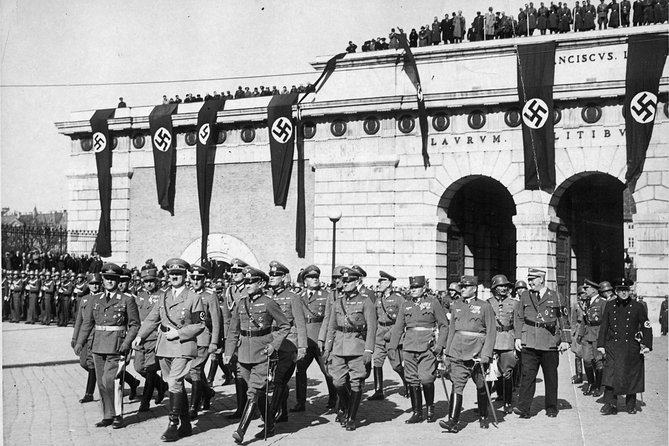
The tour kicks off at Albertinaplatz, right by the Albertina Museum, with a guide who sets the tone fast. From there, you start walking toward one of Vienna’s best-known symbols of culture, the Vienna State Opera.
This is not a quick “hit the photo spots” route. It’s a guided walk through the city’s major public spaces, where the political story keeps interrupting the arts story. If you like history that stays tied to actual streets and buildings, this format works.
The group stays small, with a maximum of 25 people, and the tour runs about 2 hours 30 minutes. It’s also in English, and you’ll receive a mobile ticket for entry.
Vienna State Opera: Don Juan Meets 1938 Reality
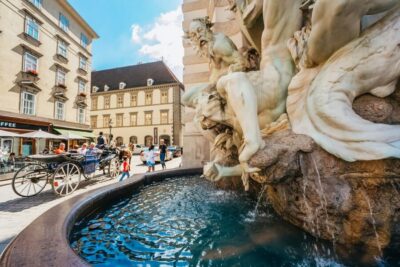
The first stop is the Vienna State Opera, and it’s a strong opener because the opera house represents what Vienna does best: music, performance, and world-class culture. The tour frames the pre-1938 world, including the opening festivities back in 1869 with Emperor Franz Joseph and Empress Elisabeth.
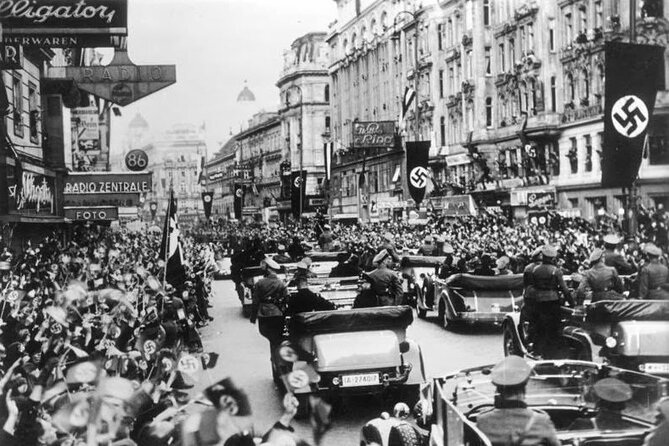
Then the story turns sharply. After the Anschluss, Adolf Hitler visited the opera on June 19 and October 27, 1938. The guide connects that presence to what National Socialism did to Vienna’s arts scene, including the departure, persecution, and murder of artists and employees and performance bans for certain works.
Practical note: this is a place where details matter. You’ll get more out of it if you slow down, look at the setting, and listen for how the guide ties the building to the people who were targeted.
Memorial Against War and Fascism: Reading the City’s Wound
Right near the start area, you move to the Memorial Against War & Fascism, a sculptural work by Austrian artist Alfred Hrdlicka. It has been there since 1988 on Vienna’s Albertinaplatz, a square that was named after Helmut Zilk in 2009.
The memorial is dedicated to all victims of war and fascism, which gives the tour a wider lens beyond any single person. Even if you already know the basics of World War II, it helps to see how postwar Austria chose to mark the trauma in public space.
This stop is also a reminder that Vienna’s remembrance is not only about the past. It’s about what gets remembered, how it gets shown, and how the city keeps talking to itself.
The Akademie der bildenden Kunste: The Art School That Rejected Him
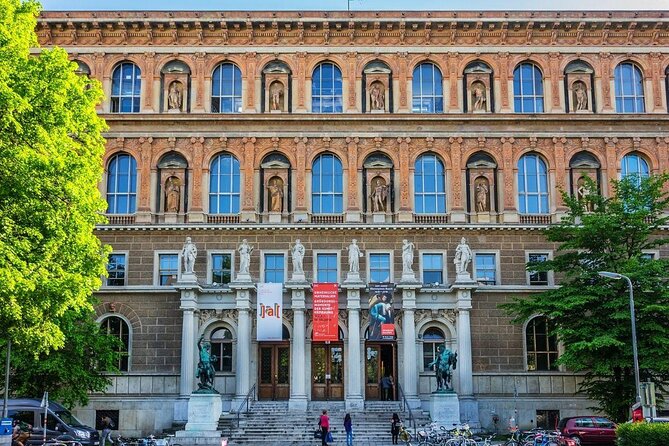
Next comes a quieter, more personal piece of the narrative: Akademie der bildenden Kunste, the art school that did not accept Hitler as a student. The guide uses this stop to explore Hitler’s early years in Vienna and how rejection, ambition, and environment can shape a path.
This is one of those moments where the heavy subject turns into a question: not just what happened later, but what Vienna was like in the years when people were forming their ideas. If you care about cause-and-effect, you’ll appreciate how the tour threads these early details into the later political takeover.
A drawback to watch for: this stop can feel less dramatic than the memorials. You have to listen for the connections the guide makes, not just the location itself.
Other Vienna write-ups filed under Austria
Heldenplatz and March 15, 1938: Power from a Balcony
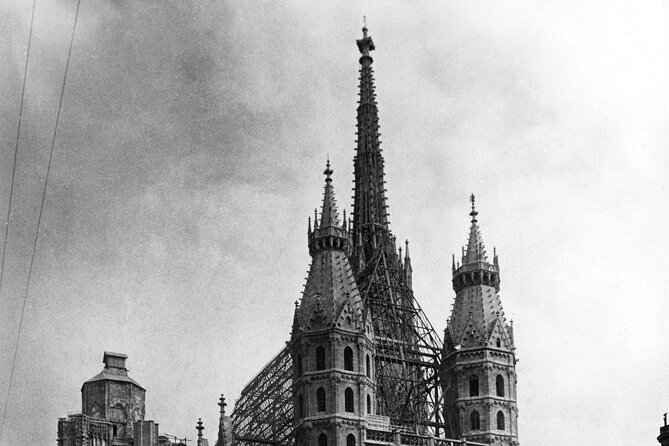
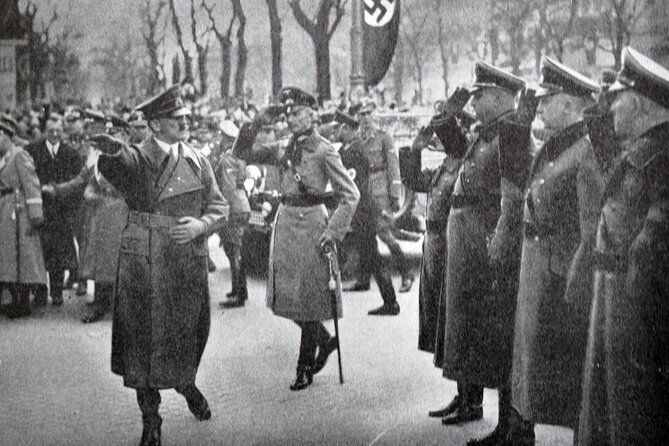
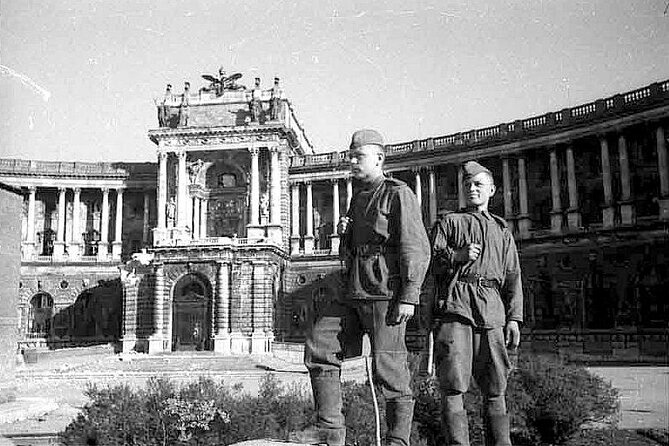
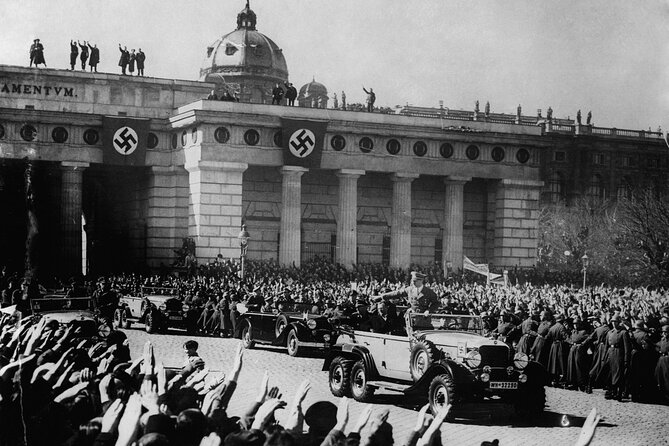
Then you reach Heldenplatz, one of Vienna’s most politically loaded squares. The focus is the March 15, 1938 speech delivered from the balcony of the Neue Hofburg. The tour presents it as the emblem of the National Socialist seizure of power and the broad approval that helped make it stick.
Heldenplatz is not just a backdrop. It’s a place where history is visible in the space, in the scale of the square, and in the way people move through it now. If you walk into this stop without context, it can feel like another big Vienna plaza. With context, it becomes something else.
This is also where the tour’s tone matters. The guide keeps it educational and respectful, which is important because you’re dealing with ideology that caused real harm.
Judenplatz Holocaust Memorial: Paying Respects in the Center of Town
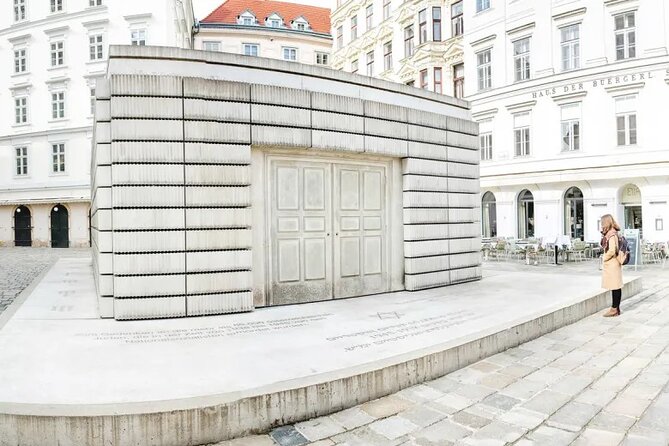
Across the inner center, the tour heads to the Judenplatz Holocaust Memorial. The German name used on-site is Mahnmal für die österreichischen jüdischen Opfer der Schoah, and the tour explains what it commemorates: more than 65,000 Austrian Jews murdered by National Socialists between 1938 and 1945.
This stop is the heart of the Holocaust remembrance on the route. It’s designed for quiet attention, not rushing. I like that the tour doesn’t try to turn reflection into a speed-run. You get the time you need to absorb what it stands for.
If you’re the kind of person who likes to understand the scale of tragedy, the memorial gives you a concrete number to hold onto while you walk back into the city’s normal rhythms.
Morzinplatz: The Former Metropole and the Gestapo
After that comes Morzinplatz, with a memorial tied to a former luxury hotel called the Metropole. Under the Third Reich, the Metropole became one of the brutal Gestapo headquarters.
This is an effective stop because it forces you to look at the city differently. Vienna can feel elegant and polished on the surface, but the tour shows you how ordinary streets also held systems of fear and control.
It’s also a reminder that the violence was not abstract. It was staffed, administered, and carried out through specific buildings and institutions. The guide keeps pointing back to that idea as you move.
The Hidden Synagogue Behind Tenement Buildings
The final part of the Jewish Vienna story focuses on why the Stadttempel Synagogue is easy to miss. The tour explains that it is hidden from sight behind tenement buildings, and it points you to the main synagogue location at Seitenstettengasse 4.
The reason is historical policy. At the time, non-Catholic places of worship had to be hidden and could not be visible from the street. As a result, the synagogue stands behind a five-story apartment building.
Above the entrance gate of the street building is an inscription: Come to his gates with thanksgiving, to his courts with praise. Seeing a line like that where you might otherwise expect only street-level walls is powerful, because it shows both faith and compromise made visible through architecture.
This stop is also a good reminder that survival can look like “out of sight,” not always like a dramatic rescue story.
How Long It Feels: Pace, Indoor Warm-Ups, and Hearing the Guide
The route is about 2.5 hours, and that time is a real walking commitment. The good news is the tour is structured so it does not feel like nonstop marching. The pace is generally relaxed, and the guide may include a couple of indoor stops to warm up and recharge when conditions are harsh.
Even so, come prepared. Vienna weather can shift quickly, and the tour guidance suggests bringing water, sunblock, and a raincoat or umbrella. In winter, cold wind can make audio harder to catch if you’re standing off to the side.
One more practical tip: on busy squares, it is easy to drift by accident. When you meet at Albertinaplatz, stick close to the group right after the guide checks everyone in. If sound is an issue, getting nearer helps.
Price and Value: Why $32.65 Works Better Than You Think
At $32.65 per person, this tour is priced like a budget-friendly history walk, but it feels more substantial than the number suggests. You’re paying for a licensed guide, guided context, and a route that connects several major Vienna sites tied to 1938 turning points and Holocaust remembrance.
Another value point: the stops on the itinerary are listed as admission ticket free. That matters in Vienna, where paid entry costs can add up quickly. Instead of turning the day into a series of ticket lines, you spend the time on storytelling and reflection.
Finally, the endpoint is convenient. You finish near Schwedenplatz, a popular area with restaurants and excellent transport, including the U line 1 and line 4. That makes it easy to turn the tour into a smooth afternoon plan.
Who Should Book This Tour, and Who Might Want a Different Style
This tour is a great match if you want historical context tied to specific addresses. It also suits people who like the Vienna angle: the city’s arts world, its public squares, and its Jewish landmarks, all shown through the lens of 1938 and the Holocaust.
If you want a strict, chronological biography focused only on Hitler himself, the tour may feel broader than you expected. The title can set that expectation, but the route also frames the social and cultural environment that shaped Vienna at the turn of the 20th century.
I also think it works well for history buffs who appreciate balance. Many guides on this route are known for careful handling of sensitive topics, and they take questions seriously when people ask them.
FAQ
Does this tour have a mobile ticket?
Yes. You receive a mobile ticket for the experience.
What is the duration and start time?
The tour lasts about 2 hours 30 minutes and starts at 2:30 pm.
What language is the tour offered in?
The tour is offered in English.
Where does the tour start and end?
It starts at Albertinaplatz (Albertinaplatz, 1010 Wien) and ends a few minutes’ walk from Schwedenplatz (Schwedenpl., 1010 Wien).
Are there any admission fees for the stops?
The listed stops show admission ticket free, including the opera-area stop and the memorials on the route.
What should I bring for the walk?
Wear comfortable shoes and clothes. Bring water, sunblock, and a raincoat or umbrella since Vienna weather can be unpredictable.
Can I cancel for a refund?
Yes. You can cancel for a full refund up to 24 hours before the experience start time.
Should You Book This Historical Hitler Walking Tour of Vienna?
Book it if you want your Vienna history connected to real places, not just dates. The route’s mix of Vienna State Opera, Heldenplatz, Judenplatz, and the reminders of the Gestapo adds up to a day that feels meaningful, not shallow.
Skip it or think twice if your main goal is a tight Hitler-only walkthrough. This tour spends real time on the broader setting around Vienna in that era, so it’s history-as-context as much as it is history-as-person.
Tours: Rest of the Austria File
- Vienna: Schönbrunn Palace & Gardens Skip-the-Line Tour
★ 4.7 · 7,739 reviews - Vienna Spanish Riding School Guided Tour
★ 4.7 · 6,765 reviews - Vienna: Skip-the-Line Sisi Museum, Hofburg and Gardens Tour
★ 4.8 · 5,918 reviews - Vienna: Skip-the-Line Schönbrunn Palace & Gardens Tour
★ 4.8 · 5,411 reviews
Tour Reviews: Rest of the Austria File
- Vienna: Vivaldi’s Four Seasons Concert in Karlskirche
★ 4.7 · 14,951 reviews - Vienna: Schönbrunn Palace & Gardens Skip-the-Line Tour
★ 4.7 · 7,739 reviews - Vienna: Light of Creation Votive Church Immersive Light Show
★ 4.8 · 6,779 reviews - Vienna Spanish Riding School Guided Tour
★ 4.7 · 6,765 reviews
Wartime and Jewish-Heritage Routes
- Vienna: World War II Historical Walking Tour
★ 4.8 · 1,772 reviews - Vienna: Day Trip to Mauthausen Concentration Camp Memorial
★ 4.6 · 303 reviews - Jewish Vienna: City Synagogue Guided Tour
★ 4.6 · 208 reviews - Vienna: Jewish Museum Vienna and Museum Judenplatz Tickets
★ 4.5 · 170 reviews
Newest Vienna write-ups on file
- Vienna: Private Walking Tour to The Hofburg & Graben Street★ 5.0 · 3 reviews
- Vienna: Private tour Mauthausen and Linz★ 4.1 · 3 reviews
- Vienna Private Full Day Tour – Tickets to Schönbrunn & Lunch★ 5.0 · 3 reviews
- Vienna: Johann Strauss 200th birthday anniversary exhibition★ 4.7 · 3 reviews
- Vienna: Full-Day Vienna Woods Wine Tasting Tour★ 5.0 · 3 reviews
- Vienna: Festive Season and New Year’s Eve Waltz Workshop★ 5.0 · 3 reviews
WWII & Jewish History Tours, compared.
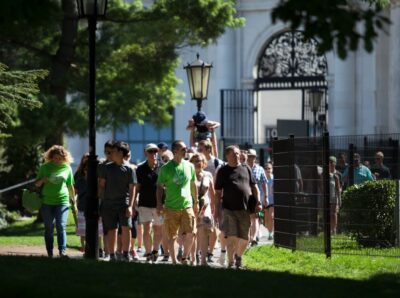 ★ 4.8Vienna: World War II Historical Walking TourFrom $311,772 reviews
 ★ 4.6Vienna: Day Trip to Mauthausen Concentration Camp MemorialFrom $174303 reviews
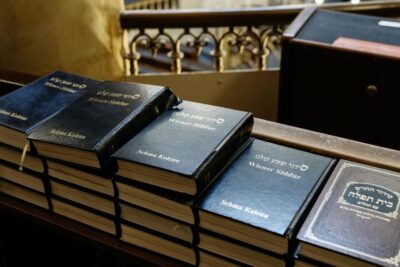 ★ 4.6Jewish Vienna: City Synagogue Guided TourFrom $23208 reviews
 ★ 4.5Vienna: Jewish Museum Vienna and Museum Judenplatz TicketsFrom $17170 reviews
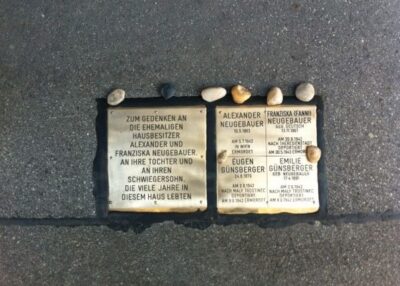 ★ 4.9Vienna: Jewish Life in Leopoldstadt 2-Hour Walking TourFrom $25109 reviews
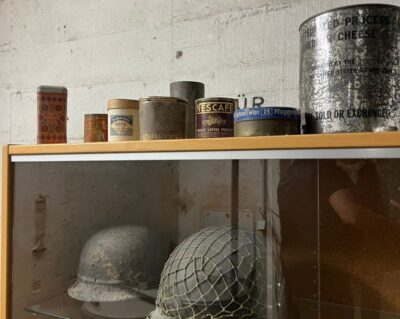 ★ 4.4Vienna: Underground WWII Bunker Ticket and Guided TourFrom $3579 reviews
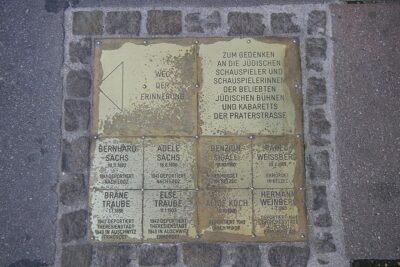 ★ 5.0Jewish Vienna Walking TourFrom $17936 reviews
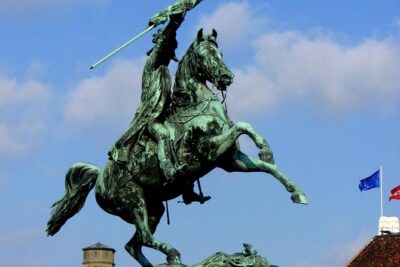 ★ 5.0Private Vienna Highlights History Walk — WWII and Post War ViennaFrom $34230 reviews
This tour also sits in