
REVIEW · WWII & JEWISH HISTORY TOURS
Private Vienna Highlights History Walk — WWII and Post War Vienna
Vienna has WWII echoes in everyday views. This private highlights walk connects imperial splendor to Second Republic symbolism, Soviet remembrance, and places tied to the Holocaust, with a guide who keeps the story readable and human. I like the hotel pickup and door-to-door start, and you get a steady, logical route instead of hopping randomly between landmarks.
My other big win is pacing that feels built for real life. You can walk it all, or use short transit bits when it helps, and a good guide will adjust to what you want to linger on. That flexibility is why people end up with time for small breaks like a quick coffee instead of feeling rushed through history.
One consideration: this is a lot of outdoor ground in about 3 hours, and some stops are emotionally heavy. Bring good shoes, a rain layer, and be ready for topics that do not soften their edges.
In This Review
- Key things you will notice on this Vienna WWII to Postwar walk
- Price and logistics that make this feel like a “real” tour
- Hotel pickup, mobile ticket, and why the start time matters
- How a private guide helps you read Vienna’s WWII to postwar clues
- Upper Belvedere gardens: the view that turns into a Second Republic story
- Schwarzenbergplatz and the Soviet War Memorial: remembrance is complicated
- Hochstrahlbrunnen, the French Embassy, and a quick Ringstraße ride
- Burggarten and Mozart’s court garden: where art history meets brutal politics
- MuseumsQuartier and the flak tower: the war that didn’t stay in the past
- Heldenplatz: the Anschluss speech setting and the fragility of power
- The Hofburg and Vienna’s power arc from monarchy to republic
- Judenplatz Nameless Library: the quiet essential checkpoint
- Pestsaule and St Stephen’s: crisis, repair, and war damage in a living church
- Who this tour suits best, and how to get the most from it
- Should you book this Vienna Highlights history walk?
Key things you will notice on this Vienna WWII to Postwar walk
- Hotel pickup plus a private licensed Austria guide, so you start fast and stay focused
- Belvedere terrace and garden axis, where architecture reads like politics after 1955
- Soviet War Memorial at Schwarzenbergplatz, a blunt marker of how liberation became occupation memory
- Heldenplatz and the Hofburg, Vienna’s power stage, from imperial ceremony to the Anschluss speech setting
- Judenplatz Nameless Library, a quiet, essential Shoah memorial tied to Vienna’s Jewish community history
- St Stephen’s Cathedral in 1945, where the war’s damage shows up in a major church landmark
Related wartime and Jewish-heritage routes
- Vienna: World War II Historical Walking Tour
★ 4.8 · 1,772 reviews - Historical Hitler Walking Tour of Vienna
★ 5.0 · 887 reviews - Vienna: Day Trip to Mauthausen Concentration Camp Memorial
★ 4.6 · 303 reviews - Jewish Vienna: City Synagogue Guided Tour
★ 4.6 · 208 reviews
Price and logistics that make this feel like a “real” tour
This tour runs about 3 hours, private for your group, and sized up to 10 people. That matters. In a city like Vienna, a group that stays together avoids the usual stress of station-to-station navigation, and it keeps the guide’s story tight instead of turning into stop-and-go micromanagement.
The price is listed as $342.40 per group. If you fill the full group limit, you are looking at roughly $34 per person. If you have fewer people, the per-person cost rises, but you are still buying something specific: a private guide plus pickup. For many people, that is the difference between seeing highlights and actually understanding them.
One more logistics point: hotel pickup is included, but hotel drop-off is not. Your walk ends near the last major stop, so plan to continue on foot or by tram to your next commitment.
Also, food and drinks are not included, and public transport to and from attractions is not listed as included. Since the route includes a short tram segment, you should be ready to handle any transit fares yourself.
Hotel pickup, mobile ticket, and why the start time matters
The tour starts at 09:30 and 14:00, so you can pick the slot that fits your day. Morning is often easier if you want clearer sightlines and fewer crowds around the major squares. Afternoon can work great if you have other plans earlier, and you still get the same storyline.
The pickup details are broad by design. You can meet at hotels and vacation rentals in town, Reichsbruecke pier, or train stations like Vienna Hbf and Vienna West. If you are arriving by ship, A-Rosa guests meet at Pier Handelskai 265, 1020 Wien. That flexibility is a real value add if you hate guessing how to reach central meeting spots.
You also get a mobile ticket, which helps you avoid paperwork friction. Confirmation happens within 48 hours if availability allows, so you are not left waiting forever after booking.
In practice, pickup is what makes this tour feel calmer. Instead of spending energy figuring out where to stand, you walk straight into the first stop and start hearing the story.
How a private guide helps you read Vienna’s WWII to postwar clues
This tour is not just a list of famous buildings. It is a way to interpret what Vienna chose to remember, rebuild, and present to the world after the war.
A good private guide can do two key things for you:
1) Translate “big history” into what you can actually see in front of you.
2) Keep the order of the route so the meaning clicks, for example how 1955 symbolism at Belvedere connects to later memory and power sites.
The guide also matters for pace. People mention guides like Walter and Brigitte for being organized, friendly, and ready to answer questions without rushing you. There is also a theme of humor and patient explanations, which helps when you are moving from imperial ceremony to political violence and mass murder memorials in one outing.
And because it is private, you can ask for small course corrections. If you are more into WWII specifics, you can push for extra context at the places that hold the key announcements and damages. If you prefer architecture, you can spend more time on the palaces and garden layouts that carry the messages.
Upper Belvedere gardens: the view that turns into a Second Republic story
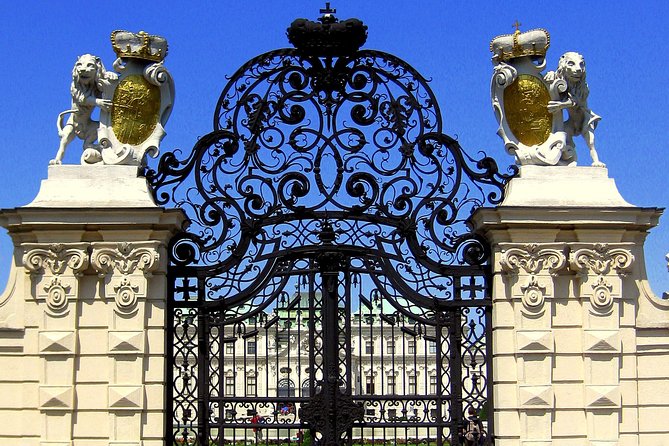
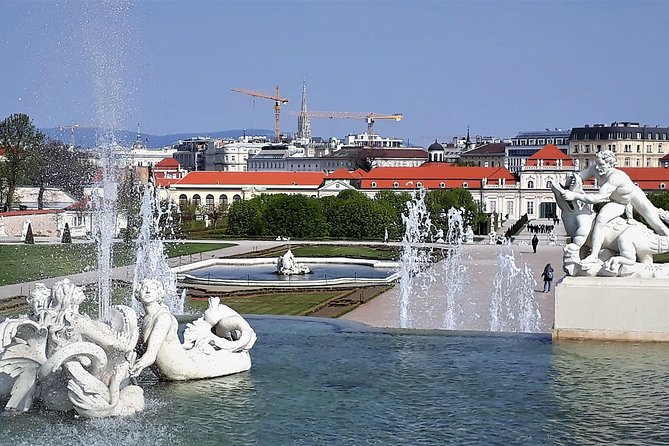
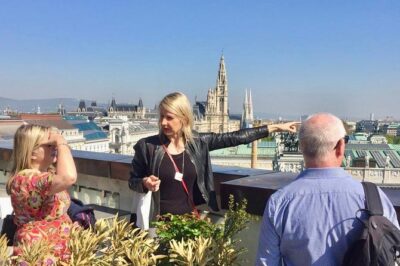
You start at the Belvedere complex, beginning with the gardens around Upper Belvedere. This is one of the smartest first moves in the whole route. The terraces and outlook give you a high vantage point, so you get oriented while the guide sets up the story.
The key thread here is transformation. Prince Eugene commissioned the palace, and later the space becomes a symbolic birthplace of Austria’s Second Republic in 1955. You are not just hearing dates. You are seeing how imperial grandeur was repurposed into a postwar national narrative.
Then you move down the axis into the Belvedere Gardens and Lower Belvedere. The baroque garden layout is not random beauty. It is an ordered sequence, and the guide uses that “built hierarchy” to explain how landscapes were used as political statements, with ideas of order and power baked into the design.
A practical upside: this portion is visually rewarding, even if you are not a museum person. A drawback: garden walking can be slick if it rains, and you will want comfortable shoes because the route involves short but repeated stretches.
If you only remember one lesson from Belvedere, make it this: Vienna often tells political stories through spaces that look purely aesthetic.
Other Vienna write-ups filed under Austria
Schwarzenbergplatz and the Soviet War Memorial: remembrance is complicated
Next comes Schwarzenbergplatz and the Soviet War Memorial. This is the moment the tour becomes very direct about how the end of Nazi rule in Vienna was tied to occupation and loss.
The monument honors thousands of Red Army soldiers who died ending Nazi rule. The guide’s framing helps you hold two things in your head at once: liberation and occupation can both exist as part of memory.
That is an important shift in tone, and it is why this tour earns its WWII and postwar focus. You move from palace symbolism to a stark public memorial that does not ask you to romanticize anything.
Time here is short, about 10 minutes. That is good, because it keeps the day from getting emotionally one-note. It also means you are ready for the next stop rather than spending too long staring at a single monument when you still have major context ahead.
Hochstrahlbrunnen, the French Embassy, and a quick Ringstraße ride
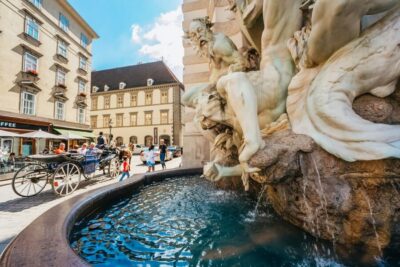
At Hochstrahlbrunnen, you get a memorable blend of utility and symbolism. The fountain celebrates Vienna’s alpine tap water, and you see it framed by the French Embassy. Two Allied powers, and two different architectural messages, all in one view.
This stop works well if you like how postwar identity shows up in everyday infrastructure and international presence, not only in palaces and speeches. It also keeps the pace moving, which helps if you have limited time in Vienna.
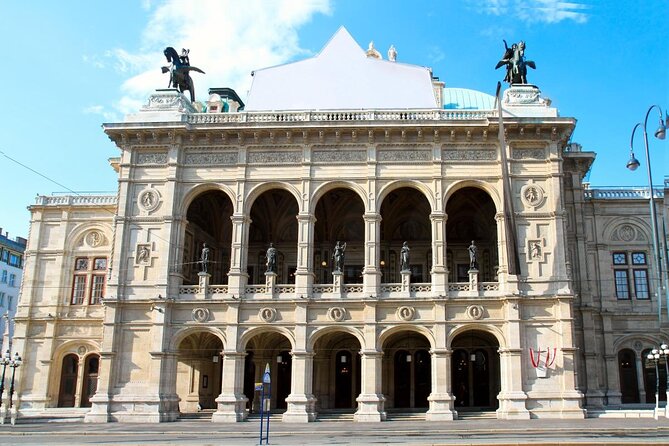
Then you take a short tram ride along the Ringstraße. That stretch is famous for 19th-century prestige projects, and it connects several big themes of continuity and rebuilding. The tour passes the rebuilt State Opera, which is a reminder that culture did not simply vanish in the war. It was repaired, redesigned, and presented again.
A practical note: tram segments can be wet and slightly bumpy in bad weather. If you are sensitive to cold, layer up. Also, if you have to use the bathroom later, plan it before the tram portion, since you are moving between areas.
Burggarten and Mozart’s court garden: where art history meets brutal politics
Burggarten is where the tour leans back toward beauty, but it does not let you stay naive about history. Mozart presides over a garden that once belonged to the imperial court. That juxtaposition is the point.
Right nearby, the Academy of Fine Arts appears in the story. You learn how it famously rejected a young Adolf Hitler. That detail is small on paper, huge in irony. It is a reminder that decisions in ordinary institutions can later become headlines, even if nobody at the time could predict the scale of what would follow.
This stop is brief, around 5 minutes, but it is emotionally clever. You get a tasteful garden moment and then a sharp historical pivot.
Drawback to consider: if you are hoping for only sweeping WWII battlefield context, this may feel more like cultural history. But if you want to understand how Vienna formed and reformed itself through art and institutions, it is a strong part of the puzzle.
MuseumsQuartier and the flak tower: the war that didn’t stay in the past
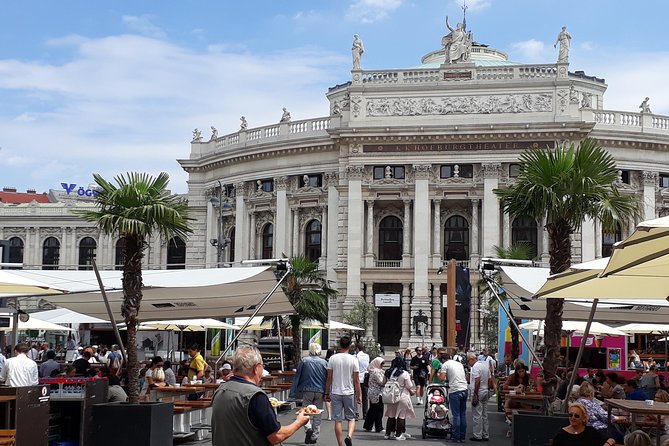
At MuseumsQuartier Wien, you encounter Maria Theresa’s square and the twin museums. This is one of those places where Vienna looks like a calm civic space, but wartime evidence can still be visible.
Behind the scenes, the tour points out one of Vienna’s six FLAK towers, described as indestructible concrete witnesses to the city’s militarized final months. Seeing that kind of structure next to modern cultural buildings forces a different kind of attention.
If you tend to skip over “less pretty” architecture, I still recommend you slow down here. The point is not to admire the tower itself. The point is to recognize that the war left physical traces that shaped the postwar city plan and skyline.
This stop is around 10 minutes, so you will not be standing for ages. But if photography matters to you, ask the guide when the best angle appears, since light can change quickly in open squares.
Heldenplatz: the Anschluss speech setting and the fragility of power
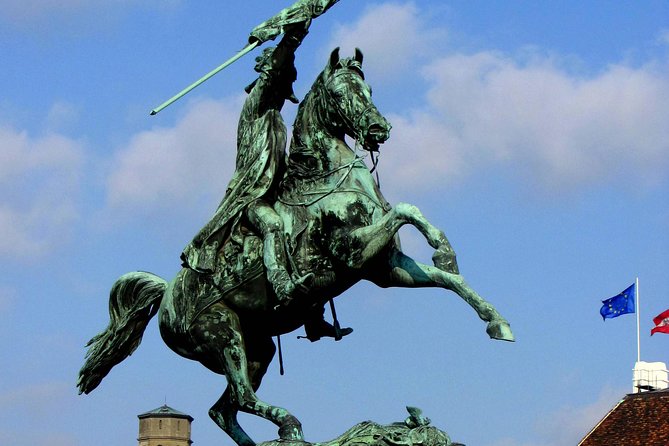
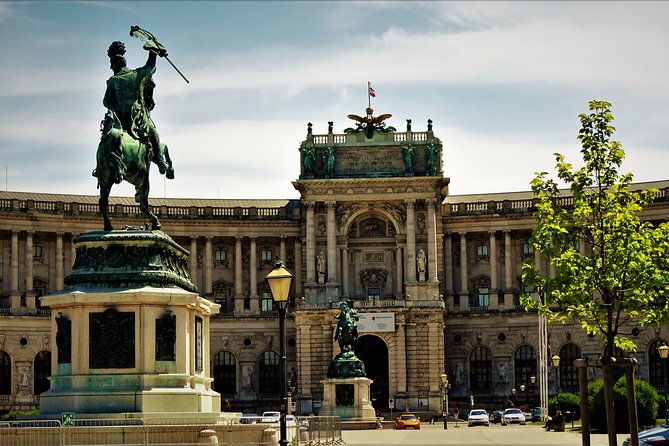
Heldenplatz is one of the most dramatic parts of the route because of what happened there in March 1938. You learn that Hitler’s Anschluss speech took place on this very stage for imperial ceremony and military pride.
Today, the square is framed by parliament, city hall, museums, and the Burgtheater. That collection of major public institutions makes the lesson hit harder: power can look permanent, yet it can turn fast.
Time at this stop is about 15 minutes, which is enough to take in the bigger architectural picture and still hear the key explanation. The benefit of a private guide here is tone control. You want someone to connect the speech site to what came before and what came after without turning it into sensational storytelling.
The drawback is the emotional weight. If you are easily overwhelmed, you might take a brief breath halfway through, then continue. The tour keeps moving, so you are not stuck lingering only on the heavy details.
The Hofburg and Vienna’s power arc from monarchy to republic
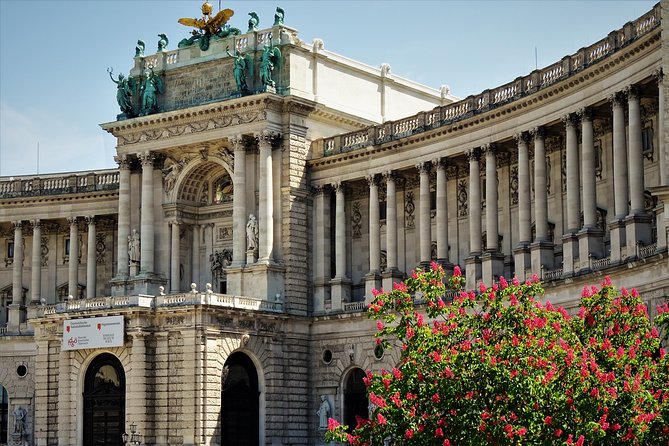
Next is the Hofburg, the palace-city that served as the seat of power for seven centuries. This is where you see how Vienna’s political identity kept changing while still using the same monumental stage.
The guide connects the dots from dukes to emperors to the modern presidency. Even if you do not care about political systems, you will likely care about how the architecture communicates authority and continuity.
The Hofburg also sets up the idea that Vienna balances ceremony, commerce, and spirituality. The walk continues near the point where imperial facades meet ecclesiastical grandeur and today’s luxury boutiques. That blend can feel contradictory at first, but it is very Vienna. It is how old systems survive into new forms.
This portion is about 15 minutes. It is a strong “zoom out” stop, meaning it helps you understand the bigger frame behind the more specific WWII events.
Judenplatz Nameless Library: the quiet essential checkpoint
Then you reach Judenplatz Holocaust Memorial, a stop that deserves its own kind of silence. The site connects to Vienna’s medieval Jewish community, destroyed in 1421. On that ground stands the Nameless Library, commemorating 65,000 Austrian Jews murdered in the Shoah.
This is not a rushed view-and-go. Even with a 15-minute time window, it feels like the tour gives you room to take in the meaning.
Why it is so valuable in a WWII to postwar tour is simple. Vienna’s story is not only about armies and speeches. It is also about communities erased from the city fabric. The memorial makes that absence visible, and it anchors the rest of the walk in human loss.
Practical tip: if you take photos, do it respectfully and quickly, then focus on reading what is in front of you. If you do not want to read, just take a minute to stand and absorb the atmosphere.
Pestsaule and St Stephen’s: crisis, repair, and war damage in a living church
Near the end, you stop at Colonna Della Peste, the Plague Column. It is a Counter-Reformation marble statement, created to reclaim a city after crisis. That earlier pandemic story might feel like a shift, but it fits the tour’s theme of how Vienna marks upheaval through public art and faith.
Then the final stop is St Stephen’s Cathedral, Vienna’s Gothic heart. The guide brings in a WWII detail that makes the cathedral feel less like a postcard. In April 1945, parts burned when looters set fire to nearby shops, a tragic end to a war that had already cost the city so much.
This matters because it shows how history is not only written in documents. It is also in damaged structures and in what later generations chose to preserve or restore.
If you are visiting later, plan a slow follow-on walk around the cathedral area. Because the tour ends there, you will likely want to continue exploring nearby on your own. Just remember that it is easy to lose time if you linger, so set expectations for your next reservation.
Who this tour suits best, and how to get the most from it
This tour is ideal if you want an organized, story-driven route through Vienna’s WWII and postwar landmarks without doing the heavy planning yourself. It also fits first-timers who want a fast but meaningful overview.
I especially think it is a good match if you:
- like history that connects politics to architecture
- want clear context at major power sites like Heldenplatz and the Hofburg
- appreciate memorial stops and want them handled with care
- have limited time and want to cover a lot in about 3 hours
To get the most out of your guide, come with two questions. For example, ask which stop shows postwar change most clearly, and ask which one best explains how Vienna remembers. Guides such as Brigitte and Walter are noted for bringing local details and answering questions with patience and humor, which makes those follow-ups easy to enjoy rather than awkward.
If you are traveling with mobility concerns, know the tour requires moderate physical fitness. It is a walking route with outdoor time, and weather can make surfaces slick. The private format helps because you can move at a more comfortable pace, but the route is still outdoors.
Should you book this Vienna Highlights history walk?
Book this tour if you want a private, efficient way to understand how Vienna’s WWII story shows up in palaces, squares, memorials, and even the damage patterns around major landmarks like St Stephen’s Cathedral. The hotel pickup, the private guide, and the ability to shape the pacing to your interests make it strong value, especially for groups.
Skip it or adjust expectations if you prefer purely light sightseeing with no memorial or war context. This is history with weight, and it moves quickly from power and speeches to remembrance.
If you want WWII to postwar Vienna explained in a route you can actually follow, this one is an easy yes.
Walking Tours: Rest of the Austria File
- Vienna: Guided Walking Tour of City Center Highlights
★ 4.7 · 4,989 reviews - Vienna: Vienna Central Cemetery Guided Walking Tour
★ 4.8 · 3,307 reviews - Vienna: Guided Walking Tour of City Highlights & Hidden Gems
★ 4.9 · 2,180 reviews - Vienna: Viennese Underworld Guided Walking Tour
★ 4.7 · 1,865 reviews
Tour Reviews: Rest of the Austria File
- Vienna: Vivaldi’s Four Seasons Concert in Karlskirche
★ 4.7 · 14,951 reviews - Vienna: Schönbrunn Palace & Gardens Skip-the-Line Tour
★ 4.7 · 7,739 reviews - Vienna: Light of Creation Votive Church Immersive Light Show
★ 4.8 · 6,779 reviews - Vienna Spanish Riding School Guided Tour
★ 4.7 · 6,765 reviews
Wartime and Jewish-Heritage Routes
- Vienna: World War II Historical Walking Tour
★ 4.8 · 1,772 reviews - Historical Hitler Walking Tour of Vienna
★ 5.0 · 887 reviews - Vienna: Day Trip to Mauthausen Concentration Camp Memorial
★ 4.6 · 303 reviews - Jewish Vienna: City Synagogue Guided Tour
★ 4.6 · 208 reviews
Newest Vienna write-ups on file
- Vienna: Private Walking Tour to The Hofburg & Graben Street★ 5.0 · 3 reviews
- Vienna: Private tour Mauthausen and Linz★ 4.1 · 3 reviews
- Vienna Private Full Day Tour – Tickets to Schönbrunn & Lunch★ 5.0 · 3 reviews
- Vienna: Johann Strauss 200th birthday anniversary exhibition★ 4.7 · 3 reviews
- Vienna: Full-Day Vienna Woods Wine Tasting Tour★ 5.0 · 3 reviews
- Vienna: Festive Season and New Year’s Eve Waltz Workshop★ 5.0 · 3 reviews
WWII & Jewish History Tours, compared.
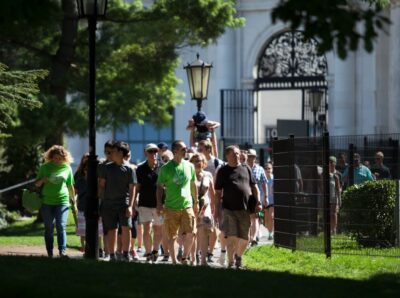 ★ 4.8Vienna: World War II Historical Walking TourFrom $311,772 reviews
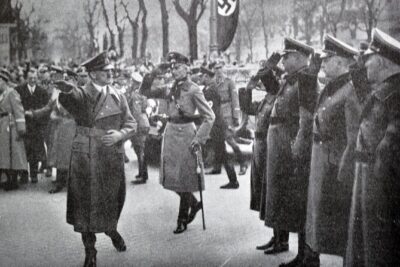 ★ 5.0Historical Hitler Walking Tour of ViennaFrom $32887 reviews
 ★ 4.6Vienna: Day Trip to Mauthausen Concentration Camp MemorialFrom $174303 reviews
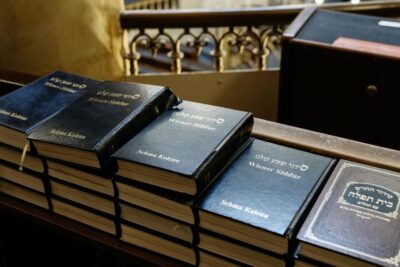 ★ 4.6Jewish Vienna: City Synagogue Guided TourFrom $23208 reviews
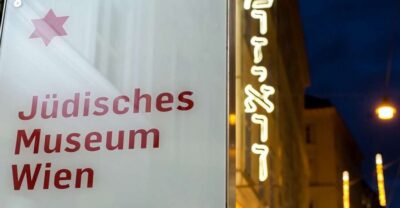 ★ 4.5Vienna: Jewish Museum Vienna and Museum Judenplatz TicketsFrom $17170 reviews
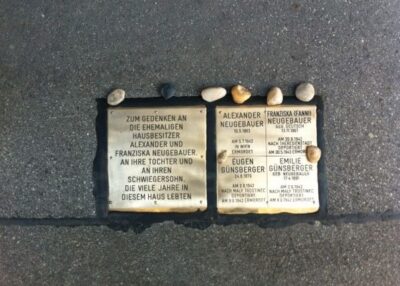 ★ 4.9Vienna: Jewish Life in Leopoldstadt 2-Hour Walking TourFrom $25109 reviews
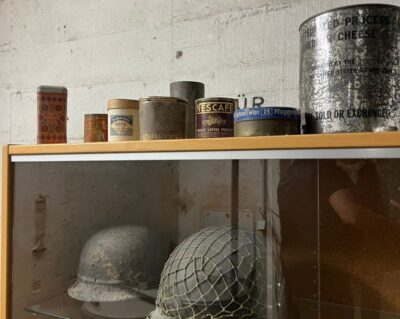 ★ 4.4Vienna: Underground WWII Bunker Ticket and Guided TourFrom $3579 reviews
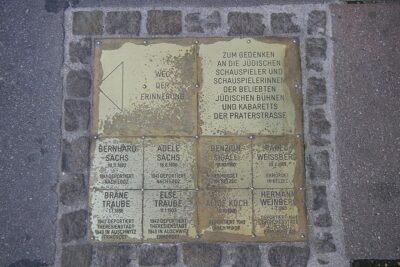 ★ 5.0Jewish Vienna Walking TourFrom $17936 reviews
This tour also sits in