
REVIEW · WWII & JEWISH HISTORY TOURS
Vienna: Private Jewish Walking Tour
Vienna history hits different when you walk it. This private Jewish walking tour strings together real city stops, from the first Jewish person in Austria, Salomon, to the ideas and people who shaped Vienna in the 1900s. I especially like how it connects Café Landtmann and big thinking to the human stories behind them, then holds those stories up against the darker parts of Vienna’s past.
One thing to consider is cost. At $530 per group up to 20, the value swings a lot depending on your headcount, and the whole experience is still about a steady 2.5 hour walk.
In This Review
- Key highlights worth your attention
- Helmut-Zilk-Platz to 1010 Vienna, a story told at walking speed
- Why Salomon and the first Jewish footsteps change the whole tone
- University of Vienna stops the story from feeling vague
- Café Landtmann and Freud’s favorite coffee house moment
- Palais Ephrussi shows how culture and status played out on real streets
- Seitenstettengasse Synagogue, viewed from outside
- Judenplatz and Joseph’s Square anchor the community in geography
- Memorial against War and Fascism, and how Vienna keeps the lesson visible
- Vienna State Opera on the route: why a grand building fits this story
- Private guide quality: what the best sessions tend to nail
- Price and logistics: when $530 per group actually feels fair
- Who should book this Jewish Vienna walk
- A realistic way to enjoy the 2.5 hour pace
- Should you book the Vienna Private Jewish Walking Tour?
- FAQ
- Where is the meeting point?
- How long is the tour, and where does it end?
- Is this a private tour?
- What languages are available?
- What is included in the price?
- Is it cancelable, and can I pay later?
Key highlights worth your attention
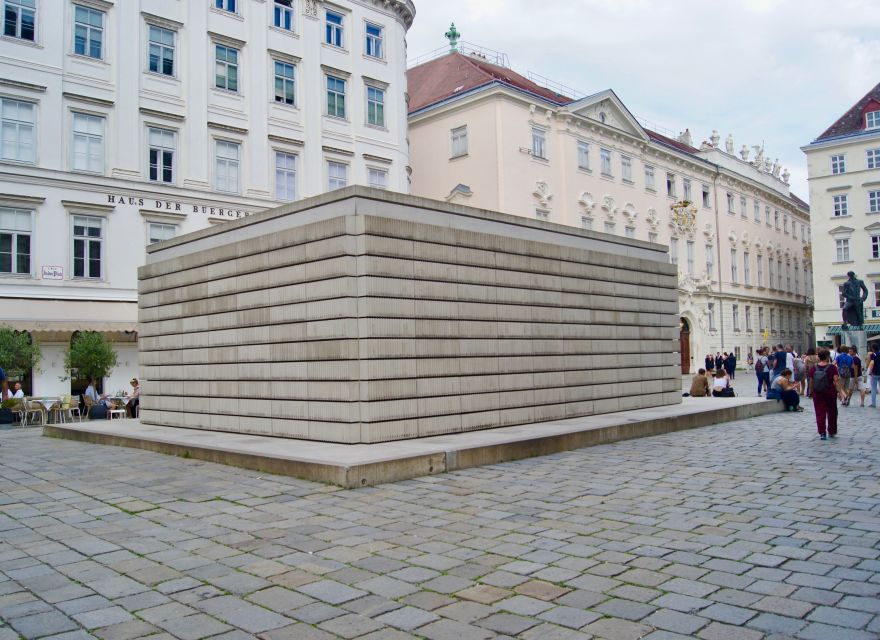
- Helmut-Zilk-Platz start: You begin at the Memorial against War and Fascism, with your guide holding a red and white striped umbrella.
- Salomon as your first anchor: The tour starts with the first Jewish person in Austria, so the story has a clear beginning.
- Café Landtmann and Freud: You see Sigmund Freud’s favorite coffee house, a quick stop that explains a lot about Vienna’s intellectual life.
- A careful mix of art and hardship: You cover artists, doctors, and scientists, plus the periods when the Jewish community was banished.
- Outside-only synagogue viewing: Seitenstettengasse Synagogue is an exterior visit, not an interior walkthrough.
- Major landmarks on foot: You pass the University of Vienna and the Vienna State Opera along the way.
Related wartime and Jewish-heritage routes
- Vienna: World War II Historical Walking Tour
★ 4.8 · 1,772 reviews - Historical Hitler Walking Tour of Vienna
★ 5.0 · 887 reviews - Vienna: Day Trip to Mauthausen Concentration Camp Memorial
★ 4.6 · 303 reviews - Jewish Vienna: City Synagogue Guided Tour
★ 4.6 · 208 reviews
Helmut-Zilk-Platz to 1010 Vienna, a story told at walking speed
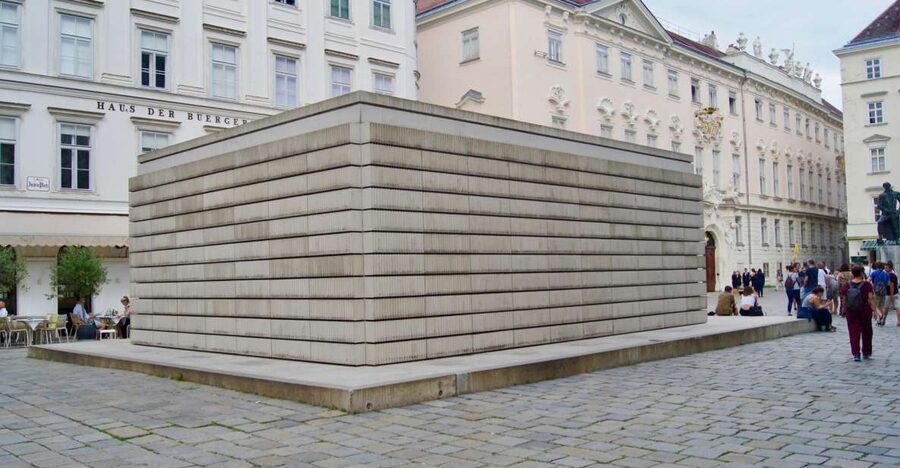
This experience is built for people who want more than names and dates. You start at Helmut-Zilk-Platz, right in front of the Memorial against War and Fascism, and your guide will be easy to spot with a red and white striped umbrella. From there, the tour moves through the center of Vienna in a private format designed for real questions and real pacing.
The route also ends right in Vienna’s inner area, at 1010 Vienna, Austria. That matters because it keeps the story connected to the neighborhoods you can actually keep exploring afterward, instead of dropping you far out after a history lesson.
With an overall duration of 150 minutes, you get enough time to make the city make sense. This is not a sprint through ten photos. It’s a walk where each stop gets interpreted, so you can connect intellectual life, community life, and Vienna’s turning points into one continuous thread.
Why Salomon and the first Jewish footsteps change the whole tone
Many city tours about Jewish history jump straight to later centuries or big events. This one starts earlier, with Salomon, described as the first Jewish person in Austria. I like that choice because it gives you a beginning you can hold onto. You’re not just reacting to one painful chapter, you’re seeing how long this community has been part of Vienna’s story.
From there, the tour looks at the Jewish community in Vienna through the 1900s, including the artists, doctors, and scientists who helped shape the city. That approach is practical. It shows you that Jewish Vienna wasn’t only about persecution, even though persecution is part of the full picture.
And the tour does not dodge the darker periods. It includes banishment from Vienna and, later, the Holocaust era. You’ll feel the contrast as you walk, because the city you see was also the city people were trying to build, and the city that later rejected them.
University of Vienna stops the story from feeling vague
When a history tour stays only on monuments, it can start to feel abstract. Here, one of the notable stops is the University of Vienna. Even without going deep into every academic detail, placing this site in the route gives you a concrete way to picture learning and influence in daily city life.
This is where the tour’s “ideas plus people” focus becomes useful. If you have ever looked at Vienna and thought it felt like a city built on thinkers, this stop gives your brain an address. Then the guide can connect that intellectual atmosphere to the Jewish contributors the tour highlights in the 1900s.
For you, that means the story stays grounded. You’re not only learning that certain people mattered, you’re seeing where a city’s institutions made it easier for ideas to circulate.
Café Landtmann and Freud’s favorite coffee house moment
One of the best parts of this tour is the stop for Café Landtmann, identified as Sigmund Freud’s favorite coffee house. This is a small geographic detour that does big work for understanding Vienna.
Coffee house culture is a Vienna thing, and this stop is a fast way to tie together the tour’s themes: conversation, ideas, and public life. It also helps explain why so many famous minds and debates seem to belong to Vienna. You’re seeing the kind of everyday setting where big thinking got shared, argued, and repeated.
What I like is that the tour uses this stop not as a photo opportunity, but as a bridge. It helps you connect the intellectual flowering of the early 1900s with the people the tour names, including those who were part of the Jewish community. That gives the story emotional weight, not just historical weight.
Other Vienna write-ups filed under Austria
Palais Ephrussi shows how culture and status played out on real streets
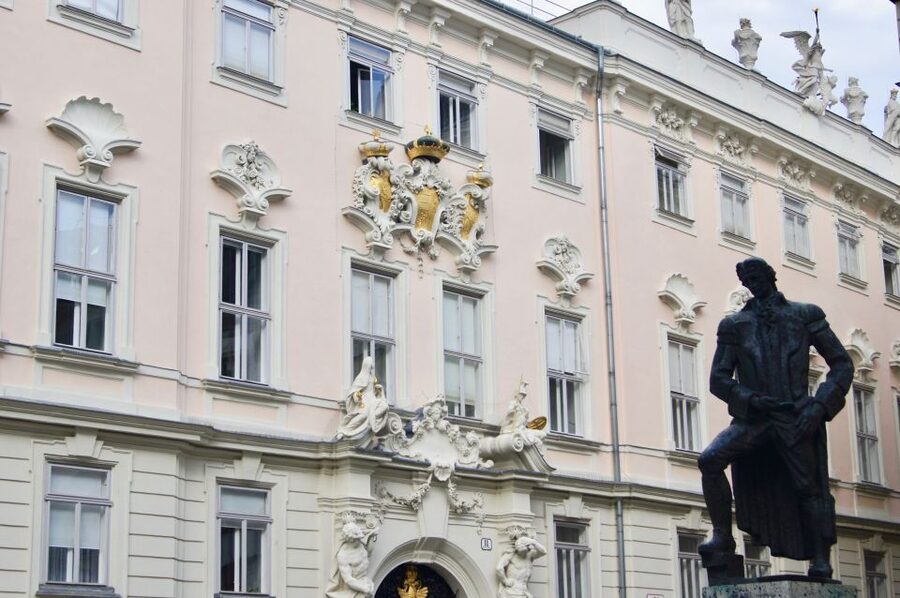
The tour includes Palais Ephrussi as one of the landmark stops. For me, this is one of those places where the exterior tells you something quickly about how power and wealth expressed themselves in Vienna’s built environment.
On a Jewish history walking tour, you might expect every stop to feel strictly memorial. Palais Ephrussi adds contrast. It shows how Jewish life and the broader city culture interacted in ways that were visible in the architecture and the social world.
You do not need to be an art historian to get value here. Think of it as context. When a guide points out a landmark like this, they are helping you understand what Jewish people were navigating, building with, and sometimes being blocked from.
Seitenstettengasse Synagogue, viewed from outside
You will see Seitenstettengasse Synagogue, with the important note that it is an outside-only visit. That can be a letdown if you were imagining an interior walkthrough, but it also can be the right choice for a walking route with multiple major stops.
Outside viewing still matters because you get the sense of place. In a tour like this, the outside of a synagogue becomes a visual punctuation mark. It signals that the story you’re hearing is not only political or intellectual. It’s community-based, spiritual, and anchored in specific locations.
If interior access is your top priority, just keep your expectations aligned: this stop is about seeing the building and its place in the city, not going inside.
Judenplatz and Joseph’s Square anchor the community in geography
The tour includes Judenplatz and Joseph’s Square. I love these kinds of stops because they help you stop thinking of Jewish Vienna as a timeline floating in your mind. Instead, you can start thinking in space.
Judenplatz, in particular, is a natural hub for the kind of storytelling this tour is doing. You can connect the earlier thread, Salomon and the long presence, to the community in the 1900s, and then to the later breaks and tragedies. The guide’s job here is to make the geography do the remembering.
Joseph’s Square adds another layer. When you hit more than one location tied to the same broader story, you start noticing patterns in how the city organized its public life. For you, that makes your understanding stick longer after the walk ends.
Memorial against War and Fascism, and how Vienna keeps the lesson visible
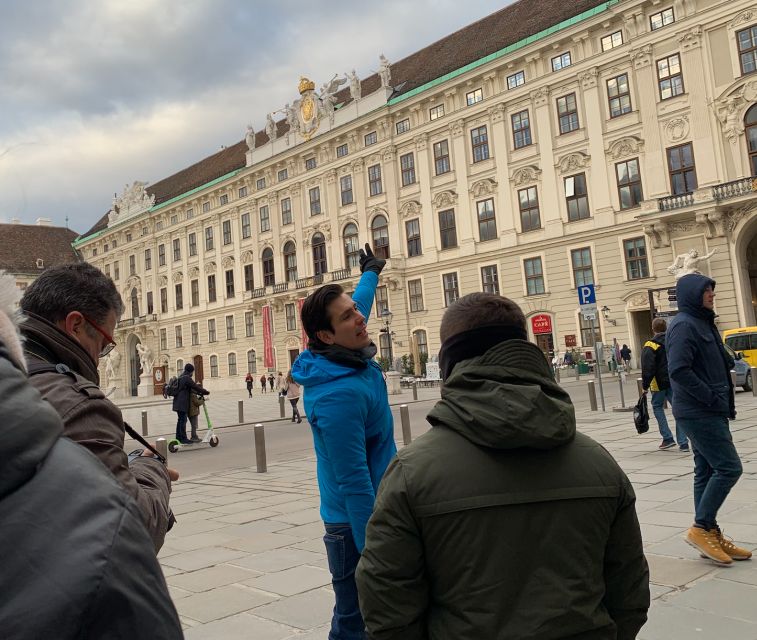
The tour begins at the Memorial against War and Fascism, and this matters more than you might expect at first. It sets a clear reading lens. The city walk is not only about cultural highlights. It also insists that the painful chapters are part of the same story as the achievements.
This is where the tour’s balance becomes a real strength. It’s one thing to learn history in a classroom setting. It’s another to start your walk at a memorial that forces you to slow down and think. That becomes especially important because the tour covers both intellectual and artistic contributions and the periods where the community was banished from Vienna.
And as you keep walking past other major landmarks, like the Vienna State Opera, the contrast sharpens. Vienna has a lot of beauty on the surface. The tour’s structure helps you look past the surface in a thoughtful way, without turning the whole experience into pure heaviness.
Vienna State Opera on the route: why a grand building fits this story
The route includes the Vienna State Opera. I know it can sound like a random famous building in a Jewish-focused tour, but it makes sense in context.
When you include a major cultural landmark like this, you’re reminded that Vienna’s arts scene was a real part of daily life. It also gives you a place to consider who had access, who contributed, and who was pushed out as history turned.
Used well, this kind of stop helps you understand the stakes behind culture. It also lets the guide compare the city’s public face with the community’s lived reality, especially during the years of banishment and the Holocaust era covered by the tour.
Private guide quality: what the best sessions tend to nail
The tour is led by a live guide, in English or German, and it is private. That structure is what allows the best guides to do what group tours often can’t: answer questions, adjust the pace, and focus on what interests you most.
The names that have shown up include Lisa, praised for being thorough and friendly, and Dr. Reinhard Travnicek, noted for both expertise and an open, human approach. Another guide mentioned is Horlando, described as clear, articulate, and able to answer questions. If you’re the type who likes to ask why things happened, this kind of guiding style usually pays off.
I also like that the guide can adapt. One common thread in the feedback is that the tour can mix the usual highlights with what your group wants. That’s valuable if your group includes people with different levels of prior knowledge.
Price and logistics: when $530 per group actually feels fair
Let’s talk value in a way that helps you decide. The price is $530 per group, up to 20 people, and the duration is 150 minutes. That makes this a “group math” tour.
If you book as a small group, your per-person cost will be higher. If you book with a full group, it can become much more reasonable. Either way, you’re paying for a private guide, not a shared headset tour, and you’re getting hotel pickup and drop-off within the inner city.
That pickup piece is not a small detail. It saves time and reduces friction, especially in Vienna where walking distances can be bigger than your map suggests. If you want a history walk without planning every transfer, this structure helps.
Also, you get a wheelchair accessible tour. Even if you are not using a chair, it signals that the provider has planned for smoother movement for more than one type of mobility need.
Who should book this Jewish Vienna walk
This is a great fit if you want Jewish history that connects to real city life. If you like art, ideas, and the way famous cafés and institutions reflect what people valued, you’ll enjoy how the tour uses Café Landtmann and the University of Vienna as meaning anchors.
It’s also a good choice if your group wants honesty about the hard chapters. The tour doesn’t treat the Holocaust and banishment as side notes. It treats them as part of the same Vienna you are walking through, starting with the memorial setting tone and ending with major landmarks that contrast beauty and harm.
Finally, it suits people who prefer a private format. You get more breathing room, and the guide’s ability to answer questions becomes part of the value.
A realistic way to enjoy the 2.5 hour pace
This is a walking tour, about 150 minutes. That means you’ll want comfortable shoes and a bit of patience for stops that are both short and meaningful. The tour covers several big landmarks, so you should expect a steady rhythm: walk, stop, learn, move on.
If you are visiting in colder weather, bring a layer. If you are there in warmer months, plan for breaks when the guide calls them out, since you’re moving continuously across central Vienna.
And because the story covers both intellectual flowering and painful events, I recommend you take notes lightly. Not to turn it into a classroom, but to keep the names and places straight while they are fresh.
Should you book the Vienna Private Jewish Walking Tour?
Book it if you want a private Jewish Vienna experience that balances intellectual and cultural highlights with the darker periods that shaped the city. The combination of Salomon, the 1900s community, Freud at Café Landtmann, and landmarks like Judenplatz and Joseph’s Square gives you a structured story you can actually remember.
Skip it or reconsider if you only want interior access to religious sites, because Seitenstettengasse Synagogue is outside only. Also, if you are traveling solo or with just one person, double-check the value math, because $530 per group can feel steep compared with per-person shared tours.
If your priority is a thoughtful guided walk that helps Vienna make moral and cultural sense, this one is easy to recommend.
FAQ
Where is the meeting point?
You meet at Helmut-Zilk-Platz, in front of the Memorial against War and Fascism. Your guide will be holding a red and white striped umbrella.
How long is the tour, and where does it end?
The tour lasts 150 minutes (about 2.5 hours). It finishes at 1010 Vienna, Austria.
Is this a private tour?
Yes. It is a private group experience.
What languages are available?
The live guide offers the tour in English and German.
What is included in the price?
The tour includes hotel pickup and drop-off within the inner city, plus a live guided walking tour.
Is it cancelable, and can I pay later?
Yes. You can cancel up to 24 hours in advance for a full refund. You can also reserve now & pay later (no payment today).
Tours: Rest of the Austria File
- Vienna: Schönbrunn Palace & Gardens Skip-the-Line Tour
★ 4.7 · 7,739 reviews - Vienna Spanish Riding School Guided Tour
★ 4.7 · 6,765 reviews - Vienna: Skip-the-Line Sisi Museum, Hofburg and Gardens Tour
★ 4.8 · 5,918 reviews - Vienna: Skip-the-Line Schönbrunn Palace & Gardens Tour
★ 4.8 · 5,411 reviews
Tour Reviews: Rest of the Austria File
- Vienna: Vivaldi’s Four Seasons Concert in Karlskirche
★ 4.7 · 14,951 reviews - Vienna: Schönbrunn Palace & Gardens Skip-the-Line Tour
★ 4.7 · 7,739 reviews - Vienna: Light of Creation Votive Church Immersive Light Show
★ 4.8 · 6,779 reviews - Vienna Spanish Riding School Guided Tour
★ 4.7 · 6,765 reviews
Wartime and Jewish-Heritage Routes
- Vienna: World War II Historical Walking Tour
★ 4.8 · 1,772 reviews - Historical Hitler Walking Tour of Vienna
★ 5.0 · 887 reviews - Vienna: Day Trip to Mauthausen Concentration Camp Memorial
★ 4.6 · 303 reviews - Jewish Vienna: City Synagogue Guided Tour
★ 4.6 · 208 reviews
Newest Vienna write-ups on file
- Vienna: Private Walking Tour to The Hofburg & Graben Street★ 5.0 · 3 reviews
- Vienna: Private tour Mauthausen and Linz★ 4.1 · 3 reviews
- Vienna Private Full Day Tour – Tickets to Schönbrunn & Lunch★ 5.0 · 3 reviews
- Vienna: Johann Strauss 200th birthday anniversary exhibition★ 4.7 · 3 reviews
- Vienna: Full-Day Vienna Woods Wine Tasting Tour★ 5.0 · 3 reviews
- Vienna: Festive Season and New Year’s Eve Waltz Workshop★ 5.0 · 3 reviews
WWII & Jewish History Tours, compared.
 ★ 4.8Vienna: World War II Historical Walking TourFrom $311,772 reviews
 ★ 5.0Historical Hitler Walking Tour of ViennaFrom $32887 reviews
 ★ 4.6Vienna: Day Trip to Mauthausen Concentration Camp MemorialFrom $174303 reviews
 ★ 4.6Jewish Vienna: City Synagogue Guided TourFrom $23208 reviews
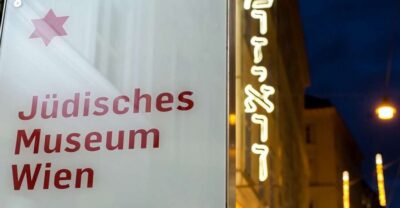 ★ 4.5Vienna: Jewish Museum Vienna and Museum Judenplatz TicketsFrom $17170 reviews
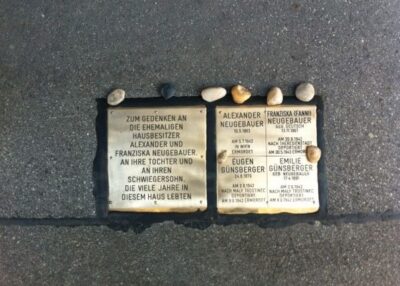 ★ 4.9Vienna: Jewish Life in Leopoldstadt 2-Hour Walking TourFrom $25109 reviews
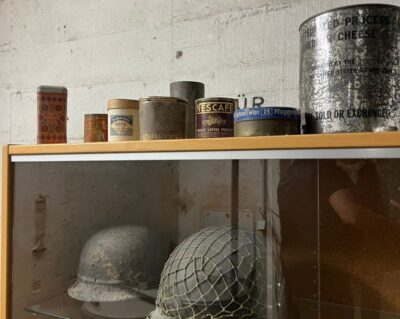 ★ 4.4Vienna: Underground WWII Bunker Ticket and Guided TourFrom $3579 reviews
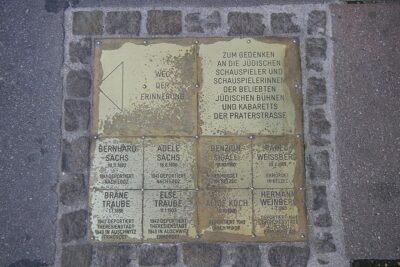 ★ 5.0Jewish Vienna Walking TourFrom $17936 reviews
This tour also sits in