
REVIEW · WWII & JEWISH HISTORY TOURS
Vienna: Historical Walking Tour – Hitler and the 1900s
Vienna can feel like a museum on foot. This tour adds a darker hinge to the story by following Adolf Hitler’s early years and then tying them to the art and politics of Vienna in the early 1900s. You’ll also get the practical benefit of a focused route, built around recognizable places like Karlsplatz and Museumsquartier, plus the kind of side-street stories that help the city click.
Two parts I especially like: the walk makes connections between the past and what you see today, and the guides are repeatedly praised for story power and good spoken English. You might find the subject matter heavy, so if you prefer strictly “beautiful buildings only,” this one takes a turn.
Key things you’ll notice on this tour
- Hitler’s early-footsteps route through central Vienna, framed in historical context
- Early 1900s culture shift, from Klimt to Wagner, alongside political change
- Stops like Karlsplatz and Museumsquartier that show how the city evolved
- Hidden spots and extra stories that go beyond the usual photo stops
- A guide-led experience in English, with strong mention of anecdote-style storytelling
- $22 for 2 hours of walking, local insight, and immediate booking confirmation
In This Review
- Why Hitler and the 1900s Works in Vienna
- Starting at the Yellow Prime Tours Umbrella
- What You Actually Walk Through in 2 Hours
- Hitler’s Early Years, Told in a Vienna Context
- Karlsplatz: A Strategic Stop for City Change
- Museumsquartier and the Art Shift from Klimt to Wagner
- Vienna’s Evolution: From Habsburg Empire to Modern Metropolis
- The Guide Factor: Joseph, Cristina, Ángeles, and Mia
- Price and Value: Is $22 Worth It?
- Who This Tour Is Best For
- What to Do Before and After the Walk
- Should You Book This Vienna Walking Tour?
- FAQ
- How long is the walking tour?
- What language is the guide?
- Where do we meet?
- Is the tour wheelchair accessible?
- What is included in the price?
- Are food, drinks, or museum entrance fees included?
Why Hitler and the 1900s Works in Vienna
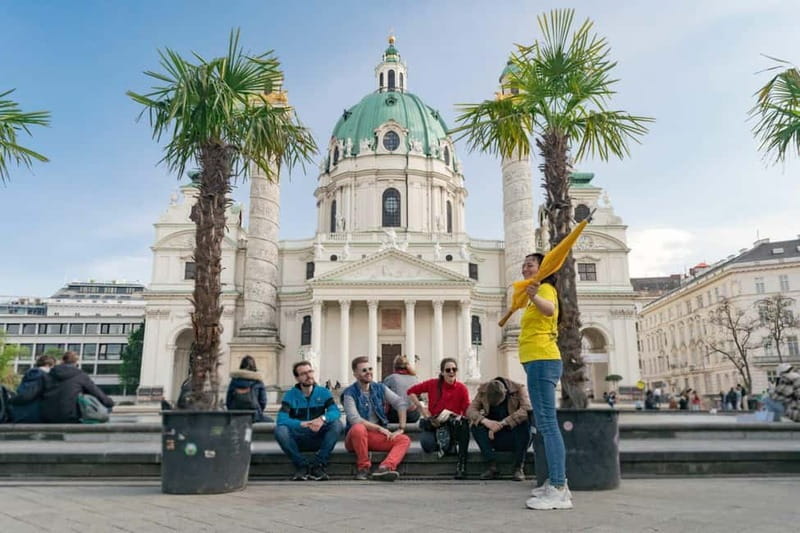
Vienna has a way of layering time. One block can hold imperial grandeur, then a turn of the corner shows a modern city built out of those old ideas. This tour leans into that, using Adolf Hitler’s early life as the controversial thread, then widening out to show how Vienna in the early 1900s was changing fast.
I like that the tour doesn’t treat history like a quiz. It’s more like a guided “how did we get here?” route. You follow places tied to Hitler’s early years and hear how his Vienna period helped shape what came later, then you pivot into the city’s artistic revolution and the political atmosphere around the same era. That pairing matters because Vienna’s cultural life and political mood were moving together, not in separate boxes.
One practical consideration: you are covering a lot of emotional territory in a short walk. Since it’s only 2 hours, you’ll want to mentally pace yourself. If you’re traveling with someone who gets uncomfortable with dark topics, agree on the goal ahead of time.
Related wartime and Jewish-heritage routes
- Vienna: World War II Historical Walking Tour
★ 4.8 · 1,772 reviews - Historical Hitler Walking Tour of Vienna
★ 5.0 · 887 reviews - Vienna: Day Trip to Mauthausen Concentration Camp Memorial
★ 4.6 · 303 reviews - Jewish Vienna: City Synagogue Guided Tour
★ 4.6 · 208 reviews
Starting at the Yellow Prime Tours Umbrella
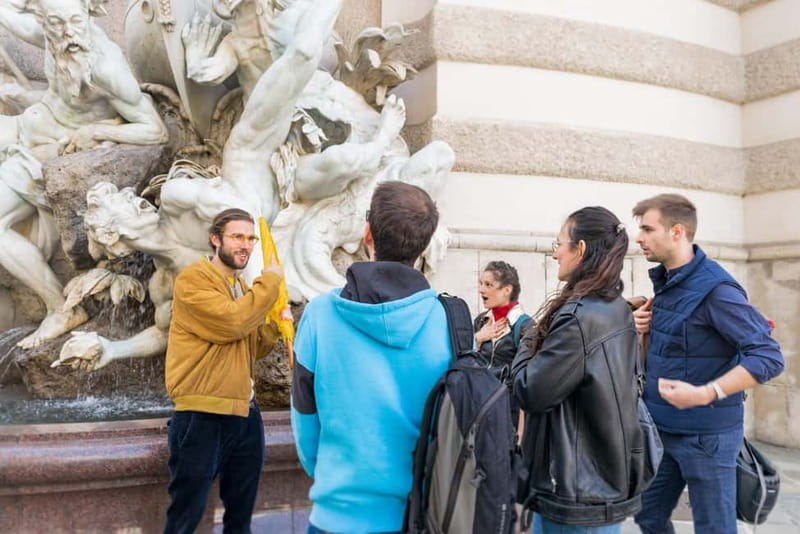
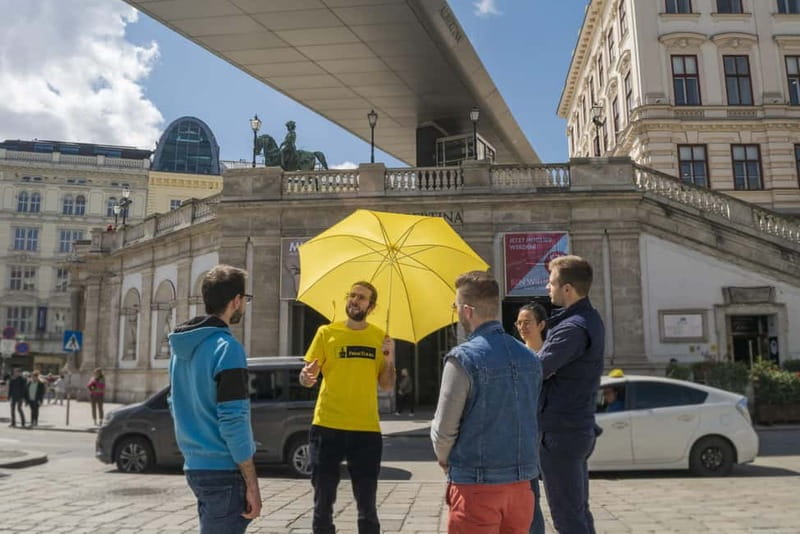
You’ll meet up at a very easy landmark: look out for the YELLOW PRIME TOURS UMBRELLA. That kind of clear meeting point makes a big difference in a city where meeting mistakes can turn into long, awkward hunts.
Because the tour ends back at the meeting point, you can plan the rest of your day without worrying about trains or a far-off drop. That’s helpful if you’ve got museum plans, a concert ticket, or just need dinner to be painless.
The tour is live guided in English, and it’s also listed as wheelchair accessible. It’s a walking tour, so you will still be on your feet, but the accessibility note is a green light if your group has mobility needs.
What You Actually Walk Through in 2 Hours
This is a 2-hour walking tour, so think of it as an efficient orientation plus a few deeper layers, not a full museum day. The highlights call out specific stops like Karlsplatz and Museumsquartier, and the rest is a guided circuit through other iconic spots that help explain Vienna’s shift from imperial roots into a modern metropolis.
The “hidden spots and stories beyond typical tourist routes” element is where a good walking guide earns their pay. Vienna’s center can look familiar fast, so the side-stories matter. You want the guide to point out details you would normally miss, like how architecture, street layout, and cultural institutions reflect the era you’re learning about.
Since it’s a walking tour, it also means you should bring sensible shoes and have water ready for the walk length. Food and drinks are not included, so if your day runs long, you’ll want a plan after the tour.
Hitler’s Early Years, Told in a Vienna Context
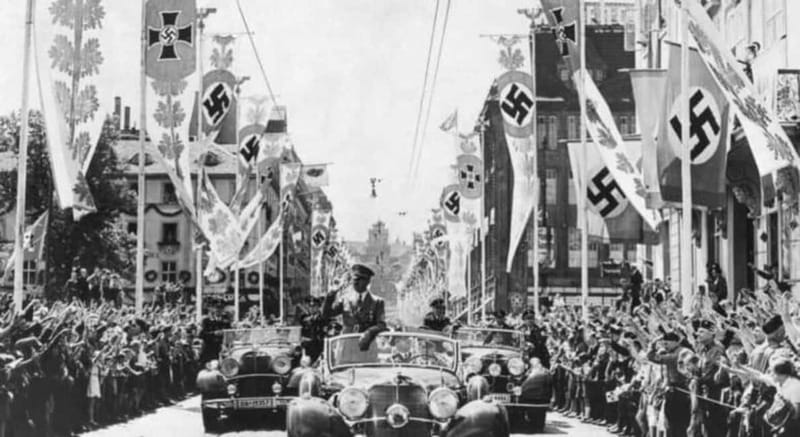
The headline attraction is the route through Hitler’s early footsteps. The tour focuses on his time in Vienna and explains how that period influenced his later life. I appreciate this approach because it keeps the story grounded in place. Vienna isn’t just “the backdrop” for a biography, it’s part of the explanation.
That said, this subject is controversial for a reason. A good guide should handle it with clear historical framing, not sensationalism. Since the tour is explicitly described as exploring Vienna’s controversial past, you should treat it as educational interpretation and not as entertainment.
If you’re the kind of traveler who likes to understand why people and ideas move the way they do, you’ll likely connect with this section. You’ll see how a city’s political and cultural atmosphere can shape a person, and you’ll get a better sense of why early 1900s Vienna mattered.
If you’re easily overwhelmed by heavy topics, consider this: the tour is short, and you can always take a break afterward. But you should not expect a lighthearted stroll.
Karlsplatz: A Strategic Stop for City Change
One of the named anchors is Karlsplatz. Even without a long lecture, a stop like this helps you “place” the tour in real geography. It’s exactly the kind of location that works well for a story-driven walk, because it sits in the middle of Vienna’s ongoing life while still pointing back to earlier eras.
On this tour, Karlsplatz is used as part of the larger theme: Vienna’s political and cultural changes in the early 1900s, and how those changes leave traces in the present city. I like that the guide ties the atmosphere to visible surroundings. Instead of just naming events, the tour aims to show you how the city itself reflects the era.
Possible drawback: because it’s a walking circuit, you won’t spend long enough at any single stop to “wander and soak it in” on your own. That’s not a flaw, it’s just the format. If you want to linger, plan to do a short follow-up walk after the tour.
Other Vienna write-ups filed under Austria
Museumsquartier and the Art Shift from Klimt to Wagner
Another named highlight is Museumsquartier. This is where the tour’s artistic side comes forward, particularly the mention of the city’s artistic revolution, from Klimt to Wagner.
That pairing is smart for travelers. Vienna is famous for classical music and visual art, but it can be easy to treat those as separate attractions. By linking the artistic revolution to the same period as political change, the guide helps you see a fuller picture of early 1900s Vienna.
Here’s what I’d watch for: how the guide connects culture to mood and momentum. In eras like this, art often doesn’t happen in a vacuum. New styles, new musical directions, and new public conversations tend to mirror the shifting society around them.
This segment is also where you may feel the tour’s strongest “learn and look at the city differently” payoff. If you enjoy understanding what you’re seeing, Museumsquartier is likely to feel like more than just a convenient landmark.
Vienna’s Evolution: From Habsburg Empire to Modern Metropolis
The tour explicitly aims to show how Vienna evolved from the Habsburg Empire into a modern city. That theme runs through the route. You’ll hear about the city’s architecture and historical events and how they translate into what’s standing in front of you now.
This is one of the highest-value parts for first-time visitors. Vienna can look timeless at a glance, but walking with a guide gives you the timeline in motion. You start noticing which elements look like they belong to an earlier worldview and which ones show the city adapting and reinventing itself.
One more practical note: because the tour is only 2 hours, the guide has to prioritize. That can mean you’ll get clear, memorable takeaways rather than a fully referenced lecture. For many travelers, that’s ideal. You leave with a better mental map, plus a handful of leads for independent exploring.
The Guide Factor: Joseph, Cristina, Ángeles, and Mia
The overall quality of this tour seems tied to the guide. The review highlights include names like Joseph and Cristina, plus Ángeles & Mia, all praised for strong speaking and engaging storytelling.
Joseph is described as having a lot of anecdotes and interesting stories. That matters on a historical walk because details are what turn “facts” into understanding. Cristina is specifically praised for being well spoken and knowledgeable, with the impression that you could listen longer than the time allows.
Ángeles and Mia also get credit, tied to learning a lot about Vienna’s history and making it super interesting. That lines up with what you want from a guide on a controversial-history topic: clarity, pacing, and enough context to keep the story from feeling jumpy.
Since guides can vary, the best move is to treat the meeting moment as your chance to get oriented. Arrive a few minutes early, watch for the yellow umbrella, and then lean in. A strong guide will do the heavy lifting.
Price and Value: Is $22 Worth It?
The price is $22 per person for a 2-hour guided walking tour. That works out to about $11 per hour. For a local guide, a structured route through major sites, and curated story content, that’s a fair value for a walking experience in central Vienna.
Here’s what you’re paying for, practically:
- A guided route through central places like Karlsplatz and Museumsquartier
- Expert local interpretation focused on a specific theme
- Insider tips and recommendations from the guide
- Reserved spot with your booking and instant booking confirmation
What you are not paying for:
- Food and drinks
- Entrance fees to museums or attractions after the tour
- Transportation to and from the meeting point
So if you’re trying to maximize your day, it helps to plan a post-tour meal nearby and only buy museum tickets if you still want to. The tour itself is self-contained walking and storytelling, which is usually easier on your schedule than trying to coordinate transit and timed entry.
Who This Tour Is Best For
This walk is a strong fit if you:
- Want a themed tour that connects politics and culture in early 1900s Vienna
- Like history that points to what you can still see today
- Enjoy guided context for big cities, especially if it’s your first time in Vienna
- Are comfortable with controversial historical subject matter presented in an educational format
It’s probably not ideal if you:
- Prefer tours that avoid difficult topics
- Want a lot of free time at each stop
- Are expecting museum-style depth with entrance fees included
If you’re the type who enjoys street-level stories, you’ll likely appreciate the mention of hidden spots and extra angles beyond typical tourist routes.
What to Do Before and After the Walk
Because food and drinks are not included, I suggest you handle your basics before you start. Grab water, wear shoes you can walk in comfortably, and plan for lunch or a snack after. You’ll also want to keep some energy for independent wandering afterward, because the tour ends back at the meeting point, making it easy to continue at your own pace.
Also, if you’re sensitive to heavy historical content, schedule something calming later the same day. A long meal, a relaxed café stop, or an easy stroll helps your brain close the loop.
If your schedule includes museums, note that entrance fees after the tour are not included. That means you can still do them, just budget separately.
Should You Book This Vienna Walking Tour?
Book it if you want a short, guided route that explains why Vienna’s early 1900s mattered, using Adolf Hitler’s early years as the controversial anchor and pairing it with the city’s artistic revolution from Klimt to Wagner. The format makes it practical, and the guide quality signs are strong, including praise for Joseph and Cristina’s storytelling style.
Skip it if you want a purely uplifting Vienna experience or if you’re not ready for history that includes troubling subject matter. This tour is not pretending those topics are easy.
If you’re on the fence, I’d frame it like this: for $22 and about 2 hours, you get a guided map of central Vienna plus interpretation you can carry into your independent sightseeing. That’s good value for travelers who like meaning, not just monuments.
FAQ
How long is the walking tour?
The tour lasts 2 hours.
What language is the guide?
The tour is guided live in English.
Where do we meet?
You meet at the Look out for the YELLOW PRIME TOURS UMBRELLA.
Is the tour wheelchair accessible?
Yes, it is listed as wheelchair accessible.
What is included in the price?
It includes an expert local guide, the walking tour through historic sites, instant booking confirmation, a reserved spot, insider tips and recommendations, and a tip for the guide is welcome on the spot.
Are food, drinks, or museum entrance fees included?
No. Food and drinks are not included, and entrance fees to museums or attractions after the tour are not included. Transportation to and from the meeting point is also not included.
Tours: Rest of the Austria File
- Vienna: Schönbrunn Palace & Gardens Skip-the-Line Tour
★ 4.7 · 7,739 reviews - Vienna Spanish Riding School Guided Tour
★ 4.7 · 6,765 reviews - Vienna: Skip-the-Line Sisi Museum, Hofburg and Gardens Tour
★ 4.8 · 5,918 reviews - Vienna: Skip-the-Line Schönbrunn Palace & Gardens Tour
★ 4.8 · 5,411 reviews
Tour Reviews: Rest of the Austria File
- Vienna: Vivaldi’s Four Seasons Concert in Karlskirche
★ 4.7 · 14,951 reviews - Vienna: Schönbrunn Palace & Gardens Skip-the-Line Tour
★ 4.7 · 7,739 reviews - Vienna: Light of Creation Votive Church Immersive Light Show
★ 4.8 · 6,779 reviews - Vienna Spanish Riding School Guided Tour
★ 4.7 · 6,765 reviews
Wartime and Jewish-Heritage Routes
- Vienna: World War II Historical Walking Tour
★ 4.8 · 1,772 reviews - Historical Hitler Walking Tour of Vienna
★ 5.0 · 887 reviews - Vienna: Day Trip to Mauthausen Concentration Camp Memorial
★ 4.6 · 303 reviews - Jewish Vienna: City Synagogue Guided Tour
★ 4.6 · 208 reviews
Newest Vienna write-ups on file
- Vienna: Private Walking Tour to The Hofburg & Graben Street★ 5.0 · 3 reviews
- Vienna: Private tour Mauthausen and Linz★ 4.1 · 3 reviews
- Vienna Private Full Day Tour – Tickets to Schönbrunn & Lunch★ 5.0 · 3 reviews
- Vienna: Johann Strauss 200th birthday anniversary exhibition★ 4.7 · 3 reviews
- Vienna: Full-Day Vienna Woods Wine Tasting Tour★ 5.0 · 3 reviews
- Vienna: Festive Season and New Year’s Eve Waltz Workshop★ 5.0 · 3 reviews
WWII & Jewish History Tours, compared.
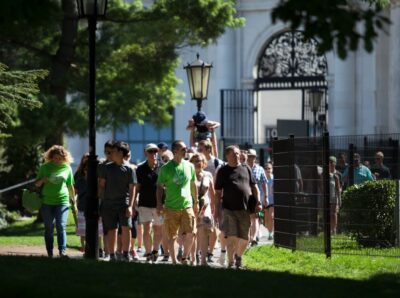 ★ 4.8Vienna: World War II Historical Walking TourFrom $311,772 reviews
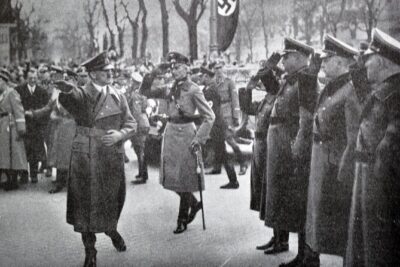 ★ 5.0Historical Hitler Walking Tour of ViennaFrom $32887 reviews
 ★ 4.6Vienna: Day Trip to Mauthausen Concentration Camp MemorialFrom $174303 reviews
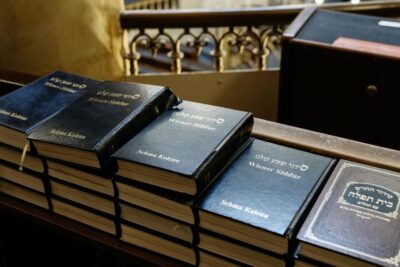 ★ 4.6Jewish Vienna: City Synagogue Guided TourFrom $23208 reviews
 ★ 4.5Vienna: Jewish Museum Vienna and Museum Judenplatz TicketsFrom $17170 reviews
 ★ 4.9Vienna: Jewish Life in Leopoldstadt 2-Hour Walking TourFrom $25109 reviews
 ★ 4.4Vienna: Underground WWII Bunker Ticket and Guided TourFrom $3579 reviews
 ★ 5.0Jewish Vienna Walking TourFrom $17936 reviews
This tour also sits in