
REVIEW · WALKING TOURS
Salzburg Oldtown: Sightseeing Walking Tour with Licensed Local Guide
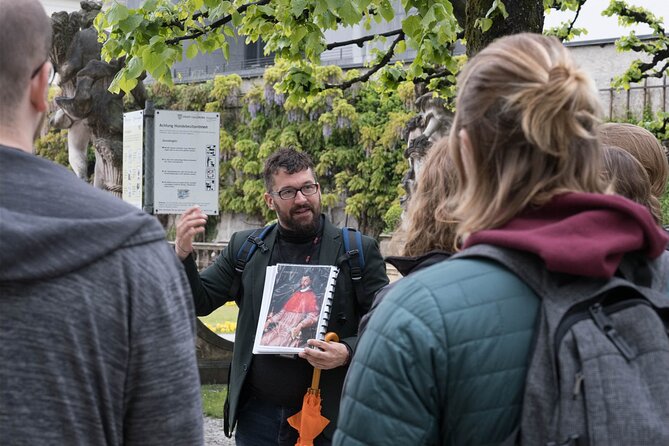
Salzburg can feel like a maze until someone points things out. This old town walk gives you the fast orientation you need, with a licensed local guide and an easy 90-minute route. I love that it is paced like a conversation, not a lecture.
If you want two quick wins, I also like the included printed Salzburg city map and the way the guide nudges you to come back later for what you cannot fully enjoy in just an hour and a half.
One possible drawback: the tour is short, so you will only see key exteriors and a couple of interiors. If you want long, quiet time inside churches or gardens, plan to extend on your own after the walk.
In This Review
- Key points worth knowing before you go
- Why This 90-Minute Old Town Walk Makes Salzburg Click
- Morning Logistics: Meeting at Spirit of Mozart and Ending at Mozartplatz
- Stop by Stop: Mozart, Gardens, Church Facades, and River Views
- Mozart Residence (Mozart Wohnhaus): The house behind the legend
- Schloss Mirabell and Mirabellgarten: A quick preview of a garden you should extend
- Getreidegasse: Salzburg’s signature street and the gateway to Mozart’s birthplace
- Universitatskirche: One of the interiors, if it is open
- Wilhelm-Furtwängler-Garten and Furtwänglerpark: From monastery grounds to university space
- Grosses Festspielhaus: Why Salzburg is a music capital
- Erzabtei Stift St. Peter: The oldest monastery area, viewed from where visitors are allowed
- Salzburg Cathedral facade: Save the interior for later
- Kapitelplatz and Kapitelschwemme: Hohensalzburg views and a classic local detail
- Makartsteg: Love locks, the river, and the city along the water
- Residenzplatz: The heart of the old town
- Mozartplatz: The cult of Mozart and the statue mystery
- What You Actually Take Away: A Map, a Plan, and Better Wandering
- Value for Money: Why $10.89 Feels Reasonable in Salzburg
- Who This Tour Suits Best (and Who Might Want Something Else)
- Should You Book This Salzburg Old Town Walking Tour?
Key points worth knowing before you go
- 90 minutes of old town orientation with a tight, logical route you can repeat later
- Licensed local guide storytelling that stays funny and practical, not just dates and facts
- Mix of Mozart landmarks and Salzburg city views, including classic postcard angles
- A couple of interiors where it makes sense, like getting into Universitatskirche if open
- You end at Mozartplatz, right by the cathedral area, so it is easy to keep exploring
- Small group size (max 25), which helps the pace stay comfortable
Other Salzburg write-ups filed under Austria
- Salzburg 2.5-Hour Walking Tour: Mozart, Old Town & More
★ 4.2 · 987 reviews - Salzburg: Old Town, Mozart, & Mirabell Gardens Walking Tour
★ 4.8 · 461 reviews - Salzburg Oldtown: Sightseeing Walking Tour with Licensed Local Guide
★ 5.0 · 392 reviews - Salzburg Old Town Walking Tour, Mozart, Mirabell Gardens
★ 4.5 · 201 reviews
Why This 90-Minute Old Town Walk Makes Salzburg Click
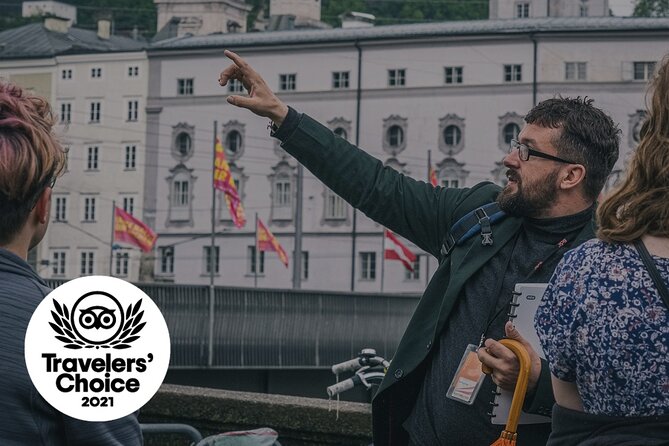
Salzburg Old Town is compact, but it is not simple. One turn you are by river views, the next you are staring at baroque facades, and then suddenly you are looking up at something that feels much bigger than you expected. This tour helps you connect the dots quickly.
What I like is the way the experience is built for real vacation timing. You get an express tour that fits around other plans, without making you feel rushed. And because the guide keeps the talk focused on what you are actually looking at, you finish with a mental map, not just photos.
The price also makes sense in context. At about $10.89 per person, you are paying for guided orientation plus a take-home city map and a postcard. That is a solid value for a first morning, especially if you are only in Salzburg for a day or two.
Morning Logistics: Meeting at Spirit of Mozart and Ending at Mozartplatz
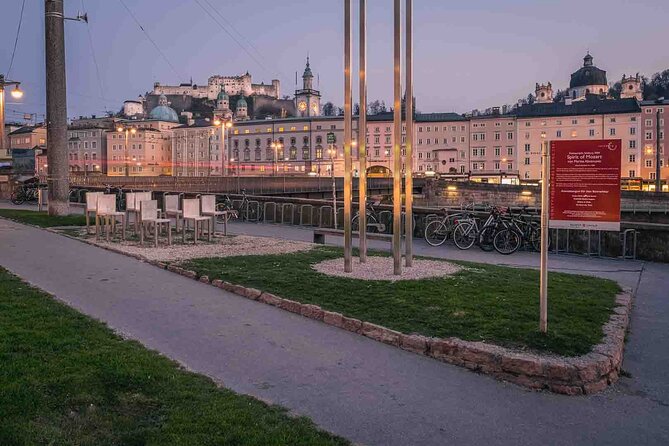
You start at Spirit of Mozart, Imbergstraße 33A, Salzburg. The tour begins at 10:00 am, and it is designed so you can get your bearings early.
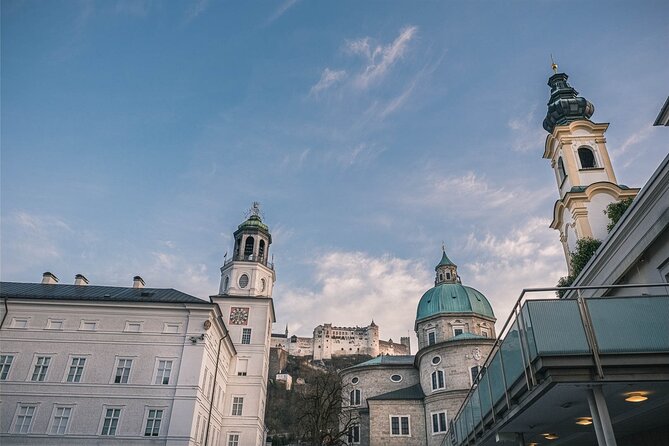
The route ends at Mozartplatz, the square near the Salzburg Cathedral and Residenzplatz. That matters because it keeps you in the heart of the old town. After the walk, you can keep going without hunting for directions or backtracking.
A few practical notes that help the day go smoothly:
- The tour is in English.
- It is a walking tour, so wear shoes you can move in for about 1 hour 30 minutes.
- It uses a mobile ticket.
- The group is capped at 25 people, which usually makes it easier to keep the pace under control.
Also worth knowing from the tour setup: it is near public transportation, and service animals are allowed.
Stop by Stop: Mozart, Gardens, Church Facades, and River Views
This is not a checklist where you sprint from one landmark to the next. The stops are spaced so you can actually look, listen, and understand what you are seeing. Here is what to expect, in the order you will encounter it.
Mozart Residence (Mozart Wohnhaus): The house behind the legend
Your first stop is the Mozart Residence, the home where Mozart lived starting at age seventeen. You will view it from across the square, so you get the setting and location rather than a museum-style experience.
This stop is more than a famous address. The guide also ties Salzburg to its long-standing cultural identity. You will hear why the city is often linked to the idea of Rome of the North. Even if you have heard Mozart facts before, seeing where his life unfolded in this particular street grid helps the name feel real.
Other Salzburg write-ups filed under Austria


Schloss Mirabell and Mirabellgarten: A quick preview of a garden you should extend
Next you glance at Schloss Mirabell and Mirabellgarden. The idea here is a taste, not a full garden tour. You will learn what the garden meant in the past and what it is used for today.
The best move after this stop: plan to return on your own later. Mirabell is the kind of place where time disappears once you start wandering paths and looking at details at your own speed. The tour sets you up to enjoy it more on the second visit because you will recognize what matters.
Getreidegasse: Salzburg’s signature street and the gateway to Mozart’s birthplace
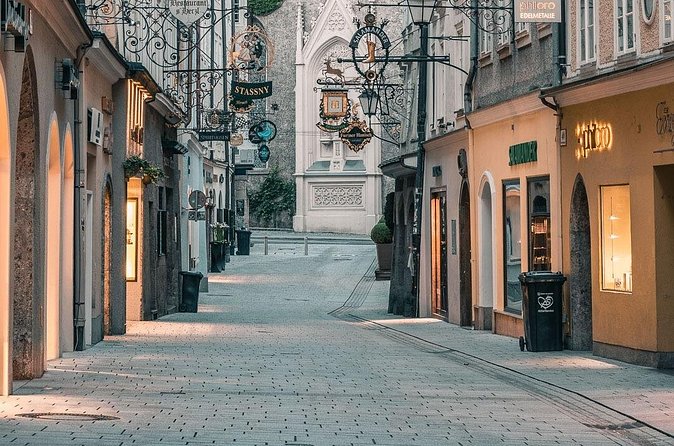
After crossing the river, you arrive at Getreidegasse, Salzburg’s most famous street. You walk along it toward Mozart’s birthplace.
This is the section where the guide’s orientation really pays off. You get the feel of the old town street patterns, the rhythm of shop fronts, and the way the city keeps Mozart close even when you are just strolling. If you are the kind of person who likes to notice little things (signs, building styles, street corners), this part will click.
Universitatskirche: One of the interiors, if it is open
The Universitatskirche is the last historic building in Salzburg that still feels like a living landmark. You do not just stand outside. The plan is to enter as a group if it is not closed.
This is a good example of why you want a guided walk early. Some places are only slightly more interesting than a photo until you step inside and see how the building shapes sound, light, and atmosphere. Since entry depends on closure, go in with flexibility, not a fixed expectation.
Wilhelm-Furtwängler-Garten and Furtwänglerpark: From monastery grounds to university space
You then reach Wilhelm-Furtwängler-Garten, part of Furtwänglerpark. Historically, this was a monastery garden. Now it is tied to Salzburg University.
The guide uses this stop to connect old spiritual spaces with modern city life. You also get talking points about the university area, modern art, and Salzburg’s canal system. Even if you never become a canal person, understanding where water and buildings interact helps you read the city better as you keep walking.
Grosses Festspielhaus: Why Salzburg is a music capital
The next stop is the Grosses Festspielhaus, the main concert hall tied to the Salzburg Festival. During summer, this is where many concerts and the opera take place for about six weeks.
This is a quick stop, but it matters because it gives context. Salzburg is famous for music for a reason, and the festival is a real engine that shapes what you see in the city. Even when you are not attending a performance, knowing where the festival’s big energy lives gives you a more complete picture of the city.
Erzabtei Stift St. Peter: The oldest monastery area, viewed from where visitors are allowed
St. Peter’s is the place where Salzburg was founded in 696, and it is the oldest monastery in the German-speaking region. You do not enter the church or the cemetery, because those are still active and guided tours are not allowed in the way this walking tour works.
Instead, you visit the monastery yard and hear what the guide knows about the site. This is still a meaningful stop. The yard and grounds give you the scale and presence of the complex, and you learn how to appreciate it without feeling like you were denied access. If you want more, you will know exactly what you are looking for on a later visit.
Salzburg Cathedral facade: Save the interior for later
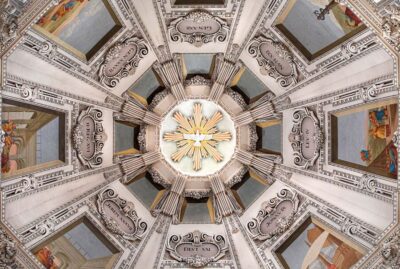
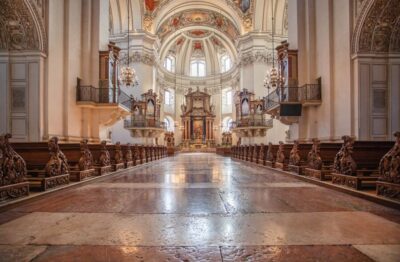
You finish this section at Salzburg Cathedral, the city’s most important church. You will not go inside on this tour, but you do admire the facade and learn about its history.
This approach is smart for a 90-minute walk. Standing outside lets you take in the architecture without the time cost of waiting, ticketing, and closing hours. Afterward, you can decide if you want the inside experience. The tour sets you up so you know what you are looking at when you return.
Kapitelplatz and Kapitelschwemme: Hohensalzburg views and a classic local detail
From Kapitelplatz square you get views of Hohensalzburg fortress, plus modern art nearby and the oldest bakery of Salzburg.
It is a neat combination because it mixes big-view Salzburg with everyday city life. Hohensalzburg is the dramatic backdrop you will keep noticing. The bakery detail is a reminder that this is not just a stage set for visitors. It is a living city.
Makartsteg: Love locks, the river, and the city along the water
Then you pass Makartsteg, the love lock bridge. The guide talks about the love locks, the bridge itself, the river, and the buildings along the water.
This stop is a breather. It gives you a pause to look, and it gives your brain something visual to anchor the previous history-heavy stops. River views also help you understand why Salzburg’s old town feels so photogenic. Water shapes the view corridor, and the buildings face the river for a reason.
Residenzplatz: The heart of the old town
Residenzplatz is the main square and the heart of the old town. The square is named because of the archbishop’s residence that used to be there.
This stop is key because it is where you feel the scale of the old town. The guide uses it to connect Salzburg’s power center to the space you are standing in now. It is the kind of place where you can stop, look around, and suddenly understand how the streets funnel people back here.
Mozartplatz: The cult of Mozart and the statue mystery
Finally you reach Mozartplatz. Here you will look at the Mozart statue and hear the story of how the Mozart cult began in the 19th century, along with the mystery surrounding Mozart that the guide explains.
This ending works well because it is iconic and also practical. From Mozartplatz, you are right where many first-time Salzburg explorers want to be: near major sights and the tourist information area.
What You Actually Take Away: A Map, a Plan, and Better Wandering
The best souvenirs from a walking tour are not always objects. For this one, you get a printed Salzburg city map and a postcard. But the real takeaway is the way you learn to move through the city with confidence.
By the time you finish, you should have:
- A clearer sense of where Mozart locations sit in relation to the cathedral area
- A short list of places you will likely want to revisit, especially Mirabell Garden and the cathedral interior
- Better instincts for spotting major viewpoints, like the fortress view from Kapitelplatz
The guide is also part of the value. Several guides associated with this tour have a talent for making the information balanced and funny, with stories that feel like they come from a real love of Salzburg. That kind of tone matters. You walk longer when you are entertained, and you remember more when the facts come with a point and a human voice.
Value for Money: Why $10.89 Feels Reasonable in Salzburg
It is tempting to think a cheap price means a basic tour. Here, the experience feels structured rather than scraped together. You pay a low amount for a licensed guide, guided pacing across the main old town highlights, and included printed materials.
At roughly 1.5 hours, you are not buying a half-day commitment. You are buying orientation, context, and a route you can build on. That is what makes the value feel right. If you later spend your time better, you effectively get more out of everything else you book.
Also, the tour caps at 25 people, which helps keep the experience readable and comfortable. In a city like Salzburg, where streets can get crowded near major sights, group size can change the quality fast.
Who This Tour Suits Best (and Who Might Want Something Else)
This is a great fit if:
- You are visiting Salzburg for the first time and want quick orientation
- You like stories that connect landmarks to real life
- You want to see the biggest hits without committing to a long day
- You prefer guided pacing so you do not spend your morning looking things up
You might want a different plan if:
- You want lots of time inside multiple churches, museums, or gardens
- You travel at a slow pace and hate being guided from stop to stop
- You want deep architectural detail at each site for a long stretch
That said, the tour is designed to point you toward the places where deeper solo exploring makes sense, like Mirabell later.
Should You Book This Salzburg Old Town Walking Tour?

If you want to understand Salzburg quickly, I would book it. It is a strong first-morning move because it ends in a prime location, it gives you a printed map to keep using, and it helps you choose what to do next with better eyes.
Book this if you care about Mozart sites, cathedral facade vibes, river views, and getting your bearings fast. If you are the kind of traveler who hates wasting time, this tour helps you avoid the common mistake of wandering aimlessly for hours before you finally feel oriented.
If you are unsure, one simple test: ask yourself whether you want a guided structure for about 90 minutes. If yes, this is an easy decision.
Walking Tours: Rest of the Austria File
- Salzburg 2.5-Hour Walking Tour: Mozart, Old Town & More
★ 4.2 · 987 reviews - Salzburg: Old Town, Mozart, & Mirabell Gardens Walking Tour
★ 4.8 · 461 reviews - Salzburg Old Town Walking Tour, Mozart, Mirabell Gardens
★ 4.5 · 201 reviews - Salzburg Old Town Highlights Private Walking Tour
★ 4.5 · 78 reviews
Tours: Rest of the Austria File
- The Original Sound of Music Tour in Salzburg
★ 4.5 · 6,129 reviews - Salzburg: Original Sound of Music Tour
★ 4.8 · 5,059 reviews - From Salzburg: Half-Day Tour to Hallstatt
★ 4.6 · 3,596 reviews - Salzburg: Amphibious Splash Tour on Land & on Water
★ 4.7 · 1,097 reviews
Tour Reviews: Rest of the Austria File
- The Original Sound of Music Tour in Salzburg
★ 4.5 · 6,129 reviews - Salzburg: Original Sound of Music Tour
★ 4.8 · 5,059 reviews - From Salzburg: Half-Day Tour to Hallstatt
★ 4.6 · 3,596 reviews - Salzburg: Mozart Concert at Mirabell Palace
★ 4.8 · 3,498 reviews
Newest Salzburg write-ups on file
- Zell am See Alpine Village Private Day Trip from Salzburg★ 5.0 · 3 reviews
- Private Austrian Food Tasting Tour in Salzburg’s Old Town★ 4.5 · 3 reviews
- Salzburg to Vienna, Private Transfer, 2h of Sightseeing, Local Driver, English★ 5.0 · 3 reviews
- Private Customized Salzburg City and Country Tour★ 5.0 · 3 reviews
- Private Transfer from Salzburg to Vienna: Door-to-door, English-speaking driver★ 4.5 · 3 reviews
- Private Tour: Discover Salzburg and the Stunning Lake District★ 5.0 · 3 reviews
Walking Tours, compared.
 ★ 4.7Vienna: Guided Walking Tour of City Center HighlightsFrom $254,989 reviews
 ★ 4.8Vienna: Vienna Central Cemetery Guided Walking TourFrom $3353,307 reviews
 ★ 4.9Vienna: Guided Walking Tour of City Highlights & Hidden GemsFrom $272,180 reviews
 ★ 4.7Vienna: Viennese Underworld Guided Walking TourFrom $371,865 reviews
 ★ 4.8Vienna: World War II Historical Walking TourFrom $311,772 reviews
 ★ 5.0Vienna Historic Center Small Group Walking TourFrom $721,746 reviews
 ★ 4.6Vienna: Private Walking Tour with a Local GuideFrom $551,420 reviews
 ★ 4.9Vienna: 1.5-Hour Underground Walking TourFrom $321,146 reviews
This tour also sits in