
REVIEW · VIENNA OLD TOWN DISCOVERY WALKS
Vienna Historic Center Small Group Walking Tour
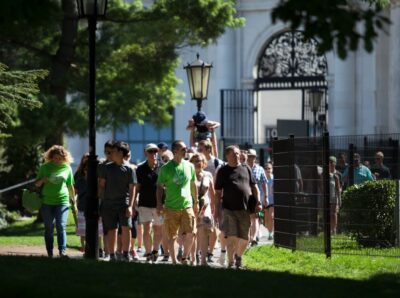
Vienna is at its best when you can walk it, and this compact small-group route does exactly that. I especially like the small group size (15 max) and the audio devices, which make it easy to hear every stop even in busy squares. One thing to plan for, though, is that it is mostly outside and you do not go inside museums.
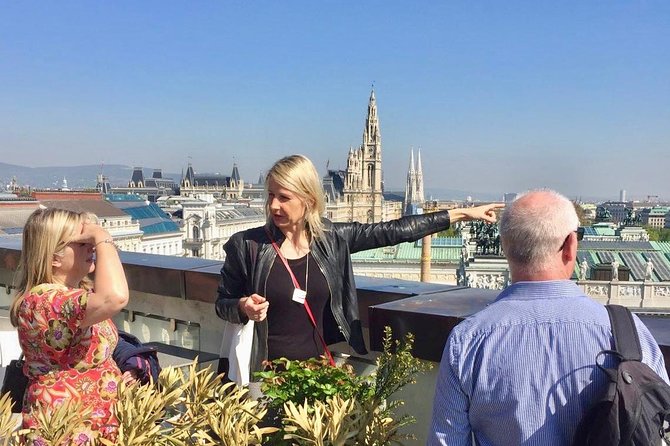
This is a strong fit if you are short on time and want the big-name buildings and the stories behind them, from Ringstrasse architecture to the Hofburg’s Habsburg power center. Guides such as Dace, Giselle, Gabriela, and Beatrice are repeatedly praised for clear, funny explanations and for keeping the group moving without losing the plot.
In This Review
- Quick hit points before you book
- A 2.5-hour Vienna historic center walk that actually fits a first day
- What $72.56 gets you, and whether it feels worth it
- The pacing, walking load, and how to dress for it
- Start at Maria-Theresien-Platz, then launch into Ringstrasse
- Ring Road landmarks: Parliament, Town Hall, and the grand civic drama
- Kunsthistorisches, Burgtor, and the Hofburg transition
- Hofburg Palace: imperial courts, a dark balcony story, and modern Austria
- Heroes Square, the National Library area, and Lipizzan links
- St. Michael’s Church, Federal Chancellor area, and Vienna’s government look
- Coffee house talk, Burgtheater, and the arts side of the city
- Volksgarten: Theseus Temple replica and why Johann Strauss mattered
- Beethoven’s Pasqualatihaus and the “Vienna between monuments” feeling
- Palais Ferstel, Universität Wien, and famous minds in motion
- Freyung, Graben and Kohlmarkt, and the final approach to Stephansplatz
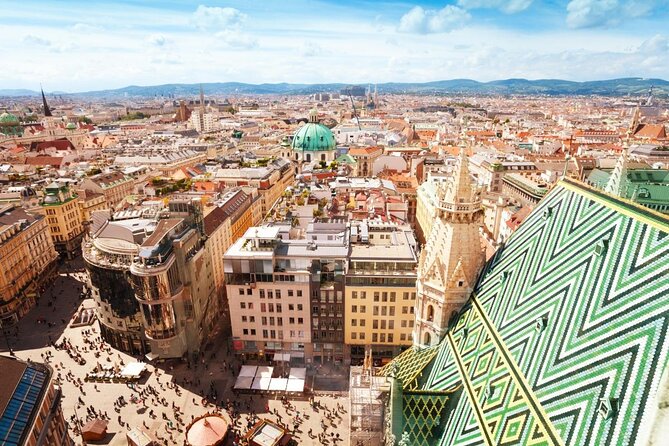
- St. Stephen’s Cathedral: finish strong, then keep exploring
- What you won’t do (and how that should shape your planning)
- Best for who, and when not to book
- Should you book it?
- FAQ
- How long is the Vienna Historic Center Small Group Walking Tour?
- What language is the tour offered in?
- How big is the group?
- Does the tour include admission to museums?
- What major sights do you see on the walk?
- Where do you meet and where does the tour end?
- Does it include audio devices?
- What should I wear or prepare for?
- Is the tour affected by weather?
- What if I need to cancel?
Quick hit points before you book
- 15-person cap with audio devices helps you hear the guide in crowds and at intersections.
- Ringstrasse to Hofburg to Stephansplatz gives you a straight line through Vienna’s political, imperial, and commercial core.
- No museum entries, so you get sights fast, then decide later if you want ticketed time at any museum.
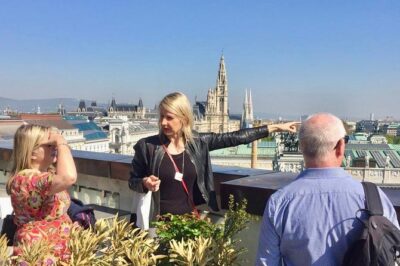
- A guide who answers questions and uses visual aids (often via an iPad) makes the history feel less like a lecture.
- Ends at St. Stephen’s Cathedral, so you can keep exploring on your own immediately.
Other Vienna old-town routes on file
- Vienna: Guided Walking Tour of City Center Highlights
★ 4.7 · 4,989 reviews - Vienna Historic Center Small Group Walking Tour
★ 5.0 · 1,746 reviews - Skip-the-Line Schonbrunn Palace Guided Tour and Vienna Historical City Tour
★ 3.5 · 940 reviews - Exclusive Vienna Old Town Highlights Walking Tour (max. 6 persons)
★ 5.0 · 252 reviews
A 2.5-hour Vienna historic center walk that actually fits a first day
This tour is built for that classic Vienna problem: you arrive eager to see everything, then realize the city is huge, spread out, and expensive. The payoff here is focus. In about 2.5 hours, you get a practical overview of the historic center without getting bogged down in long museum lines.
I like that it is a “see the landmarks, learn the why” walk. You’re not just glancing at façades, you’re getting the context for why these places matter, like how Ringstrasse replaced older fortifications in the 1800s and became Vienna’s grand showcase of power and taste.
What $72.56 gets you, and whether it feels worth it
$72.56 is not cheap for a walking tour, so you want to make sure you are buying value, not just a route. In this case, the value comes from three places.
First, the audio devices are a real quality-of-life upgrade. Vienna’s crowds can drown out a guide, especially near St. Stephen’s Cathedral or along pedestrian streets, and the reviews back up that the system helps everyone keep up.
Second, you’re paying for a guide who can connect buildings, rulers, and cultural habits into a story you can remember. Guides like Dace and Beatrice are frequently mentioned for being both funny and informative, and for answering questions on the spot.
Third, you get personal recommendations for food and cafés. Vienna is pricey, so having a trusted starting point can easily save you money and time later.
The pacing, walking load, and how to dress for it
This tour runs about 2 hours 30 minutes, with a “comfortable but brisk” rhythm. You’ll be on your feet for a lot of ground, and one review cited roughly 14,000 steps over the walk, so plan accordingly.
Wear real walking shoes. Even if you’re capable, Vienna’s cobblestones and slick winter days can turn “a short walk” into an ankle workout.
Also, do not treat this like a sightseeing stroll where you can linger at each corner for long photos. The route is tightly planned, so you’ll see plenty, but you’ll also keep moving.
Start at Maria-Theresien-Platz, then launch into Ringstrasse
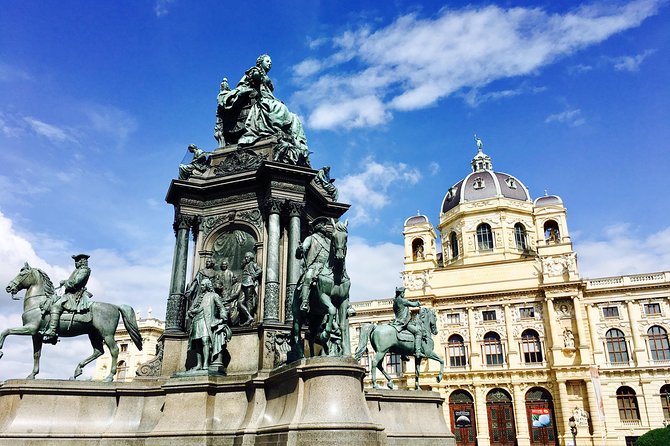
The meeting point is Maria-Theresien-Platz, a big square that sits between the Ringstrasse and the Museumsquartier area. Standing here, you get that immediate Vienna vibe: twin museum buildings facing each other, plus a major statue of Empress Maria Theresa anchoring the scene.
From there, the walk nudges you toward the Maria Theresia Denkmal, one of the standout monuments on Ringstrasse, and you’ll also hear how Mozart and other figures get woven into the symbolism of the city.
Then you hit the Ringstrasse proper, Vienna’s famous circular boulevard that replaced the old city fortifications in the second half of the 19th century. This is UNESCO-designated, and the architecture lesson is the point. You’ll pass or see buildings that mix Classical, Gothic, Renaissance, and Baroque elements, so it feels like an architectural highlight reel.
Other Vienna write-ups filed under Austria
Ring Road landmarks: Parliament, Town Hall, and the grand civic drama
As you move along Ringstrasse, you’ll see some of Vienna’s biggest political signals. The route specifically passes the neo-Gothic Town Hall and the Austrian Parliament Building, both of which help explain why Vienna treats governance like theater.
This is one of the reasons I like this tour for first-timers. If you only visit churches and palaces, Vienna can feel like a museum. Ringstrasse reminds you it is also a living capital, with civic power you can read on the street.
Kunsthistorisches, Burgtor, and the Hofburg transition
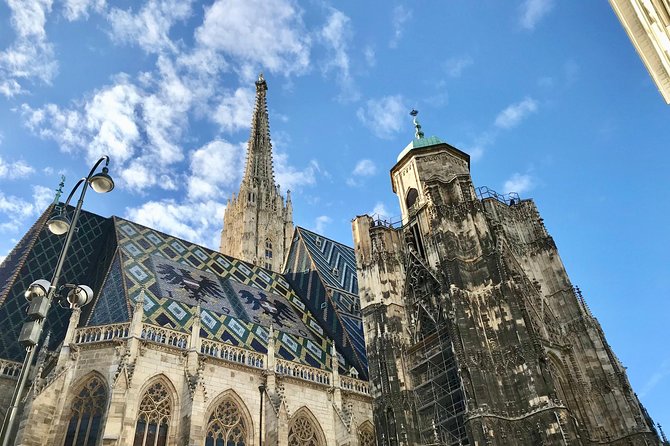
One quick but meaningful moment comes near Kunsthistorisches Museum Vienna. Even though the tour does not go inside museums, seeing the scale of the building in person helps you understand why Vienna’s museum culture is such a big deal.
Next comes Burgtor, a neoclassical gate built after the Napoleonic wars. It works like a “threshold moment” in the walk. After seeing Ringstrasse’s parade of grand facades, you feel like you’ve arrived at the imperial zone.
Then you step into the Hofburg orbit, and this is where the tour shifts from architecture to power stories.
Hofburg Palace: imperial courts, a dark balcony story, and modern Austria
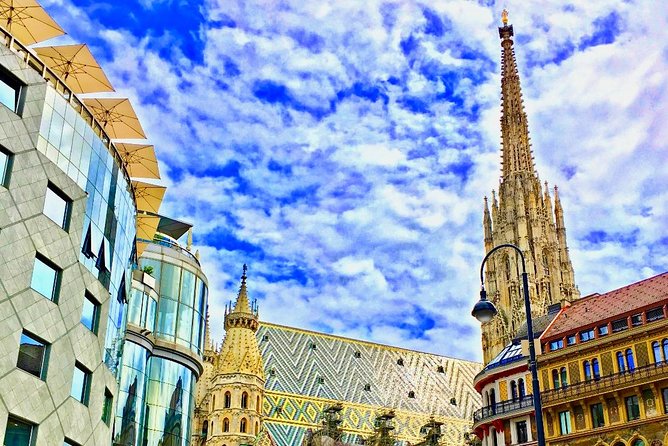
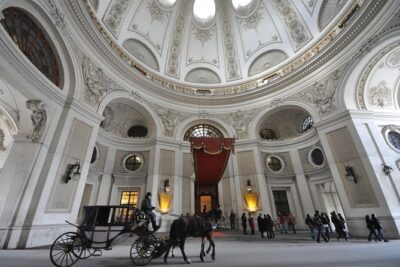
The Hofburg area is where you’ll spend the most interpretive time. The route covers the palace complex, including the New Castle and its role as a seat of authority for the Habsburgs. The guide explains the palace’s development and the way courtyards and façades connect to centuries of court life.
A specific detail you’ll hear is that from the balcony of the Neu Castle, Adolf Hitler proclaimed the Anschluss of Austria into the Third Reich. That is heavy material, but it is historically important, and this tour uses it to show how imperial spaces were repurposed in the 20th century.
This is also one of those “you can’t get this alone” segments. On your own, you can wander courtyards and take photos, but you might miss the thread of how the site functioned as Austria’s center of power, then into modern national identity.
Heroes Square, the National Library area, and Lipizzan links
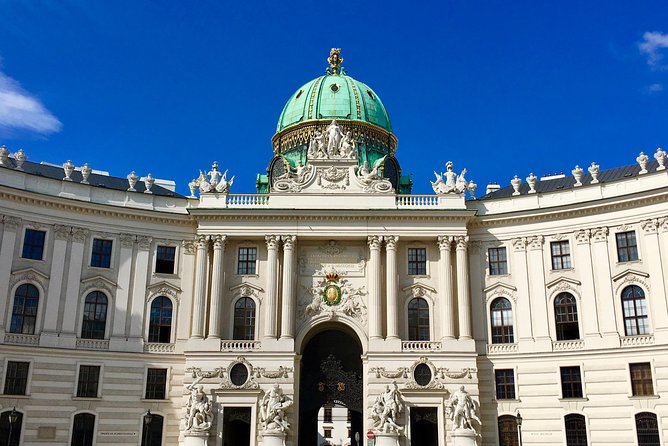
From the Hofburg zone, you’ll reach Heldenplatz (Heroes Square), an open green space tied to the palace after old bastions were demolished during the Napoleonic Wars. It’s a wide, airy counterpoint to the dense palace architecture.
The route also references nearby cultural landmarks, including the Austrian National Library area and the Baroque Winter Riding School at the Hofburg, famous for the Lipizzan stallions training and performing. Even without going inside, seeing where those institutions live makes them feel real, not just postcard facts.
St. Michael’s Church, Federal Chancellor area, and Vienna’s government look
The walk continues to St. Michael’s Church, with origins dating back to around 1220. This stop is short, but it gives you a shift back into atmosphere, because churches in Vienna often feel quieter and more textured than the grand boulevard stops.
From there, the route passes key government surroundings, including the Office of Federal Chancellor of Austria and then moves toward Rathaus (City Hall). Rathaus is a standout neo-Gothic structure, and it’s the kind of building where knowing the context makes the stonework feel less decorative and more purposeful.
Coffee house talk, Burgtheater, and the arts side of the city
As the tour heads deeper into the historic core, you’ll hear about Vienna’s café culture in a way that feels practical, not just romantic. One highlight mentioned is a stop meant for exploring the sort of café conversations Vienna is famous for, with references to writers, composers, architects, psychoanalysts, and revolutionaries meeting over coffee and cake.
Next you’ll see Burgtheater, described as one of the best theaters in the world. Again, the tour does not require museum-style ticketing, so you get the sense of Vienna as an arts capital without extra logistics.
If you care about culture, this part helps you connect the dots. Vienna’s music and theater aren’t side quests, they are part of the city’s civic identity.
Volksgarten: Theseus Temple replica and why Johann Strauss mattered
The route includes Volksgarten, a park stop that works as a breather from the stone-heavy core. In the center stands the Theseus Temple, described as a small replica of Hephaisteion from Athens.
The guide also ties the stop to café culture again, including mention of the Cortisches coffee house, where composer Johann Strauss used to play waltzes. Even if you never sit down for a long coffee during the walk, the context makes the place feel like more than green space.
Beethoven’s Pasqualatihaus and the “Vienna between monuments” feeling
One of the more charming stops on the route is Beethoven Pasqualatihaus, a former residence of Ludwig van Beethoven. It’s set in a more exposed position on the ramp of former town fortifications, and the guide uses this to bring the city’s people back into the picture.
This matters because Vienna can turn into a blur of buildings if you only look outward. A stop like Beethoven’s house helps you remember the city’s creative engine was built by individuals, not just rulers.
Palais Ferstel, Universität Wien, and famous minds in motion
You’ll also pass Palais Ferstel, historically linked to the Austro-Hungarian National Bank and the Stock Exchange. This is a reminder that Vienna’s greatness was not only imperial. It also had commerce and finance shaping daily life.
Then comes Universität Wien, where the guide connects Vienna’s academic legacy to global science. You’ll hear stories about Sigmund Freud and Lise Meitner, including Meitner’s role in changing modern science.
The practical value here is that it tells you where to look when you return on your own. If you later pick a museum or lecture, you’ll have a mental map of what Vienna was producing, not just what it was building.
Freyung, Graben and Kohlmarkt, and the final approach to Stephansplatz
Toward the end, you shift into smaller squares and then into shopping streets. Freyung is described as one of the oldest squares in the city center, known for its intimate feel.
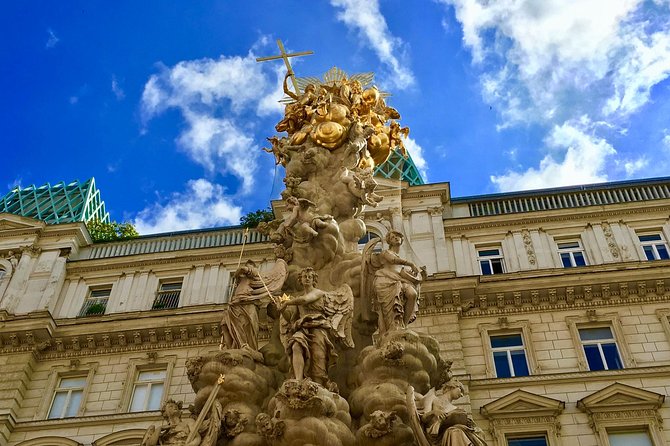
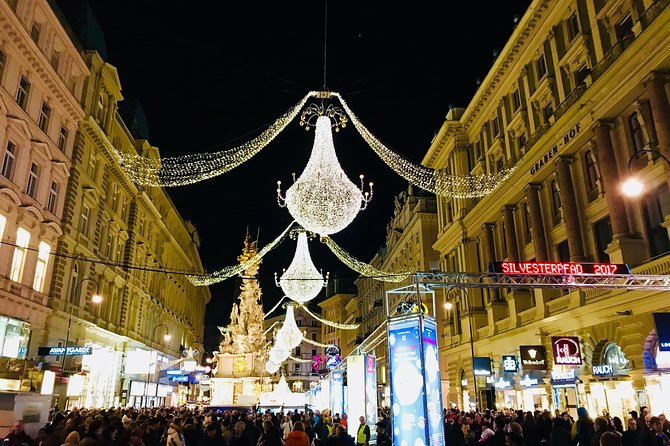
Next is Graben and Kohlmarkt, described as Vienna’s most elegant pedestrian street area. This is the part where you’ll feel the city’s energy increase, and it’s a good moment to remember that this walk is both history and everyday life.
The final square is Stephansplatz, described as the heart and soul of Vienna and where St. Stephen’s Cathedral dominates the view.
St. Stephen’s Cathedral: finish strong, then keep exploring
The tour ends at St. Stephen’s Cathedral, Vienna’s most famous landmark. The experience is designed so you finish right where you would want to be if you want to keep sightseeing on your own.
Here’s how I recommend using the ending: stay flexible. If you’re feeling energetic, stick around for more photos, side streets, and quick food stops. If you’re cooked, at least you have a central starting point that is easy to navigate from.
The biggest benefit of ending here is simple. You are not walking away from the city’s “main character.” You are stepping into the next chapter.
What you won’t do (and how that should shape your planning)
This is not a museum tour. The tour specifically says it does not visit the inside of museums. You may see some churches, and depending on weekday, you might also see select indoor spots such as palaces, the university, or a café.
So if you are hoping for major-ticket interiors like cathedral access or palace museum rooms, treat this as your overview and orientation tour. Then plan separate time for the attractions that actually require entries and tickets.
The upside is you save energy and money on parts that often eat half a day. The downside is you will not get the full inside experience at major sites.
Best for who, and when not to book
This tour is a great match for:
- First-time visitors who want high-impact landmarks without a confusing map day.
- Time-pressed travelers who still want the stories and cultural context.
- People who appreciate good guiding with humor and lots of Q&A.
I would think twice if:
- You need a low-walking plan or have walking disorders. The tour is not recommended for walking disorders.
- You hate brisk pacing, because the route is designed to cover a lot in a short time.
- You expect museum entry as part of the base experience.
Should you book it?
If you want a fast, high-clarity introduction to Vienna’s center, I think this is an easy yes. You’re paying for a tight route, strong guiding, and audio support, plus a finish at St. Stephen’s Cathedral that makes your next steps simple.
Book it especially if it is your first day or your only day in town for “big Vienna” sights. Pass on it if your top goal is museum interiors, since this walk keeps things mostly outside and avoids museum ticketing.
FAQ
How long is the Vienna Historic Center Small Group Walking Tour?
It runs about 2 hours 30 minutes.
What language is the tour offered in?
The tour is offered in English.
How big is the group?
The tour is capped at a maximum of 15 travelers.
Does the tour include admission to museums?
No. The tour does not visit the inside of any museums.
What major sights do you see on the walk?
You’ll see highlights such as St. Stephen’s Cathedral, Hofburg Palace, and stops around Ringstrasse, including the neo-Gothic Town Hall and the Austrian Parliament Building.
Where do you meet and where does the tour end?
The tour starts at Maria-Theresien-Platz, Vienna, and ends at Stephansplatz, 1010 Vienna.
Does it include audio devices?
Yes. The tour uses audio devices so everyone in the group can hear the guide.
What should I wear or prepare for?
You should have a moderate physical fitness level, and comfortable walking shoes, since it is a walking tour with a planned route.
Is the tour affected by weather?
Yes. The tour requires good weather, and if it is canceled due to poor weather, you’ll be offered a different date or a full refund.
What if I need to cancel?
Free cancellation is available, and you can cancel up to 24 hours in advance for a full refund. If you cancel less than 24 hours before the start time, the amount paid will not be refunded.
Tours: Rest of the Austria File
- Vienna: Schönbrunn Palace & Gardens Skip-the-Line Tour
★ 4.7 · 7,739 reviews - Vienna Spanish Riding School Guided Tour
★ 4.7 · 6,765 reviews - Vienna: Skip-the-Line Sisi Museum, Hofburg and Gardens Tour
★ 4.8 · 5,918 reviews - Vienna: Skip-the-Line Schönbrunn Palace & Gardens Tour
★ 4.8 · 5,411 reviews
Tour Reviews: Rest of the Austria File
- Vienna: Vivaldi’s Four Seasons Concert in Karlskirche
★ 4.7 · 14,951 reviews - Vienna: Schönbrunn Palace & Gardens Skip-the-Line Tour
★ 4.7 · 7,739 reviews - Vienna: Light of Creation Votive Church Immersive Light Show
★ 4.8 · 6,779 reviews - Vienna Spanish Riding School Guided Tour
★ 4.7 · 6,765 reviews
Old-Town Routes Around Vienna
- Vienna: Guided Walking Tour of City Center Highlights
★ 4.7 · 4,989 reviews - Vienna: Guided Walking Tour of City Highlights & Hidden Gems
★ 4.9 · 2,180 reviews - Skip-the-Line Schonbrunn Palace Guided Tour and Vienna Historical City Tour
★ 3.5 · 940 reviews - Exclusive Vienna Old Town Highlights Walking Tour (max. 6 persons)
★ 5.0 · 252 reviews
Newest Vienna write-ups on file
- Vienna: Private Walking Tour to The Hofburg & Graben Street★ 5.0 · 3 reviews
- Vienna: Private tour Mauthausen and Linz★ 4.1 · 3 reviews
- Vienna Private Full Day Tour – Tickets to Schönbrunn & Lunch★ 5.0 · 3 reviews
- Vienna: Johann Strauss 200th birthday anniversary exhibition★ 4.7 · 3 reviews
- Vienna: Full-Day Vienna Woods Wine Tasting Tour★ 5.0 · 3 reviews
- Vienna: Festive Season and New Year’s Eve Waltz Workshop★ 5.0 · 3 reviews
Vienna Old Town Discovery Walks, compared.
 ★ 4.7Vienna: Guided Walking Tour of City Center HighlightsFrom $254,989 reviews
 ★ 4.9Vienna: Guided Walking Tour of City Highlights & Hidden GemsFrom $272,180 reviews
 ★ 3.5Skip-the-Line Schonbrunn Palace Guided Tour and Vienna Historical City TourFrom $82940 reviews
 ★ 5.0Exclusive Vienna Old Town Highlights Walking Tour (max. 6 persons)From $151252 reviews
 ★ 4.7Vienna: Hidden Gems near St. Stephen’s & Old UniversityFrom $353153 reviews
 ★ 5.0Guided Walking Tour of Vienna City Center HighlightsFrom $30150 reviews
 ★ 4.5Food Tasting Tour in Hidden Gems of Vienna for Small GroupsFrom $14391 reviews
 ★ 4.8St Stephen’s Cathedral Vienna Old Town Walking TourFrom $21912 reviews
This tour also sits in