
REVIEW · WALKING TOURS
Salzburg Introduction Walking Tour
Salzburg history in a 2.5-hour stroll. This Salzburg introduction walking tour turns the Old Town into a living story, connecting medieval trade streets, baroque squares, and the music heritage most visitors come for. You’ll walk key sights like Getreidegasse, Mozart’s birthplace area, and St. Peter’s Abbey while a scholar-style guide explains how the city’s past shaped its famous names.
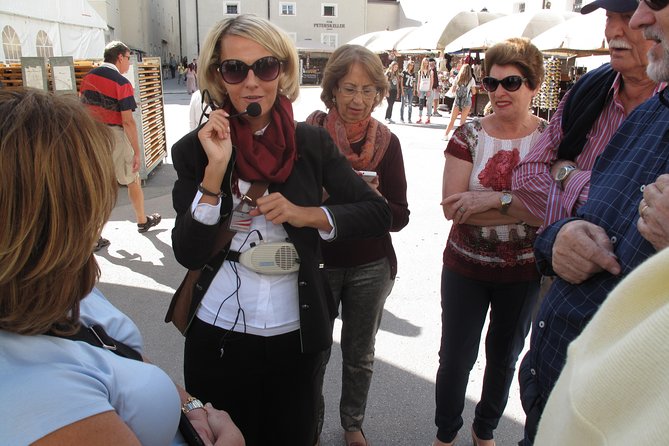
I really like two things here. First, the tour stays small-group and intimate, with a stated max of six people (and a listed maximum of eight), so you are not shouting over a crowd. Second, the guide mix is academic in tone, with people described as professors, doctoral students, historians, journalists, art critics, and published authors.
One possible drawback to consider: if you want a perfectly linear, one-era-at-a-time explanation, you may find the narration can feel more story-based than timeline-based. In that case, it helps to lean in with questions when the guide pivots from Mozart to the city’s bigger political and cultural themes.
In This Review
- Key highlights you should care about
- Starting at Linzer G. 39, Salzburg: a smart way to get your bearings
- Burgher Town streets and Getreidegasse: where medieval Salzburg still breathes
- Baroque squares and the Archbishops’ seat: the city’s power story
- Mozart’s birthplace area and the Festival Halls: music history with real city anchors
- St. Peter’s Abbey and early Salzburg from 696 AC
- Salt commerce, medical innovations, and the city behind the music
- The Sound of Music link: the von Trapp story in WWII context
- Pacing, comfort, and what “small group” means in practice
- Price and value: what $180.21 buys you in Salzburg
- Who should book this Salzburg introduction walk (and who should skip it)
- Should you book this Salzburg walk?
- FAQ
- How long is the Salzburg Introduction Walking Tour?
- What is the tour price per person?
- Is the tour offered in English?
- Where does the tour start?
- Is food and drinks included?
- Is hotel pickup or drop-off included?
- Are there morning and afternoon departures?
- What is not included regarding Mozart sites?
- How big is the group?
- Is the tour ticket digital?
Key highlights you should care about
- Getreidegasse and passageways: medieval commercial streets that still feel real, not themed.
- Mozart’s early life and childhood context: you get biography clues, not just photo stops.
- St. Peter’s Abbey dating back to 696 AC: early Salzburg anchored in place and tradition.
- Salt commerce and medical innovations: the city’s practical history behind the beauty.
- The Trapp family story grounded in WWII: the Sound of Music connection with context.
Other Salzburg write-ups filed under Austria
- Salzburg 2.5-Hour Walking Tour: Mozart, Old Town & More
★ 4.2 · 987 reviews - Salzburg: Old Town, Mozart, & Mirabell Gardens Walking Tour
★ 4.8 · 461 reviews - Salzburg Oldtown: Sightseeing Walking Tour with Licensed Local Guide
★ 5.0 · 392 reviews - Salzburg Old Town Walking Tour, Mozart, Mirabell Gardens
★ 4.5 · 201 reviews
Starting at Linzer G. 39, Salzburg: a smart way to get your bearings
The tour starts at Linzer G. 39 (5020 Salzburg). It’s set up for easy self-navigation, and you are told it is near public transportation, which matters because Salzburg’s center is walkable but not always simple to time.
A 2.5-hour Old Town walk is a good sweet spot. Long enough to feel like you actually learned the city, short enough that you still have energy for museums, a coffee break, and a second pass at your favorite streets. Expect to move at a walking-tour pace, not a slow sightseeing shuffle.
Also note the tour has morning and afternoon departures, so you can pick the time that matches your heat tolerance. One guide style you may notice in practice is a “make it comfortable” approach, like choosing shade or pausing for a bit if the day gets hot.
Burgher Town streets and Getreidegasse: where medieval Salzburg still breathes
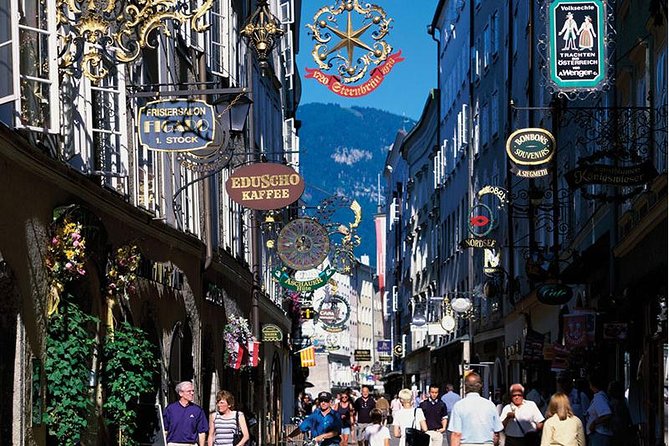
This walk kicks off in Salzburg’s Burgher Town, where the streets are narrow and crooked in a way that instantly changes your sense of scale. The city stops feeling like a postcard and starts feeling like a place where people actually traded goods, delivered supplies, and navigated day-to-day life.
Then comes the big “wow” street: Getreidegasse, Salzburg’s commercial center with the old passage ways that still preserve medieval charm. If you have seen Salzburg through major landmarks only, this part is the bridge that makes everything else make sense. You learn how the city’s wealth and power were tied to commerce, and why the old core is so dense with history.
Here is what makes this section valuable for you: it gives you context before you reach the famous buildings. You start to notice details like how a street’s layout affects foot traffic and how the architecture reflects who lived and worked there.
Practical tip: wear shoes with real grip. The walk is in historic streets, and while Salzburg is very walkable, cobbles and uneven surfaces are part of the deal.
Baroque squares and the Archbishops’ seat: the city’s power story
After the medieval lanes, the route opens up into the spacious baroque squares of the district where the archbishops presided over the city. This is a key shift. Medieval Salzburg feels tight and practical. Baroque Salzburg feels intentional and ceremonial.
You do not just see pretty buildings here. You get the political and cultural background that explains why Salzburg looks the way it does. The archbishops were the kind of leaders who shaped arts, ceremonies, and public space, so the baroque look is not accidental decoration. It is a sign of authority.
In a tour like this, the squares also work as natural “reset points.” You get a short breather, the guide can connect earlier stories to later stops, and you can look around instead of watching only your feet.
Mozart’s birthplace area and the Festival Halls: music history with real city anchors
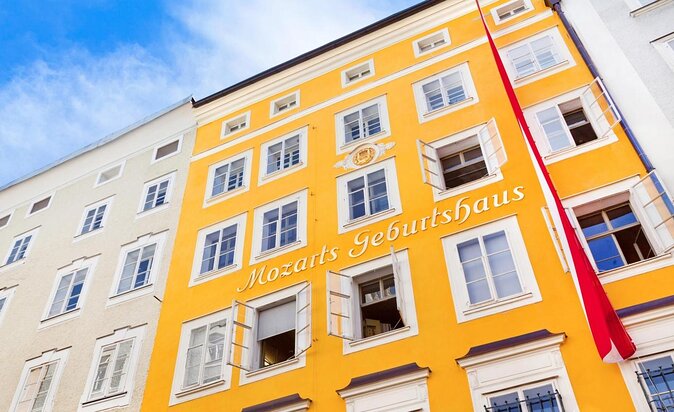
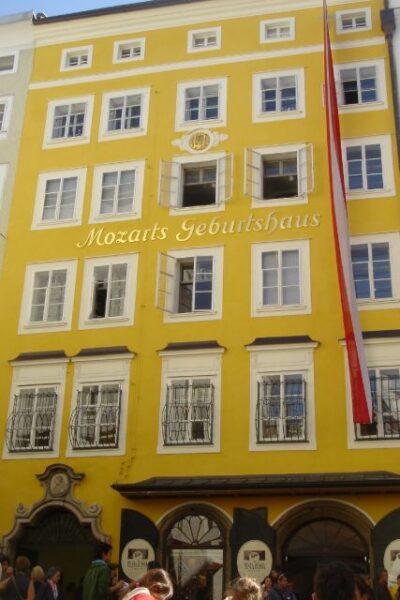
The tour moves past Mozart’s birthplace and the Festival Halls, and this is where your trip gains momentum if you care about music beyond the trivia.
You are not just collecting names. You hear how Mozart and his childhood fit into the city’s rhythms, and you also get context around his family, including Wolfgang and Nannerl Mozart. That matters because so many Mozart stops elsewhere are basically “standing here is where it happened.” In Salzburg, the goal is to show you how the city shaped the person.
You also hear about Michael Haydn, described as the great second musical son of the city. That’s a smart addition for you if you want more than the Mozart headline. It expands the idea of Salzburg as a musical ecosystem, not just one genius story.
One useful angle: when the guide connects these places to the wider history, your next museum visit and your later strolls around town feel less random. Instead of chasing monuments, you start reading the city.
If you are a “I need the timeline” person, you might find it helps to ask one quick question like: How does this connect to the political power or trade we just talked about? That is the difference between hearing facts and building a mental map.
St. Peter’s Abbey and early Salzburg from 696 AC
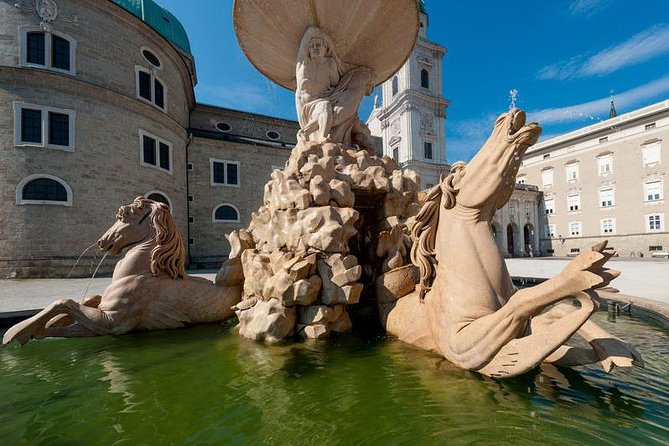
One of the tour’s anchor stops is the monastery of the Benedictines called St. Peter’s, dating back to 696 AC. This is the kind of place that changes how you see a city. Salzburg’s beauty is obvious, but St. Peter’s adds depth because it is tied to religious life, daily routines, and long continuity.
What I like about including a stop like this in an intro tour is that it gives your brain a “timeline anchor.” When you learn the city’s long timeline early on, later sights start to feel connected instead of separate.
One practical drawback to keep in mind: monastery areas can be cooler than street level, but you still need to dress for outdoors walking between stops. Also, you should expect the focus to be storytelling and orientation, not a full museum-like visit. If you were hoping for extended interior time at every site, you might feel the tour is brisk.
That said, an intro walk is exactly when St. Peter’s works well. You get the significance fast, then you can decide whether to return for more time later.
Salt commerce, medical innovations, and the city behind the music
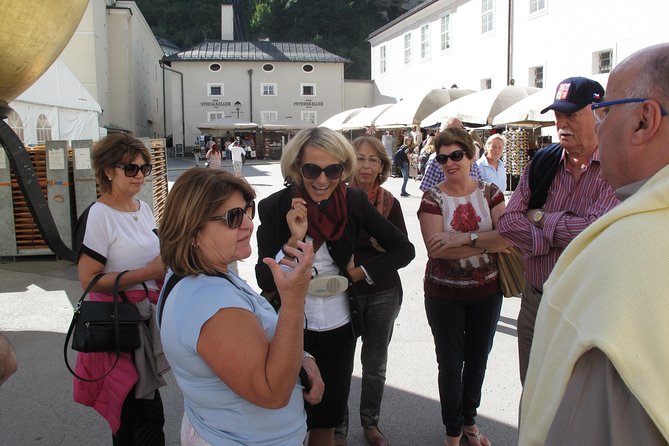
This is where the tour gets unexpectedly practical. You learn about Salzburg’s medieval salt commerce, and you also hear about medical innovations tied to the city’s history.
Those topics matter because they reframe Salzburg. It is not only churches and costumes. It is also a place where wealth came from trade routes and where local life pushed forward real knowledge.
The salt story is especially important in a place like Salzburg. Salt was a major driver of economic power across Europe, and Salzburg’s position helped shape what the city could support, including the arts. When the guide links this to the musical legacy, you understand the cause behind the cultural results.
You also follow the Mozarts’ childhood and the larger local life story of musical figures like Michael Haydn. The tour threads family biography through city context, so it feels like you are learning how people lived, not just where they stood.
If you are a history buff, this is the segment that often makes the tour feel worth it. It also helps you plan your next day, because once you know what mattered economically and socially, you can focus on the right neighborhoods and institutions.
The Sound of Music link: the von Trapp story in WWII context
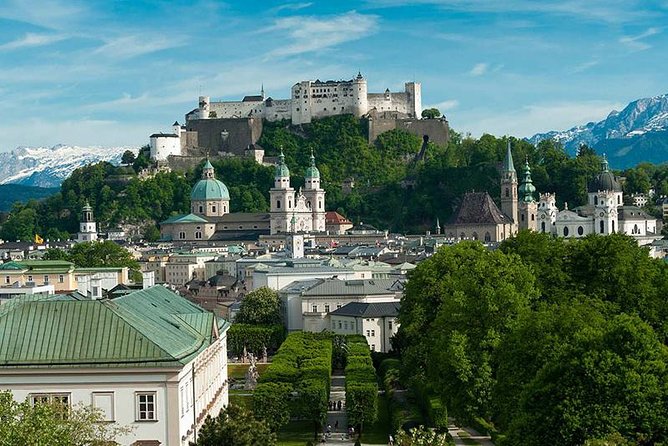
Yes, you will talk about the von Trapp family singers connected to The Sound of Music. But the tour also promises the “true story,” framed as an authentic refugee tale connected to World War II.
That context is the value. If you only approach Salzburg through movie locations, you can miss the human story underneath. In an Old Town walk, it lands well because you are learning how the city’s history shaped what people carried with them, what they escaped, and how culture survived.
One more smart detail: this portion does not pretend the film is the whole truth. It uses the global familiarity of the movie as a doorway, then guides you toward the real historical events behind it.
If you love musicals, I think you will enjoy this approach. And if you prefer history over entertainment, you still get something. You get a grounded story tied to the city’s identity, not a costume parade.
Pacing, comfort, and what “small group” means in practice
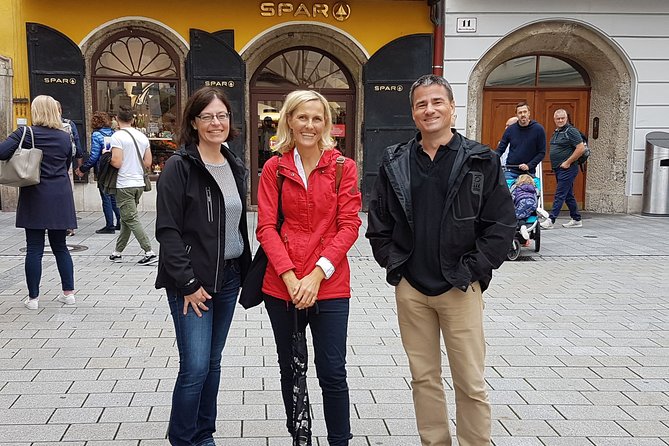
The tour runs about 2 hours 30 minutes. It is described as a small group with a maximum of six in one part of the details and a maximum of eight in another. Either way, the point is the same: you get a more personal walking experience than the typical big-bus sightseeing crush.
Your guide can shape the tour based on what the group cares about. One named guide example from the tour experience record is Natalie, who tailored the tour based on group interests and tied Salzburg history to personality points. Other named guides you might encounter include Liza, Claudia, Lisa, Gabe, and Astrid, and the shared pattern is that they focus on giving you a coherent sense of place.
Comfort matters too. Several guide notes highlight thoughtful pacing and staying in shade during heat. So if you are visiting in summer, do not just pack water and hope. Pack patience for walking, and expect the guide to choose where you stand while explaining.
If you get motion sick easily, this is still mostly walking, not vehicles, but you will be outside the whole time. Bring your baseline comfort items like a light layer, sunscreen, and a small bottle of water.
Price and value: what $180.21 buys you in Salzburg
At $180.21 per person for about 2.5 hours, this is not a budget tour. You should only book it if you want a guide-led orientation that saves you time and helps you get meaning out of the places you would otherwise see quickly.
Here is what you actually get value for:
- A professional scholarly guide, described in multiple ways, including historians and academic writers.
- A route that hits major Salzburg themes fast: medieval streets, baroque squares, Mozart connections, and St. Peter’s Abbey.
- Inclusion of hard-to-plan context like salt commerce, local medical innovations, and the WWII Trapp family story.
What you do not get is also clear: food and drinks are not included, hotel pickup and drop-off is not included, and Mozart Residence admission is not included. That means you will likely plan your own snack stop and possibly pay for specific ticketed sites later.
So the value question becomes simple: will you use a guide to get your bearings and understand the city faster? If yes, the price starts to make sense. If you prefer to wander alone with a guidebook, you may feel this costs more than you needed.
Who should book this Salzburg introduction walk (and who should skip it)
This tour is ideal if:
- You want a guided Old Town orientation that connects Salzburg’s architecture to the people and events behind it.
- You like music history but also want it placed in real city context.
- You enjoy walking tours, and you do not need long interior time at every stop.
- You are traveling solo, as the group is small, and you still get a structured day.
Consider skipping or swapping for a different style if:
- You need a super strict chronological timeline, with zero storytelling jumps.
- You want a tour focused only on specific “must-see” tickets, like entering Mozart Residence right away.
- You are not comfortable walking for about 2.5 hours outdoors.
Should you book this Salzburg walk?
If you want to understand Salzburg, not just photograph it, I think this is a strong choice. The best part is the mix of major landmarks with big-picture explanations, from Getreidegasse and the archbishops’ baroque squares to St. Peter’s Abbey and the WWII context behind the Sound of Music.
Book it if your goal is to leave with a mental map and a set of connections you can carry into the rest of your trip. Skip it if you only want ticketed attractions and a mostly silent “see the sights” format.
FAQ
How long is the Salzburg Introduction Walking Tour?
It lasts about 2 hours 30 minutes.
What is the tour price per person?
The price is $180.21 per person.
Is the tour offered in English?
Yes, it is offered in English.
Where does the tour start?
The meeting point is Linzer G. 39, 5020 Salzburg, Austria.
Is food and drinks included?
No, food and drinks are not included.
Is hotel pickup or drop-off included?
No, hotel pickup and drop-off are not included.
Are there morning and afternoon departures?
Yes, morning or afternoon departures are available.
What is not included regarding Mozart sites?
Mozart Residence admission is not included.
How big is the group?
The tour is described as small group with a maximum of six people, and the additional information also lists a maximum of 8 travelers.
Is the tour ticket digital?
Yes, it includes a mobile ticket.
Walking Tours: Rest of the Austria File
- Salzburg 2.5-Hour Walking Tour: Mozart, Old Town & More
★ 4.2 · 987 reviews - Salzburg: Old Town, Mozart, & Mirabell Gardens Walking Tour
★ 4.8 · 461 reviews - Salzburg Oldtown: Sightseeing Walking Tour with Licensed Local Guide
★ 5.0 · 392 reviews - Salzburg Old Town Walking Tour, Mozart, Mirabell Gardens
★ 4.5 · 201 reviews
Tours: Rest of the Austria File
- The Original Sound of Music Tour in Salzburg
★ 4.5 · 6,129 reviews - Salzburg: Original Sound of Music Tour
★ 4.8 · 5,059 reviews - From Salzburg: Half-Day Tour to Hallstatt
★ 4.6 · 3,596 reviews - Salzburg: Amphibious Splash Tour on Land & on Water
★ 4.7 · 1,097 reviews
Tour Reviews: Rest of the Austria File
- The Original Sound of Music Tour in Salzburg
★ 4.5 · 6,129 reviews - Salzburg: Original Sound of Music Tour
★ 4.8 · 5,059 reviews - From Salzburg: Half-Day Tour to Hallstatt
★ 4.6 · 3,596 reviews - Salzburg: Mozart Concert at Mirabell Palace
★ 4.8 · 3,498 reviews
Newest Salzburg write-ups on file
- Zell am See Alpine Village Private Day Trip from Salzburg★ 5.0 · 3 reviews
- Private Austrian Food Tasting Tour in Salzburg’s Old Town★ 4.5 · 3 reviews
- Salzburg to Vienna, Private Transfer, 2h of Sightseeing, Local Driver, English★ 5.0 · 3 reviews
- Private Customized Salzburg City and Country Tour★ 5.0 · 3 reviews
- Private Transfer from Salzburg to Vienna: Door-to-door, English-speaking driver★ 4.5 · 3 reviews
- Private Tour: Discover Salzburg and the Stunning Lake District★ 5.0 · 3 reviews
Walking Tours, compared.
 ★ 4.7Vienna: Guided Walking Tour of City Center HighlightsFrom $254,989 reviews
 ★ 4.8Vienna: Vienna Central Cemetery Guided Walking TourFrom $3353,307 reviews
 ★ 4.9Vienna: Guided Walking Tour of City Highlights & Hidden GemsFrom $272,180 reviews
 ★ 4.7Vienna: Viennese Underworld Guided Walking TourFrom $371,865 reviews
 ★ 4.8Vienna: World War II Historical Walking TourFrom $311,772 reviews
 ★ 5.0Vienna Historic Center Small Group Walking TourFrom $721,746 reviews
 ★ 4.6Vienna: Private Walking Tour with a Local GuideFrom $551,420 reviews
 ★ 4.9Vienna: 1.5-Hour Underground Walking TourFrom $321,146 reviews
This tour also sits in