
REVIEW · WALKING TOURS
Private Walking Tour of Salzburg
Salzburg is easier when someone points things out. This private, 2-hour walk threads together Mozart landmarks, river views, and the old town’s big moments, plus a guide who adds stories and practical ideas for the rest of your trip. I love the private pace and how the route works as an instant orientation, especially if you are arriving for the first time. I also like that you get both famous stops and quick detours, from Mozart Wohnhaus to St. Peter’s Abbey. One drawback to consider: the tour is short, so it focuses on key places and views, not long stays inside every site.
You meet at the Spirit of Mozart on Imbergstraße, then finish at Mozartplatz, near the cathedral and Residenzplatz. Guides named in recent feedback include Leo, Johannes, Sonja, and Cristian, and the common theme is clear explanations with lively storytelling and helpful suggestions for what to do next. Expect a friendly group walk with lots of stopping for context, not a nonstop march.
In This Review
- Quick reasons this private Salzburg walk works
- Starting at Spirit of Mozart, ending near Mozartplatz
- Mozart Wohnhaus across the square: seeing the house, hearing the story
- Schloss Mirabell and Mirabellgarten: the garden link to how the city thinks
- Makartsteg love-lock bridge: river views with a story behind them
- Getreidegasse to Mozart’s birthplace area: the old town’s main line
- Universitätskirche: entering the last big historic stop
- Wilhelm-Furtwängler-Garten, then the concert-hall world
- Grosses Festspielhaus: connecting Salzburg Festival to the street
- Stift St. Peter’s Abbey yard: Salzburg’s early roots, with limits respected
- Salzburg Cathedral: a guided-visit interior moment
- Kapitelplatz and Kapitelschwemme: fortress views and the oldest bakery angle
- Residenzplatz and Mozartplatz: where Salzburg’s power and Mozart cult meet
- What makes the guides matter on this tour
- Value check: is $263.67 per group worth it?
- Should you book this private Salzburg walking tour?
- FAQ
- What is the meeting point for the tour?
- Where does the tour end?
- What time does the tour run?
- How long is the tour?
- How much does it cost and how many people are in a group?
- Is this a private tour?
- Does the tour include any entrances?
- Can I bring a service animal?
- What is the cancellation policy?
Quick reasons this private Salzburg walk works
- Private by design: up to 15 people per group, so your guide can respond to your questions.
- First-day orientation: you cover the old town’s main bones quickly, so the rest of your plans make more sense.
- Mozart focus without the overload: you hit several Mozart-related stops and still keep breathing room.
- River-and-royal views: Makartsteg and the canal-area scenery give Salzburg its signature look.
- Church time when allowed: you can enter Universitätskirche and Salzburg Cathedral when open, so you get more than street-level photos.
- Festival connection: a look at Grosses Festspielhaus ties the summer Salzburg Festival to the city you are walking through.
Other Salzburg write-ups filed under Austria
- Salzburg 2.5-Hour Walking Tour: Mozart, Old Town & More
★ 4.2 · 987 reviews - Salzburg: Old Town, Mozart, & Mirabell Gardens Walking Tour
★ 4.8 · 461 reviews - Salzburg Oldtown: Sightseeing Walking Tour with Licensed Local Guide
★ 5.0 · 392 reviews - Salzburg Old Town Walking Tour, Mozart, Mirabell Gardens
★ 4.5 · 201 reviews
Starting at Spirit of Mozart, ending near Mozartplatz
The tour begins at Spirit of Mozart on Imbergstraße 33A (5020 Salzburg). This is a smart pick for getting oriented because it places you right where you can start linking streets, squares, and viewpoints in your head.
You finish at Mozartplatz, by the Mozart statue and close to the cathedral and Residenzplatz. That ending matters. It drops you at the heart of the old town, where you can keep wandering, grab lunch, or line up an evening plan without needing extra transit or a fresh map study.
This is also a good fit if you have limited time. You are looking at about 2 hours of walking and story stops. You do not need a whole morning, and you still get the kind of context that helps the rest of Salzburg click.
Mozart Wohnhaus across the square: seeing the house, hearing the story
One early stop is Mozart Wohnhaus, the home where Mozart lived from age seventeen. The approach is practical: you talk about what you are seeing from the opposite side of the square, so you get the story without a long detour.
Why this works: Mozart in Salzburg can feel like a blur of statues, plaques, and souvenir shops if you do not connect the dates to the place. A guided stop here helps you understand that Salzburg was not just a backdrop for Mozart, it was part of his timeline. After this, the rest of the walking becomes more meaningful, because you start noticing how the city marks his life in different ways.
Possible consideration: this is not a long interior visit. If you want a deep museum-style experience at Mozart Wohnhaus, you will need to add that separately.
Schloss Mirabell and Mirabellgarten: the garden link to how the city thinks
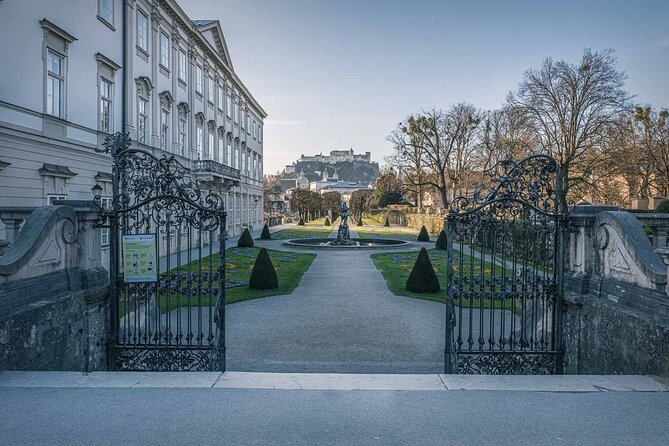
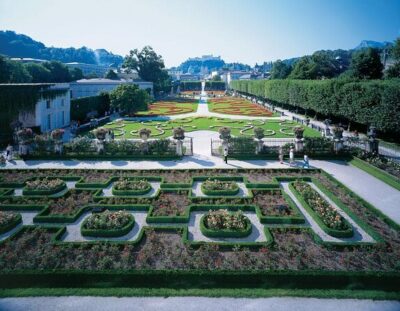
Next you get a look at Schloss Mirabell and Mirabellgarten. The focus is on what the gardens were historically and what they are today, with a note that you should come back later for a deeper explore.
This is a good “taste” stop. Mirabell is one of those places that is easy to enjoy even if you do not know its background, but it becomes more satisfying when you understand why it is laid out the way it is and how it fits into Salzburg’s story.
A drawback to plan for: the tour gives you a quick glance, not a full garden afternoon. Still, that can be a plus. It keeps the momentum for the rest of the walk and helps you decide whether you want a longer return visit later.
Makartsteg love-lock bridge: river views with a story behind them
Then you cross the river at Makartsteg, the love lock bridge area. You will hear about the bridge, the river, and the buildings along the water.
Why it’s worth stopping: Salzburg looks like a postcard for good reason, and river views are part of what makes the city feel different from other Austrian towns. The guide’s framing helps you see more than just the romantic spot. You start noticing how the river bends the city, how the buildings face the water, and why people keep showing up here for photos.
Time-wise, this is brief, so you will not feel stuck in one place. You will get enough for context and continue with the route.
Other Salzburg write-ups filed under Austria

Getreidegasse to Mozart’s birthplace area: the old town’s main line
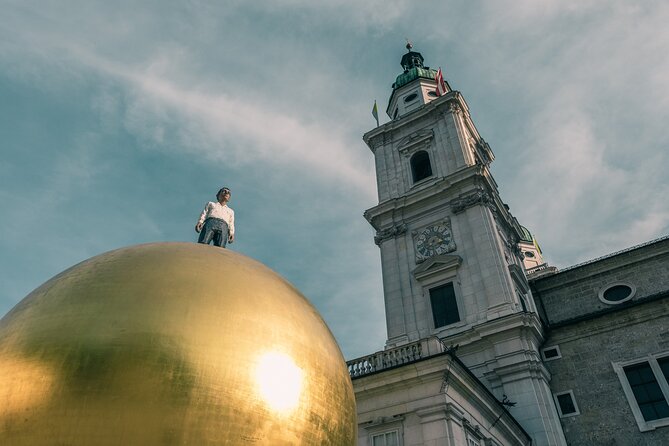
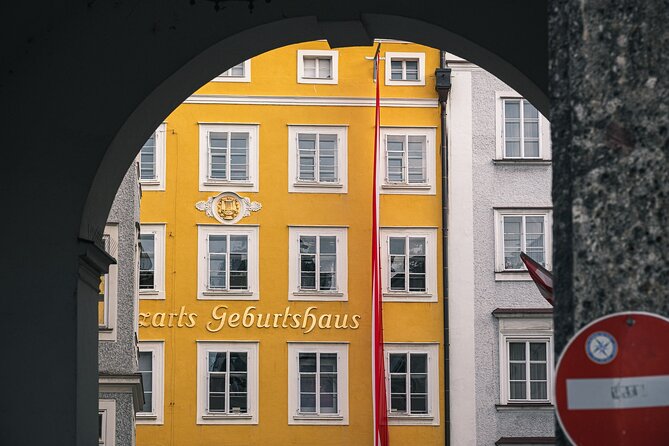
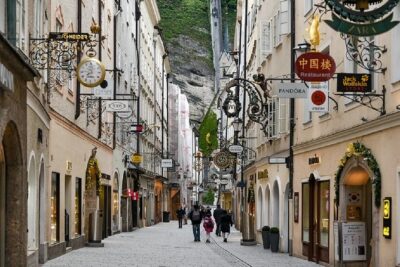
After crossing, you head toward Getreidegasse, described as Salzburg’s most famous street. From there you walk to the area connected with Mozart’s birthplace.
This stretch is where Salzburg becomes instantly recognizable. Getreidegasse is all about atmosphere: tight streets, old facades, and that “you could get lost here in a good way” feeling. Having a guide here matters because it helps you connect what you see to the names and stories behind them, not just the buildings’ visual charm.
Practical upside: this walk section sets you up for the next stops because you are staying in the old-town flow instead of hopping around.
Universitätskirche: entering the last big historic stop
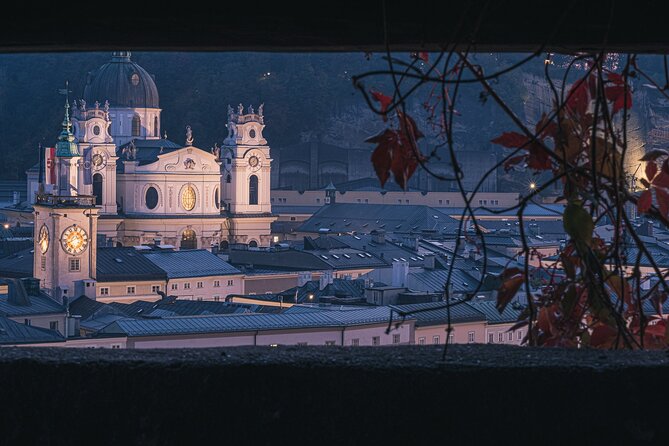
Universitätskirche is one of the few places where the tour aims to go inside. It is the University Church, described as the last historic building in Salzburg. It is no longer used as a church, so the group entry depends on whether it is open.
This is exactly the kind of stop that turns an ordinary street walk into a real experience. Interiors change your sense of scale and style. Even if you are not religious, it is still a chance to see how Salzburg’s institutions shaped public life.
Possible drawback: if the church is closed for any reason, your entry may not happen. The good news is the tour plans for this by keeping the stop short and moving on.
Wilhelm-Furtwängler-Garten, then the concert-hall world
At Wilhelm-Furtwängler-Garten (part of the former Furtwänglerpark), the theme shifts toward how Salzburg is organized around education, modern art, and the canal system. You also get a lead-in about what comes next before moving on to the concert hall area.
This stop is valuable because it shows Salzburg is not only medieval lanes and Baroque facades. The city is layered. You see how older structures connect to universities and how the water and canals shape daily life and layout.
If you like cities where the present makes sense because the past is explained, this is one of the stronger stops on the walk.
Grosses Festspielhaus: connecting Salzburg Festival to the street

You then reach Grosses Festspielhaus. The Salzburg Festival is described as the most prestigious classical music festival in the world, and the concert hall is where most concerts and opera take place during six summer weeks.
Even if you are visiting outside festival season, the connection is worth making. The city’s elegance and its love of music are not random. They are built into the places you walk past. A guide can point out what this hall represents and how that culture shaped Salzburg’s reputation long before you arrived.
Possible consideration: this is a short look. If you want to go deeper, you would need a separate concert or a longer venue visit.
Stift St. Peter’s Abbey yard: Salzburg’s early roots, with limits respected
One of the most distinct moments comes at Erzabtei Stift St. Peter Salzburg. St. Peter’s is described as the place where Salzburg was founded in 696, and it is also the oldest monastery in the German-speaking region.
Here, the tour does not push you into areas that are off-limits or restricted. You do not enter the church or the cemetery because the monastery and church are still active, and guided tours are not allowed there. Instead, you visit the yard and the guide explains what you are seeing.
This is a respectful and realistic approach, and it helps you avoid the frustration of arriving somewhere sacred or operational only to be turned away. The yard still gives you plenty to look at, and the founding-year context helps the stop land with weight.
Salzburg Cathedral: a guided-visit interior moment
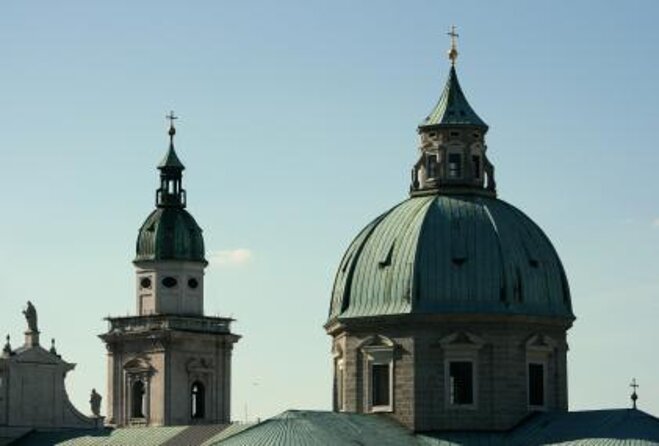
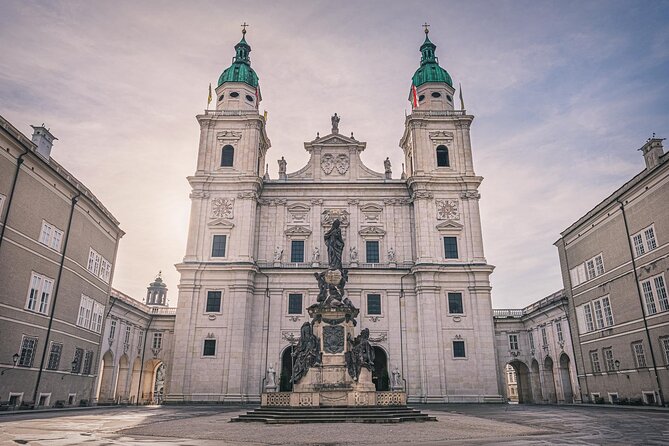
Then comes Salzburg Cathedral, described as the most significant church in the city. This is one of the few churches where guided tours are allowed, so the plan is to enter and learn its history during your visit.
An interior stop is a big deal on a walking tour like this. You get the contrast between outside views and inside scale and design. And because entry is permitted for guided groups, you are not stuck with only exterior landmarks.
Possible consideration: entry depends on opening situations at the time of your tour. Still, the route timing is built around short stays, so you are not losing half a day if access is limited.
Kapitelplatz and Kapitelschwemme: fortress views and the oldest bakery angle
Next you reach Kapitelplatz and Kapitelschwemme. From Kapitelplatz, you get views toward Hohensalzburg Fortress. You also see more modern art in the area and hear about the oldest bakery of Salzburg.
This is a clever pairing because it mixes big-photo Salzburg (fortress view) with everyday city life (food and local tradition). Even if you never buy anything on the spot, you leave with a clear lead for where to aim later for treats or a snack.
Time here is short, so keep expectations right: you are getting the orientation and the story hook, not a full food crawl.
Residenzplatz and Mozartplatz: where Salzburg’s power and Mozart cult meet
You finish the old town loop at Residenzplatz and then Mozartplatz. Residenzplatz is described as the main square and the heart of the old town. The square got its name because that is where the archbishop’s residence was located historically.
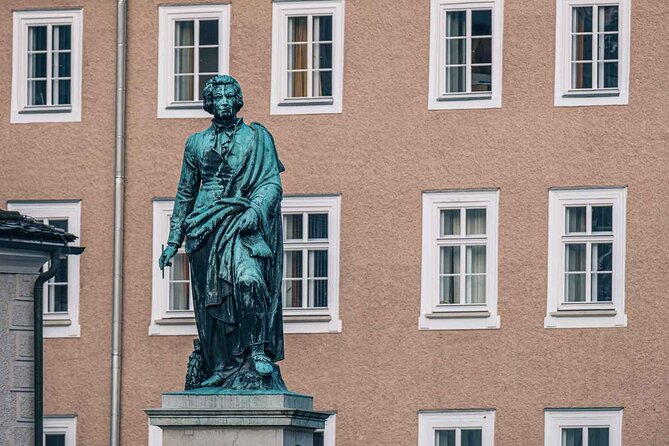
Then you move to Mozartplatz, where the Mozart cult is linked to the 19th century and the Mozart statue. The guide helps explain the mystery around Mozart and why that cult grew where it did.
This final stretch is where the tour’s big theme clicks. Salzburg is a city that constantly re-makes its identity, first through power centers like the archbishop’s residence, and later through Mozart’s legend. Seeing both in one walk makes the city feel less like a checklist and more like a story you can keep following on your own.
What makes the guides matter on this tour
The route is strong, but the guide is what makes it stick. In the recent feedback tied to this experience, guides like Leo and Johannes stand out for mixing historical facts with stories and practical tips for the rest of your stay. Sonja is described as warm and welcoming, with a level of care that makes the tour feel personal, not scripted. Cristian is described as an amazing guide, and there are mentions of guides going beyond pointing at buildings by adding interactive moments.
A key bonus: you are private. So if your group has a specific interest, like Mozart, churches, or festival culture, you can steer questions in that direction. That is hard to do on a group tour where you are competing with other people’s curiosity.
Also, you are not treated like a random walker in a crowd. Service animals are allowed, and the tour is designed so most travelers can participate. That combination makes it feel easier to join, even if you are traveling with a dog or you are not sure how fast the pace will be.
Value check: is $263.67 per group worth it?
This tour is priced at $263.67 per group for up to 15 people. That matters, because you are not paying per person in the way many private tours do. If you are traveling as a couple, family, or small friends group, this can work out as strong value compared with booking multiple separate entrances or trying to “wing it” with no local context.
Also, the stops are built around places where admissions are listed as free, and the big entry moments are the cathedral and Universitätskirche, when access allows. That means your money goes mostly to guiding and timing, not to ticket costs.
The duration is about two hours. That is not a huge chunk of vacation time, which keeps the risk low. If you are arriving, it helps you plan. If you are returning, it gives you a structured refresher so you do not just re-see the same sights.
Should you book this private Salzburg walking tour?
Book it if you want a smart first-day move that helps Salzburg make sense fast. It is especially worth it when you care about Mozart, like getting your bearings through a walk, or prefer avoiding the friction of larger group tours.
Skip it or pair it with other plans if you are expecting long museum-style visits. This is a highlight-and-orientation tour, with short stops and a few key entries. It is best as a foundation, not the whole Salzburg trip.
If you want to do this at the right moment, aim for early in your stay. You will leave with a mental map and a shortlist of what to return for. And if your group includes kids or you just want someone to keep things lively, the guide experiences associated with this tour suggest it can be fun, not stiff.
FAQ
What is the meeting point for the tour?
The tour starts at Spirit of Mozart, Imbergstraße 33A, 5020 Salzburg, Austria.
Where does the tour end?
The tour ends at Mozartplatz, Mozartpl., 5020 Salzburg, Austria, near the Salzburg Cathedral and Residenzplatz.
What time does the tour run?
The start time listed is 11:00 am.
How long is the tour?
The tour lasts about 2 hours.
How much does it cost and how many people are in a group?
It costs $263.67 per group, up to 15 people.
Is this a private tour?
Yes. It is private, so only your group participates.
Does the tour include any entrances?
The plan includes entering Universitätskirche and Salzburg Cathedral as long as they are open. The other stops are described as free to view or visit from outside or in allowed areas.
Can I bring a service animal?
Yes. Service animals are allowed.
What is the cancellation policy?
You can cancel for free up to 24 hours in advance for a full refund. If you cancel less than 24 hours before the start time, the amount paid is not refunded.
Walking Tours: Rest of the Austria File
- Salzburg 2.5-Hour Walking Tour: Mozart, Old Town & More
★ 4.2 · 987 reviews - Salzburg: Old Town, Mozart, & Mirabell Gardens Walking Tour
★ 4.8 · 461 reviews - Salzburg Oldtown: Sightseeing Walking Tour with Licensed Local Guide
★ 5.0 · 392 reviews - Salzburg Old Town Walking Tour, Mozart, Mirabell Gardens
★ 4.5 · 201 reviews
Tours: Rest of the Austria File
- The Original Sound of Music Tour in Salzburg
★ 4.5 · 6,129 reviews - Salzburg: Original Sound of Music Tour
★ 4.8 · 5,059 reviews - From Salzburg: Half-Day Tour to Hallstatt
★ 4.6 · 3,596 reviews - Salzburg: Amphibious Splash Tour on Land & on Water
★ 4.7 · 1,097 reviews
Tour Reviews: Rest of the Austria File
- The Original Sound of Music Tour in Salzburg
★ 4.5 · 6,129 reviews - Salzburg: Original Sound of Music Tour
★ 4.8 · 5,059 reviews - From Salzburg: Half-Day Tour to Hallstatt
★ 4.6 · 3,596 reviews - Salzburg: Mozart Concert at Mirabell Palace
★ 4.8 · 3,498 reviews
Newest Salzburg write-ups on file
- Zell am See Alpine Village Private Day Trip from Salzburg★ 5.0 · 3 reviews
- Private Austrian Food Tasting Tour in Salzburg’s Old Town★ 4.5 · 3 reviews
- Salzburg to Vienna, Private Transfer, 2h of Sightseeing, Local Driver, English★ 5.0 · 3 reviews
- Private Customized Salzburg City and Country Tour★ 5.0 · 3 reviews
- Private Transfer from Salzburg to Vienna: Door-to-door, English-speaking driver★ 4.5 · 3 reviews
- Private Tour: Discover Salzburg and the Stunning Lake District★ 5.0 · 3 reviews
Walking Tours, compared.
 ★ 4.7Vienna: Guided Walking Tour of City Center HighlightsFrom $254,989 reviews
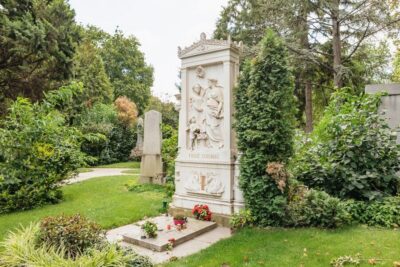 ★ 4.8Vienna: Vienna Central Cemetery Guided Walking TourFrom $3353,307 reviews
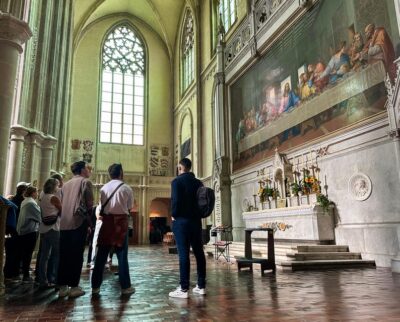 ★ 4.9Vienna: Guided Walking Tour of City Highlights & Hidden GemsFrom $272,180 reviews
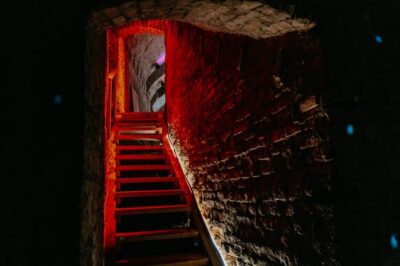 ★ 4.7Vienna: Viennese Underworld Guided Walking TourFrom $371,865 reviews
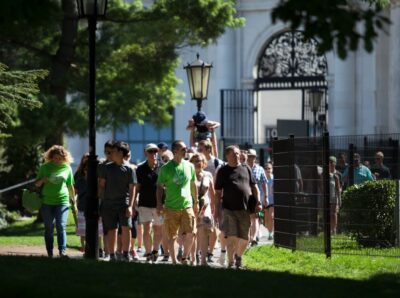 ★ 4.8Vienna: World War II Historical Walking TourFrom $311,772 reviews
 ★ 5.0Vienna Historic Center Small Group Walking TourFrom $721,746 reviews
 ★ 4.6Vienna: Private Walking Tour with a Local GuideFrom $551,420 reviews
 ★ 4.9Vienna: 1.5-Hour Underground Walking TourFrom $321,146 reviews
This tour also sits in