
REVIEW · HISTORICAL TOURS
Private tour of historical Vienna with Jan
Vienna gets a story, not just a stroll. This private tour with Jan Kepinski turns the historical center into a guided walk with meaning, from the Habsburg world at Hofburg to the smart city-design lessons around St. Stephen’s. You’ll cover major landmarks at a friendly walking pace, then end at the food scene of Naschmarkt.
What I love most is the mix of big-name sights and the human scale of a private group. The route is paced so you get time to ask questions, take photos, and actually absorb why each place matters, not just where it is. I also like the built-in break at Conditorei SLUKA, a traditional Viennese coffee house with an end-of-the-century Art Nouveau interior.
One thing to consider: this is a history and architecture walk that focuses on key exterior areas and public spaces. If you’re hoping for lots of long museum time or a deep inside visit to every building, you may want to pair this with separate tickets later.
In This Review
- Key highlights that make this tour work well
- A 2 to 3 hour Vienna walk that links the city’s eras
- Starting at Stephansplatz: getting oriented in the heart of Vienna
- Historic Center of Vienna (Stop 1): why Vienna feels designed for real life
- Hofburg courtyards (Stop 2): seeing the Habsburg story without the overload
- Heldenplatz and Maria Theresien Square (Stops 3 and 4): power, culture, and modernization
- Conditorei SLUKA (Stop 5): the coffeehouse break that feels like Vienna
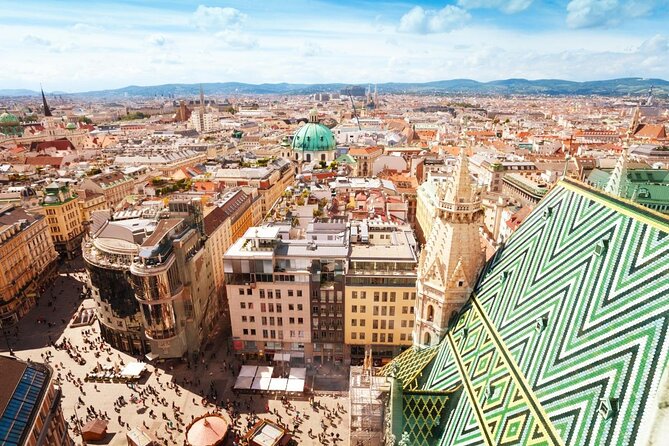
- St. Stephen’s Cathedral (Stop 6): the spiritual and geographic anchor
- Church of the Jesuits (Stop 7): baroque detail in a shorter time window
- Stadtpark (Stop 8) and a breather from the old streets
- Graben and Kohlmarkt (Stop 9): shopping streets, plague history, and skyline views
- Why Jan Kepinski’s storytelling makes the difference
- Price and value for a private group up to 10
- Who this tour suits best, and who might want something else
- Should you book Historical Vienna with Jan?
- FAQ
- How long is the Historical Vienna with Jan tour?
- Where does the tour start and end?
- Is this a private tour?
- What’s the group size limit?
- Is pickup available?
- Is a mobile ticket provided?
- What’s included in the tour price?
- What language is the tour in?
- What is the cancellation policy?
Key highlights that make this tour work well
- Private, English-guided walking tour that keeps your questions front and center
- Hofburg outer courtyards plus Habsburg dynasty stories without rushing
- Photo-ready squares like Heldenplatz and Maria Theresien Square
- Conditorei SLUKA coffeehouse stop in an Art Nouveau setting
- Quick hits of major religion and baroque architecture, including St. Stephen’s and the Church of the Jesuits
- Smart old-town navigation paired with a calmer break at Stadtpark and the classic shopping streets of Graben and Kohlmarkt
Other Vienna write-ups filed under Austria
- Vienna: Private Walking Tour with a Local Guide
★ 4.6 · 1,420 reviews - Vienna: Private Walking Tour with a Guide
★ 4.7 · 962 reviews - Vienna: Wine Tasting Experience in a Private Wine Cellar
★ 4.8 · 413 reviews - Private Day Tour Trip Salzburg Hallstatt and Melk from Vienna
★ 5.0 · 388 reviews
A 2 to 3 hour Vienna walk that links the city’s eras
This is a focused half-day type of outing, about 2 to 3 hours, built for orientation. You start at Stephansplatz and finish at Naschmarkt, so the tour naturally moves you from the historic center toward a lively place to eat afterward.
Because it’s a private tour for up to 10 people, you get something you rarely get on big group tours: you can ask, point, and redirect. That matters in Vienna because the city rewards attention to details, like statues, architectural styles, and how public squares were used to project power.
Also, I like that the “admission” part is handled in a way that keeps you moving through time. The itinerary labels the stop highlights as admission ticket free, so you’re mostly seeing the right spaces, without spending the whole outing queued at doors.
Starting at Stephansplatz: getting oriented in the heart of Vienna
The tour begins at Stephansplatz, and from there you’re set up for understanding Vienna’s old-town layout. Stop 1 is your orientation through the historic center, where the focus is on what shaped Vienna and what you’ll see when you wander on your own later.
You don’t just hear dates. You also get practical direction on where the city feels livable, including what the old town offers for eating and shopping. That’s useful on day one, especially if you’re trying to avoid the common trap of walking in circles because you assumed the major sights were all lined up.
Expect a classic city-walk rhythm here, around 45 minutes. It’s long enough for context, but not so long that you lose momentum. If you tend to get tired on long walking days, that pacing is a real plus.
Historic Center of Vienna (Stop 1): why Vienna feels designed for real life
This first section is where you learn to read the city like a map. Vienna can look like it’s all monuments and grand facades, but the stories behind the buildings explain why the streets and spaces work the way they do.
The tour also sets expectations for your next visits. When you later see a palace wing, a cathedral tower, or a grand square, you’ll know what question to ask: Who used this? Why here? What changed over time?
Practical tip: bring comfortable shoes. You’ll be doing regular walking between stop points, and the tour is short enough that you don’t have a lot of “recovery time” built in before the café moment.
Hofburg courtyards (Stop 2): seeing the Habsburg story without the overload
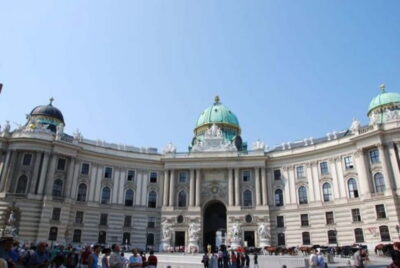
At the Hofburg, you don’t get the typical “stare at the palace” experience. You explore the outer courtyards and the palace’s patchwork layout, where different wings came from different rulers and different periods.
That’s smart for most first-timers. It’s easier to understand the Habsburg dynasty when you see the palace as a collection of eras instead of one frozen image. The outer courtyards give you the drama of the architecture without forcing you into a full-ticket museum marathon.
This stop runs about 30 minutes, which is enough time to connect names, power shifts, and visible architecture choices. And since you’re focusing on the courtyards, you can also take photos without rushing around corners trying to beat crowds.
Other Vienna write-ups filed under Austria
Heldenplatz and Maria Theresien Square (Stops 3 and 4): power, culture, and modernization
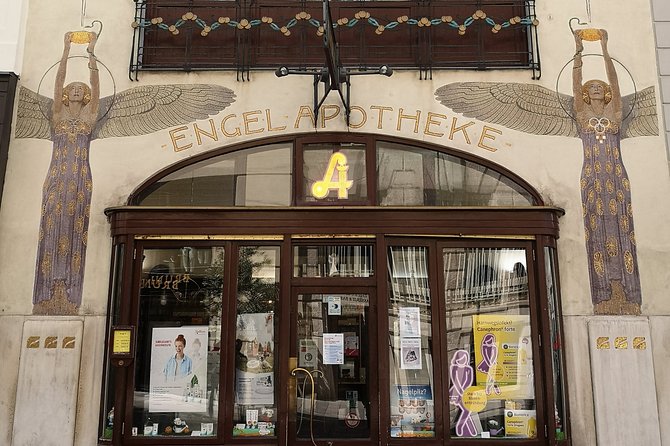
From Hofburg, the tour heads to two big public spaces that are built for spectacle. Heldenplatz (Stop 3) is where you can capture the grandeur of the historic architecture, while the stories you hear explain the empire-level mindset behind the scene.
You’ll spend about 15 minutes here, including talk that connects the square to major buildings like the National Library palace. That detail matters, because in Vienna, culture and governance often share the same stage.
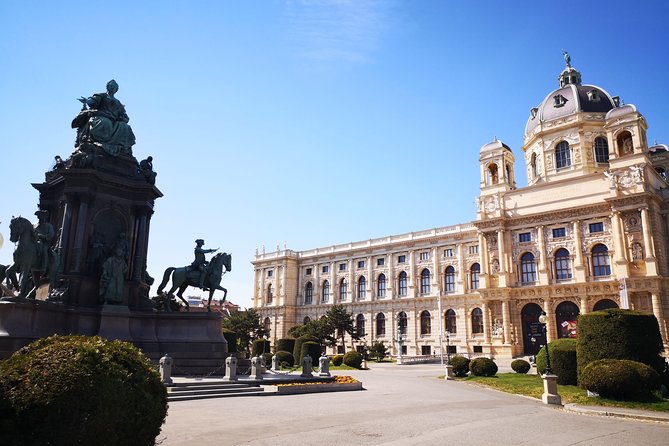
Then you move to Maria Theresien Square (Stop 4). Again, it’s about time, not just scale. You’ll hear about Maria Theresia and how her reign is tied to an enlightened modernization process. The tour’s framing is that her reforms supported a centralized state and helped grow a new middle class, including bureaucrats.
This is one of those stops where a guide makes the difference. A square looks like a square until you understand what system it supported. You’ll get a short, focused 15 minutes that leaves you with a clearer mental picture for why Vienna looks the way it does.
Conditorei SLUKA (Stop 5): the coffeehouse break that feels like Vienna
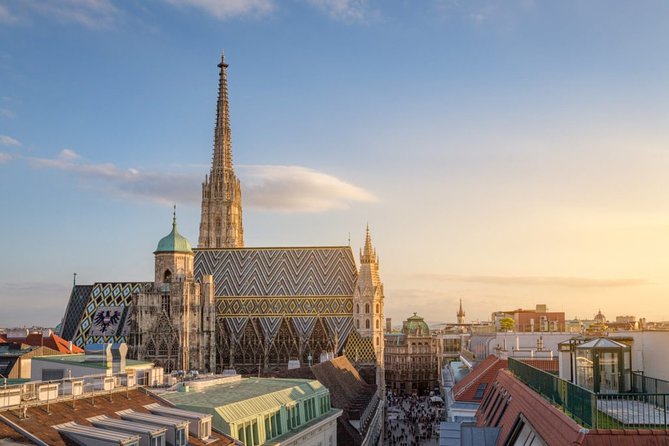
Then comes the pause that makes the whole tour feel balanced: Conditorei SLUKA (Stop 5). It’s listed as about 30 minutes, and it’s scheduled for a café moment, not a random stop.
This matters because Vienna history is heavy on power and conflict. The coffeehouse is the human side: cakes, coffee, and the atmosphere of an old city that likes to slow down. SLUKA is described as a traditional Viennese coffee house with a beautiful Art Nouveau interior, so even if you only order one thing, the setting helps you reset.
In practice, this is also where you can ask your guide what to do next. I like using café breaks for practical planning, like which areas are best to wander in the afternoon and where you can get a good meal without ending up in tourist traps.
A note from the spirit of the experience: people often use this break to try Viennese sweets. If you enjoy pastries, you’ll probably want to order what looks best on the day, since the stop is clearly built around that classic ritual of strudel-style desserts and coffee culture.
St. Stephen’s Cathedral (Stop 6): the spiritual and geographic anchor
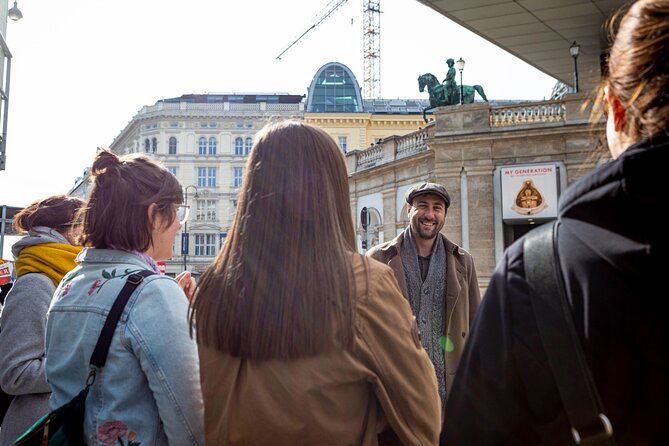
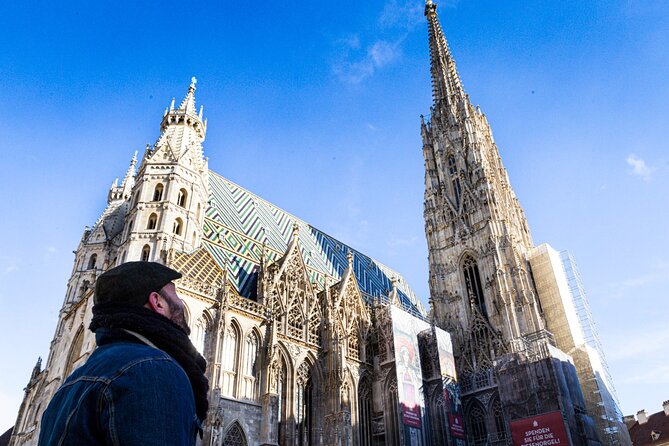
Next is St. Stephen’s Cathedral (Stop 6), the spiritual and geographic heart of Vienna. The tour gives a quick, concentrated look at why the cathedral is such a landmark, including the fact that construction spanned many decades and multiple styles.
It’s about 10 minutes in the schedule, so you’re not getting a full guided interior visit. Still, the stop is valuable because you learn what to notice fast, like the way the building’s long timeline shows up in its look.
The standout story here is about post-war reconstruction and the cooperative spirit behind bringing it back. Even on a short stop, that kind of context makes the cathedral feel less like a photo spot and more like a symbol of recovery.
Church of the Jesuits (Stop 7): baroque detail in a shorter time window
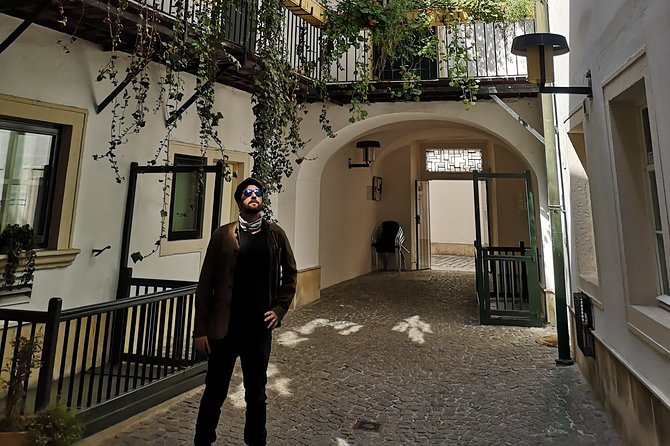
Right after the cathedral, the tour hits the Church of the Jesuits (Stop 7). This is described as one of the finest but least visited baroque churches in Vienna, and it’s scheduled for 10 minutes.
This is a clever use of time. Baroque interiors can be overwhelming if you go in cold. With a guide, you’re pointed toward what makes the style special, so you don’t spend your visit scanning for where to look.
If you like dramatic architecture and you’re not sure you want a long indoor detour, this quick hit is a good compromise. You get the feeling of flamboyant baroque without eating up half your afternoon.
Stadtpark (Stop 8) and a breather from the old streets
Then the tour gives you a little breath at Stadtpark (Stop 8), about 15 minutes. This park hugs the southern side of the Ringstrasse boulevard, and the tone shifts from stone monuments to green space.
The guide ties the park to Vienna’s golden age, including references to painters, musicians, and politicians. Even if you just walk slowly for a few minutes, this stop changes your pacing. It’s the reset you need so the rest of the day doesn’t blur together.
Practical tip: if you’re photographing, parks are easier light than narrow lanes. Use this stop to grab a few relaxed shots and recharge your legs.
Graben and Kohlmarkt (Stop 9): shopping streets, plague history, and skyline views
The final stop area is Graben and Kohlmarkt (Stop 9), around 10 minutes. These are classic high-end shopping streets in the old town, lined with luxury brands and coffee houses.
But the tour doesn’t treat them like a sterile retail strip. It points out the baroque plague column on Graben, which commemorates survival of a devastating plague that raged at the end of the 17th century.
That’s the kind of detail that makes a city feel real. Vienna isn’t just shopping, it’s survival, memory, and public art. Even if you don’t buy anything, walking these streets with context makes them more interesting than you’d expect.
At the end, you finish at Naschmarkt, a famous open air food market. It’s a very natural landing spot because you’re coming out of the old town and likely ready to eat.
Why Jan Kepinski’s storytelling makes the difference
A lot of tours list stops. This one also focuses on how you experience them.
With Jan Kepinski, the guiding style is described as engaging and accessible, with plenty of room for questions. That’s not a small thing. In Vienna, the right question can turn a building from background noise into a story you carry around for days.
You’ll also notice that the pacing stays workable. Multiple accounts highlight that the walk is well paced and stays light, even when touching on darker parts of history. For me, that’s the right balance. You don’t want a history lecture, and you also don’t want history softened into fluff.
English is included, which matters because language can make or break your understanding. If you’ve ever struggled to keep up on a guided tour, you’ll appreciate that the communication stays clear.
Finally, the tour seems built for real-life visitors. Some groups report that he helped them figure out the subway and even get passes for the week. That’s the kind of extra value that can save you time and stress later, because you learn how to move around the city efficiently.
Price and value for a private group up to 10
The price is $432.53 per group for up to 10 people, lasting about 2 to 3 hours. The key value point is that it’s priced per group, not per head, so your per-person cost drops if you have friends or family to share it with.
To give you a feel for the math: if you’re two people, it works out to a higher per-person amount than if you fill it with a larger group. If you’re traveling as a couple, it can still be a good deal when you compare it with the cost of multiple tickets for different tours across days, plus the value of a guide who can tailor pacing and interests.
There’s also “schedule value.” This kind of private orientation can make the rest of your trip easier. When you understand what you’re seeing, you waste less time backtracking.
Booking demand looks strong, with the tour averaging about 62 days in advance when people book. If you have tight dates or a specific time window, you’ll likely want to plan ahead rather than assume last-minute availability.
Who this tour suits best, and who might want something else
This tour is a great fit if you want:
- A first-day overview that helps you navigate Vienna quickly
- Habsburg-focused stories tied to places you can see from the street
- Architecture and city planning context, not just namedropping
- A comfortable break at a classic coffee house
It may not be the best choice if you mainly want:
- Long, ticketed museum time
- A deep dive into one inside venue, like a full cathedral interior session or extended palace rooms
If you’re somewhere in the middle, this is a smart starting point. It gives structure, then you can explore further on your own.
Should you book Historical Vienna with Jan?
I’d book it if you want Vienna history that actually helps you walk the city with confidence. The route makes sense, the pacing stays friendly, and the stops cover the big must-sees without feeling like a stamp-collecting tour. The SLUKA coffeehouse break is also a strong reset point, so the day feels enjoyable, not exhausting.
I’d skip it only if you already have a very detailed, inside-only itinerary and you don’t care about orientation or architectural context. Otherwise, this is the kind of guided experience that can turn your whole trip into something more coherent.
FAQ
How long is the Historical Vienna with Jan tour?
It’s scheduled for about 2 to 3 hours.
Where does the tour start and end?
The tour starts at Stephansplatz, 1010 Wien, Austria, and ends at Naschmarkt, 1060 Wien, Austria.
Is this a private tour?
Yes. It’s private, and only your group participates.
What’s the group size limit?
The tour is priced per group up to 10 people.
Is pickup available?
Pickup is offered.
Is a mobile ticket provided?
A mobile ticket is offered.
What’s included in the tour price?
The tour is guided by a qualified and state licensed guide. Gratuity is not included.
What language is the tour in?
The tour is offered in English.
What is the cancellation policy?
Free cancellation is available. You can cancel up to 24 hours in advance for a full refund.
Private: Rest of the Austria File
- Vienna: Private Walking Tour with a Local Guide
★ 4.6 · 1,420 reviews - Vienna: Private Walking Tour with a Guide
★ 4.7 · 962 reviews - Vienna: Wine Tasting Experience in a Private Wine Cellar
★ 4.8 · 413 reviews - Private Day Tour Trip Salzburg Hallstatt and Melk from Vienna
★ 5.0 · 388 reviews
Tours: Rest of the Austria File
- Vienna: Schönbrunn Palace & Gardens Skip-the-Line Tour
★ 4.7 · 7,739 reviews - Vienna Spanish Riding School Guided Tour
★ 4.7 · 6,765 reviews - Vienna: Skip-the-Line Sisi Museum, Hofburg and Gardens Tour
★ 4.8 · 5,918 reviews - Vienna: Skip-the-Line Schönbrunn Palace & Gardens Tour
★ 4.8 · 5,411 reviews
Tour Reviews: Rest of the Austria File
- Vienna: Vivaldi’s Four Seasons Concert in Karlskirche
★ 4.7 · 14,951 reviews - Vienna: Schönbrunn Palace & Gardens Skip-the-Line Tour
★ 4.7 · 7,739 reviews - Vienna: Light of Creation Votive Church Immersive Light Show
★ 4.8 · 6,779 reviews - Vienna Spanish Riding School Guided Tour
★ 4.7 · 6,765 reviews
Newest Vienna write-ups on file
- Vienna: Private Walking Tour to The Hofburg & Graben Street★ 5.0 · 3 reviews
- Vienna: Private tour Mauthausen and Linz★ 4.1 · 3 reviews
- Vienna Private Full Day Tour – Tickets to Schönbrunn & Lunch★ 5.0 · 3 reviews
- Vienna: Johann Strauss 200th birthday anniversary exhibition★ 4.7 · 3 reviews
- Vienna: Full-Day Vienna Woods Wine Tasting Tour★ 5.0 · 3 reviews
- Vienna: Festive Season and New Year’s Eve Waltz Workshop★ 5.0 · 3 reviews
Historical Tours, compared.
 ★ 4.6Vienna: Time Travel and Magic Vienna History TourFrom $273,879 reviews
 ★ 4.8Vienna: World War II Historical Walking TourFrom $311,772 reviews
 ★ 5.0Vienna Historic Center Small Group Walking TourFrom $721,746 reviews
 ★ 4.5Time Travel-Magic Vienna History Tour TicketFrom $271,099 reviews
 ★ 3.5Skip-the-Line Schonbrunn Palace Guided Tour and Vienna Historical City TourFrom $82940 reviews
 ★ 4.5Vienna Mozart Concert in Historical Costumes at the MusikvereinFrom $83888 reviews
 ★ 5.0Historical Hitler Walking Tour of ViennaFrom $32887 reviews
 ★ 4.9Vienna: History Highlight Walking TourFrom $33602 reviews
This tour also sits in