
REVIEW · WALKING TOURS
Nuns and Nazis Walking Tour in Salzburg
Salzburg can be sweet on the surface and heavy underneath. This tour pairs Sound of Music landmarks with Second World War reality, using Leo’s personal family connection to keep the facts grounded.
I love the way the route is built around real city corners you can revisit later. Two things I particularly like are the attention to survivor-focused details like Stolpersteine in Linzergasse, and the movie tie-ins that make places click fast, like Mirabellgarten and the Festspielhaus.
One consideration: the topic is Nazi-era history, including persecution and forced labor. If you prefer a light, purely scenic walk, this is not that kind of experience.
In This Review
- Key highlights before you start
- Where the Nuns and Nazis tour fits in your Salzburg trip
- Start point and timing, plus how the pace really feels
- Stop 1: Schloss Mirabell and Mirabellgarten, the movie landing pad
- Stop 2: Makartplatz, street names that change with power
- Stop 3: Linzergasse and Stolpersteine, remembering victims in plain sight
- Stop 4: Steingasse and an urban legend you get to judge
- Stop 5: Staatsbrücke, forced laborers on a bridge that still stands
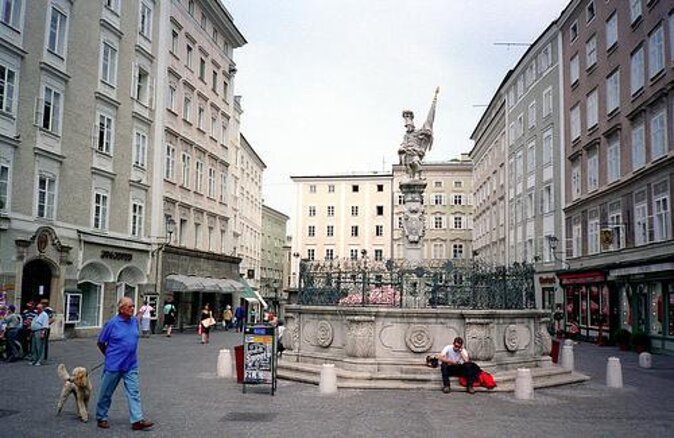
- Stop 6: Alter Markt, Jewish stories and escape paths
- Stop 7: Grosses Festspielhaus, where the Trapp family actually performed
- Stop 8: Residenzplatz, Anschluss details and book burning in Salzburg
- Stop 9: Stift Nonnberg, the nuns theme and an Alpine viewpoint
- Price and value of this tour at $20.64 per person
- Who should book the Nuns and Nazis tour
- Small-group tour with a real guide, not a script
- Should you book the Nuns and Nazis Walking Tour in Salzburg?
- FAQ
- How long is the Nuns and Nazis walking tour?
- Where does the tour start and end?
- What time does the tour begin?
- How much does the tour cost?
- Do I need tickets for the stops?
- Is there a mobile ticket?
- Who is the guide?
- Is the walking route difficult?
- Are service animals allowed?
- Is the tour near public transportation?
- What is the cancellation policy?
Key highlights before you start
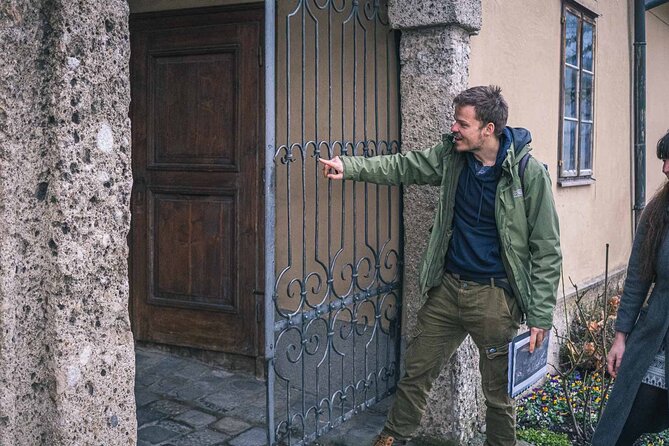
- Leo’s WWII perspective ties city sites to Trapp family and film context, not just generic dates
- Sound of Music filming locations like Mirabellgarten show up early, then you see the wartime story behind them
- Stolpersteine in Linzergasse put names of victims into the pavement, right where people once lived
- Staatsbrücke and forced labor connect the city’s physical infrastructure to human cost
- Residenzplatz facts include the Anschluss, plus mention of a book burning in Salzburg during WWII
- Nonnberg Abbey ending blends history, faith, and an Alpine viewpoint with a clear walking exit toward Hohensalzburg
Other Salzburg write-ups filed under Austria
- Salzburg 2.5-Hour Walking Tour: Mozart, Old Town & More
★ 4.2 · 987 reviews - Salzburg: Old Town, Mozart, & Mirabell Gardens Walking Tour
★ 4.8 · 461 reviews - Salzburg Oldtown: Sightseeing Walking Tour with Licensed Local Guide
★ 5.0 · 392 reviews - Salzburg Old Town Walking Tour, Mozart, Mirabell Gardens
★ 4.5 · 201 reviews
Where the Nuns and Nazis tour fits in your Salzburg trip
Salzburg is famous for a feel-good movie, shot in gorgeous corners of the old town. But that same old town also carries visible reminders of the Second World War era, right down to street names, buildings, and what happened to ordinary people.
This tour is designed for travelers who want more than a quick overview. It focuses specifically on World War II in Salzburg, plus the Trapp family story and how the movie came to be. Along the way, you’ll get specific, location-based details: names laid in the ground, a bridge built with forced labor, and the way Nazi-era control reshaped daily life.
It also has a thematic rhythm. The first half leans movie and setting. The second half leans wartime consequences and survivor stories. That structure helps you keep your bearings without the tour turning into a generic lecture.
Start point and timing, plus how the pace really feels
You meet at Kurgarten, Rainerstraße 2 (5020 Salzburg) and the tour starts at 3:00 pm. It ends at Nonnberggasse 8, at Stift Nonnberg.
The posted duration is about 2 hours to 2 hours 15 minutes. In real life, it can run a bit longer, so I’d plan for a solid half-afternoon commitment. The stops are close enough for an efficient walking route, but you are still moving through the old town streets, including uphill portions near the end.
This one is best if you have moderate physical fitness. The walking is manageable for many people, but it is not a sit-down museum experience. Wear shoes you trust on cobblestones.
Stop 1: Schloss Mirabell and Mirabellgarten, the movie landing pad
The tour begins near Schloss Mirabell and heads across Mirabellgarten. This is one of Salzburg’s easiest “I recognize this” moments if you know The Sound of Music. The gardens are widely associated with filming, and they give you an immediate sense of place.
The smart move here is that the tour doesn’t rush past the setting. You get a short introduction, then you walk through the gardens with the guide pointing out how Salzburg’s beauty became part of a global story. That makes the later wartime material hit harder, because you’ve already seen the city through a different lens.
Practical note: the stop itself is listed with free admission, so you are not juggling tickets here. You will, however, want to watch for wind and cool air around gardens in late day light.
Stop 2: Makartplatz, street names that change with power
Next comes Makartplatz. This square has been renamed multiple times before, during, and after WWII, and that fact matters. Names are one of the easiest ways to see how regimes try to rewrite reality. When you watch a guide connect a square to renaming, you stop thinking of history as something abstract.
The buildings around the square also take on a role in the tour. Even without going inside, the guide uses the architecture as a way to talk about what changed and what stayed.
Time at this stop is short, about 10 minutes, so think of it as a quick but important “context switch” moment.
Stop 3: Linzergasse and Stolpersteine, remembering victims in plain sight
At Linzergasse, the tour turns toward remembrance with Stolpersteine. These are small memorial stones laid for victims of the Nazi regime. The impact comes from the simplicity. You are not walking through a memorial museum. You are walking along a residential-like street where these names sit where people once lived their ordinary lives.
This stop is listed at 10 minutes, but it can feel longer mentally. I like how this tour uses the pavement as a prompt, instead of asking you to hold all the tragedy in your head. You slow down without being told to.
One useful tip: look down and scan calmly, then re-lift your eyes to the street. That back-and-forth helps you connect the memorial to the real urban environment.
Stop 4: Steingasse and an urban legend you get to judge
Then you reach Steingasse, where the guide tells an urban legend about a special trace of WWII in Salzburg. This is the one stop that is less straightforward on purpose. The guide frames it as a story you should weigh, so you end up practicing your own judgment instead of just accepting everything as fact.
Time here is about 10 minutes. Don’t expect it to be the tour’s heavy emotional peak. It’s more like a breather that still keeps the WWII theme active.
If you like sorting what is solid history versus what is local lore, you’ll enjoy this segment. If you dislike legends entirely, it still helps you understand how people live with history over time.
Stop 5: Staatsbrücke, forced laborers on a bridge that still stands
The tour moves to Staatsbrücke, Salzburg’s main bridge in the old town. During WWII, hundreds of prisoners of war and forced laborers worked against their will on its construction.
This is one of the tour’s most grounded moments because it ties a very specific piece of infrastructure to very specific human suffering. You look at the bridge as you walk across or near it, and that physical crossing becomes more complicated.
Expect around 10 minutes here. That’s enough time to connect the name and purpose of the bridge to the wartime story, then keep moving.
Stop 6: Alter Markt, Jewish stories and escape paths
Next is Alter Markt (the Old Market square). This stop focuses on common people, including a Jewish family and how escape played out, either successfully or not.
This part matters because it keeps the story from becoming only top-level politics. You hear about what it meant locally when Nazis took over, and how families tried to protect themselves under tightening control.
It’s listed at 10 minutes, so the guide keeps it tight. You still leave with a sense of the kinds of choices people faced, even though you do not get every historical detail in one stop.
If you want to add deeper reading later, this is a strong place to note which families or terms stood out for you, so you can search afterward.
Stop 7: Grosses Festspielhaus, where the Trapp family actually performed
At Grosses Festspielhaus, the tour connects the music-world sparkle to wartime flight. The Festspielhaus appears near the end of The Sound of Music during a concert scene before the Trapp family fled Salzburg. What makes this stop more than a movie reference is that the guide notes the family actually performed there.
This is one of those “wait, that’s real” stops. It helps you see the film not as a fantasy disconnected from place, but as something rooted in the city’s real cultural institutions.
Time is about 15 minutes, giving you space for both movie context and local detail.
Stop 8: Residenzplatz, Anschluss details and book burning in Salzburg
The tour then arrives at Residenzplatz, the main square of the old town. This is a center-of-gravity stop. Here the guide explains the Anschluss, the Nazi takeover of Austria, and continues the Trapp and film connections.
There is also a standout Salzburg-specific detail: the guide mentions the only book burning in Salzburg during WWII. That line sticks because it moves beyond the broad concept of censorship into an event that happened in a real place, with a real date-linked narrative you can picture.
Expect around 20 minutes at Residenzplatz. This is one of the longer stops, so you get better pacing and time to process the heavier content before heading to the finale.
Stop 9: Stift Nonnberg, the nuns theme and an Alpine viewpoint
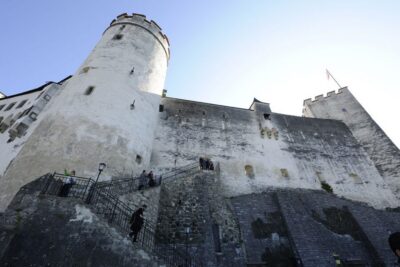
The last stop is Stift Nonnberg, a women’s monastery strongly associated with The Sound of Music. The guide describes it as the oldest women’s monastery in the world, and you also get alps views from the area.
This is where the tour’s title makes sense. It’s not just a clever hook. The nuns connection is real and physical in this ending location, and it gives you a place to exhale after the wartime material.
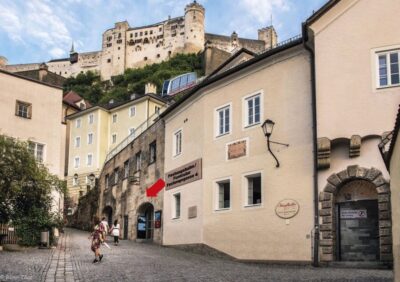
Time here is about 20 minutes. Since the tour ends at this point, you’ll likely feel like it’s an easy transition to keep exploring, including the footpath route toward Fortress Hohensalzburg. Even if you don’t go further up, the viewpoint alone gives your brain somewhere to land.
Price and value of this tour at $20.64 per person
At $20.64 per person, this is not the kind of tour that tries to justify itself with luxury or long museum time. The value is the focus: a small-group walking route with a strong theme, mobile ticketing, and a tight structure from movie landmarks to WWII traces.
A couple value drivers make this one feel like more than a basic city walk:
- You get small-group attention since the tour caps at 25 travelers
- The guide ties Salzburg’s cultural fame to wartime reality, which is exactly the kind of context you cannot get from a standard “highlights” route
- Many listed stops are free admission, so your money mostly pays for storytelling, pacing, and interpretation rather than entrances
If you are already planning to see Sound of Music sites, I see this as a smart add-on. If you only want a sunny stroll and zero heavy topics, skip it.
Who should book the Nuns and Nazis tour
This tour is a good match if you:
- know or love The Sound of Music and want the city behind the movie
- care about WWII local history rather than only big-picture timelines
- enjoy learning from a guide with a personal connection to the topic, not just facts pulled from a guidebook
- want a walk you can finish with views and a natural next step, since the route ends at Stift Nonnberg
It may not be for you if:
- you prefer strictly light topics
- you get uncomfortable with memorial themes and stories tied to persecution and forced labor
- you dislike urban legends at all, since the Steingasse stop includes a story you decide whether to believe
Small-group tour with a real guide, not a script
What makes this experience work is the human factor. The guide leading it is Leo, and the tour information emphasizes that his family history is influenced by WWII. That matters because the stories stay anchored to places you can point at, not just abstract concepts.
Also, this is a walking tour through multiple squares and streets. Even with strong storytelling, you still need to be the kind of traveler who likes moving and looking, not someone who wants everything explained from one bench.
For me, the best sign is that the tour aims to balance the emotional weight with a sense of place and clarity, plus keep the pace engaging enough to hold attention for two-plus hours.
Should you book the Nuns and Nazis Walking Tour in Salzburg?
I’d book it if you want your Salzburg to feel real, not only postcard pretty. The strongest reason is the pairing: movie locations plus Nazi-era traces equals a version of Salzburg you will remember, because the city becomes a living timeline.
Book it if you are the type who likes to connect dots as you walk, like noticing Stolpersteine right where someone might otherwise hurry past. And if you are curious about how the Trapp family story and the film narrative fit into Salzburg, this tour gives that connection without pretending WWII was a side note.
Skip it if you are only in Salzburg for quick sightseeing and you want a totally light experience.
If you are on the fence, a simple strategy helps: pair it with the rest of your day by keeping evening plans flexible. This tour is focused, emotional, and surprisingly memorable, so give yourself time to decompress after the walk.
FAQ
How long is the Nuns and Nazis walking tour?
The tour is listed as about 2 hours to 2 hours 15 minutes. Some tours may run longer, so it is smart to plan for a bit more than two hours.
Where does the tour start and end?
It starts at Kurgarten, Rainerstraße 2, 5020 Salzburg and ends at Nonnberggasse 8, 5020 Salzburg, at Nonnberg Abbey (Stift Nonnberg).
What time does the tour begin?
The start time is 3:00 pm.
How much does the tour cost?
The price is listed as $20.64 per person.
Do I need tickets for the stops?
The tour’s listed stops show admission tickets as free for the included sights, so you are not paying for entrance as part of this walking route.
Is there a mobile ticket?
Yes, the tour uses a mobile ticket.
Who is the guide?
The tour guide is Leo.
Is the walking route difficult?
The tour is designed for people with moderate physical fitness. It is a walking route through the old town, so comfortable walking shoes are a good idea.
Are service animals allowed?
Yes, service animals are allowed.
Is the tour near public transportation?
Yes, it is listed as near public transportation.
What is the cancellation policy?
Free cancellation is available. You can cancel up to 24 hours in advance for a full refund. If you cancel less than 24 hours before the start time, the amount paid is not refunded.
Walking Tours: Rest of the Austria File
- Salzburg 2.5-Hour Walking Tour: Mozart, Old Town & More
★ 4.2 · 987 reviews - Salzburg: Old Town, Mozart, & Mirabell Gardens Walking Tour
★ 4.8 · 461 reviews - Salzburg Oldtown: Sightseeing Walking Tour with Licensed Local Guide
★ 5.0 · 392 reviews - Salzburg Old Town Walking Tour, Mozart, Mirabell Gardens
★ 4.5 · 201 reviews
Tours: Rest of the Austria File
- The Original Sound of Music Tour in Salzburg
★ 4.5 · 6,129 reviews - Salzburg: Original Sound of Music Tour
★ 4.8 · 5,059 reviews - From Salzburg: Half-Day Tour to Hallstatt
★ 4.6 · 3,596 reviews - Salzburg: Amphibious Splash Tour on Land & on Water
★ 4.7 · 1,097 reviews
Tour Reviews: Rest of the Austria File
- The Original Sound of Music Tour in Salzburg
★ 4.5 · 6,129 reviews - Salzburg: Original Sound of Music Tour
★ 4.8 · 5,059 reviews - From Salzburg: Half-Day Tour to Hallstatt
★ 4.6 · 3,596 reviews - Salzburg: Mozart Concert at Mirabell Palace
★ 4.8 · 3,498 reviews
Newest Salzburg write-ups on file
- Zell am See Alpine Village Private Day Trip from Salzburg★ 5.0 · 3 reviews
- Private Austrian Food Tasting Tour in Salzburg’s Old Town★ 4.5 · 3 reviews
- Salzburg to Vienna, Private Transfer, 2h of Sightseeing, Local Driver, English★ 5.0 · 3 reviews
- Private Customized Salzburg City and Country Tour★ 5.0 · 3 reviews
- Private Transfer from Salzburg to Vienna: Door-to-door, English-speaking driver★ 4.5 · 3 reviews
- Private Tour: Discover Salzburg and the Stunning Lake District★ 5.0 · 3 reviews
Walking Tours, compared.
 ★ 4.7Vienna: Guided Walking Tour of City Center HighlightsFrom $254,989 reviews
 ★ 4.8Vienna: Vienna Central Cemetery Guided Walking TourFrom $3353,307 reviews
 ★ 4.9Vienna: Guided Walking Tour of City Highlights & Hidden GemsFrom $272,180 reviews
 ★ 4.7Vienna: Viennese Underworld Guided Walking TourFrom $371,865 reviews
 ★ 4.8Vienna: World War II Historical Walking TourFrom $311,772 reviews
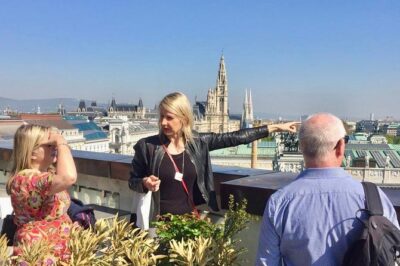 ★ 5.0Vienna Historic Center Small Group Walking TourFrom $721,746 reviews
 ★ 4.6Vienna: Private Walking Tour with a Local GuideFrom $551,420 reviews
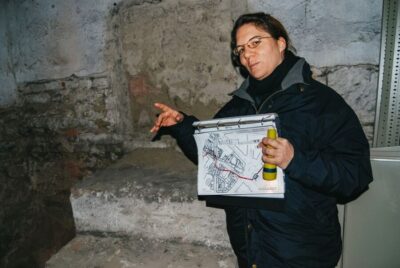 ★ 4.9Vienna: 1.5-Hour Underground Walking TourFrom $321,146 reviews
This tour also sits in