
REVIEW · VIENNA ART MUSEUMS
Vienna: Ticket to the Weltmuseum
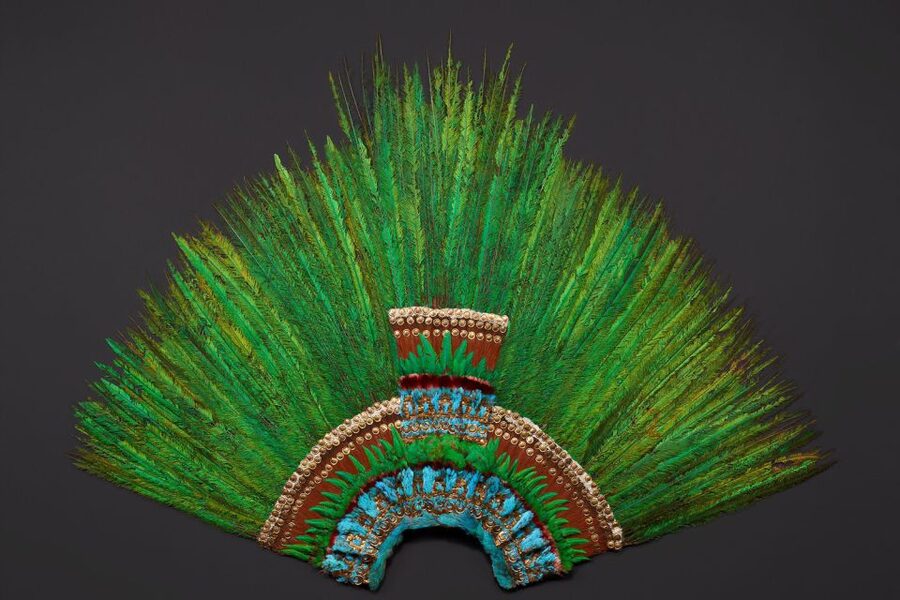
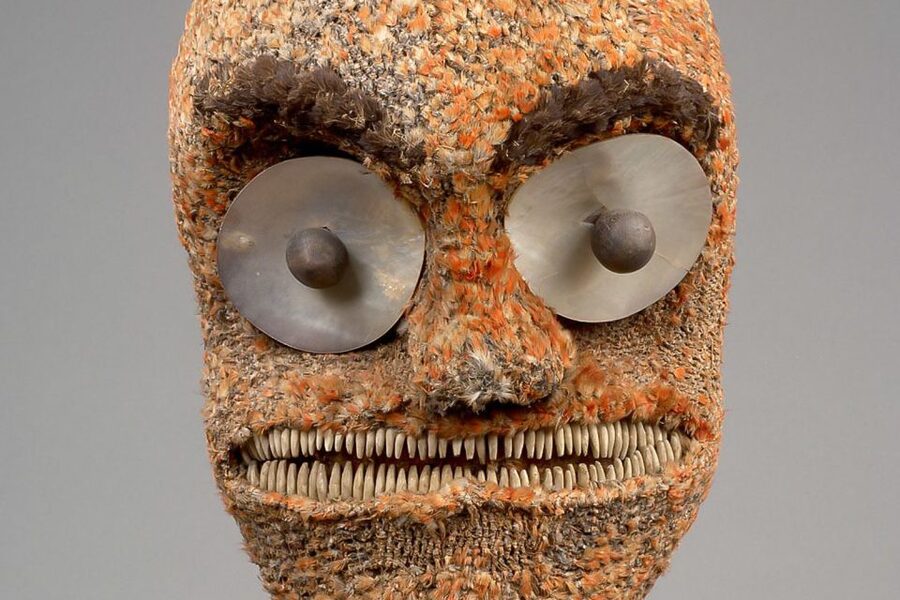
A feathered crown, then empires of trade. At Vienna’s Weltmuseum, you get a close look at global cultures through Habsburg collecting, with the famous Penacho feather decoration as the star.
And I really like how the museum pairs that spectacle with serious maritime context, especially the James Cook collection from the 19th century.
You’ll also get one of the museum’s biggest gifts right up front, the impressive listed pillar hall, which makes the whole visit feel more like stepping into history than just walking past objects. One possible drawback is that the museum covers a lot of ground, so if you only want one or two highlights, you might feel the ticket price is too much for your personal interests.
In This Review
- Key Things That Make This Ticket Worth Your Time
- Weltmuseum in Vienna’s Nieuwe Burg, a World-Collected Museum
- Meeting at Heldenplatz: Get Oriented Before You Stare at Everything
- Penacho, the Feather Crown That Pulls You In Fast
- James Cook Collections: Exploration by Sea, Not Just Legends
- Kunstkammer Pieces and Emperor Rudolf II’s Collecting Mindset
- The World-That-Wasn’t-Flat: Ethnography, Photos, and Books
- The Listed Pillar Hall: The Museum’s Heart and Its Built-In Sense of Drama
- How to Plan Your One Day So You Don’t Feel Rushed
- Price and Value: Is $18 Good for What You See?
- Who This Ticket Fits Best (And Who Might Skip It)
- Should You Book the Weltmuseum Ticket?
- FAQ
- Where is the meeting point?
- How much does the ticket cost?
- How long is the experience?
- Is the Weltmuseum wheelchair accessible?
- What can I see at the Weltmuseum?
- Is there free cancellation?
- Can I reserve now and pay later?
Key Things That Make This Ticket Worth Your Time
- Penacho first-timer payoff: A world-famous antique Mexican feather decoration that’s easy to understand as soon as you see it.
- James Cook context: A 19th-century sailor spotlight that adds story to exploration beyond Europe.
- Rudolf II cabinet pieces: Kunstkammer-style objects linked to Emperor Rudolf II collecting habits.
- Habsburg collecting timeline: Collections that go back about 500 years to the Habsburgs’ interest in non-European cultures.
- Pillar hall atmosphere: A listed architectural centerpiece that functions as a public heart of the museum, and even a stage for events.
Weltmuseum in Vienna’s Nieuwe Burg, a World-Collected Museum
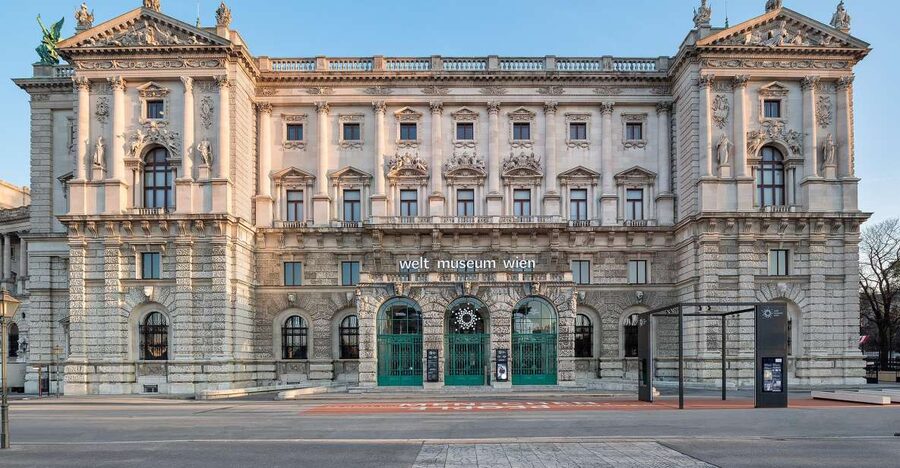
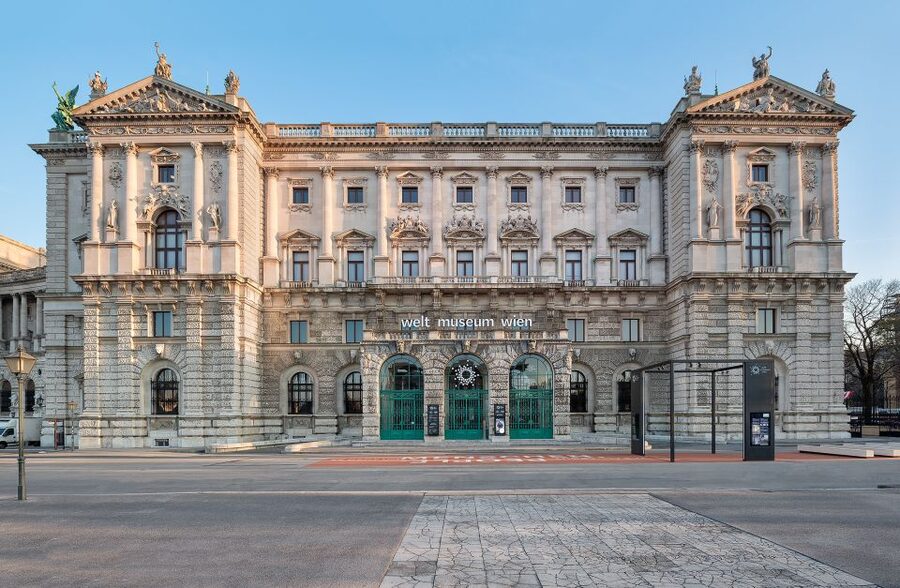
The Weltmuseum sits in Vienna’s Neue Burg at Heldenplatz, a setting that already feels like you’re in the center of the action. From the meeting point, you’re basically stepping into a museum complex that matches Vienna’s love of display, order, and big collections.
What I like about this setup is that it keeps your brain switched on. You’re not just absorbing “foreign cultures” as a vague theme. You’re seeing how one European power, the Habsburgs, organized and preserved objects, photographs, and books over centuries, and how that approach shaped what you can learn today.
You should expect a one-day visit that can either feel perfectly focused or a bit too broad, depending on your style. If you’re the type who loves details, you’ll likely want extra time in multiple rooms. If you’re more “highlight hunting,” you can still do it well, but you’ll need to keep moving.
Meeting at Heldenplatz: Get Oriented Before You Stare at Everything
Your meeting point is Heldenplatz, Neue Burg, 1010 Vienna. That’s a good anchor in practical terms. You can use it to line up your day with other sights nearby, and it’s easy to find compared to lesser-known museum corners.
A smart move is to arrive with a plan for your first 30 minutes. Start with the headline objects you care about most, like the Penacho and the James Cook-related areas. Once you’ve seen those, you’ll understand the rest of the museum’s “why” much faster.
Also, give yourself permission to pause. This museum is big on objects with visual impact, and the best learning often happens when you stop reading for a second and just look. I’d rather you do that than sprint through labels like you’re trying to beat a timer.
Penacho, the Feather Crown That Pulls You In Fast
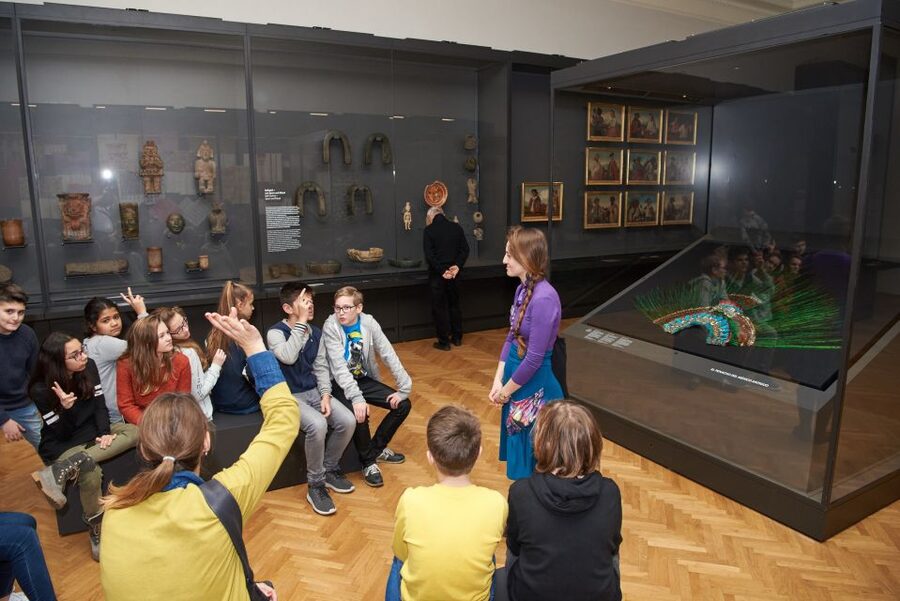
Penacho is the headline most people come for, and it’s easy to see why. This antique Mexican feather decoration has a reputation for a reason, and in the museum it feels like the room was built around it.
What makes Penacho especially satisfying is that it’s not just decorative. It connects to deeper questions about craftsmanship, display, and how objects travel far from their original setting. Even if you don’t read every label, you can still sense how unusual and valuable it is as a preserved cultural artifact.
If you’re the kind of visitor who wants a meaningful highlight without a lot of prep, Penacho works great. It’s a clear entry point. You’ll likely find your attention improves after you’ve seen it, because you start noticing how the museum frames other collections in the same spirit of wonder plus documentation.
James Cook Collections: Exploration by Sea, Not Just Legends
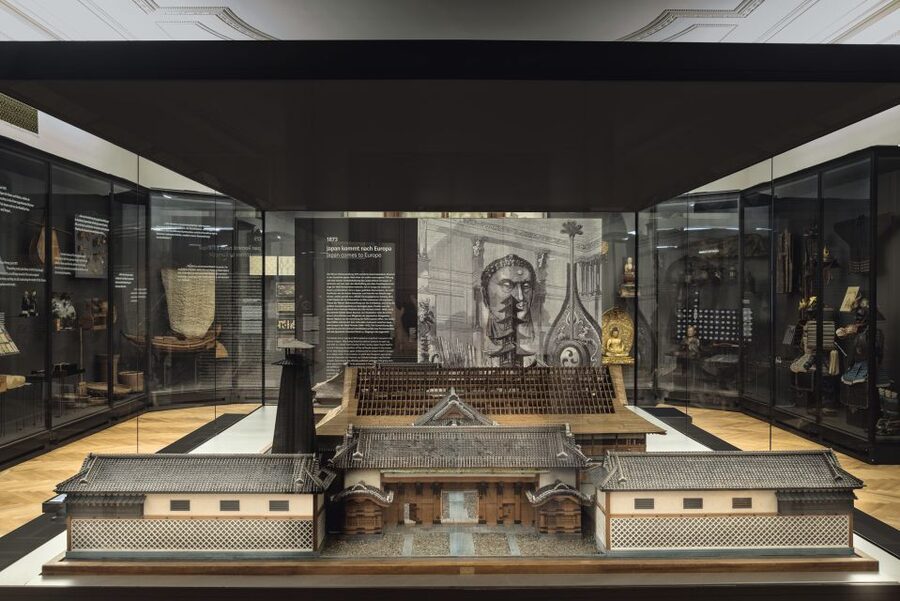
The museum’s James Cook collection is a major draw, and it helps balance the emotional impact of Penacho with a more structured historical angle. This is the 19th-century sailor collection, and it gives you a way to connect exploration to artifacts and curated evidence rather than just stories.
I like that this part of the museum turns a famous name into something you can actually see. It’s easier to understand global contact when the museum shows tangible material connected to navigation, ships, and sea-world thinking.
One practical note: don’t rush this section. If you glide past it, you miss the “bridge” it offers. After seeing it, the broader ethnographic objects and historical materials make more sense, because you’ve already got one clear thread for how Europeans built knowledge networks about the world.
Kunstkammer Pieces and Emperor Rudolf II’s Collecting Mindset
The Weltmuseum also highlights Kunstkammerstücke connected to Emperor Rudolf II. If you like the idea of museums-in-miniature, cabinet thinking, and collecting as a form of worldview, this is where your interest can spike.
Kunstkammer pieces matter because they show collecting as a cultural system, not just collecting as decoration. Rudolf II’s interest is framed as part of a long tradition of attention to rare objects and “curiosities,” which the Habsburgs then carried forward through later centuries.
You might not want to spend your whole day on this thread if you’re only into the biggest headline displays. But even then, I’d still recommend at least a slow stop here. It gives you a lens for the museum’s broader mission, why these objects are grouped together, and why they’re shown the way they are.
The World-That-Wasn’t-Flat: Ethnography, Photos, and Books
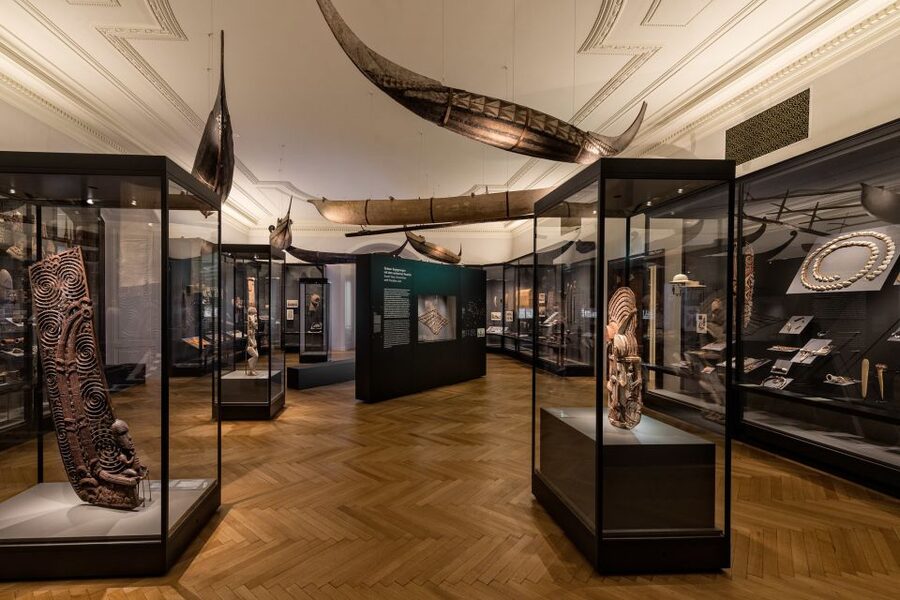
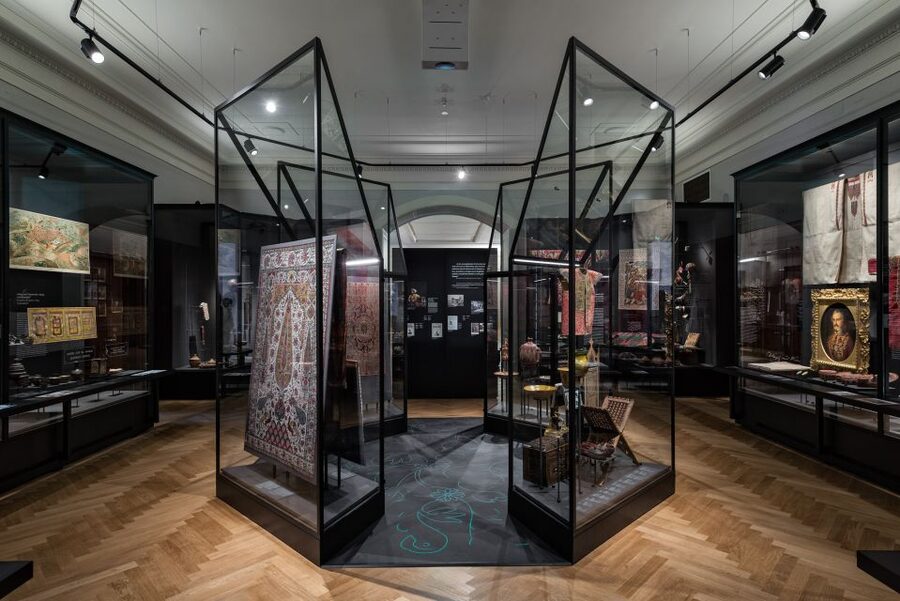
Beyond individual stars, the Weltmuseum covers ethnographic objects, historical photographs, and books about non-European cultures. This mix is valuable because it shows that collecting wasn’t only about physical objects. It was also about documenting how knowledge moved, got printed, and got archived.
This matters for how you interpret what you see. Objects alone can feel like they’re frozen in time. But when you also have photographs and books in the mix, you get more clues about the era when these items were gathered and described.
If you enjoy reading in museums, you’ll probably be happy here. If you don’t, you can still learn by looking for themes across rooms. For example, try to notice how the museum links visual material to cultural understanding, rather than treating objects as isolated curios.
The Listed Pillar Hall: The Museum’s Heart and Its Built-In Sense of Drama
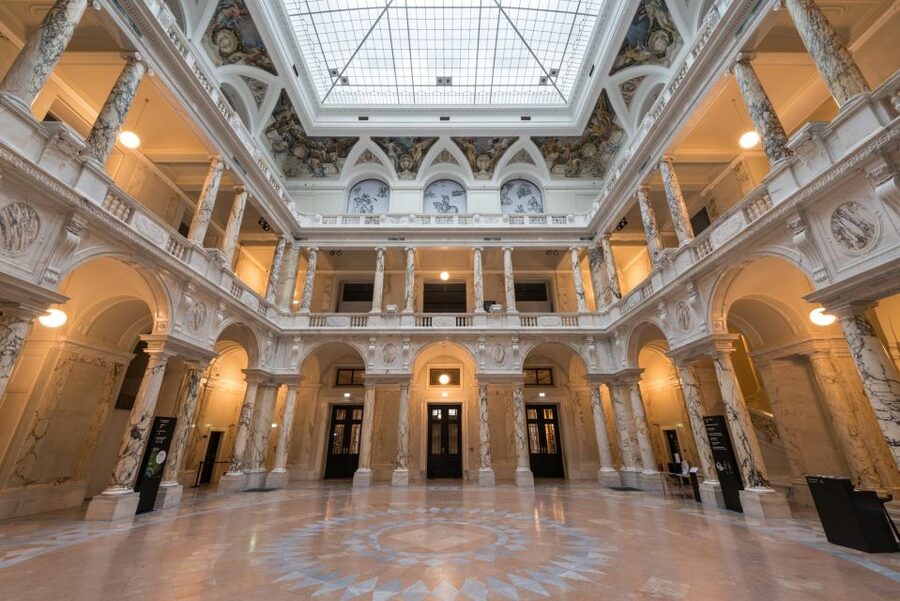
The pillar hall is one of the standout reasons to come. It’s described as the museum’s heart, and it’s listed, meaning it has architectural importance and protection because it’s part of the building’s value.
What’s practical about this space is that it helps you pace your day. When the museum gives you a big architectural centerpiece, it naturally creates rhythm. You can use the hall as a reset point, a place to regroup, decide what you want to see next, and then flow into another cluster of rooms.
It also functions as a stage for the museum’s own events and customer events. Even if you’re visiting on a regular day, that role shapes how you feel in the space. You’re not only a viewer, you’re in a public interior designed for moments, not just storage.
And if you want a small break, plan one here or nearby. There’s a museum café where you can have a coffee, and the hall offers a special glimpse that makes the pause feel like part of the museum, not time away from it.
How to Plan Your One Day So You Don’t Feel Rushed
This ticket is set for a one-day visit, and the museum is big enough that you could easily lose time if you have no strategy. A visitor-friendly approach is to split your day into two modes.
Mode one is the highlight loop. Prioritize Penacho, then move on to the James Cook collection, then check out Rudolf II’s Kunstkammer pieces. This gives you your high-impact learning and your visual “anchor” moments.
Mode two is the context loop. After highlights, slow down and pick a few rooms focused on ethnographic objects plus the historical photographs and books. This is where the museum’s long-term collecting story becomes clearer, about 500 years linked to the Habsburgs.
Timing tip: plan a coffee break after you’ve completed your highlight loop. That way you don’t end up tired and cranky while you try to read more detail. Also, wear comfortable shoes. This is one of those museums where “a quick look” can become “one more room,” especially when the pillar hall keeps pulling you back as a visual waypoint.
Price and Value: Is $18 Good for What You See?
At $18 per person, this ticket sits in a price zone that feels reasonable for a major museum, especially in Vienna where cultural options add up. The value comes from the fact that you’re not buying one exhibit. You’re buying a full pass into multiple collection types and eras.
The headline draws include Penacho and the James Cook collection, plus Rudolf II cabinet-related pieces. Then you add the broader framework: ethnographic objects, photographs, and books on non-European cultures, with the Habsburg collecting story stretching back about 500 years.
Now for balance: some people find that wide coverage means not every room grabs them. A recent note in the available feedback points out that the experience can feel like more than one museum at once, and that certain audio options may not land for everyone. If your taste is narrow, you’ll want to spend extra time on the sections that match you and skip the rest without guilt.
For most visitors, though, $18 is a strong deal when you focus on what you can actually see in a single day: major objects, big architectural space, and context that helps you connect the dots.
Who This Ticket Fits Best (And Who Might Skip It)
I’d recommend this ticket if you like museums that mix big recognizable objects with actual historical framing. Penacho alone can be a top-level reason to come, but the best experience happens when you also care about why these objects were collected and how they were documented.
You’ll probably enjoy it most if you:
- like ethnography when it’s supported by readable context like photos and books
- enjoy maritime history when it’s tied to physical collections
- are curious about Habsburg collecting culture, especially Kunstkammer-style thinking
You might consider another option if you want a small, single-subject museum visit. This one is broad, and you may feel it’s too much if you only want one theme for a short stop.
Should You Book the Weltmuseum Ticket?
Yes, if you want a well-known highlight plus real context in a beautiful, architectural centerpiece. Penacho is a strong “must-see,” and the James Cook collection gives you a second kind of payoff that isn’t just visual impact.
Book it if you’re okay spending part of your day reading, looking closely, and letting the museum’s collecting story do the work. If you like quick hits only, still consider it, but build your day around Penacho, James Cook, and the pillar hall so you leave satisfied instead of scattered.
If you’re the kind of visitor who enjoys a museum that can scale from 1 highlight sprint to a full day of room-to-room detail, this ticket is one of the better value plays in Vienna.
FAQ
Where is the meeting point?
The meeting point is Heldenplatz, Neue Burg, 1010 Vienna.
How much does the ticket cost?
The price is listed as $18 per person.
How long is the experience?
It is a one-day experience, and the ticket is valid for 1 day. Starting times depend on availability.
Is the Weltmuseum wheelchair accessible?
Yes, it is wheelchair accessible.
What can I see at the Weltmuseum?
You can see ethnographic objects, historical photographs and books on non-European cultures, including highlights like the Penacho feather decoration, the James Cook collection, and Kunstkammer pieces connected to Emperor Rudolf II. The pillar hall is also a major feature.
Is there free cancellation?
Yes. You can cancel up to 24 hours in advance for a full refund.
Can I reserve now and pay later?
Yes. The option is Reserve now & pay later, so you can book a spot and pay nothing today.
Vienna Art Museums, compared.
 ★ 4.6Vienna Kunsthistorisches Museum Day Admission TicketFrom $253,690 reviews
 ★ 4.7Tickets for the Albertina ExhibitionsFrom $232,126 reviews
 ★ 4.6Sigmund Freud Museum TicketFrom $181,668 reviews
 ★ 4.5Vienna: St. Stephen’s Cathedral & Dom Museum Wien TicketsFrom $341,652 reviews
 ★ 4.7Vienna: Leopold Museum Skip-the-Line Entry TicketFrom $22968 reviews
 ★ 4.7Combo Ticket: Kunsthistorisches Museum & Imperial TreasuryFrom $37785 reviews
 ★ 4.6Vienna: Tickets for Kunst Haus Wien: Museum HundertwasserFrom $18651 reviews
 ★ 4.5Skip the Line: Kunsthistorisches Museum Vienna Entrance Ticket466 reviews
This tour also sits in