
REVIEW · WALKING TOURS
Vienna Art Nouveau Walking Tour
A great city teaches you how to look. This Vienna Art Nouveau Walking Tour turns everyday metro architecture into a story about Viennese Jugendstil and public life. You get a guided route that mixes standout design, practical history, and a few key buildings you can spot again later on your own.
I especially like how it connects design to the city’s real problem, fast growth that demanded better transit. And I love the focus on Otto Wagner’s ideas, from icon-like station details to how the style became unmistakably Viennese.
One consideration is that two major stops may cost extra if you want in. The Otto Wagner Pavillon and the Secession House have separate admission, and the Beethoven Frieze visit depends on the day.
In This Review
- Key things you will notice on this tour
- Why Vienna’s Art Nouveau shows up in the metro
- Meeting point and pacing, so you do not feel rushed
- Café Museum to Karlsplatz: the Wagner thread begins
- Stadtpark station: the “best preserved” proof of the plan
- Sezession House and Jugendstil ideology: what the symbols try to say
- Otto Wagner buildings along the walk: apartment houses as design statements
- Kettenbrücke station to the imperial station: design under political pressure
- Otto Wagner Pavillon Hietzing and Österreichische Postsparkasse: the wider Wagner map
- Guides matter: what stands out about the people leading the walk
- Price and value: what you get for $176
- When this tour is the right fit
- Should you book the Vienna Art Nouveau Walking Tour?
- FAQ
- How long is the Vienna Art Nouveau Walking Tour?
- Where does the tour start?
- Is the tour guided in English?
- What is included in the price?
- What admissions are not included?
- Which metro stations does the tour focus on?
- When can you see Klimt’s Beethoven Frieze at the Secession House?
Key things you will notice on this tour
- The metro explained like a design project, not just a transit system
- Station architecture you can actually see and read, especially at Stadtpark and Kettenbrücke
- Jugendstil meaning, including the materials and symbols artists favored
- The Secession Building as a style landmark, including a special Klimt link on many days
- Otto Wagner’s multiple roles, planner, architect, and public statement maker
Other Vienna write-ups filed under Austria
- Vienna: Guided Walking Tour of City Center Highlights
★ 4.7 · 4,989 reviews - Vienna: Vienna Central Cemetery Guided Walking Tour
★ 4.8 · 3,307 reviews - Vienna: Guided Walking Tour of City Highlights & Hidden Gems
★ 4.9 · 2,180 reviews - Vienna: Viennese Underworld Guided Walking Tour
★ 4.7 · 1,865 reviews
Why Vienna’s Art Nouveau shows up in the metro
Vienna’s Art Nouveau, often called Jugendstil, is not just pretty facades. It is a whole approach to modern life, built around line, geometry, ornament, and materials that feel intentional. What makes this tour click is that it starts where most people normally do not look closely, transportation.
In the late 1800s, Vienna grew fast. With suburbs pressing into the city core, the metro plan was not optional. Urban planners needed routes along the Ringstrasse to link places and people. The architect tapped for the job, Otto Wagner, wanted a metro that was easy to recognize and hard to ignore. That is where the style enters. This was meant to be functional, but also an icon.
You will walk and ride with a guide who treats the stations and buildings like visual evidence. You will learn how Wagner translated a style often seen as bourgeois into something that could carry more public weight, even imperial politics. It makes the city feel smarter, and your eyes start working differently.
Meeting point and pacing, so you do not feel rushed
You start at Café Museum, Operngasse 7 (A-1010 Vienna). From there, the tour is designed as a focused loop with guided stops and walking stretches. The official duration is listed as 3 hours, and the guided portion is described as about 2.5 hours, so plan on a brisk but manageable pace.
This is the kind of tour that works best if you wear comfortable shoes. One review mentions they walked miles, and that matches the nature of the route. Even though you will use the metro for part of it, you still need time on foot to appreciate the buildings, not just pass by them.
Group size can be private or small, and that matters for pacing. In small groups, it is easier to ask questions and to slow down when a detail catches your eye.
Café Museum to Karlsplatz: the Wagner thread begins
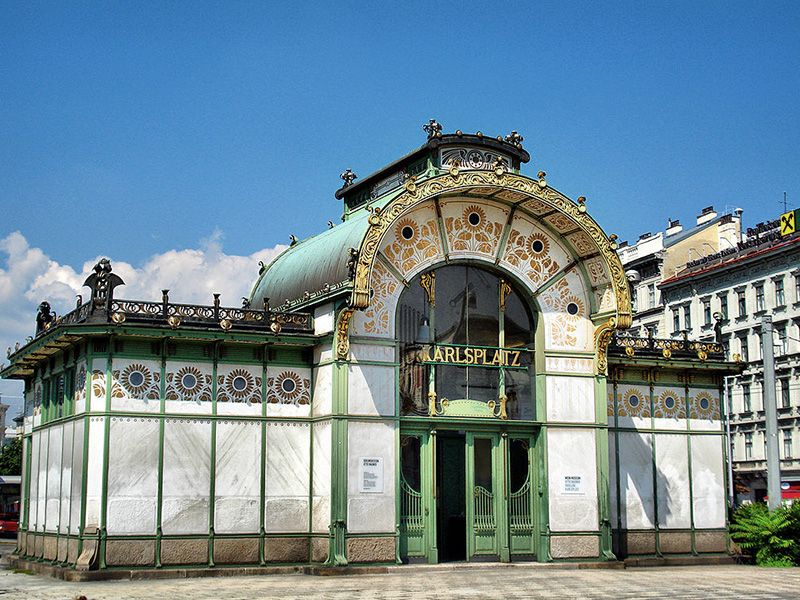
Early on, you are guided through the Café Museum stop. It sets the tone: this tour is about seeing architecture as a cultural statement. Then the route moves to the Wien Museum Otto Wagner Pavillon at Karlsplatz.
The Wagner Pavillon is where you start to understand why Wagner’s style feels both modern and unmistakably Vienna. You also get a chance to connect the dots before you begin spotting details at stations. In other words, you are not just collecting sights. You are building a reading skill.
One practical note: admission to the Wagner Pavillon is not included. That means you may want to arrive mentally ready to either pay separately for entry or accept what the guide can cover from outside during the stop. If you care deeply about Wagner as a person and a designer, budget for it.
Stadtpark station: the “best preserved” proof of the plan
Your next big step is a walk toward Stadtpark station, highlighted as the best-preserved of the original metro stations still in use. This is where the tour becomes very visual.
Stations are not just shelters for trains. They are public interiors. Wagner’s goal was that the system should be easy to recognize. So you will be looking for how the station’s design signals identity at a glance. You will also notice how materials and ornament are used to make the spaces feel crafted, not accidental.
The value here is not only the look. It is the logic. You will learn to connect what you see in the station to the broader idea that transit was a modern tool, and modern design could make it feel official and dignified.
This is a good stop if you like architecture that rewards close attention, like repeating motifs, careful lines, and design decisions that look simple but are not.
Sezession House and Jugendstil ideology: what the symbols try to say
A key moment happens around the Secession House. It is presented as the icon par excellence of Viennese Jugendstil. Even if you have seen photos before, this building tends to hit differently in person because it feels like a manifesto you can walk around.
You also get a chance to learn the philosophy behind Art Nouveau and to think about why certain symbols and materials were favored. This matters because many people treat Jugendstil like decoration. Here you will learn it is also about meaning, about pushing against older tastes, and about claiming a place for modern art in everyday spaces.
There is an important practical factor: admission to the Secession House costs extra, listed at €9.50 for adults and €6 for students and seniors. If your tour runs from Tuesday to Sunday, you will visit specifically to see Gustav Klimt’s Beethoven Frieze, and your guide will help you handle entry payment. On other days, you may still see the building and its design focus, but the Klimt interior visit is tied to that schedule detail.
If you want the Klimt payoff, check your tour day so you do not feel surprised by the extra ticket need.
Otto Wagner buildings along the walk: apartment houses as design statements
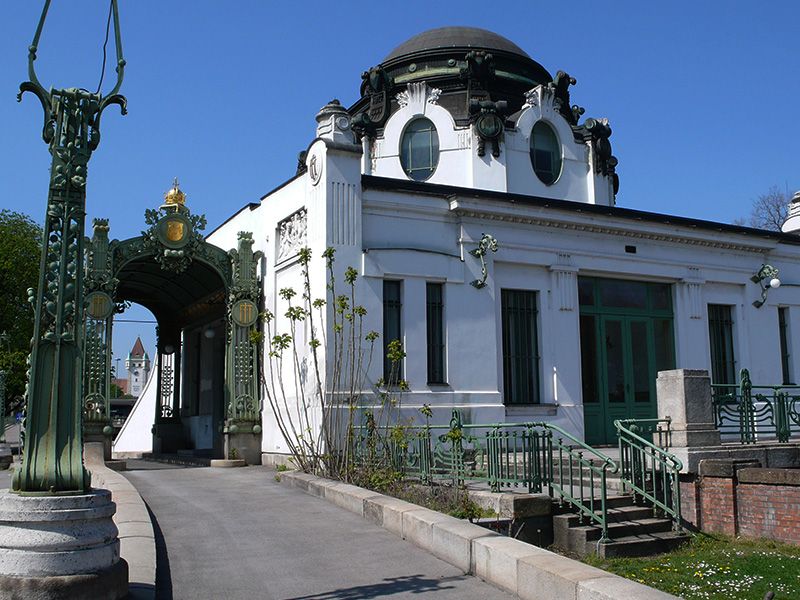
Between the station visits, the route includes other architecture stops, including two apartment houses designed by Otto Wagner. This is a smart inclusion because it keeps the tour from being just about public infrastructure.
Apartment buildings are where style meets daily life. You start seeing how the same design principles move across categories, from stations and pavilions to homes. Once you spot that link, the city stops looking like separate collections of landmarks. It starts looking like one design conversation happening at different scales.
This is also where the tour stays grounded. Instead of only grand buildings, you get examples of how design shaped what ordinary people experienced. If you enjoy architecture that tells you how society lived, not only how elites posed, you will like this portion.
Kettenbrücke station to the imperial station: design under political pressure
Next up is Kettenbrücke station, your next metro stop. Like Stadtpark, it is part of the experience because the tour treats these stations as design evidence. You are not just riding. You are comparing how the style shows up in different station contexts.
Then you take the metro again for the final stop, a visit to the imperial station, built outside Schönbrunn solely for the emperor. That detail gives the tour a dramatic edge. This is Art Nouveau, but it is also a performance of support for a major public project.
The tour points out a symbolic purpose. The station was meant to show critics of Vienna’s metro that the emperor backed the line. That turns the design into something political. The guide will help you pay attention to how Wagner translated a generally bourgeois Art Nouveau approach into a look with imperial grandiosity.
This is a great moment if you like stories where art and power overlap. It makes the architecture feel less like a museum piece and more like a public argument written in stone, metal, and form.
Otto Wagner Pavillon Hietzing and Österreichische Postsparkasse: the wider Wagner map
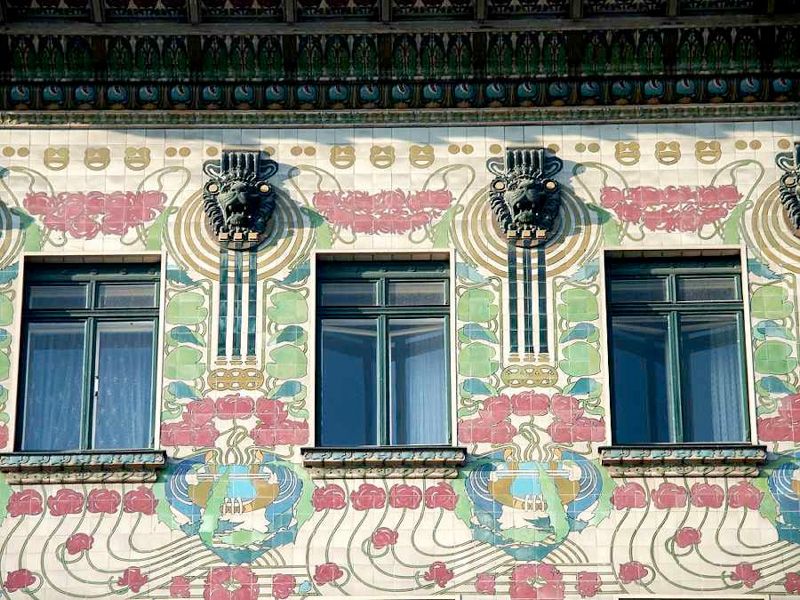
Your itinerary also includes guided time at Otto Wagner Hofpavillon Hietzing and the Österreichische Postsparkasse. Even if you already know Wagner’s name, these stops help you see that he was not only a station architect. He shaped a whole way of thinking about modern Vienna in multiple civic and semi-civic settings.
Hofpavillon is tied to the imperial theme you heard earlier, so it helps reinforce the idea that Wagner’s design language could be tuned to different audiences and institutions. The Postsparkasse brings the Art Nouveau idea into a building tied to public services and everyday transactions.
You get more than one flavor of the same aesthetic. That’s part of the value for the price. You are paying for an interpretation layer, a guide who can connect what you’re seeing to the why behind it.
If you love architecture, this makes the tour feel like a mini-course you can take with you. Later, when you walk around Vienna on your own, you will recognize design choices faster because you have already learned the reading method.
Guides matter: what stands out about the people leading the walk
This tour is led by a historian guide, and the experiences shared in the reviews highlight strong guide skills. One guide name you might hear is Wolfgang, described as enthusiastic and able to tailor the tour closely for a small group, with plenty of walking while keeping it enjoyable. Another is Peter, praised for handling a lot of questions and making the architecture easier to spot, including less obvious places of worship details. Giuseppina is also mentioned as warm, attentive, and very well informed about Art Nouveau.
That matters because Art Nouveau is full of small signals. If your guide is good, you do not just see pretty work. You learn what to focus on, and you stop guessing. In a small group, you often get that bonus of flexibility, so the tour can bend slightly toward what you care about, like Klimt links, the metro design story, or the symbolism behind Jugendstil.
Price and value: what you get for $176
At $176 per person for a 3-hour experience, you are paying for more than a walk. You are paying for a live English historian guide and a route that combines major Jugendstil landmarks with metro architecture and interpretive context. That kind of “how to see it” guidance is hard to replace if you self-guide without a plan.
The main value tension is admissions. Entry to the Otto Wagner Pavillon is not included, and the Secession House costs extra. If you want the Beethoven Frieze visit on Tuesday to Sunday, factor in that €9.50 adult and €6 student or senior ticket. When you add those potential extras, the total cost rises.
Still, I think the structure is a fair match for the price. You are not just buying access to buildings. You are buying interpretation of Otto Wagner’s metro vision and an architectural language you will notice for the rest of your trip. For a visitor who wants to understand Vienna beyond walking in circles, that’s solid value.
If you are tight on budget, consider whether you will pay for both optional admissions. If you are really invested in Jugendstil details and Klimt, budget the extra tickets and enjoy the full effect.
When this tour is the right fit
Book this tour if you:
- Want Art Nouveau that connects to real city life, especially transit and civic buildings
- Like design stories with a brain, where symbolism and materials get explained
- Plan to stay in central Vienna and can handle some walking
- Enjoy guided architecture, where you learn what to look for, not only what to see
You might skip or keep expectations focused if you:
- Only care about quick photo stops and dislike structured walking routes
- Are not interested in architecture theory or the “why” behind style
- Prefer fully self-guided sightseeing, since two major entries may cost extra
Should you book the Vienna Art Nouveau Walking Tour?
Yes, I think you should book it if you want a Vienna experience that feels more like understanding than checking boxes. The tour’s strongest ingredient is that it treats the metro stations and Jugendstil buildings as part of one story, Wagner’s design goals, and the ideology behind the style. That angle is exactly what makes the walk more satisfying than a typical landmark circuit.
Just plan for the two separate admissions and, if Klimt is a priority, aim for a day when the Secession House visit includes the Beethoven Frieze. Also, wear comfy shoes and be ready to walk. If you bring curiosity and you like architecture, this one should pay off quickly, and it will give you a sharper eye for Vienna long after the tour ends.
FAQ
How long is the Vienna Art Nouveau Walking Tour?
The tour is listed as 3 hours total.
Where does the tour start?
The meeting point is Café Museum, Operngasse 7, A-1010 Vienna.
Is the tour guided in English?
Yes. The live tour guide speaks English.
What is included in the price?
The tour includes the 3-hour Vienna Art Nouveau tour and a historian guide.
What admissions are not included?
Admission to the Otto Wagner Pavillon and to the Secession House is not included. The Secession House costs €9.50 for adults and €6 for students and seniors.
Which metro stations does the tour focus on?
The tour includes views at Stadtpark station and Kettenbrücke station, and it also includes a final visit to the imperial station.
When can you see Klimt’s Beethoven Frieze at the Secession House?
If your tour runs Tuesday to Sunday, you will visit the Secession House to see Klimt’s Beethoven Frieze, and the entrance fee is not included in the tour price.
Walking Tours: Rest of the Austria File
- Vienna: Guided Walking Tour of City Center Highlights
★ 4.7 · 4,989 reviews - Vienna: Vienna Central Cemetery Guided Walking Tour
★ 4.8 · 3,307 reviews - Vienna: Guided Walking Tour of City Highlights & Hidden Gems
★ 4.9 · 2,180 reviews - Vienna: Viennese Underworld Guided Walking Tour
★ 4.7 · 1,865 reviews
Tours: Rest of the Austria File
- Vienna: Schönbrunn Palace & Gardens Skip-the-Line Tour
★ 4.7 · 7,739 reviews - Vienna Spanish Riding School Guided Tour
★ 4.7 · 6,765 reviews - Vienna: Skip-the-Line Sisi Museum, Hofburg and Gardens Tour
★ 4.8 · 5,918 reviews - Vienna: Skip-the-Line Schönbrunn Palace & Gardens Tour
★ 4.8 · 5,411 reviews
Tour Reviews: Rest of the Austria File
- Vienna: Vivaldi’s Four Seasons Concert in Karlskirche
★ 4.7 · 14,951 reviews - Vienna: Schönbrunn Palace & Gardens Skip-the-Line Tour
★ 4.7 · 7,739 reviews - Vienna: Light of Creation Votive Church Immersive Light Show
★ 4.8 · 6,779 reviews - Vienna Spanish Riding School Guided Tour
★ 4.7 · 6,765 reviews
Newest Vienna write-ups on file
- Vienna: Private Walking Tour to The Hofburg & Graben Street★ 5.0 · 3 reviews
- Vienna: Private tour Mauthausen and Linz★ 4.1 · 3 reviews
- Vienna Private Full Day Tour – Tickets to Schönbrunn & Lunch★ 5.0 · 3 reviews
- Vienna: Johann Strauss 200th birthday anniversary exhibition★ 4.7 · 3 reviews
- Vienna: Full-Day Vienna Woods Wine Tasting Tour★ 5.0 · 3 reviews
- Vienna: Festive Season and New Year’s Eve Waltz Workshop★ 5.0 · 3 reviews
Walking Tours, compared.
 ★ 4.7Vienna: Guided Walking Tour of City Center HighlightsFrom $254,989 reviews
 ★ 4.8Vienna: Vienna Central Cemetery Guided Walking TourFrom $3353,307 reviews
 ★ 4.9Vienna: Guided Walking Tour of City Highlights & Hidden GemsFrom $272,180 reviews
 ★ 4.7Vienna: Viennese Underworld Guided Walking TourFrom $371,865 reviews
 ★ 4.8Vienna: World War II Historical Walking TourFrom $311,772 reviews
 ★ 5.0Vienna Historic Center Small Group Walking TourFrom $721,746 reviews
 ★ 4.6Vienna: Private Walking Tour with a Local GuideFrom $551,420 reviews
 ★ 4.9Vienna: 1.5-Hour Underground Walking TourFrom $321,146 reviews
This tour also sits in