
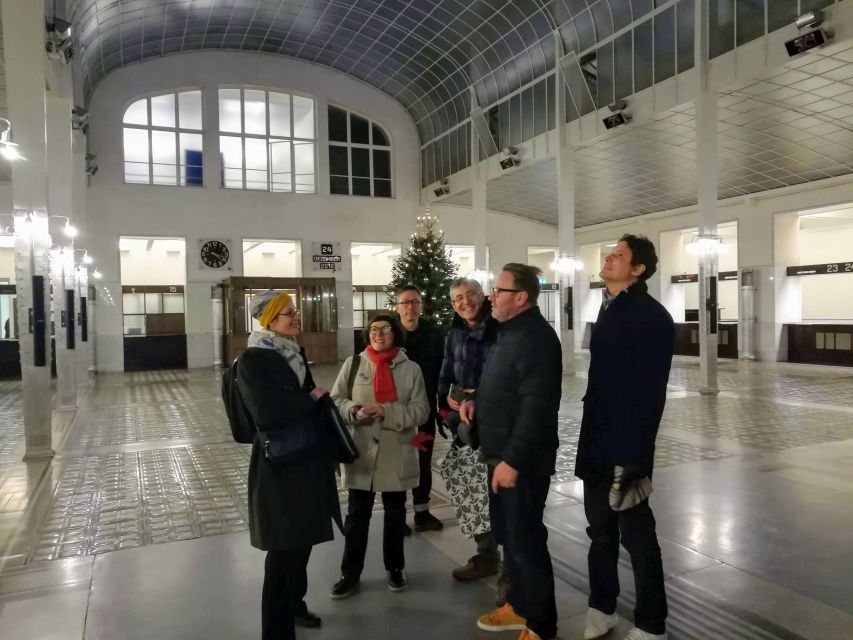
REVIEW · WALKING TOURS
Vienna Art Nouveau Walking Tour
Vienna Art Nouveau shows up in the oddest places. This 2.5 hour tour (around 3 hours on foot) connects Otto Wagner and Jugendstil ideas to buildings you can actually see in Vienna, with a guide who explains how the details work.
Two things I really like: the small group (up to 8) keeps questions flowing, and the route mixes famous sights with the kind of metro architecture most people miss. One thing to consider is that a couple of stops can add entry costs depending on the day and season.
You also get a real “why it matters” sense of Vienna around 1900, not just a checklist of pretty facades. The discussion ties symbols, materials, and design philosophy to the people behind the style, including names like Gustav Klimt and the artists linked to the Secession movement. The main drawback: expect some cold or wet walking, and you should budget a little extra if you want all optional museum time.
In This Review
- Key highlights worth prioritizing
- Vienna’s Art Nouveau, explained by what you can actually see
- From Operngasse to Otto Wagner Pavillon at Karlsplatz
- Stadtpark station and the clever riverbed story
- The Secession building at Kettenbrücke, plus Klimt’s Beethoven Frieze
- The optional Klimt stop and what it costs
- “Imperial” station and why the emperor backed the metro
- How the guide makes Art Nouveau click in real time
- Price and value: what you get for $180.04
- Possible extra costs to plan for
- Practical tips so you enjoy the walking part
- Who should book this Vienna Art Nouveau tour
- Should you book this Vienna Art Nouveau walking tour?
- FAQ
- How long is the Vienna Art Nouveau walking tour?
- Where does the tour start?
- Is the tour offered in English?
- Is admission included for the stops?
- What is the cost for the Secession House Beethoven Frieze?
- Is food and drinks included?
- How big is the group?
- Can I get a full refund if I cancel?
Key highlights worth prioritizing
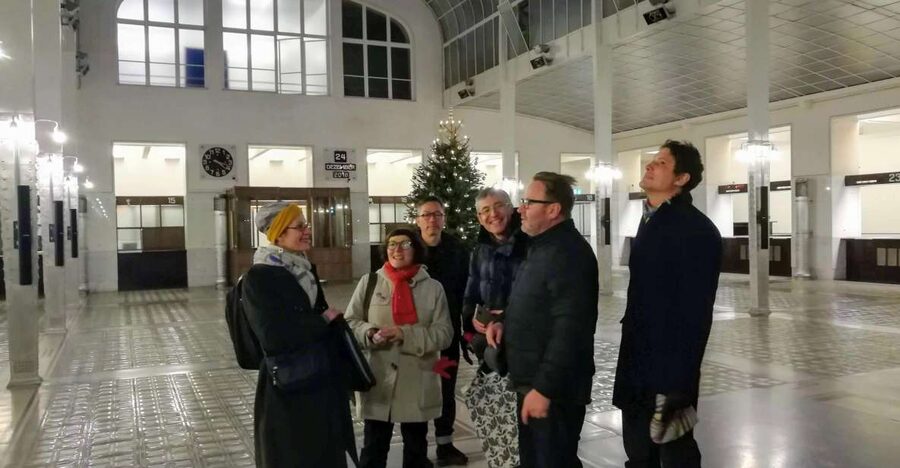
- Metro stations as design galleries: you start reading the city through stations still in use
- Otto Wagner’s fingerprints: pavillon, apartments, and how he translated Art Nouveau into something grand
- Secession building and Klimt’s Beethoven: a direct stop for the ideas behind Viennese Jugendstil
- A living infrastructure story: the Stadtpark station’s redirected riverbed is a great “how they built it” lesson
- Small group format: up to 8 people, and guides can adjust to keep things comfortable
Other Vienna write-ups filed under Austria
- Vienna: Guided Walking Tour of City Center Highlights
★ 4.7 · 4,989 reviews - Vienna: Vienna Central Cemetery Guided Walking Tour
★ 4.8 · 3,307 reviews - Vienna: Guided Walking Tour of City Highlights & Hidden Gems
★ 4.9 · 2,180 reviews - Vienna: Viennese Underworld Guided Walking Tour
★ 4.7 · 1,865 reviews
Vienna’s Art Nouveau, explained by what you can actually see
Vienna’s Art Nouveau, often called Jugendstil, is easier to understand when you stop treating it like wallpaper. On this tour, I like that the guide grounds everything in real locations: metro stations, apartment houses, and signature buildings that show how the movement used line, ornament, and structure as one idea.
The route also gives you a fast orientation for Vienna. Even if you’ve been before, you get fresh context for what you’re seeing elsewhere in the city, because the guide links these designs to the era and the artists behind them.
You’ll walk, but you’ll also use public transit as part of the experience. That matters because it keeps the pacing realistic, especially if you do not want to spend the whole time doing long stretches on foot.
From Operngasse to Otto Wagner Pavillon at Karlsplatz
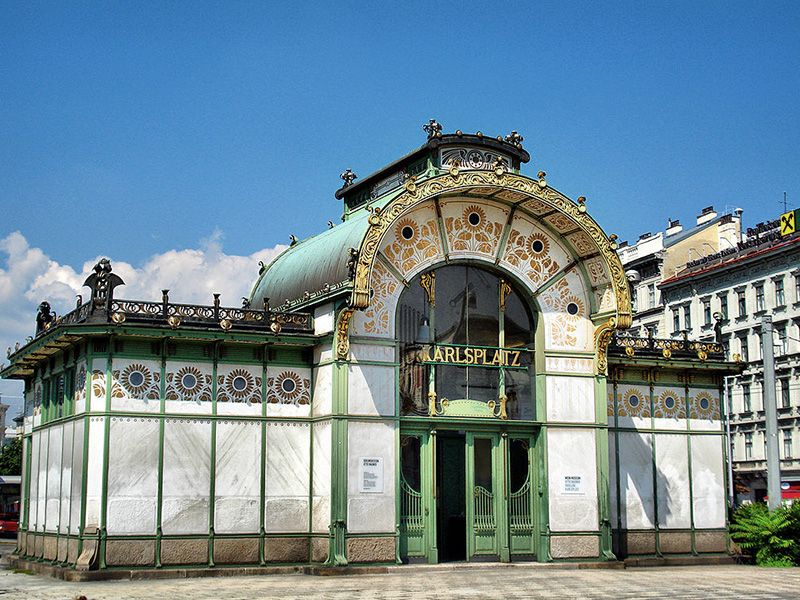
Your morning (or afternoon) starts at Operngasse 7, 1010 Wien near public transportation. From there, the first focus is the Otto Wagner Pavillon at Karlsplatz, starting with the pavilion itself and a chance to look at the small Wagner Museum.
This is a strong opener because it sets expectations for what you are about to see. Otto Wagner is not just one architect in a list, he is the thread that connects the city’s Art Nouveau language to something more functional and more expressive at the same time.
Admission at this first stop is listed as free for the Wagner Museum. If you want value right away, this is a good start, because you are seeing a focused introduction without extra ticket cost.
What to watch for here is the “handwriting” of Jugendstil. Look for how forms feel both decorative and structural. The tour’s angle is that the details are not random, they are part of a design philosophy.
Stadtpark station and the clever riverbed story
Next you head to Stadtpark station, described as the best preserved of the original metro stations still in use. That alone is useful, because you are not just touring the concept of metro architecture, you are seeing it in a living environment.
One detail I found especially interesting is the artificial riverbed built for the small Vienna river. When the city train was built, the river needed rechanneling, and the station’s setting helps you understand how planners integrated the new infrastructure into the existing city.
This stop is valuable for two reasons. First, it teaches you to notice how Jugendstil thinking can show up in public engineering and spatial design, not only in museums and big civic buildings. Second, it gives you a practical lens for seeing Vienna: the city grew by reshaping systems, then styling the result.
Admission here is free as well. So if you are trying to keep costs down while still getting a meaningful architecture focus, this is a great point on the schedule.
The Secession building at Kettenbrücke, plus Klimt’s Beethoven Frieze
After Stadtpark, you reach Kettenbrücke station, and on the way you get time at the famous Secession building, a standout icon of Viennese Jugendstil. This is where the tour shifts from “look at the shape” to “understand the idea,” with an emphasis on the symbols and materials Jugendstil practitioners favored.
You’ll also see two apartment houses by Otto Wagner on the way. I like that connection because it shows how the same design impulses can appear in everyday residential life, not only in grand cultural institutions.
A big question you might have when you see the Secession building is why it looks the way it does. The tour is set up to answer that, pointing you toward the logic behind the style, then showing how those concepts echo across the other stations and buildings you already visited.
The optional Klimt stop and what it costs
From Kettenbrücke, you take the metro for your next main stop, and part of the Secession experience includes the famous Beethoven Frieze by Gustav Klimt in the Secession House.
The tour data says that this is not included automatically as free. If you tour Tuesday to Sunday, you pay €9.50 for adults and €6 for students and seniors for admission to Secession House to see the Beethoven Frieze. Your guide helps you pay.
Here’s how to decide if it’s worth adding: if Klimt is one of your main Vienna interests, this is the cleanest way to connect Jugendstil design with one of the movement’s most iconic artworks. If art museums do not do much for you, you can still enjoy the Secession building itself, which is already central to the style lesson.
Also note the day logic. Since the ticket requirement is tied to Tue-Sun in the provided info, check your travel day so you are not surprised when you arrive at this part of the route.
“Imperial” station and why the emperor backed the metro
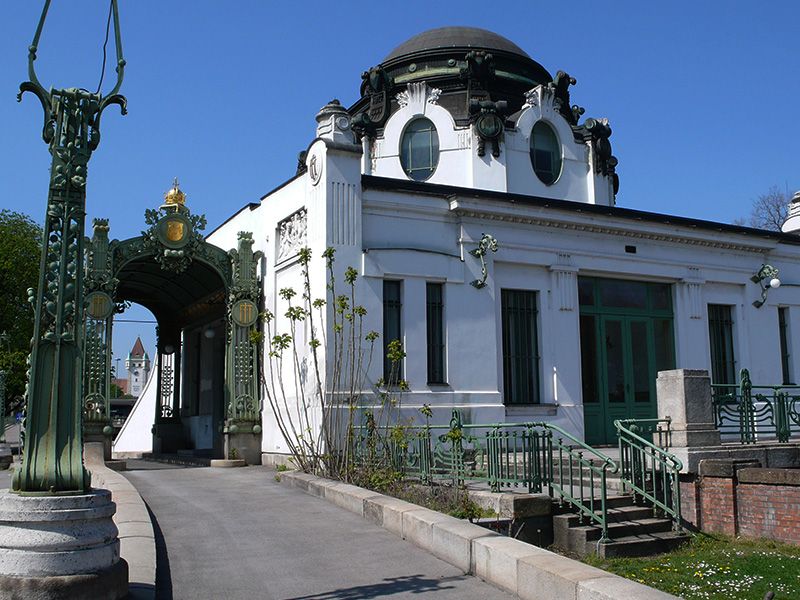
The tour’s final big architectural moment centers on the imperial station, visited via metro from Kettenbrücke. The station building is described as having been erected outside Schönbrunn castle specifically for the emperor to use.
This stop adds a fascinating layer to the story. It is not only about Art Nouveau style, it is about power and public perception. The tour highlights the symbolic meaning of the imperial connection, showing critics of Vienna’s metro that the emperor supported the line.
What I like about ending here is that it helps you see Wagner’s work as more than ornament. You learn how Wagner took a style that could feel “bourgeois” and translated it into something with imperial grandiosity.
Even if you are not a railway nerd, the lesson sticks because it connects design decisions to social meaning. You start noticing patterns you saw earlier: materials, shapes, and the way stations and buildings can communicate authority, progress, and identity.
Admission is listed as free for this part of the visit, which makes the ending feel accessible.
How the guide makes Art Nouveau click in real time
This type of tour lives and dies by the guide. And the feedback tied to this experience strongly points to guides who can explain architecture with energy, clarity, and a bit of story.
For example, you might be guided by Jan, Stephan, Suzanne, Ilse, or Wolfgang Augsten. Across these names in the supplied notes, the common thread is the ability to connect Otto Wagner, Jugendstil design, and Vienna history in a way that stays focused on what you are standing in front of.
I also like that the guides seem willing to adapt. In cold or rainy weather, one guide offered a way to avoid getting soaked, and another used a specific metro line (the U4) to cut down on walking and warm the group between discussions. That kind of flexibility matters because it keeps the architecture lesson from turning into a misery test.
The other practical win: you leave with tips for how to handle Vienna’s public transportation system. Even if you only take the U-Bahn once or twice, you get a smoother feel for getting around the city later.
Price and value: what you get for $180.04
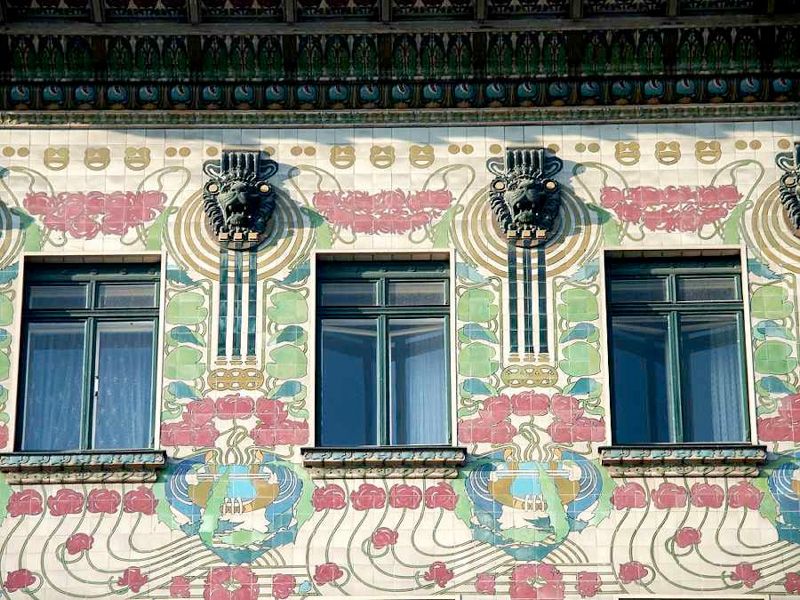
At $180.04 per person, this is not the cheapest Vienna tour. But it is also not priced like a private driver and bespoke museum sprint. You are paying for a focused guide plus a route that ties multiple major nodes of Jugendstil design together.
Here’s what supports the value:
- You get a structured 2.5 hour guided experience that centers on metro stations and landmark architecture.
- The group is limited to a maximum of 8 travelers, which is a big deal for question time and pacing.
- Most station and pavilion-related stops are listed as free admission in the provided information, with only a couple of optional museum-style charges.
What could make it feel pricier is if you add both optional paid components. The Otto Wagner Pavilion can include an admission cost in certain months, and Secession House can add a ticket for the Beethoven Frieze.
Possible extra costs to plan for
Based on the provided details:
- Otto Wagner Pavilion: from April to October, when the museum is open, the tour incorporates a visit with admission listed as €5 for general, €4 for senior citizens, students, Vienna Card holders, and persons with disabilities.
- Secession House (Klimt Beethoven Frieze): if touring Tuesday to Sunday, €9.50 adults and €6 students and seniors.
Food and drinks are not included, so build in some time later for a warm meal.
If you want a clean value match, this tour works well if you care about Jugendstil as a design system, not only as postcard facades. If you love architecture and you like seeing how the same style shows up in infrastructure and everyday buildings, the price starts to feel reasonable fast.
Practical tips so you enjoy the walking part
This experience is described as a walking tour and the schedule is around 2.5 hours (and also marketed as roughly a 3-hour walking format). That means you should plan for real outdoor time, even if the route uses metro segments to keep it moving.
Bring layers. Vienna weather can change fast, and at least one guide response in the provided notes suggests comfort strategies when it gets wet and cold. If you have a compact umbrella, bring it. If you hate damp shoes, wear footwear you can handle for a few hours.
Also, since you are using public transit during the tour, arrive at the start point ready to move. The meeting point is Operngasse 7, 1010 Wien, and it is near public transportation, which helps.
For your photos: focus on angles and details. Stations and apartment houses give you different views than museums. You’ll get more from looking at line work, ornament placement, and how the building shapes interact with streets than from trying to capture everything in one wide shot.
Who should book this Vienna Art Nouveau tour
This is a good fit if you:
- care about art and architecture around Vienna’s turn-of-the-century period
- want a guided way to understand Jugendstil and Otto Wagner through real places
- like tours that mix art history with built-world design, including metro stations
It may feel less ideal if you:
- mostly want palace interiors and big museum rooms
- dislike outdoor walking, even if metro segments help
- only want the single biggest star attraction and not the surrounding design network
If you have already done a standard “Vienna highlights” day, this one gives you a different lens. It helps you see how aesthetics and city systems grew together.
Should you book this Vienna Art Nouveau walking tour?
I’d book it if Vienna around 1900 is your kind of travel theme and you want a tight, guided route that teaches you to see the city’s Jugendstil logic in context. The combination of Otto Wagner stops, Secession symbolism, and the story behind stations makes it more than a sightseeing stroll.
Before you go, check your travel day. If you want Klimt’s Beethoven Frieze, factor in the stated Secession House ticket for Tue-Sun. If you visit between April and October, factor in the possible Otto Wagner Pavilion admission as well.
FAQ
How long is the Vienna Art Nouveau walking tour?
It runs for about 2 hours 30 minutes (approximately). It is also described as a 3-hour walking tour.
Where does the tour start?
The meeting point is Operngasse 7, 1010 Wien, Austria.
Is the tour offered in English?
Yes, the tour is offered in English.
Is admission included for the stops?
Many parts are listed as free, but there can be additional admission fees for the Otto Wagner Pavilion (Apr to Oct when the museum is open) and for Secession House to see Klimt’s Beethoven Frieze (Tuesday to Sunday).
What is the cost for the Secession House Beethoven Frieze?
If touring Tuesday to Sunday, admission to Secession House is listed as €9.50 for adults and €6 for students and seniors. Your guide helps with payment.
Is food and drinks included?
No. Food and drinks are not included unless specified.
How big is the group?
The maximum group size is 8 travelers per booking.
Can I get a full refund if I cancel?
Yes. You can cancel up to 24 hours in advance for a full refund.
Walking Tours: Rest of the Austria File
- Vienna: Guided Walking Tour of City Center Highlights
★ 4.7 · 4,989 reviews - Vienna: Vienna Central Cemetery Guided Walking Tour
★ 4.8 · 3,307 reviews - Vienna: Guided Walking Tour of City Highlights & Hidden Gems
★ 4.9 · 2,180 reviews - Vienna: Viennese Underworld Guided Walking Tour
★ 4.7 · 1,865 reviews
Tours: Rest of the Austria File
- Vienna: Schönbrunn Palace & Gardens Skip-the-Line Tour
★ 4.7 · 7,739 reviews - Vienna Spanish Riding School Guided Tour
★ 4.7 · 6,765 reviews - Vienna: Skip-the-Line Sisi Museum, Hofburg and Gardens Tour
★ 4.8 · 5,918 reviews - Vienna: Skip-the-Line Schönbrunn Palace & Gardens Tour
★ 4.8 · 5,411 reviews
Tour Reviews: Rest of the Austria File
- Vienna: Vivaldi’s Four Seasons Concert in Karlskirche
★ 4.7 · 14,951 reviews - Vienna: Schönbrunn Palace & Gardens Skip-the-Line Tour
★ 4.7 · 7,739 reviews - Vienna: Light of Creation Votive Church Immersive Light Show
★ 4.8 · 6,779 reviews - Vienna Spanish Riding School Guided Tour
★ 4.7 · 6,765 reviews
Newest Vienna write-ups on file
- Vienna: Private Walking Tour to The Hofburg & Graben Street★ 5.0 · 3 reviews
- Vienna: Private tour Mauthausen and Linz★ 4.1 · 3 reviews
- Vienna Private Full Day Tour – Tickets to Schönbrunn & Lunch★ 5.0 · 3 reviews
- Vienna: Johann Strauss 200th birthday anniversary exhibition★ 4.7 · 3 reviews
- Vienna: Full-Day Vienna Woods Wine Tasting Tour★ 5.0 · 3 reviews
- Vienna: Festive Season and New Year’s Eve Waltz Workshop★ 5.0 · 3 reviews
Walking Tours, compared.
 ★ 4.7Vienna: Guided Walking Tour of City Center HighlightsFrom $254,989 reviews
 ★ 4.8Vienna: Vienna Central Cemetery Guided Walking TourFrom $3353,307 reviews
 ★ 4.9Vienna: Guided Walking Tour of City Highlights & Hidden GemsFrom $272,180 reviews
 ★ 4.7Vienna: Viennese Underworld Guided Walking TourFrom $371,865 reviews
 ★ 4.8Vienna: World War II Historical Walking TourFrom $311,772 reviews
 ★ 5.0Vienna Historic Center Small Group Walking TourFrom $721,746 reviews
 ★ 4.6Vienna: Private Walking Tour with a Local GuideFrom $551,420 reviews
 ★ 4.9Vienna: 1.5-Hour Underground Walking TourFrom $321,146 reviews
This tour also sits in