
REVIEW · VIENNA OLD TOWN DISCOVERY WALKS
The Ringstrasse Project Walking Tour
Vienna’s grand Ringstrasse gets real when a great guide points out the details. I especially like the small-group size (up to 8) and the chance to see big-name buildings like the Rathaus and Wiener Staatsoper without a rushed museum day. The main drawback is simple: it is a walking tour, so you’ll want comfortable shoes and a plan for weather.
You also get a very Vienna-style ending at Café Schwarzenberg, which helps the whole route make sense. If you want one morning or afternoon plan that blends architecture, public life, and café culture, this one fits well, and the guides named Sussana and Biljana come through with friendly professionalism and humor. Just know the tour does not include food or drinks, so you may want to budget a pause on your own.
In This Review
- Quick hits before you go
- Why the Ringstrasse walk works in Vienna
- Meeting at Café Landtmann, ending at Café Schwarzenberg
- Stop 1: Vienna Rathaus, civic power in neo-Gothic form
- Stop 2: Wiener Staatsoper, why opera sits at the heart of the Ring
- Stop 3: Kunsthistorisches Museum Vienna, art that signals importance
- Stop 4: Postsparkasse and Otto Wagner’s Vienna Secession style
- Stop 5: Stadtpalais Todesco, aristocratic salons and Sophie von Todesco
- Stop 6: Café Schwarzenberg, a 19th-century coffee house finish
- Price and value: is $177.44 worth it?
- Who should book this Ringstrasse tour
- Make the most of it on the day
- Should you book the Ringstrasse Project Walking Tour?
- FAQ
- How long is the Ringstrasse Project Walking Tour?
- Where does the tour start and end?
- Is the tour offered in English?
- How big is the group?
- Is there a mobile ticket?
- What is the cancellation policy?
Quick hits before you go
- Small group, max 8: easier questions, more personal pacing, and less crowd pressure.
- Morning or afternoon departures: pick the timing that matches your energy and sightseeing plan.
- Free-entry stops on the route: Rathaus, Wiener Staatsoper area views, Kunsthistorisches Museum, Postsparkasse, Stadtpalais Todesco, and the café finish.
- Otto Wagner meets Vienna Secession: Postsparkasse is a key style moment on the Ring.
- Old-school coffee house finish: Café Schwarzenberg interior largely unchanged since it opened in the 19th century.
- English tour with a mobile ticket: straightforward for planning and day-of logistics.
Other Vienna old-town routes on file
- Vienna: Guided Walking Tour of City Center Highlights
★ 4.7 · 4,989 reviews - Vienna Historic Center Small Group Walking Tour
★ 5.0 · 1,746 reviews - Skip-the-Line Schonbrunn Palace Guided Tour and Vienna Historical City Tour
★ 3.5 · 940 reviews - Exclusive Vienna Old Town Highlights Walking Tour (max. 6 persons)
★ 5.0 · 252 reviews
Why the Ringstrasse walk works in Vienna
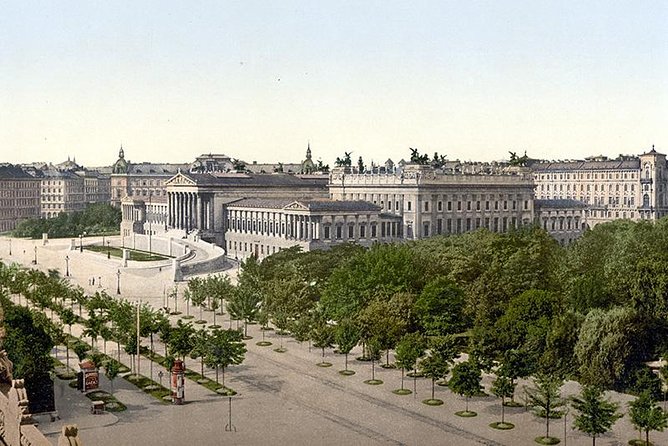
The Ringstrasse is basically Vienna seen at its most theatrical. The architecture is meant to be seen from the street, and that is exactly why a walking format fits. Instead of bouncing between distant sights, this route keeps you moving along the boulevard and lets each stop build on the last.
What makes this experience practical is that the guide’s job is not just to list facts. You get a guided flow from government and civic identity, to music and high culture, to the look of art movements, and then to everyday social life. That mix is why the tour feels more like orientation for the city than a checklist.
And you’ll notice the pacing is built for real street viewing. The stops range from about 15 minutes to 25 minutes, so you get time to look up, notice details, and still keep the energy for the next landmark.
Meeting at Café Landtmann, ending at Café Schwarzenberg
The tour starts at Café Landtmann on Universitätsring 4 in Vienna’s 1010 area and ends at Café Schwarzenberg on Kärntner Ring 17. That matters more than it sounds, because you are not just wandering randomly. You’re anchored on two classic spots tied to Vienna’s café culture.
I like that the end point is Café Schwarzenberg, not another big building that would send you right back into sightseeing mode. The café is described as a traditional Viennese coffee house, with an interior that has remained largely unchanged since it opened in the 19th century. Even if you only take a short break, that gives you a sense of how the Ring became a place to see and be seen from the moment it was completed.
One practical note: the tour includes the guided portion, but food and drinks are not included. So if you plan to sit down, do it with your wallet in mind. On the plus side, the café stop is built in, so you can decide on the moment whether you want coffee, tea, or just a quick look.
Stop 1: Vienna Rathaus, civic power in neo-Gothic form
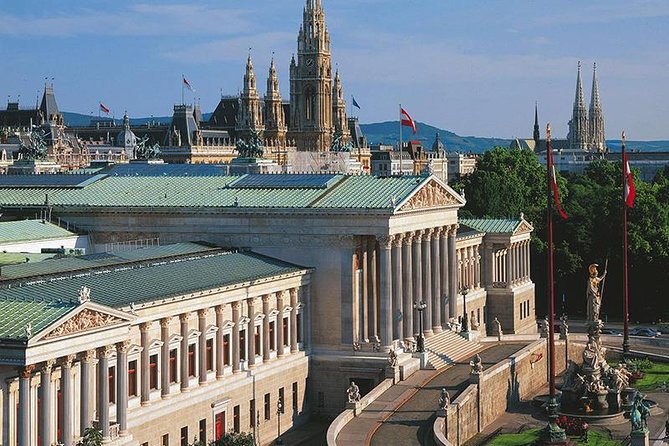
Your first major landmark is the Rathaus, the Vienna City Hall on Rathausplatz along the Ringstrasse. It is the seat of local government, and the building was constructed from 1872 to 1883 in a neo-Gothic style. Inside are offices for the Mayor of Vienna plus chambers of the city council and Vienna Landtag diet.
What I like about starting here is how it sets the tone. You’re not guessing why the Ring looks so ceremonial. Civic buildings were part of the message. When you see the neo-Gothic approach right away, the rest of the route makes more sense, because you start noticing how different institutions wanted to look and feel.
The visit time is about 15 minutes, and the plan lists admission ticket as free. That is helpful. You can focus on exterior details, the overall scale, and the setting at Rathausplatz without feeling like you have to squeeze in a long entry.
A small consideration: neo-Gothic can be visually busy. If you’re tempted to speed-run photos, pause instead and let the guide point out what to look for first. That will make the next stops easier to read.
Stop 2: Wiener Staatsoper, why opera sits at the heart of the Ring
Next up is Wiener Staatsoper. This is the 1,709-seat Vienna State Opera, built from 1861 to 1869, and described as the first major building on the Vienna Ring Road. The tour treats the opera as proof of how important music was to Viennese culture.
This stop is about more than admiring a façade. Starting at the opera tells you the Ring is not only about politics and administration. It also shows cultural identity placed in plain sight.
Your scheduled time is about 20 minutes, and admission is listed as free. So you can take in the building’s presence and learn what the guide wants you to notice without committing to a paid ticket.
If you love music, this stop is the kind that makes you want to plan a future evening performance. Even if you do not catch a show, you’ll leave with a clearer sense of why this building was a priority when the Ring grew.
Other Vienna write-ups filed under Austria
Stop 3: Kunsthistorisches Museum Vienna, art that signals importance
Then comes Kunsthistorisches Museum Vienna, which the tour notes applies to both the institution and the main building. It is described as the largest art museum in Austria and one of the most important museums worldwide.
The guided approach here is smart. You are not trying to turn a street tour into a full museum day. Instead, you get context and perspective so that when you later visit a museum, it feels less random. The Ring is full of buildings that announce status. This one announces Vienna’s relationship with art and collecting.
Your time at this stop is about 20 minutes, and it is listed as free admission. That makes it easier to stay flexible. If you want to keep moving and absorb the building from outside, you can. If the guide points to specific details, you can zoom in for a moment without worrying you need extra tickets.
One drawback to watch for: if you are museum-fatigued that day, the museum stop can feel like a preview. I’d treat it as orientation. Use it to decide whether you want to add a longer museum visit later.
Stop 4: Postsparkasse and Otto Wagner’s Vienna Secession style
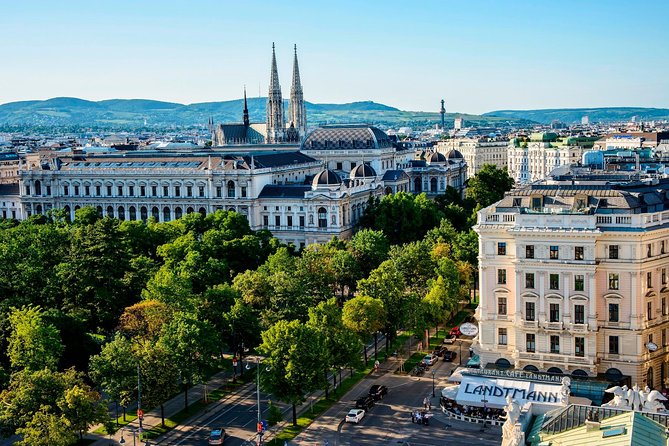
At Postsparkasse, the tour shifts into architectural style in a way that feels practical and memorable. The building is attributed to architect Otto Wagner, and the guide frames it as an important work of the Vienna Secession, a branch of Art Nouveau.
Your time is about 20 minutes, with admission listed as free. That means you can spend your energy looking at how the building communicates style and modernity, instead of working around ticket lines.
I like this stop because it breaks the rhythm of grand civic and cultural buildings. You still get “Ringstrasse drama,” but now it’s in the language of ornament and design movement. If you have ever wondered why the Ring doesn’t look uniform, this is the kind of stop that answers that question.
A tip: if you photograph a lot, consider saving fewer shots and focusing on one or two design elements the guide highlights. With Otto Wagner and Secession-era work, details are the point.
Stop 5: Stadtpalais Todesco, aristocratic salons and Sophie von Todesco
The next stop is Stadtpalais Todesco. The tour explains it as a Ringstraßenplatz residence constructed from 1861 to 1864 for the aristocratic Todesco family. One inhabitant was Baroness Sophie von Todesco, who established a renowned salon for artists and intellectuals.
This is where the tour starts to feel human. You go from buildings as symbols to buildings as settings for real social life. A salon might sound abstract if you only see it mentioned in books, but the stop time, about 15 minutes, is long enough for the guide to connect the idea to what a Ring neighborhood would have meant in daily life.
Admission is listed as free. So again, you can read and observe without adding ticket costs.
If you enjoy culture beyond architecture, this stop is a good reward. It gives you a story thread you can carry while you walk. Instead of only thinking, big impressive building, you start thinking, who used to gather here, and why.
Stop 6: Café Schwarzenberg, a 19th-century coffee house finish
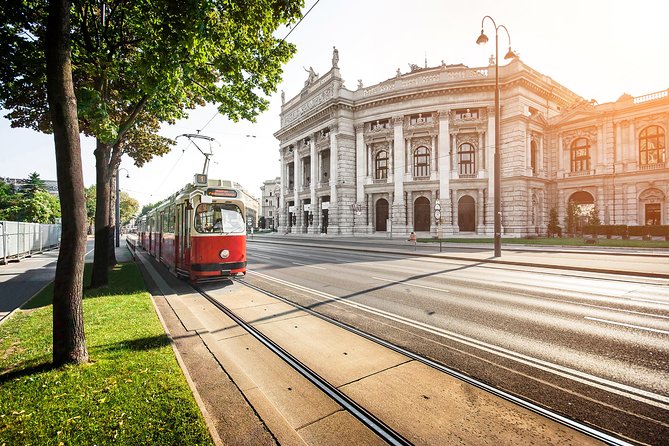
The tour ends at Café Schwarzenberg, which makes this feel like a Vienna-themed day rather than a rapid architectural circuit. The café is described as traditional, with an interior that has remained largely unchanged since it opened in the 19th century. It is also referenced as being established in 1861.
You’ll get around 25 minutes here, and the guide’s role is partly to help you understand why Vienna’s café culture matters. The Ring is described as a place to see and be seen from the moment it was completed, and this stop puts that idea into a real-world setting.
I find this kind of ending works well for two reasons. First, it lets you digest what you just saw. Second, it shifts the pace down from outdoor street viewing to indoor observation, so you get a real break.
Remember: food and drinks are not included. If you want something, plan it as part of your personal budget. If you just want tea or a quick look, that’s totally fine too. The value is in the setting and the guided context.
Price and value: is $177.44 worth it?
At $177.44 per person for about 2.5 hours, this tour is not a bargain-basement option. But the value logic is clear when you look at what’s included.
You get a 2.5-hour guided walk focused on the Ringstrasse, plus a professional guide. The group maximum is 8, which is a real quality lever. In a small group, you get more back-and-forth, and it is easier for the guide to adjust pacing. The experience also includes a mobile ticket, which keeps day-of logistics simple. Add in the fact that the stops listed are marked with free admission, and you can spend money mainly on your coffee break, not on a stack of tickets.
Where the price becomes a better deal is if you are planning a focused Vienna day and want one coherent route. If you only have a couple hours and you want to understand what you are looking at, this tour earns its keep.
Possible reason to reconsider: if you already know a lot about Vienna architecture and prefer self-guided pace, you might not use the guide as much. For first-time visitors, though, the guide acts like a translator for the city’s visual language.
Who should book this Ringstrasse tour
This fits best if you want a structured but not stiff walk. The stops are timed, the group stays small, and the route flows from civic identity to opera and art to style movements and salon culture, then ends with café culture.
It also helps if you want an English-speaking guide and you value friendly professionalism. The named guides, Sussana and Biljana, are described as professional and friendly, with humor and deep understanding. That kind of guide energy matters on a walking tour because it keeps attention up during transfers between landmarks.
If you are traveling with kids, there is also an option for a children’s family tour where the guide focuses on symbols on buildings and everyday life around 1900. That is a strong match for families who want Vienna to feel like a story, not a lecture.
If you are someone who hates walking, this may feel like too much. The plan is built for movement, and the time between stops is part of the experience.
Make the most of it on the day
Since it is a 2.5-hour street walk, I’d plan for comfort first. Wear shoes you can stand in for an hour or more, and keep water handy even though the tour does not include drinks.
I also recommend coming with one small goal. For example, focus on architectural styles, or focus on what Vienna institutions valued enough to put on the Ring. When you have a goal, the guide’s explanations land faster.
Finally, save your decision-making for the café. Café Schwarzenberg is your endpoint, so if you want a seated break, you can make it at the end when you are done walking.
Should you book the Ringstrasse Project Walking Tour?
Yes, if you want a compact Vienna plan that connects architecture with culture, not just photos. The small group cap of 8 is a big quality edge, and the route is built to keep you learning at each stop without turning it into a museum marathon.
Book it if you like guided context and you want your Ringstrasse experience to finish with café culture at Café Schwarzenberg. Skip it if you prefer total self-direction, or if walking 2.5 hours outdoors will be a struggle for you.
FAQ
How long is the Ringstrasse Project Walking Tour?
It runs for about 2 hours 30 minutes.
Where does the tour start and end?
It starts at Café Landtmann, Universitätsring 4, 1010 Wien, Austria, and ends at Café Schwarzenberg, Kärntner Ring 17, 1010 Wien, Austria.
Is the tour offered in English?
Yes, it is offered in English.
How big is the group?
The tour has a maximum of 8 travelers.
Is there a mobile ticket?
Yes, the tour includes a mobile ticket.
What is the cancellation policy?
You can cancel for free up to 24 hours in advance for a full refund. If you cancel less than 24 hours before the start time, the amount you paid will not be refunded.
Tours: Rest of the Austria File
- Vienna: Schönbrunn Palace & Gardens Skip-the-Line Tour
★ 4.7 · 7,739 reviews - Vienna Spanish Riding School Guided Tour
★ 4.7 · 6,765 reviews - Vienna: Skip-the-Line Sisi Museum, Hofburg and Gardens Tour
★ 4.8 · 5,918 reviews - Vienna: Skip-the-Line Schönbrunn Palace & Gardens Tour
★ 4.8 · 5,411 reviews
Tour Reviews: Rest of the Austria File
- Vienna: Vivaldi’s Four Seasons Concert in Karlskirche
★ 4.7 · 14,951 reviews - Vienna: Schönbrunn Palace & Gardens Skip-the-Line Tour
★ 4.7 · 7,739 reviews - Vienna: Light of Creation Votive Church Immersive Light Show
★ 4.8 · 6,779 reviews - Vienna Spanish Riding School Guided Tour
★ 4.7 · 6,765 reviews
Old-Town Routes Around Vienna
- Vienna: Guided Walking Tour of City Center Highlights
★ 4.7 · 4,989 reviews - Vienna: Guided Walking Tour of City Highlights & Hidden Gems
★ 4.9 · 2,180 reviews - Vienna Historic Center Small Group Walking Tour
★ 5.0 · 1,746 reviews - Skip-the-Line Schonbrunn Palace Guided Tour and Vienna Historical City Tour
★ 3.5 · 940 reviews
Newest Vienna write-ups on file
- Vienna: Private Walking Tour to The Hofburg & Graben Street★ 5.0 · 3 reviews
- Vienna: Private tour Mauthausen and Linz★ 4.1 · 3 reviews
- Vienna Private Full Day Tour – Tickets to Schönbrunn & Lunch★ 5.0 · 3 reviews
- Vienna: Johann Strauss 200th birthday anniversary exhibition★ 4.7 · 3 reviews
- Vienna: Full-Day Vienna Woods Wine Tasting Tour★ 5.0 · 3 reviews
- Vienna: Festive Season and New Year’s Eve Waltz Workshop★ 5.0 · 3 reviews
Vienna Old Town Discovery Walks, compared.
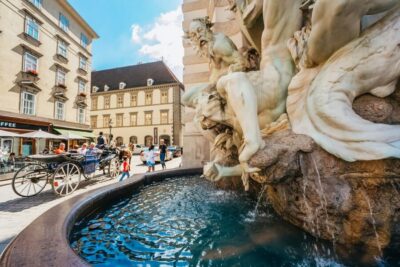 ★ 4.7Vienna: Guided Walking Tour of City Center HighlightsFrom $254,989 reviews
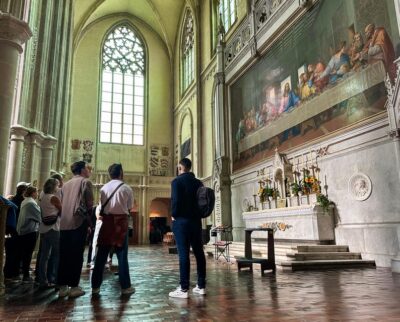 ★ 4.9Vienna: Guided Walking Tour of City Highlights & Hidden GemsFrom $272,180 reviews
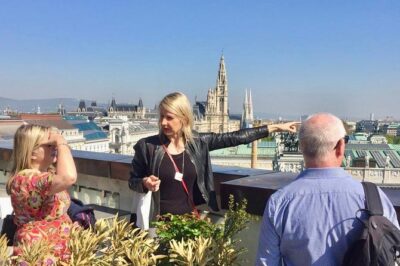 ★ 5.0Vienna Historic Center Small Group Walking TourFrom $721,746 reviews
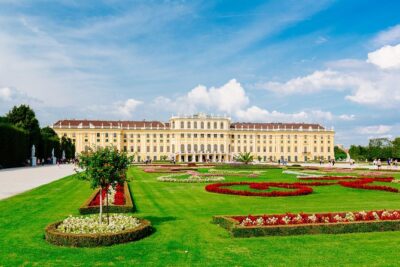 ★ 3.5Skip-the-Line Schonbrunn Palace Guided Tour and Vienna Historical City TourFrom $82940 reviews
 ★ 5.0Exclusive Vienna Old Town Highlights Walking Tour (max. 6 persons)From $151252 reviews
 ★ 4.7Vienna: Hidden Gems near St. Stephen’s & Old UniversityFrom $353153 reviews
 ★ 5.0Guided Walking Tour of Vienna City Center HighlightsFrom $30150 reviews
 ★ 4.5Food Tasting Tour in Hidden Gems of Vienna for Small GroupsFrom $14391 reviews
This tour also sits in