
REVIEW · WALKING TOURS
Private Vienna Art Nouveau Walking Tour
Art Nouveau hides in plain sight. This private walk strings together metro architecture and big-name masterpieces, so you see Vienna’s Jugendstil ideas as something you can actually walk through. I especially like the tight focus on Otto Wagner-era design and the chance to pause at the Secession Building for Klimt’s Beethoven Frieze.
One thing to consider is that key sights may require extra admission, and the Otto Wagner Pavillon stop depends on the season.
You’ll get a guide who can answer questions on both art and the city itself, and that makes the whole route feel personal instead of like a checklist. Guides named Barbara, Wolfgang, and Annelie have been singled out for being organized, friendly, and able to handle everything from art movements to everyday Vienna details. I also like that it’s truly private, with space for questions and pacing that works for your group.
A practical heads-up: it’s a walking tour, so if you have mobility limits, plan carefully and check what parts you feel comfortable doing, because the stops are spread along central Vienna.
In This Review
- Key Points Worth Knowing
- Why Vienna’s Metro Stations Matter Here
- The 3-Hour Route, From Secession to Metro Stations
- Secession Building: Klimt’s Beethoven Frieze and a Rebel Manifesto
- Stadtpark: A Breather Between Architectural Statements
- Karlsplatz Station Buildings: Jugendstil at Street Level
- Otto Wagner Pavillon: Modernist Transport Meets Art Nouveau
- Postsparkasse: A Postal Bank Building That Feels Like Art
- Naschmarkt and Wagner Apartment Houses You Can Spot
- The Ending at Two Metro Stations, Including the Emperor Stop
- Price and Value: What $490 Buys for a Private Group
- Tickets, Timing, and the One Season You Should Know
- Guides and the Q&A Style That Makes It Work
- Who This Private Art Nouveau Tour Suits Best
- Should You Book This Vienna Art Nouveau Tour?
- FAQ
- FAQ
- How long is the private Vienna Art Nouveau walking tour?
- What is the group size limit?
- Where do we meet for the tour?
- Where does the tour end?
- Is hotel pickup or drop-off included?
- Are entrance fees included for the main sights?
- What extra ticket cost should I expect for the Secession Building?
- Is the Otto Wagner Pavillon included, and does it have an admission fee?
- Does the tour include food and drinks?
- Can I cancel for a refund?
Key Points Worth Knowing
- 3-hour private route paced for your group, capped at 10 people
- Secession Building time included for Klimt’s Beethoven Frieze, with entry handled by your guide
- Metro-station architecture that turns transit into a design museum
- Otto Wagner buildings you can recognize on sight, including the Karlsplatz station buildings and the Postsparkasse
- Naschmarkt break built into the walk, plus a good chance to spot Wagner apartment-house style nearby
- Seasonal add-on: Otto Wagner Pavillon admission applies April to October
Other Vienna write-ups filed under Austria
- Vienna: Guided Walking Tour of City Center Highlights
★ 4.7 · 4,989 reviews - Vienna: Vienna Central Cemetery Guided Walking Tour
★ 4.8 · 3,307 reviews - Vienna: Guided Walking Tour of City Highlights & Hidden Gems
★ 4.9 · 2,180 reviews - Vienna: Viennese Underworld Guided Walking Tour
★ 4.7 · 1,865 reviews
Why Vienna’s Metro Stations Matter Here
Vienna has plenty of art museums, but this is a different way to read the city. Instead of treating design as something behind ticket gates, you get to see Art Nouveau ideas built into stations and everyday structures.
I like that the tour is structured around movement. You’re not just looking at facades, you’re walking between them, so the style changes make sense street to street.
And it’s private, which is a big deal for this kind of architecture tour. If someone in your group wants more context, you can ask. If someone wants more photo time, you can slow down.
The 3-Hour Route, From Secession to Metro Stations
The tour runs about 3 hours and is designed as a compact loop across central Vienna. You meet at Operngasse 7, 1010 Wien, then head into the Art Nouveau zone with a guide who knows how to connect the dots.
Even though it’s billed as a walking tour, it’s really a design route through Vienna’s early modern ideas. You start with a statement building, move through parks and station architecture, then finish at two metro stations, including a tiny stop associated with the Emperor.
The pacing is short-stop friendly. Several stops are around 10 to 30 minutes, which works well if you want to see a lot without losing focus.
Secession Building: Klimt’s Beethoven Frieze and a Rebel Manifesto
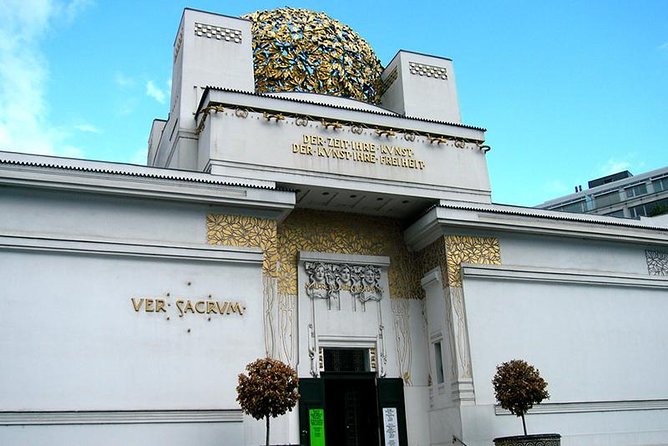
Your first major stop is the Secession Building (Secessionsgebaude), an exhibition hall completed in 1898. Joseph Maria Olbrich designed it as an architectural manifesto for the Vienna Secession, a group of rebel artists that split from a long-established fine art institution.
This is where the tour gets specific in the best way. You’re not just hearing general talk about Art Nouveau, you’re standing in a building created to announce a new artistic direction.
There’s also the star work inside: the Beethoven Frieze, painted by Gustav Klimt for one of the original exhibitions. Plan on about 30 minutes here.
Note on tickets: admission is not included. If your tour date falls Tuesday to Sunday, expect €9.50 for adults and €6 for students and seniors for Secession House access to the Beethoven Frieze. Your guide will help you pay.
Stadtpark: A Breather Between Architectural Statements
After the Secession Building, you get a short pause at Stadtpark for about 15 minutes. It’s a public city park area that connects the more formal Ringstraße zone with the inner districts.
This stop is useful even if you’re not a big park person. It breaks up the architecture, gives your feet a reset, and helps you notice how the buildings sit in relation to open space.
If you like design details, this is also a good moment to look back at what you already saw. When you can rest for a minute, you tend to remember more.
Other Vienna write-ups filed under Austria

Karlsplatz Station Buildings: Jugendstil at Street Level
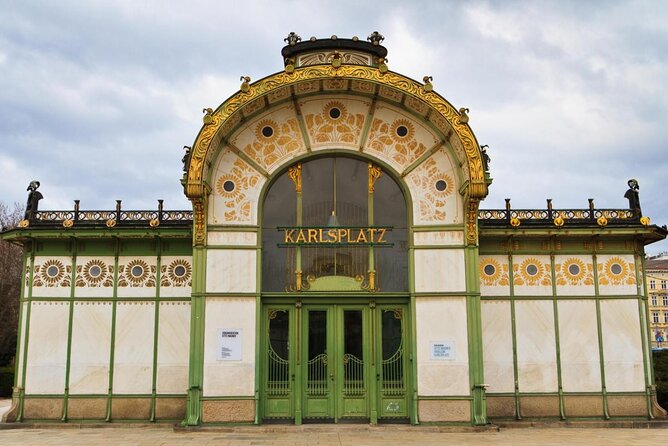
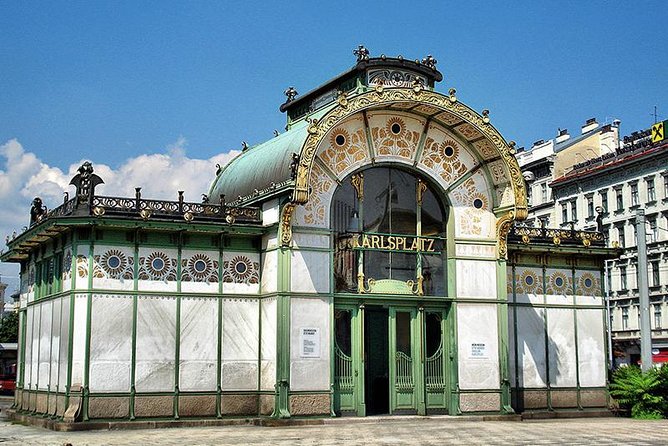
Next comes Karlsplatz, including the Karlsplatz Stadtbahn Station buildings above ground. These are described as a well-known example of Jugendstil architecture, and you see them up close rather than as distant monuments.
This section matters because it shows Art Nouveau in a real public setting. Otto Wagner was an adviser to the Transport Commission in Vienna, and the Karlsplatz station buildings were designed by Otto Wagner with Joseph Maria Olbrich.
You’ll spend about 20 minutes here, enough time to focus on the building shapes and learn what to look for. If you’re the type who takes photos of details, this stop gives you plenty of angles.
Admission at this stop is not included, so treat it as mainly an exterior and interpretation moment unless your date includes anything beyond what’s stated.
Otto Wagner Pavillon: Modernist Transport Meets Art Nouveau
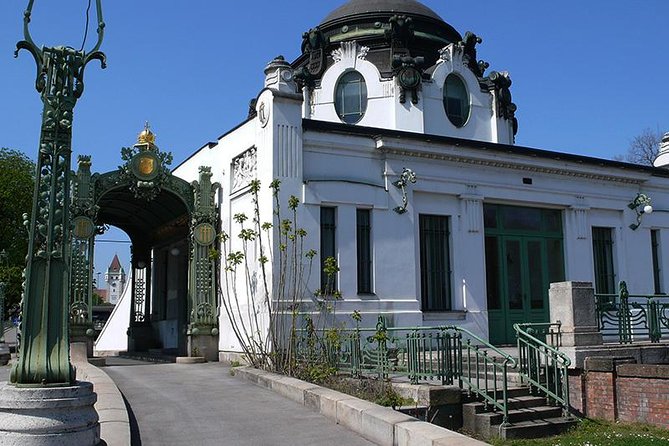
Right after Karlsplatz, the tour includes time at the Otto Wagner Pavillon Karlsplatz, an 1898 station-building exhibit connected to Wagner’s life and work. Expect about 15 minutes.
This is the stop where transport architecture starts to feel like a gallery. Wagner’s designs are often described through the lens of modern movement, but here you can see how Art Nouveau thinking shows up in the form and purpose.
Season matters. The Otto Wagner Pavillon visit is incorporated when the museum is open, which is April to October. Admission costs are listed as €5 general and €4 for senior citizens, students, Vienna Card holders, and persons with disabilities.
Even if you’re not obsessed with interiors, it’s worth the planning time, because the pavilion helps you connect the dots between the station exteriors and Wagner’s bigger ideas.
Postsparkasse: A Postal Bank Building That Feels Like Art
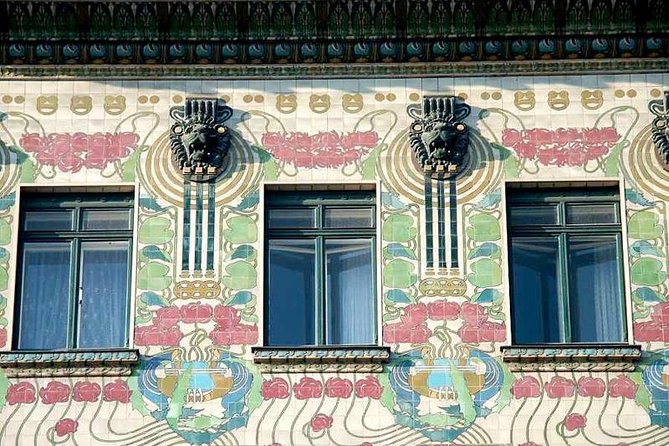
Then you head to Postsparkasse, the Austrian Postal Savings Bank building designed and built by Otto Wagner. It’s regarded as an important work connected to the Vienna Secession, a branch of Art Nouveau.
You’ll have about 25 minutes here, which is longer than a quick photo stop. The building gets enough time for your guide to explain what makes it Bauform and style, not just a pretty facade.
Admission for this stop is listed as free, so you’re paying for guidance and time, not ticket hassles. That’s a nice ratio on a walking route where some other sights may charge.
If you care about the practical side of design, this stop is a win. A bank and a postal service are not abstract buildings. They were meant for real people using daily systems.
Naschmarkt and Wagner Apartment Houses You Can Spot
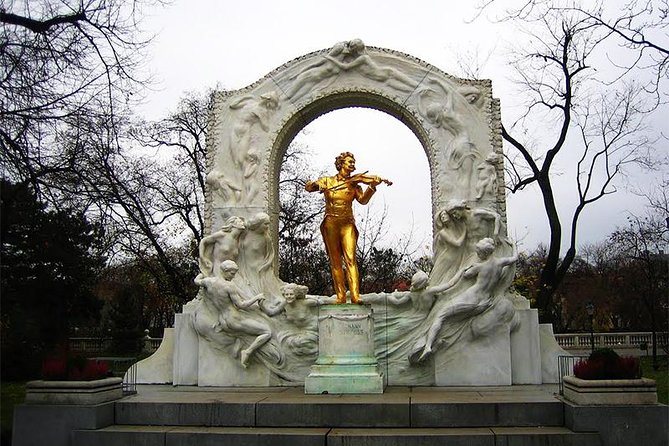
As the tour continues, you arrive at Naschmarkt for about 10 minutes. It’s Vienna’s best-known culinary market, with around 120 market stands and plenty of places to eat nearby.
This isn’t a long food break, and food and drinks are not included unless specified. Still, Naschmarkt gives you a lively, human-scale counterpoint to the formal architecture you just saw.
The bigger payoff is what often gets paired with this part of the route. In the area, you can recognize Otto Wagner apartment-house style, including the well-known Majolikahaus (Majolica House) and other signature designs linked to Wagner’s residential work. If your eye is sharp, you’ll see why people associate this city block with early modern Vienna.
And if you’re not an architecture super-fan, Naschmarkt helps balance things. You get a quick taste of how Vienna’s design-minded past lives next to market life.
The Ending at Two Metro Stations, Including the Emperor Stop
The tour finishes at a pair of beautiful metro stations, and the route includes a tiny stop built just for the Emperor. The exact feel here is different from the earlier grand facades, because the focus shifts to how the system served power and daily movement at the same time.
This ending is more than a final scenic moment. It reinforces the tour’s main idea: Art Nouveau is not only in standalone monuments. It’s also in infrastructure, where design meets history.
If you like your tours to end while you’re still curious, this is a good close. You’re not left with a single last photo, you’re left with a sense of how transit and status used to intersect.
Price and Value: What $490 Buys for a Private Group
The price is $490 per group for up to 10 people. That setup can be a strong value if you’re traveling with friends or family who like architecture, because you spread the cost across multiple people while keeping the tour private.
At the same time, it’s not priced like a budget group tour. You’re paying for:
- a professional guide
- a private route
- the time spent on interpretation, not just viewing
You can also plan for extra costs. Entrance fees are not included for certain stops, and the Secession and Otto Wagner Pavillon access depend on your date and season. If you’re visiting in the peak open season, those tickets can add a noticeable amount.
Still, for design travelers, the guide factor is the differentiator. A good guide turns stations and apartment buildings into understandable, memorable architecture.
One more practical point: this tour is commonly booked about 11 days in advance on average. If you’re traveling in busier months, book earlier so you get your preferred time.
Tickets, Timing, and the One Season You Should Know
This tour uses a mix of free viewing stops and paid-entry stops. The biggest ticket moments are the Secession Building and the Otto Wagner Pavillon (April to October).
Here’s what to mentally budget:
- Secession House for Klimt’s Beethoven Frieze: not included, with Tuesday to Sunday pricing listed at €9.50 adults and €6 students and seniors
- Otto Wagner Pavillon: not included during April to October, with €5 general and €4 for seniors, students, Vienna Card holders, and persons with disabilities
Also, food and drinks are not included. If you want snacks or lunch, plan to grab them around Naschmarkt or before/after the tour.
Your ticket is handled digitally as well. The experience includes a mobile ticket, which makes entry steps smoother when you arrive.
Guides and the Q&A Style That Makes It Work
This tour lives and dies by the guide, and the guiding style is a big part of the appeal. People have highlighted guides such as Barbara, Wolfgang, and Annelie for being organized and able to answer questions ranging from Vienna history to art movement basics.
That matters because Art Nouveau can be abstract if you only get a quick overview. With a strong guide, you start noticing how details relate to ideas, why certain shapes mattered, and how the city’s culture shaped building choices.
I also appreciate that the guide is positioned to help with ticketing where it’s needed, since admission costs for the Secession House can apply depending on day of week.
Who This Private Art Nouveau Tour Suits Best
I’d book this if you want an architecture tour that stays human-sized. It’s ideal for art, architecture, and design buffs who like the idea of metro stations as cultural landmarks.
It also fits well if you have mixed interests in your group. Someone can love the Beethoven Frieze and symbolism, while someone else can focus on Wagner’s practical building design and see how it connects to daily city life.
If you are traveling with kids who like looking at buildings, it might work, but it depends on attention span. The stops move quickly, and you get the most out of it if people are willing to pause and read what the guide points out.
And if you have limited mobility, you should think carefully. This is a walking route with multiple stops spread across central Vienna.
Should You Book This Vienna Art Nouveau Tour?
Book it if you want a private Vienna art and architecture plan that doesn’t feel like museum-only tourism. The route’s strength is the way it links Secession design, Wagner transport architecture, and station life into one clear story you can follow on foot.
Skip it or look for alternatives if you don’t enjoy architecture enough to pause for interpretation. With this tour, the value comes from the guide’s explanation and your willingness to notice details on the move.
My practical decision rule is simple: if your group will spend time asking questions and taking in buildings, this is a good use of money. If you mainly want quick views with no stopping, you might prefer a shorter, more relaxed option.
FAQ
FAQ
How long is the private Vienna Art Nouveau walking tour?
It lasts about 3 hours.
What is the group size limit?
The tour is private for your group, up to 10 people.
Where do we meet for the tour?
The meeting point is Operngasse 7, 1010 Wien, Austria.
Where does the tour end?
It ends in Vienna, Austria at a pair of metro stations.
Is hotel pickup or drop-off included?
Hotel pickup and drop-off is listed as not included, even though pickup is offered. You should confirm what applies to your booking.
Are entrance fees included for the main sights?
No. Entrance fees are not included.
What extra ticket cost should I expect for the Secession Building?
If you tour Tuesday to Sunday, admission to Secession House to see the Beethoven Frieze is €9.50 for adults and €6 for students and seniors.
Is the Otto Wagner Pavillon included, and does it have an admission fee?
It is incorporated when the museum is open, from April to October. Admission is €5 for general and €4 for seniors, students, Vienna Card holders, and persons with disabilities.
Does the tour include food and drinks?
Food and drinks are not included unless specified.
Can I cancel for a refund?
Yes, you can cancel for a full refund up to 24 hours in advance of the experience start time.
Walking Tours: Rest of the Austria File
- Vienna: Guided Walking Tour of City Center Highlights
★ 4.7 · 4,989 reviews - Vienna: Vienna Central Cemetery Guided Walking Tour
★ 4.8 · 3,307 reviews - Vienna: Guided Walking Tour of City Highlights & Hidden Gems
★ 4.9 · 2,180 reviews - Vienna: Viennese Underworld Guided Walking Tour
★ 4.7 · 1,865 reviews
Tours: Rest of the Austria File
- Vienna: Schönbrunn Palace & Gardens Skip-the-Line Tour
★ 4.7 · 7,739 reviews - Vienna Spanish Riding School Guided Tour
★ 4.7 · 6,765 reviews - Vienna: Skip-the-Line Sisi Museum, Hofburg and Gardens Tour
★ 4.8 · 5,918 reviews - Vienna: Skip-the-Line Schönbrunn Palace & Gardens Tour
★ 4.8 · 5,411 reviews
Tour Reviews: Rest of the Austria File
- Vienna: Vivaldi’s Four Seasons Concert in Karlskirche
★ 4.7 · 14,951 reviews - Vienna: Schönbrunn Palace & Gardens Skip-the-Line Tour
★ 4.7 · 7,739 reviews - Vienna: Light of Creation Votive Church Immersive Light Show
★ 4.8 · 6,779 reviews - Vienna Spanish Riding School Guided Tour
★ 4.7 · 6,765 reviews
Newest Vienna write-ups on file
- Vienna: Private Walking Tour to The Hofburg & Graben Street★ 5.0 · 3 reviews
- Vienna: Private tour Mauthausen and Linz★ 4.1 · 3 reviews
- Vienna Private Full Day Tour – Tickets to Schönbrunn & Lunch★ 5.0 · 3 reviews
- Vienna: Johann Strauss 200th birthday anniversary exhibition★ 4.7 · 3 reviews
- Vienna: Full-Day Vienna Woods Wine Tasting Tour★ 5.0 · 3 reviews
- Vienna: Festive Season and New Year’s Eve Waltz Workshop★ 5.0 · 3 reviews
Walking Tours, compared.
 ★ 4.7Vienna: Guided Walking Tour of City Center HighlightsFrom $254,989 reviews
 ★ 4.8Vienna: Vienna Central Cemetery Guided Walking TourFrom $3353,307 reviews
 ★ 4.9Vienna: Guided Walking Tour of City Highlights & Hidden GemsFrom $272,180 reviews
 ★ 4.7Vienna: Viennese Underworld Guided Walking TourFrom $371,865 reviews
 ★ 4.8Vienna: World War II Historical Walking TourFrom $311,772 reviews
 ★ 5.0Vienna Historic Center Small Group Walking TourFrom $721,746 reviews
 ★ 4.6Vienna: Private Walking Tour with a Local GuideFrom $551,420 reviews
 ★ 4.9Vienna: 1.5-Hour Underground Walking TourFrom $321,146 reviews
This tour also sits in