
REVIEW · WALKING TOURS
Private Hidden Vienna Walk — Stories Behind Quiet Corners
Vienna gets quieter on purpose. This private 3-hour walk is built for quiet corners, with a guide weaving stories through the streets and up to a secret rooftop for skyline views. You get a real sense of how Vienna connects religion, power, and music across a compact, walkable area.
I love that the route links famous landmarks to the smaller details you usually miss, from the Jesuit Church to St. Stephen’s Cathedral and on to the Judenplatz Holocaust Memorial. The one thing to watch is that it is still a 3-hour walking experience and it has a moderate physical fitness requirement, so if you need frequent sitting breaks or longer church time, tell your guide early.
In This Review
- The point of this tour: stories in the spaces between postcards
- Vienna at walking speed, and why that matters
- Price and group size: when a private tour actually feels like value
- Picking a morning or afternoon start: how timing shapes the experience
- From Stubentor U to the Jesuit Church: Vienna as architecture lesson
- Basilisk House and schnitzel since 1905: myths, food, and street-level Vienna
- Sala Terrena and music in 1781: tying Mozart to the street
- St. Stephen’s Cathedral plus a secret rooftop: the best payoff per step
- Judenplatz Holocaust Memorial: where the tour slows down without stopping
- Café Central, Ferstel Passage, and the Trotsky-Stalin story
- Palais Daun-Kinsky: dates, power, and who was born where
- Rathausplatz and Café Landtmann: Freud’s favorite stop
- Service, pacing, and tailoring: what makes the best guide work
- Who should book this Vienna walk, and who might want a different format
- Should you book this Private Hidden Vienna Walk?
- FAQ
- How long is the tour?
- What does it cost?
- How many people can be in the group?
- Is pickup offered?
- What language is the tour in?
- Does the tour use a mobile ticket?
- Are admissions included for the stops?
- Where can the guide meet cruise guests?
- Are service animals or pets allowed?
- What is the cancellation policy?
The point of this tour: stories in the spaces between postcards
- Private time for up to 10 people means you can ask questions without a crowd bottleneck.
- Rooftop views add a payoff shot, without turning the day into a museum marathon.
- Architecture explained in plain language, so churches feel like history you can read.
- Judging distances by steps, not by vibes, since the tour is designed as an efficient walking loop.
- Vienna through music and politics, including Mozart and Beethoven’s presence in everyday places.
Other Vienna write-ups filed under Austria
- Vienna: Guided Walking Tour of City Center Highlights
★ 4.7 · 4,989 reviews - Vienna: Vienna Central Cemetery Guided Walking Tour
★ 4.8 · 3,307 reviews - Vienna: Guided Walking Tour of City Highlights & Hidden Gems
★ 4.9 · 2,180 reviews - Vienna: Viennese Underworld Guided Walking Tour
★ 4.7 · 1,865 reviews
Vienna at walking speed, and why that matters
A good Vienna walk does two jobs at once. It helps you see the city, and it helps you understand it. This one is built around that second job. Instead of handing you a list of sights, the guide connects the dots: why a façade is shaped the way it is, why a square carries layers of meaning, and how music shaped daily life.
Because it is private, you get a more human pace than group tours. You can slow down for a detail on a church wall, ask follow-up questions, or take a breath before you move on. That makes a difference in Vienna, where the most interesting parts are often the ones you would normally walk past.
You also get a structured arc. You start with the city’s strength and boundaries at an old gate, then shift into spiritual and artistic Vienna, and later land in the heavy memory of Judenplatz. By the end, even the lighter moments, like cafés and famous anecdotes, feel grounded in real place.
Price and group size: when a private tour actually feels like value
The price is $344.80 per group for up to 10 people, for about 3 hours. For a private walking tour, that is the kind of pricing that can work well if you travel with friends or family, not just if you are solo.
Here is the math that helps you decide: if you fill the group with 10 people, it works out to roughly $34 per person. If it is just two people, it is about $172 per person. So the “sweet spot” is when you have at least a handful of people who want the same route and the same pacing.
Where this tour earns its keep is not in checklists. It is in the guide attention. You get someone licensed in Austria for your specific time slot, plus a mobile ticket, plus optional pickup arrangements. When your time in Vienna is short, paying for guidance can save you from spending hours figuring out what to see and why.
Picking a morning or afternoon start: how timing shapes the experience
You can choose a morning or afternoon departure. That choice changes the feel of the walk more than you might expect.
A morning start usually gives you better light for façades and a calmer rhythm at major sights. An afternoon start can be great if you want to pair the walk with a late lunch or coffee break afterward, especially around Rathausplatz. Since the tour includes both outside views and a bit of inside time at St. Stephen’s Cathedral, light and foot traffic matter.
Either way, the structure is consistent: it is a compact inner-city route with frequent stops. The tour is designed so you see the main anchors plus the smaller street stories that sit beside them. If you have the flexibility, pick the time that best matches your energy level, and plan for a steady walking day.
From Stubentor U to the Jesuit Church: Vienna as architecture lesson
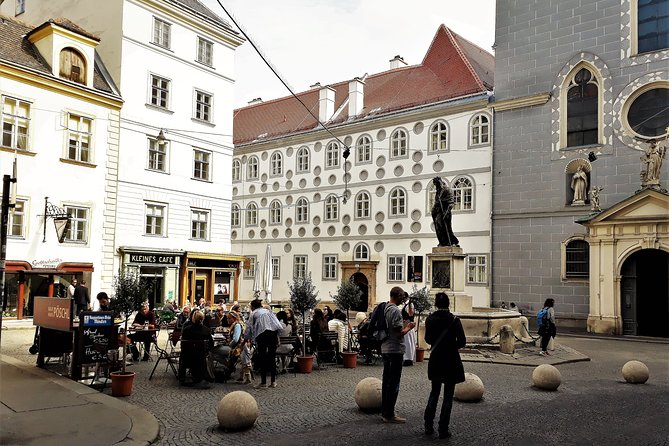
The tour begins at Stubentor U, one of the eastern gates. Starting at a gate is smart because it sets context fast. You see that Vienna was once about walls, control, and boundaries, not just cafés and concert halls. It helps you read the city as something built for defense before it became a stage for art and power.
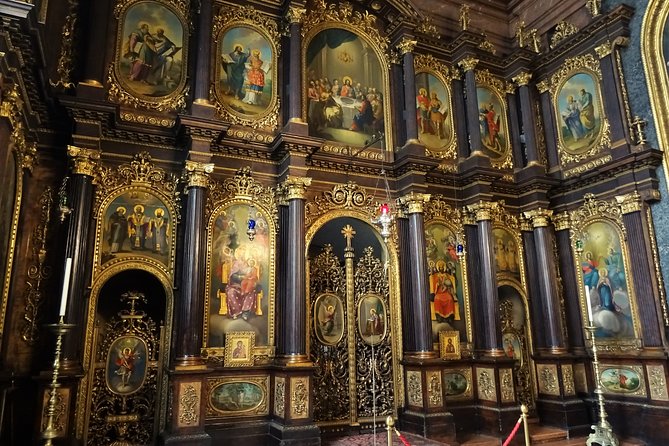
Next you head to the Church of the Jesuits. The point here is not worship, it is understanding. You are guided to decipher the spiritual ideas expressed through architecture and decoration. You get to notice how design choices shape emotion, even if you do not share the same faith. It is the kind of stop where a good guide turns stone and ornament into meaning.
Practical reality check: these early stops are usually quick and focused. You will get enough time to look, but not enough for a long, slow meditation. If you want to sit for a while in a church, you need to say so early so the route can flex.
Other Vienna write-ups filed under Austria
Basilisk House and schnitzel since 1905: myths, food, and street-level Vienna
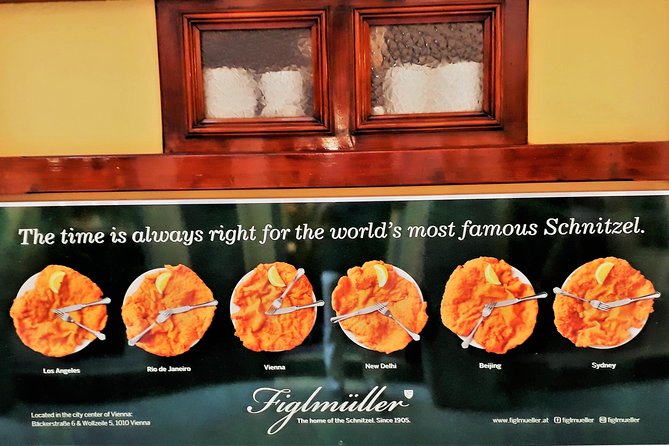
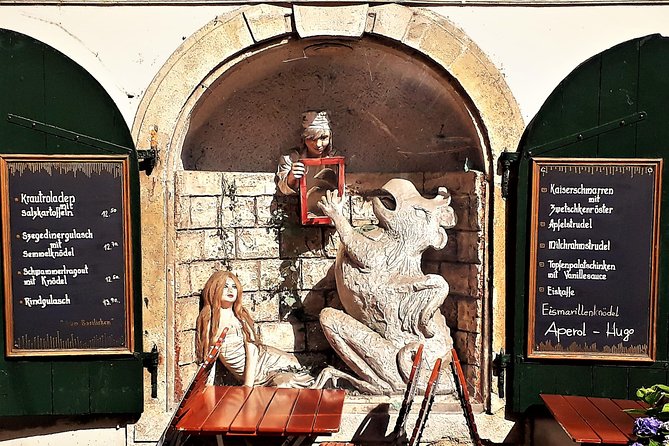
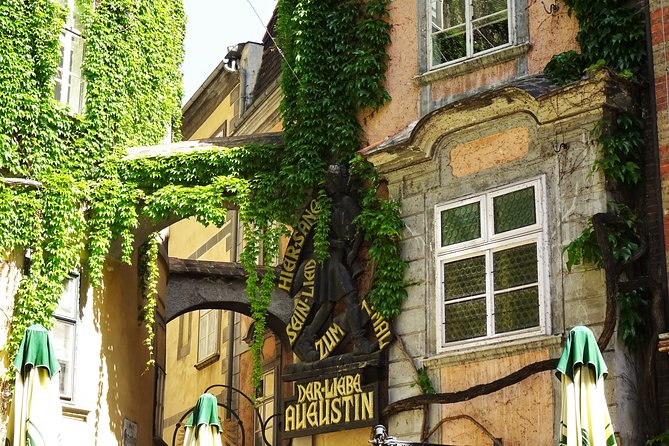
A highlight of this route is the legend of the Vienna basilisk, illustrated by a mural. It is exactly the sort of story that makes Vienna feel local instead of touristy. You get the myth, and you also learn how Vienna uses small visuals in everyday places to keep history and folklore in circulation.
Then you shift into a very practical Vienna detail: the area links to famous schnitzel since 1905. This is not just trivia. It is a reminder that food culture sits right alongside religion, imperial politics, and world-class music. If you like travel that mixes big names with everyday life, this stop hits.
Even better, because it is private, the guide can spend an extra minute on the parts you care about. If you are more food-driven, ask for the best places for a traditional meal afterward. If you are more story-driven, ask how the basilisk myth connects to other Vienna legends. Either way, the tour helps you notice details you would likely miss on your own.
Sala Terrena and music in 1781: tying Mozart to the street
Next comes Sala Terrena im Deutschordenshaus. The tour focuses on a room and what happened there when music played while the famous composer lived in the house connected to the Teutonic Order in 1781.
This is where the tour’s music theme becomes tangible. Instead of treating Mozart as a name in a book, you see how Vienna’s streets and buildings carried musical life as part of everyday culture. The guide connects the dots so you understand why those historical references show up in the city’s real spaces.
The timing here is short, so keep expectations realistic. You are not spending an hour in a music hall. You are getting a guided “why this room matters” moment, which works well in a 3-hour walking format.
If you are a music fan, come prepared with a question. For example, ask how Vienna’s musical world shaped what people did in public life. A good guide can make those connections fast.
St. Stephen’s Cathedral plus a secret rooftop: the best payoff per step
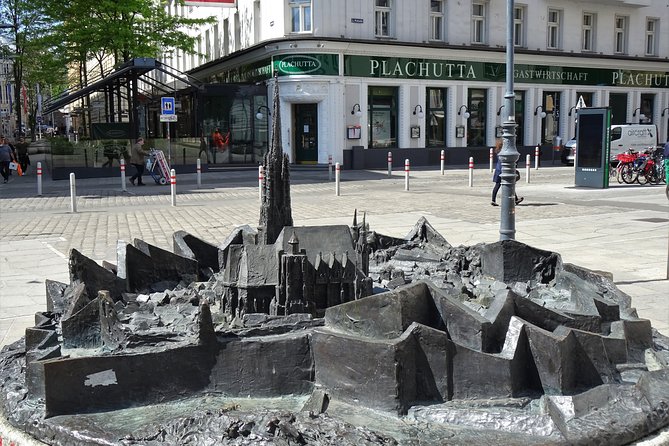
St. Stephen’s Cathedral is the classic anchor. The tour uses it well. You get help understanding outside details first, then time to look inside. The trick is that you are not wandering with no context. You see what to notice, and you learn how different parts relate to different periods of the city’s evolution.
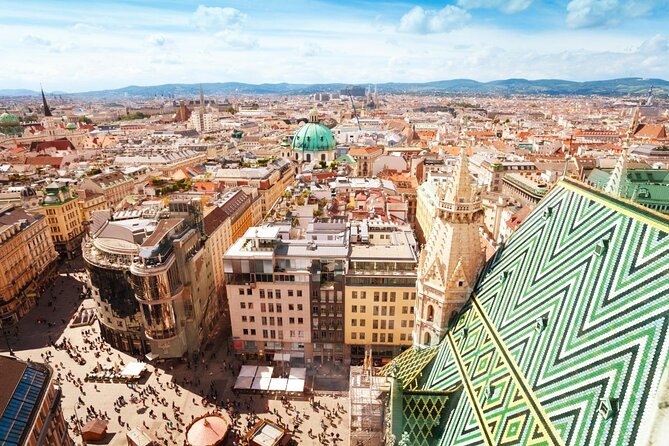
After that, you head up to a secret rooftop for great views. That rooftop is the kind of payoff that makes the whole walk feel worth it. You get perspective, literally. The city turns into a map of roofs, towers, and street lines, and the earlier stories click into place.
Two notes for your planning. First, the cathedral stop includes outside time and some inside time, but the total tour time is still tight. Second, if you have mobility limits, rooftop access and church sightseeing can involve steps. The tour has a moderate physical fitness level for a reason.
Judenplatz Holocaust Memorial: where the tour slows down without stopping
The Judenplatz Holocaust Memorial sits in one of Vienna’s most atmospheric neighborhood squares. This stop carries weight. The tour frames it as embedded in a place with seven hundred years of story, not just a marker on a route.
This is one of those moments where the guide’s job is to help you look carefully. You do not rush through it. You spend enough time to read the setting and understand why it matters.
At the same time, it is still a walking tour. So you get impact through focus, not through extended time on one spot. If you want time to sit and reflect longer, you will need to communicate that. A private guide can often adjust within the time window, but the tour is structured.
If you are sensitive to heavy topics, plan your day around it. This stop is placed so it lands after you have picked up context from architecture and city structure. That sequence can make the experience more coherent, not just more emotional.
Café Central, Ferstel Passage, and the Trotsky-Stalin story
One of the fun parts of this tour is how it keeps Vienna human. You get to see Café Central and the Ferstel Passage, then hear a story connected to where Trotsky and Stalin did not become friends.
Even if you do not care about political history, this is useful because it shows how people used cafés and passages as social spaces. Buildings here are not just beautiful backdrops. They are stages for ideas, debates, and everyday routines.
This stop also tends to produce great “future plans.” A guide might point you toward local coffee, bakeries, or a place to grab a real bite afterward. Several guides on similar private walks are the kind who share practical suggestions, like where to find a favorite pastry or where to go for coffee when you want a break from sightseeing.
If you love travel that mixes trivia with atmosphere, you will enjoy this part. If you want zero anecdotes and only solemn monuments, you can still get the value, because the guide uses these stops to explain how Vienna social life worked.
Palais Daun-Kinsky: dates, power, and who was born where
At Palais Daun-Kinsky, you get Vienna as a power center told through commissioning and birth records. The palace was commissioned by Count Wirich Philipp von Daun, with construction starting in 1713 under architect Johann Lucas von Hildebrandt.
Then you get a very specific human anchor: Prince Józef Poniatowski was born there on 7 May 1763. Those date anchors make the architecture feel real. You can stand in a street view and remember that real people lived inside these walls.
This stop is short, but it gives you a framework for reading Vienna’s palaces. You start to see them as more than decorative exteriors. They are designed statements of wealth, influence, and family legacy.
The only drawback is simple: the tour does not turn into a palace interior visit. You get exterior interpretation and story, not a deep museum-style experience. For most people, that is the right tradeoff in a 3-hour walk.
Rathausplatz and Café Landtmann: Freud’s favorite stop
The tour ends with a look around Rathausplatz, and then a short stop near Café Landtmann, noted as Freud’s favorite.
This is another “why it matters” stop. Vienna cafés are part of the city’s intellectual infrastructure. They are meeting places where ideas shaped art, psychology, politics, and literature. So this feels less like a random café detour and more like a historical theme landing in a real-world setting.
If you have energy afterward, this is a good area to extend your day with lunch or a longer coffee break. The tour helps you arrive with context, which makes the café stop afterward more satisfying.
If you are trying to maximize Vienna in one trip, the whole route sets you up nicely. You see the city’s structure, the spiritual and artistic language of buildings, the meaning of public memory, and the role of cafés in social life.
Service, pacing, and tailoring: what makes the best guide work
The biggest predictor of a great experience here is match. A private tour can be brilliant when the guide knows your pace and interests, and you know what you are buying.
Guides in this program, such as Walter, Sabine, Hannes, Brigitte, and Danielle, are repeatedly praised for being personable, flexible, and funny, and for answering questions in clear English. Some focus on architecture and city layers. Others build in conversation about world events through an Austrian perspective, or provide restaurant recommendations after the tour.
So here is your best move: tell the guide what you want before you start. If you want more time in churches, say so. If you want more street stories and less inside time, say so. If you have mobility constraints, be upfront. The tour has a moderate physical fitness requirement and involves walking plus stop-and-go sightseeing.
When expectations are aligned, you get a tour that feels like Vienna with friends, not Vienna on rails.
Who should book this Vienna walk, and who might want a different format
This tour is ideal for first-time visitors who want a structured introduction that goes beyond the obvious. It is also great for repeat visitors who want the “in-between” pieces, the side streets and quiet corners that connect the major sights.
I especially recommend it if you:
- like architecture and want to understand it, not just photograph it
- want Holocaust Memorial context as part of a broader city narrative
- enjoy stories tied to food, music, and political history
I would think twice if you:
- cannot manage a steady 3-hour walk and the moderate fitness requirement
- need long seated time inside big sights, since the schedule is designed for several stops
- dislike rooftop access or steps, since there is a rooftop view included
If any of that might apply, a private guide can often adjust within the route, but you need to communicate early.
Should you book this Private Hidden Vienna Walk?
Yes, if you want a thoughtful, private Vienna introduction that mixes major landmarks with street-level stories. The best part is the way the tour turns architecture, memorial space, and famous cafés into a single connected experience. You come away with a sharper sense of how Vienna thinks and remembers.
Skip it or choose a different option if walking time and pace feel like a gamble. This is not a slow stroller tour. It is a compact 3-hour walk with frequent stops, plus a secret rooftop and multiple church and square moments.
If you book, do one thing that pays off immediately: share your pace needs and interests ahead of time. Then let the guide handle the rest. You’ll get more out of Vienna in three hours than you will on a half-guess day of aimless walking.
FAQ
How long is the tour?
The tour lasts about 3 hours.
What does it cost?
The price is $344.80 per group (up to 10 people).
How many people can be in the group?
It is up to 10 people per private group.
Is pickup offered?
Yes, pickup is offered. The guide can meet you at your doorstep or pier or train station area, and other meeting points within Vienna can be arranged.
What language is the tour in?
The tour is offered in English.
Does the tour use a mobile ticket?
Yes, the tour includes a mobile ticket.
Are admissions included for the stops?
The listed stops are marked as admission ticket free.
Where can the guide meet cruise guests?
For A’Rosa guests, the meeting point is Pier Handelskai 265, 1020 Wien. Other meeting points can be arranged.
Are service animals or pets allowed?
Service animals are allowed. Pets are not permitted in certain areas visited.
What is the cancellation policy?
Free cancellation is available. You can cancel up to 24 hours in advance for a full refund, based on the local time where the experience takes place.
Private: Rest of the Austria File
- Vienna: Private Walking Tour with a Local Guide
★ 4.6 · 1,420 reviews - Vienna: Private Walking Tour with a Guide
★ 4.7 · 962 reviews - Vienna: Wine Tasting Experience in a Private Wine Cellar
★ 4.8 · 413 reviews - Private Day Tour Trip Salzburg Hallstatt and Melk from Vienna
★ 5.0 · 388 reviews
Walking Tours: Rest of the Austria File
- Vienna: Guided Walking Tour of City Center Highlights
★ 4.7 · 4,989 reviews - Vienna: Vienna Central Cemetery Guided Walking Tour
★ 4.8 · 3,307 reviews - Vienna: Guided Walking Tour of City Highlights & Hidden Gems
★ 4.9 · 2,180 reviews - Vienna: Viennese Underworld Guided Walking Tour
★ 4.7 · 1,865 reviews
Tour Reviews: Rest of the Austria File
- Vienna: Vivaldi’s Four Seasons Concert in Karlskirche
★ 4.7 · 14,951 reviews - Vienna: Schönbrunn Palace & Gardens Skip-the-Line Tour
★ 4.7 · 7,739 reviews - Vienna: Light of Creation Votive Church Immersive Light Show
★ 4.8 · 6,779 reviews - Vienna Spanish Riding School Guided Tour
★ 4.7 · 6,765 reviews
Newest Vienna write-ups on file
- Vienna: Private Walking Tour to The Hofburg & Graben Street★ 5.0 · 3 reviews
- Vienna: Private tour Mauthausen and Linz★ 4.1 · 3 reviews
- Vienna Private Full Day Tour – Tickets to Schönbrunn & Lunch★ 5.0 · 3 reviews
- Vienna: Johann Strauss 200th birthday anniversary exhibition★ 4.7 · 3 reviews
- Vienna: Full-Day Vienna Woods Wine Tasting Tour★ 5.0 · 3 reviews
- Vienna: Festive Season and New Year’s Eve Waltz Workshop★ 5.0 · 3 reviews
Walking Tours, compared.
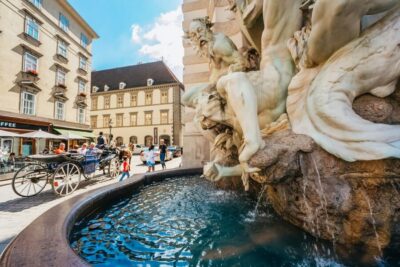 ★ 4.7Vienna: Guided Walking Tour of City Center HighlightsFrom $254,989 reviews
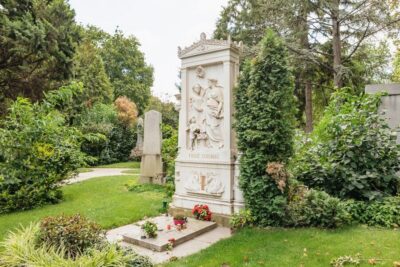 ★ 4.8Vienna: Vienna Central Cemetery Guided Walking TourFrom $3353,307 reviews
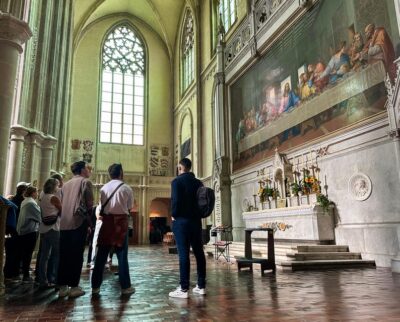 ★ 4.9Vienna: Guided Walking Tour of City Highlights & Hidden GemsFrom $272,180 reviews
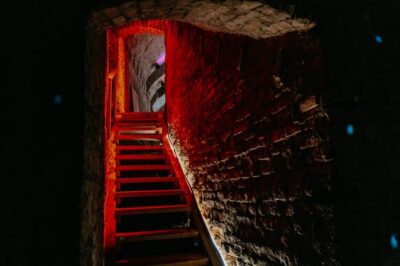 ★ 4.7Vienna: Viennese Underworld Guided Walking TourFrom $371,865 reviews
 ★ 4.8Vienna: World War II Historical Walking TourFrom $311,772 reviews
 ★ 5.0Vienna Historic Center Small Group Walking TourFrom $721,746 reviews
 ★ 4.6Vienna: Private Walking Tour with a Local GuideFrom $551,420 reviews
 ★ 4.9Vienna: 1.5-Hour Underground Walking TourFrom $321,146 reviews
This tour also sits in