
REVIEW · WALKING TOURS
An Introduction to Vienna Walking Tour
Vienna has a way of rewarding slow walking. This small-group tour strings together the city’s big landmarks with stories about Austria’s shifting past, from turn-of-the-century art to Habsburg power and the darker moments that sit underneath the pretty facades.
I especially like the small-group size, which makes it feel personal, not like you’re just being marched past statues. I also love the way the guide links buildings to people, with chances to ask questions and get practical suggestions for what to do next in the city. Names you might hear along the way include guides like Elisabeth, Wolfgang, Katarina, and Annelie, and the common thread is animated storytelling that makes Vienna make sense fast.
One thing to consider: this is a walking tour, and at the listed price you’ll want to be there for the history and orientation, not only for quick photo stops. If you’re after a light stroll with minimal detail, you might feel the cost more than the time.
In This Review
- Key things that make this tour worth your time
- Starting at Café Hawelka and getting your bearings fast
- The Secession building: Klimt, Mahler, and the art-music swing of the era
- Stephansdom: Vienna’s cathedral icon, framed by story
- Hofburg at Michaelerplatz: Habsburg power and the 13th-century seat
- Naschmarkt and the shopping streets: where locals mingle and the darker details show up
- Ringstraße and luxury in old palaces
- Loos House and Maria-Theresien-Platz: modern architecture meets the museum cluster
- Value, timing, and who this tour is best for
- Guide style: why the stories matter as much as the stops
- Walking route practicality: how to enjoy it without rushing
- Use this tour to plan your Vienna day after the walk
- Should you book this Vienna walking tour?
- FAQ
- How long is the Vienna walking tour?
- How much does the tour cost?
- What language is the tour offered in?
- Where do we meet, and where does the tour end?
- How big is the group?
- What is included in the price?
- Is food or drinks included?
- Is hotel pickup or drop-off included?
- What is the cancellation policy?
Key things that make this tour worth your time

- Historian-led walk: You get context, not just directions.
- Turn-of-the-century stop at the Secession building, tied to figures like Klimt and Mahler.
- Iconic Vienna sights: Stephansdom and the Hofburg are part of the core route.
- Real-life city flavor at Naschmarkt, the market locals use to meet and shop.
- A smart mix of eras from Habsburg power to the 19th-century Ringstraße and Adolf Loos architecture.
- Small group scale with a cap of up to 8 travelers, keeping it interactive.
Other Vienna write-ups filed under Austria
- Vienna: Guided Walking Tour of City Center Highlights
★ 4.7 · 4,989 reviews - Vienna: Vienna Central Cemetery Guided Walking Tour
★ 4.8 · 3,307 reviews - Vienna: Guided Walking Tour of City Highlights & Hidden Gems
★ 4.9 · 2,180 reviews - Vienna: Viennese Underworld Guided Walking Tour
★ 4.7 · 1,865 reviews
Starting at Café Hawelka and getting your bearings fast
Meet at Café Hawelka on Dorotheergasse 6 in central Vienna. It’s a great choice because you’re already in a neighborhood that feels like Vienna, not just a postcard zone.
From there, the tour settles into the sights that help you orient the city. The best part of a guided walk like this is that it gives you a mental map. You start to see why these places line up the way they do, and how they relate to each other, not only as individual monuments, but as one long story.
The Secession building: Klimt, Mahler, and the art-music swing of the era
The walk takes you to the Secession building, Vienna’s turn-of-the-century creative statement. This is where the city’s art and music energy rubs up against the politics and changing tastes of the time.
You’ll connect what you see in the architecture with the names that shaped the mood of that period, including Klimt and Mahler. Even if you’re not a deep art-history person, this stop gives you a useful lens: Vienna wasn’t always polite and formal. It had rebels too, and the Secession movement is one of the clearest signs.
Tip for you: if you like learning by doing, bring a quick note app. Jot down the names or themes the guide mentions, then use them later as search terms for whatever museum or performance you choose that day.
Stephansdom: Vienna’s cathedral icon, framed by story
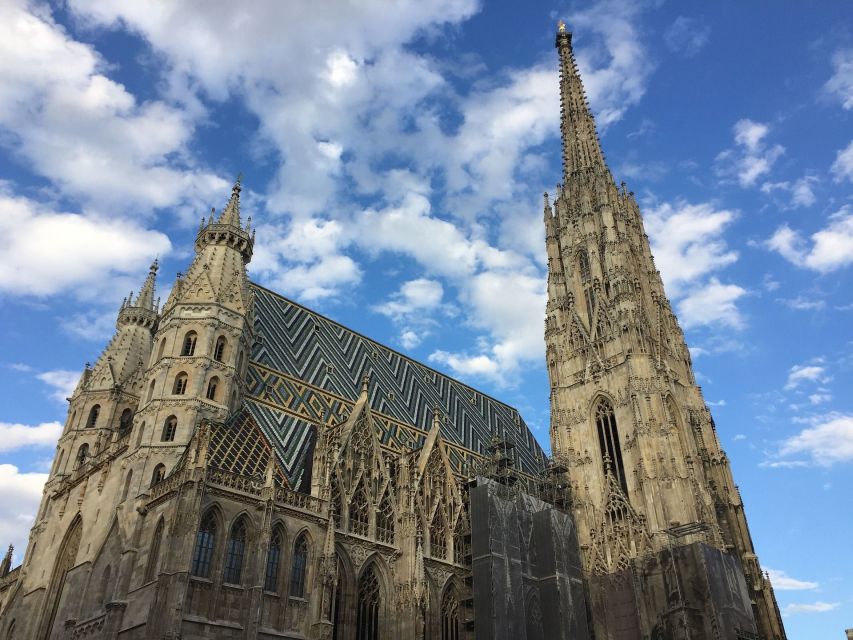
Next comes Stephansdom, the city’s national architectural icon. From the outside, it’s already dramatic, but what makes it land on this route is the way the guide frames it as part of the city’s identity, not just another landmark.
This stop is useful even if you’ve seen Stephansdom photos before. You get a better sense of scale and location in the old center, and you hear why the cathedral matters in the bigger picture of Austrian history and civic life.
If you’re short on time later in your trip, this is exactly the kind of stop that helps you decide where to spend your energy. Once you know the why, you tend to look longer at the details.
Hofburg at Michaelerplatz: Habsburg power and the 13th-century seat
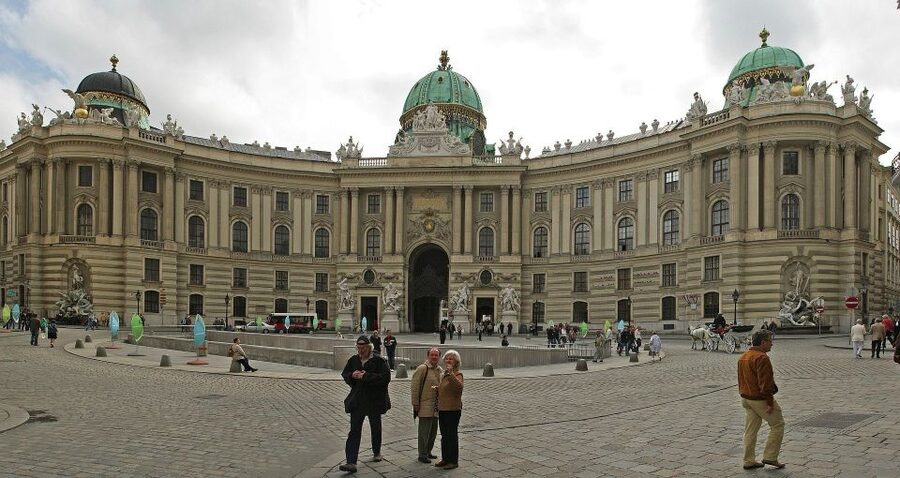
The heart of the political story is the Hofburg complex. You see it at Michaelerplatz, where the palace dominates the square, and you get the key fact that it has been the seat of power since the 13th century.
That is a long run of influence, and the guide helps you feel what that means on the street level. You’ll hear how the Habsburgs shaped Austria through centuries, and you’ll understand why so much of Vienna’s core geography is still organized around that legacy.
Practical angle: after this stop, the rest of the city feels less random. It’s easier to connect the Hofburg to the nearby churches, boulevards, and formal spaces you’ll see later. You’re learning how Vienna was designed to project power.
Naschmarkt and the shopping streets: where locals mingle and the darker details show up
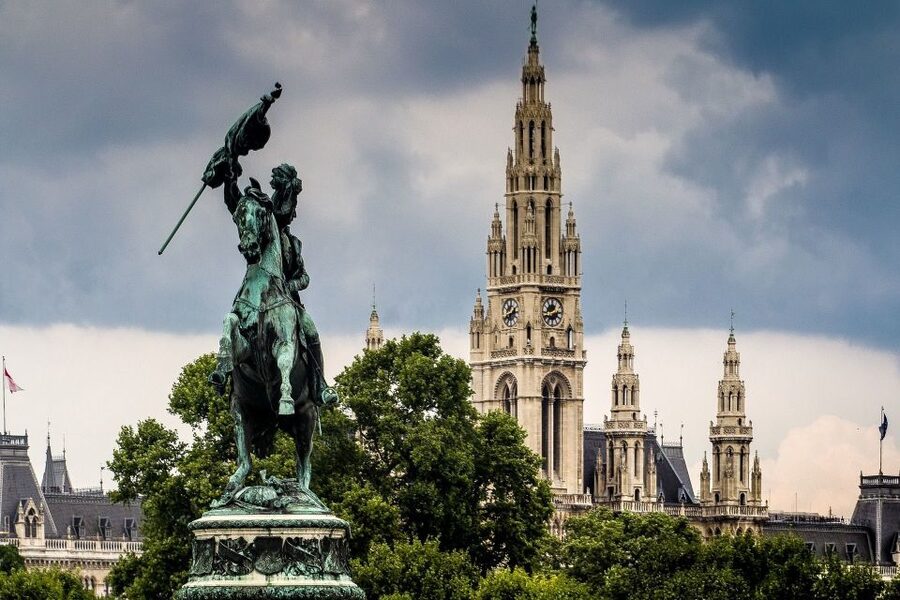
Vienna is full of royal venues, but the city also runs on everyday gathering places. That’s why the route pauses at Naschmarkt, the traditional food market where people mingle and shop.
This is one of the best moments to slow down. Market streets teach you how locals actually live in the city, and it’s a good chance to notice the rhythm of Vienna outside of the biggest monuments.
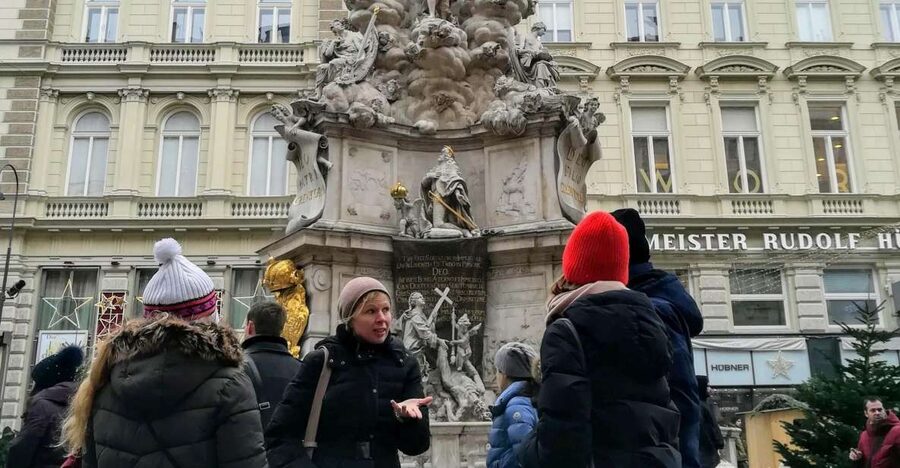
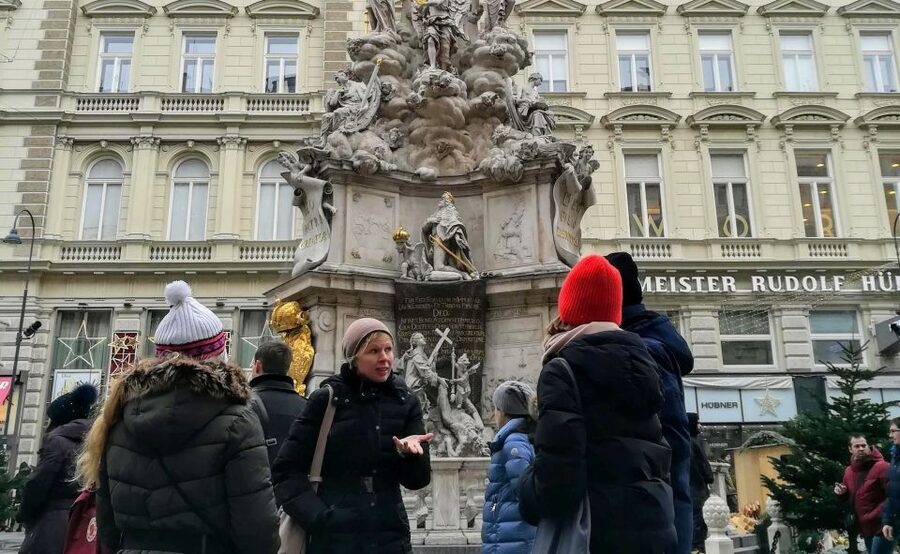
Then the tour moves into Kohlmarkt and the Graben, now one of Vienna’s more fashionable shopping areas. You get the contrast between refined shopping streets and the fact that Vienna carries heavy memory under the surface, including a plague column commemorating the 17th-century bubonic plague outbreak.
If you’re sensitive to historical tragedy, this is handled as part of the story of the city. You’ll come away understanding why Vienna can look elegant and still remember loss.
Ringstraße and luxury in old palaces
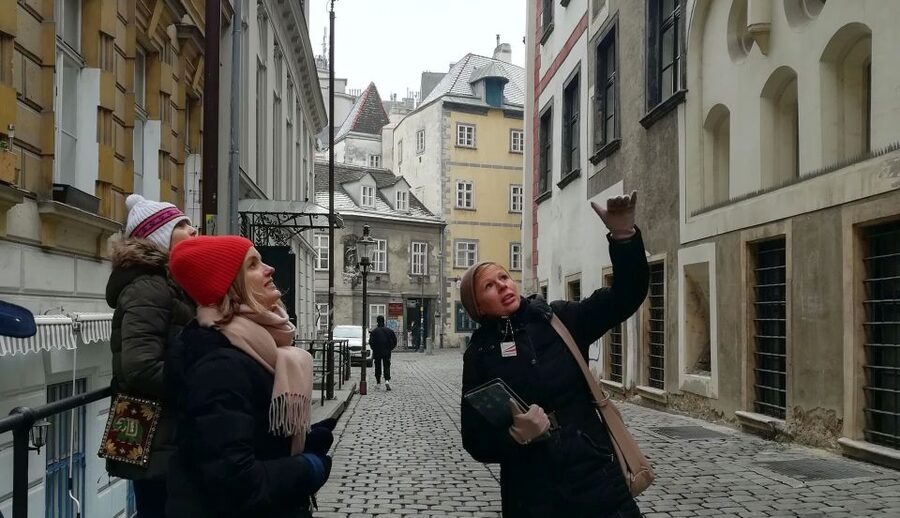
One of the most helpful parts of this walk is the Ringstraße stretch. It’s a grand boulevard built in the middle of the 19th century, and it’s where Vienna’s “new face” came together in a showy, modern way for its time.
You’ll pass luxury hotels that sit within the walls of older palaces. That detail matters. It’s easy to think of Vienna as just old. The Ringstraße helps you see Vienna as a city that keeps rebuilding itself while keeping the bones of earlier eras.
As you walk, watch for the pattern: the guide is teaching you to read the city like a timeline. Buildings become clues for what period is in charge, even when they’re only a few steps apart.
Loos House and Maria-Theresien-Platz: modern architecture meets the museum cluster
Clockwise from the Hofburg is the Loos House, designed by Austrian architect Adolf Loos (1870 to 1933). The guide uses this stop to show another side of Vienna: not all innovation was decorative. Some of it was about how modern life should look and feel.
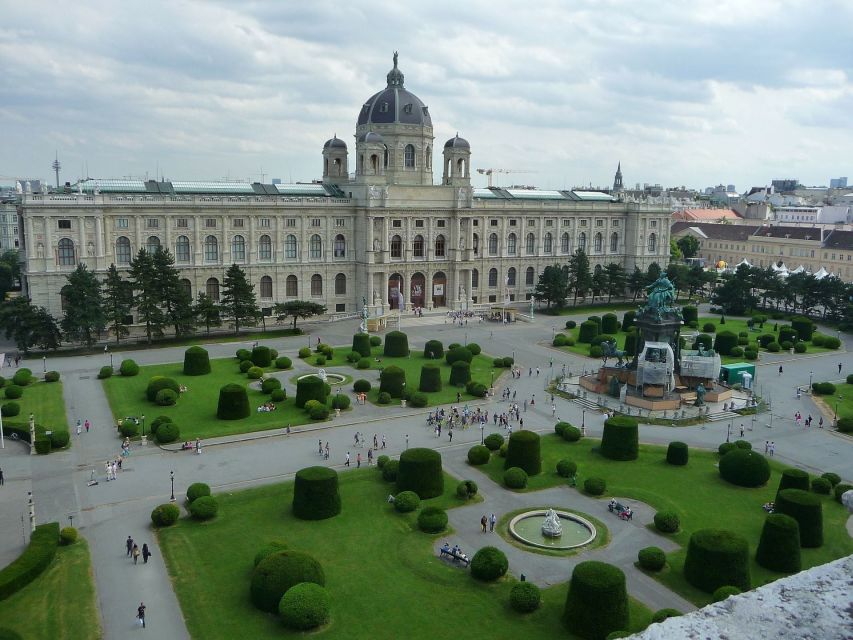
Then comes Maria-Theresien-Platz, known for the city’s largest concentration of museums. This is a smart final setup because it helps you plan. If you’re a museum person, you’ll now understand where that energy is concentrated, so you can choose one or two exhibits without zigzagging across town.
Even if you don’t plan to museum-hop, the plaza works as an orientation point. You get a better sense of the city’s layout and how the cultural centers connect.
Value, timing, and who this tour is best for
This is listed as about 2.5 hours and runs with a small group size, capped at up to 8 travelers. In practice, that scale is a big part of the value. It means you can ask questions, and the guide can shape the pace and focus based on what you’re interested in.
The price is $181.02 per person, and that’s not “budget tour” pricing. For me, the question isn’t just cost, it’s whether the guide is giving you something you can’t easily pick up on your own. If you want an expert’s connections between architecture, music, politics, and everyday life, this price starts to look fair.
I also like that it’s commonly booked in advance, averaging 53 days. That’s a hint: there’s demand for guided context in Vienna, and this itinerary does the core landmarks without dragging on.
Who it suits best:
- You want a first-day orientation so the rest of your trip feels easier.
- You like history that includes art, politics, and daily culture, not only battles and dates.
- You prefer walking tours where you can ask questions and get direct answers.
Guide style: why the stories matter as much as the stops
The strongest feedback I’ve seen about this tour is about the guide experience. Guides such as Christina, Wolfgang, Katarina, and Annelie show up repeatedly in positive descriptions, with a common focus on turning history into something you can actually picture.
Some guides include extra creative touches. One guest experience described music of Mozart and Haydn during the walk, and another mentioned tasting Sisi’s favorite candies. There are also examples of practical local guidance, like tips on where to find classic Viennese sweets without the worst lines at the most famous tourist trap.
You’ll also notice a pattern in how questions get handled. People value interactive guides who keep attention even in bad weather. If you’re the type who wonders, Why did this building get placed here, or What was life like for regular people, this is the kind of walking tour that can answer that.
And importantly, the guide is described as both academic and human. You get detail, but it’s delivered in a way that stays understandable.
Walking route practicality: how to enjoy it without rushing
You’re on foot for the whole experience, so wear comfortable shoes. This is a central Vienna route, so you’ll be close to public transport, but you still want to be ready for typical city walking.
You’ll also be out long enough to learn a lot, but not so long that you feel trapped. That makes it ideal for the first part of a travel day. Once it ends, you’re set up to explore independently with more confidence, because you know the “why” behind the layout.
Quick strategy for you: after the last stop, ask the guide for one or two next steps. Even when food and drinks aren’t included, good recommendations can save you hours of guesswork.
Use this tour to plan your Vienna day after the walk
By the time you hit the end of the route, you should be able to do two useful things on your own.
First, you’ll pick better museums. Since Maria-Theresien-Platz is a hub, it’s easier to decide which exhibit fits your interests without trying to cover everything at once.
Second, you’ll choose where to eat and wander. Naschmarkt is a natural cue for a market-style meal, while the Kohlmarkt and Graben area gives you shopping street options if that’s your vibe.
If the tour has helped you get the city’s timeline straight, your later choices feel more intentional. You’re not just visiting places. You’re visiting moments.
Should you book this Vienna walking tour?
Book it if you want a small-group, historian-led overview that connects Vienna’s major sights with stories you can carry into the rest of your trip. The itinerary covers the big hitters, Secession, Stephansdom, the Hofburg, and the Ringstraße, plus meaningful stops like Naschmarkt and the plague column that add depth without turning the day into a lecture.
Skip it or consider a different option if you only want quick sightseeing with minimal detail. At this price, the tour really earns its money when you care about how Vienna got to where it is, through art, power, and everyday life.
If you’re unsure what to focus on in your limited time, this tour is a strong starting point. It gives you a framework, then helps you decide what to chase next.
FAQ
How long is the Vienna walking tour?
It is listed as about 2 hours 30 minutes.
How much does the tour cost?
The price shown is $181.02 per person.
What language is the tour offered in?
The tour is offered in English.
Where do we meet, and where does the tour end?
You meet at Café Hawelka, Dorotheergasse 6, 1010 Wien, Austria. The tour end is listed as Vienna, Austria.
How big is the group?
The tour is capped at a maximum of 8 travelers, with a maximum of 6 people per booking mentioned.
What is included in the price?
Included is a 2.5-hour guided walk with an historian guide.
Is food or drinks included?
Food and drinks are not included unless specified.
Is hotel pickup or drop-off included?
No, hotel pickup and drop-off are not included.
What is the cancellation policy?
You can cancel for a full refund up to 24 hours in advance. If you cancel less than 24 hours before the start time, the amount paid is not refunded.
Walking Tours: Rest of the Austria File
- Vienna: Guided Walking Tour of City Center Highlights
★ 4.7 · 4,989 reviews - Vienna: Vienna Central Cemetery Guided Walking Tour
★ 4.8 · 3,307 reviews - Vienna: Guided Walking Tour of City Highlights & Hidden Gems
★ 4.9 · 2,180 reviews - Vienna: Viennese Underworld Guided Walking Tour
★ 4.7 · 1,865 reviews
Tours: Rest of the Austria File
- Vienna: Schönbrunn Palace & Gardens Skip-the-Line Tour
★ 4.7 · 7,739 reviews - Vienna Spanish Riding School Guided Tour
★ 4.7 · 6,765 reviews - Vienna: Skip-the-Line Sisi Museum, Hofburg and Gardens Tour
★ 4.8 · 5,918 reviews - Vienna: Skip-the-Line Schönbrunn Palace & Gardens Tour
★ 4.8 · 5,411 reviews
Tour Reviews: Rest of the Austria File
- Vienna: Vivaldi’s Four Seasons Concert in Karlskirche
★ 4.7 · 14,951 reviews - Vienna: Schönbrunn Palace & Gardens Skip-the-Line Tour
★ 4.7 · 7,739 reviews - Vienna: Light of Creation Votive Church Immersive Light Show
★ 4.8 · 6,779 reviews - Vienna Spanish Riding School Guided Tour
★ 4.7 · 6,765 reviews
Newest Vienna write-ups on file
- Vienna: Private Walking Tour to The Hofburg & Graben Street★ 5.0 · 3 reviews
- Vienna: Private tour Mauthausen and Linz★ 4.1 · 3 reviews
- Vienna Private Full Day Tour – Tickets to Schönbrunn & Lunch★ 5.0 · 3 reviews
- Vienna: Johann Strauss 200th birthday anniversary exhibition★ 4.7 · 3 reviews
- Vienna: Full-Day Vienna Woods Wine Tasting Tour★ 5.0 · 3 reviews
- Vienna: Festive Season and New Year’s Eve Waltz Workshop★ 5.0 · 3 reviews
Walking Tours, compared.
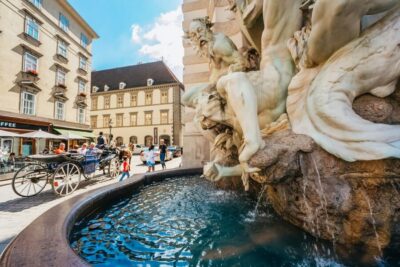 ★ 4.7Vienna: Guided Walking Tour of City Center HighlightsFrom $254,989 reviews
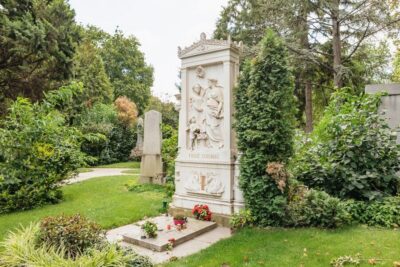 ★ 4.8Vienna: Vienna Central Cemetery Guided Walking TourFrom $3353,307 reviews
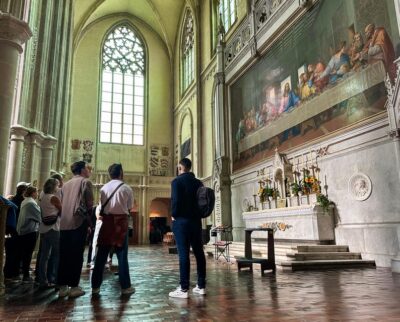 ★ 4.9Vienna: Guided Walking Tour of City Highlights & Hidden GemsFrom $272,180 reviews
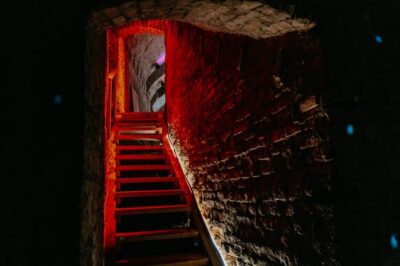 ★ 4.7Vienna: Viennese Underworld Guided Walking TourFrom $371,865 reviews
 ★ 4.8Vienna: World War II Historical Walking TourFrom $311,772 reviews
 ★ 5.0Vienna Historic Center Small Group Walking TourFrom $721,746 reviews
 ★ 4.6Vienna: Private Walking Tour with a Local GuideFrom $551,420 reviews
 ★ 4.9Vienna: 1.5-Hour Underground Walking TourFrom $321,146 reviews
This tour also sits in