
REVIEW · 2-HOUR EXPERIENCES
Vienna’s Highlights in two hours (two options)
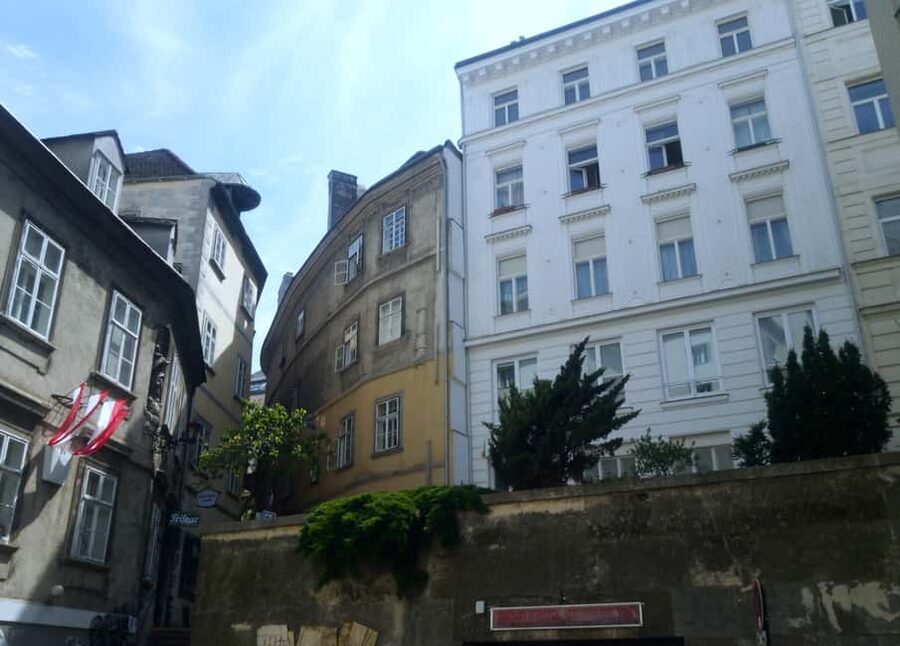
Vienna has a pocket of stories most people skip. In just two hours, you’ll connect plague-era hope, printing-house beginnings, and Art Nouveau facades along the Greek Quarter. It’s history you can actually see on the street, plus legends that make the stones feel alive.
I especially like how this tour keeps the pace calm and easy to follow, with a proper guided flow through key streets and building fronts. I also love the way the guide (Nicol) turns architecture into narrative, including details like the oldest residential tower in Vienna and those mostly overlooked Art Nouveau buildings around Fleischmarkt.
One consideration: this is a walking tour that is not suited to wheelchair users, and it stays above ground only. If you want a lot of stops or long museum time, this format may feel too short and focused for your style.
In This Review
- Key things you will notice on this walk
- Why Vienna’s Greek Quarter is worth your 2 hours
- Starting near Stubentor, with a calm pace and clear audio
- Fleischmarkt’s Art Nouveau facades and the early print story
- Streets filled with legend: Augustin and the basilisk
- The oldest residential tower in Vienna, and why it changes your view
- Griechengasse, Schönlaterngasse, and Lugeck’s printing press links
- What the secret passages and building facades add
- Drop-off locations: keep going with Parlament Österreich in mind
- Price and value: $24 for a private, headset-guided street tour
- Who should book, and who might want a different tour
- FAQ
- FAQ
- How long is Vienna’s Highlights in two hours?
- Where do we meet for the tour?
- Is this tour private?
- Is the tour underground?
- Do I need to walk a lot?
- What languages are available for the guide?
- Is pickup available?
- Should you book this 2-hour Vienna Greek Quarter tour?
Key things you will notice on this walk
- Greek Quarter focus: churches, taverns, and old print connections in the historical First District
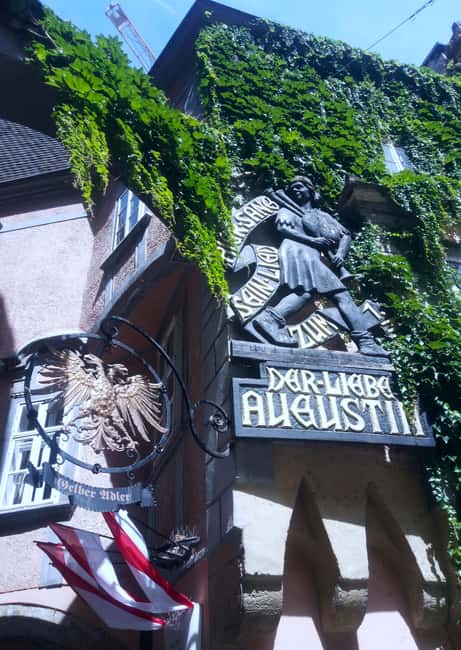
- Legends with locations: Augustin, the basilisk, and Middle Age alchemist-style stories tied to streets
- Art Nouveau you might miss: facades near Fleischmarkt that are mostly unknown to tourists
- Old Vienna landmarks: including the oldest residential tower in Vienna
- Printing-house and Habsburg context: Lugeck’s connections to the early Habsburg monarchy
- A useful way to explore after: you end with drop-offs that can help you plan the next leg of your day
Other Vienna write-ups filed under Austria
- Vienna: Romantic Old Town 2-Hour Discovery Tour
★ 4.7 · 816 reviews - Vienna: 2 Hours Sightseeing Walking Tour
★ 4.8 · 332 reviews - Vienna: 2-Hour Historical Crimes Guided Walking Tour
★ 4.8 · 130 reviews - Vienna: Jewish Life in Leopoldstadt 2-Hour Walking Tour
★ 4.9 · 109 reviews
Why Vienna’s Greek Quarter is worth your 2 hours
Most Vienna sightseeing routes crowd the famous core, and that’s exactly why the Greek Quarter feels so refreshing. You’re in the First District, right in the layer-cake where Vienna’s medieval past, early publishing, and later 19th-century design all overlap.
What makes this tour special is that it doesn’t treat “history” like a lecture. It treats it like a map. You’ll move from street to street and learn how the area links to serious events and big myths at the same time. The legend of Augustin is one thread, but you also hear about hope during the plague, groundwork connected to Greek independence, and early printing activity that helped spread books long before “old-world” became the default label for Vienna.
You also get a clear visual payoff. Along the walk, you’re asked to look at facades, street edges, and architectural clues, not just read plaques. If you like the feeling of discovering Vienna rather than ticking boxes, this is built for you.
Starting near Stubentor, with a calm pace and clear audio
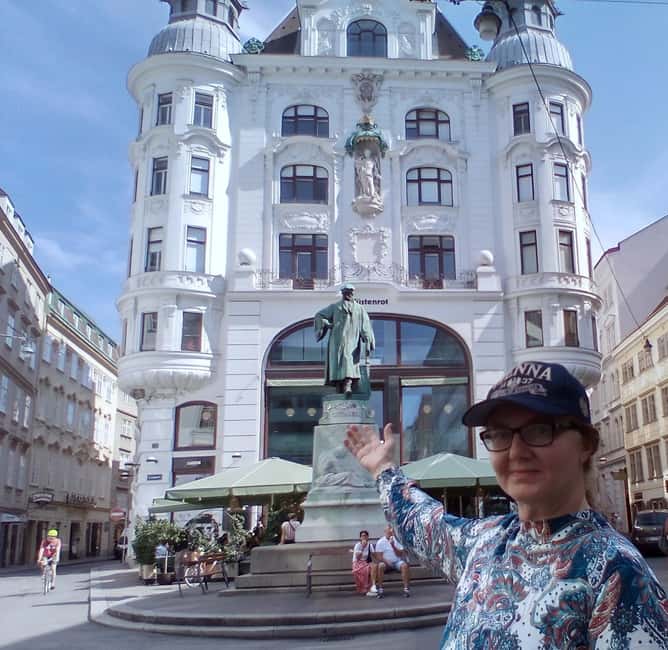
You meet around the Dr. Karl Lueger monument near the subway station Stubentor. The advantage of this start is simple: it’s practical and easy to find, especially if you’re already moving around Vienna by public transport.
The tour is designed to be easy. You don’t walk much and it’s not strenuous. That matters because two hours passes quickly, and it’s better when you can actually take in what you’re seeing, not rush through it.
To keep the experience smooth, you wear headsets so you can hear the live guide clearly. This is a quiet, controlled way to do a street walk, and it helps a lot if the city noise is doing its usual thing.
Pick-up is optional. If you want it, you meet in your hotel lobby or at a public transport station you agree on by email. One key detail: they do not do car or bus pickups, so plan on public transport for anything beyond the main meeting point.
Fleischmarkt’s Art Nouveau facades and the early print story
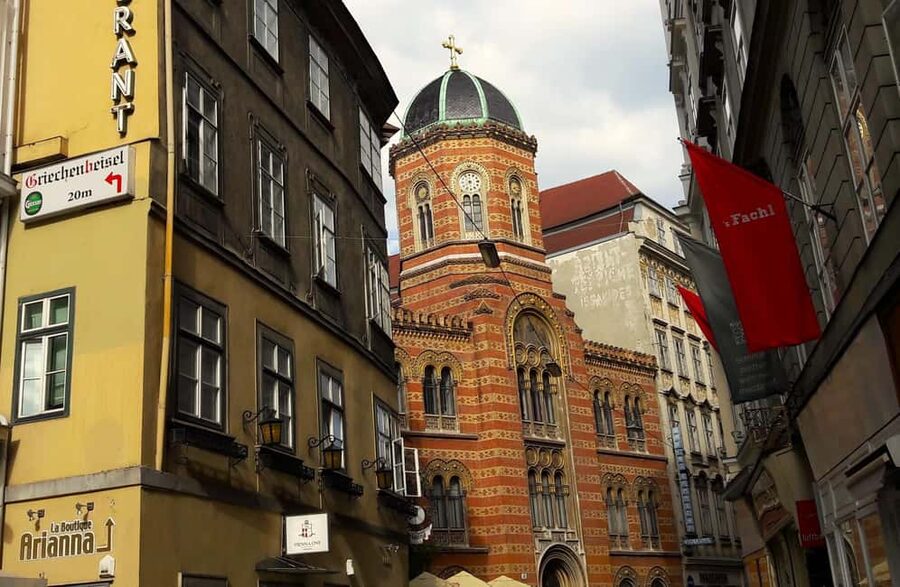
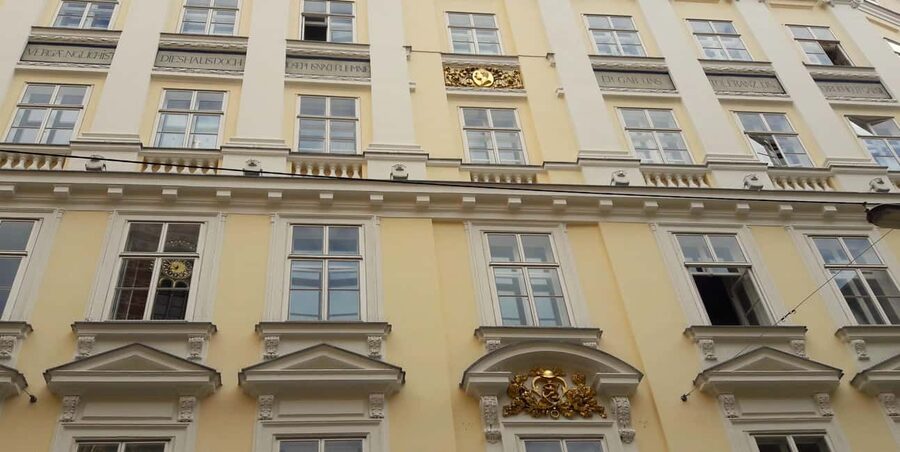
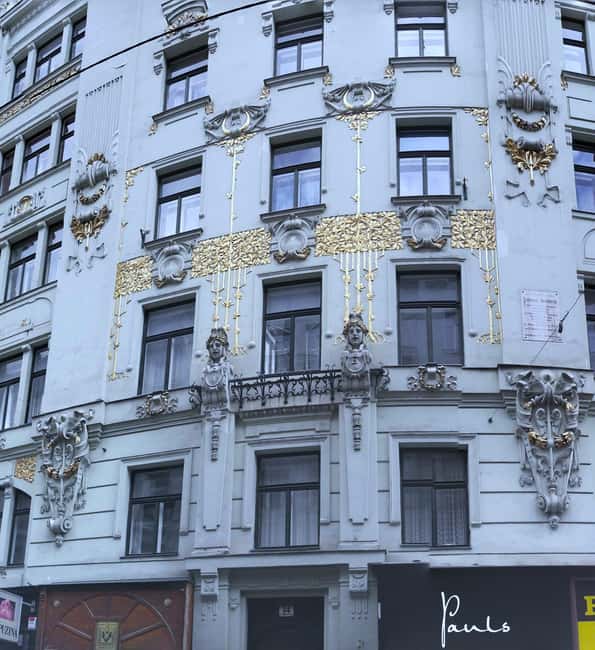
One of the best parts of the route happens right away in how you look at Fleischmarkt. You’ll admire Art Nouveau buildings there that are mostly unknown to tourists. That’s a big deal in Vienna, where it’s easy to spend your whole trip staring at the same handful of postcard-worthy streets.
But the tour doesn’t just point at pretty fronts. It connects those facades to the area’s earlier role in publishing. You’ll learn how the neighborhood ties to the first printing houses in Vienna, and you’ll start to see why the Greek Quarter mattered beyond food and worship.
Here’s the practical value for you: when you understand the printing connection, you’ll notice more. You start reading building styles like clues, and you also understand why certain communities and patrons would shape the city’s look. Vienna’s architecture often feels like it was built for show. On this walk, you get the sense it was built to support ideas and influence.
If you’re the type who likes photography, this is the section where you’ll probably linger for one more shot. Just don’t get too lost in it. The route is short, and the story stays tied to specific streets and corners.
Streets filled with legend: Augustin and the basilisk
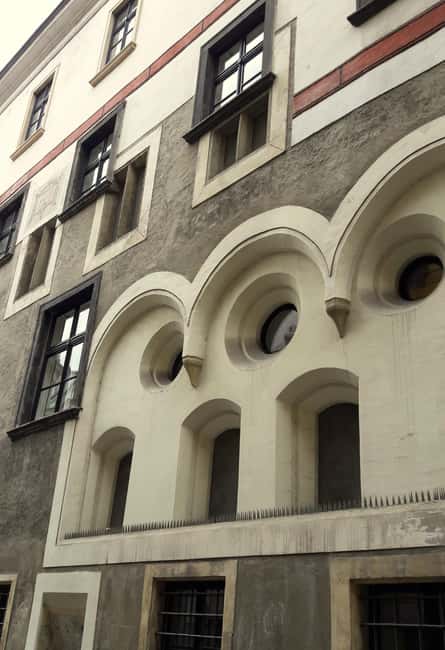
The Greek Quarter is famous for its community history, but the tour’s tone is particularly strong in the storytelling section. You’ll discover the legend of Augustin, hear the saga of the basilisk, and pick up Middle Age-style lore tied to alchemists and scientists.
This is not fantasy for fantasy’s sake. The guide frames these legends as part of how people made sense of danger, illness, and power in earlier centuries. When you connect the story to a place you’re standing in, it sticks. That’s the real point.
You’ll also learn why hope mattered here. The tour links the legends to survival during the plague, and it places that feeling of hope directly into the neighborhood history. Then it expands into a broader theme: how the area contributed to the political path toward Greek independence, not just cultural exchange.
A small caution: if you prefer strictly factual sightseeing with zero myth, you might find the legend-heavy approach less your style. Still, the legends are always tied back to visible architecture and street context, so even the “myth” part has a grounded purpose.
The oldest residential tower in Vienna, and why it changes your view
Every city has landmarks people brag about. Vienna also has the kind you only notice if someone points you toward it. In this tour, you’re led to the oldest residential tower in Vienna, located in the Greek Quarter.
Why is that worth your time? Because towers are practical architecture. They hint at defense, civic identity, and how people lived before the city became a polished performance. When you understand that, the area’s mixed styles start making more sense. Old buildings stop feeling like decoration and start feeling like evidence.
On this walk, the tower is part of a larger idea: the neighborhood contains both very old structures and more modern additions. That mixture is one of the main reasons I think a short guided loop works better than trying to self-navigate. You might find the tower on your own eventually, but you’d likely miss the “why” behind it, and the tour’s whole goal is to give you that context fast.
Griechengasse, Schönlaterngasse, and Lugeck’s printing press links
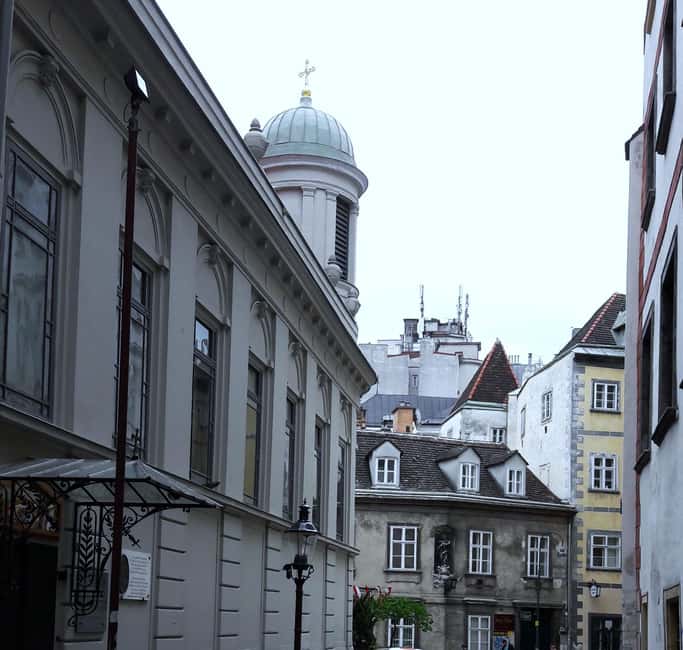
As you move through the route, the tour shifts from big highlights into street-level history. You’ll learn about Griechengasse and how it was a border area connected to the Danube. Border areas tend to create mixing points, and that’s exactly what this neighborhood becomes in the stories: trade, cultural exchange, and ideas crossing paths.
Then Schönlaterngasse brings more legends into the walk. The point here is less about memorizing the legend, and more about noticing how the city keeps its stories alive through street names and recurring themes.
The finale through Lugeck connects history of Vienna’s printing press with broader historical context from the beginning of the Habsburg monarchy. This part is especially useful if you like thinking beyond “Vienna as art.” It frames Vienna as a place where institutions and ideas helped shape what Europe later became.
If you’re planning your day, this history matters because it changes how you interpret what you see next. When you stand in the Habsburg-connected sections of the city, you’ll recognize patterns in how power, publishing, and patronage shaped the urban environment.
What the secret passages and building facades add
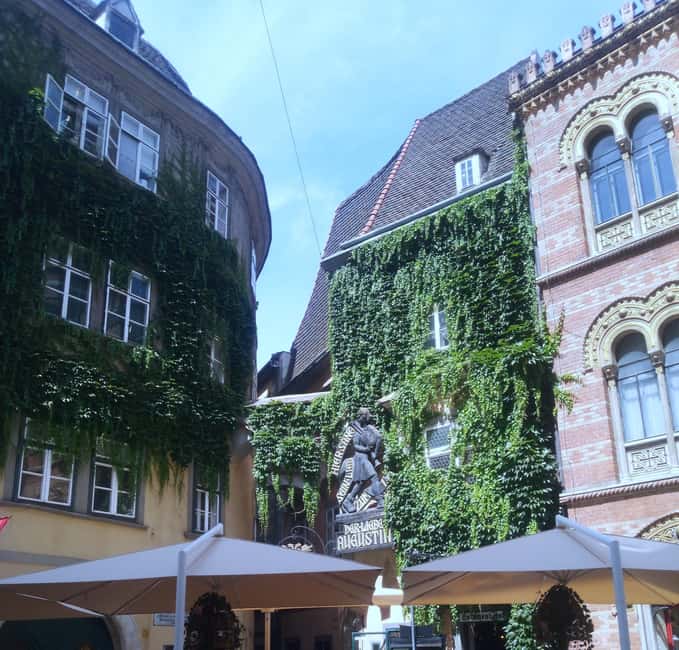
From the experience feedback, one of the standout praises is that the guide doesn’t just take you to obvious viewpoints. The tour includes references to secret passages and hidden connections that are not easy to discover on your own.
That’s a big value point. Vienna rewards slow exploration, and self-guided wandering often misses the small geometry of a place. Here, the tour helps you build a mental model of the neighborhood. You’re not just looking at facades. You’re learning how different parts of the area could function and connect in earlier times.
Nicol is specifically noted for being friendly and for answering questions, which matters more than people think. If you’re curious about a detail you spot on the street, you won’t have to hold your curiosity for later.
Also, you’ll admire architecturally the facades of several buildings. That means you’ll leave with a better “eye,” not just a set of dates. You’ll know what to look for when you continue walking after the tour.
Drop-off locations: keep going with Parlament Österreich in mind
The tour finishes with two drop-off locations: Lugeck 6 and Parlament Österreich. That’s helpful because it positions you near major sightseeing corridors, depending on what you want next.
You also return to the starting area at the end of the experience, but the drop-offs give you flexibility. In practice, you can use the final stretch to set up your next stops without feeling like you must immediately backtrack across the city.
This is a great setup if you plan to do more First District walking afterward, or if you want to shift toward the broader ring and government-area sights next.
Price and value: $24 for a private, headset-guided street tour
At $24 per person for a 2-hour guided experience, the value is strongest when you consider what’s included.
You get:
- A private tour
- Headsets so you can hear the live guide clearly
- A route designed around key streets in the historic First District
- Focus on architecture plus legend plus printing and community history
For this type of experience in Vienna, the biggest value isn’t just the guide. It’s the time-saving focus. Instead of spending your limited trip hours searching for the right street corners or guessing which buildings are worth your attention, you’re handed a storyline with stops placed to support it.
If you’re traveling as a duo, private tours can be a practical splurge that still feels reasonable. If you’re solo, it’s still a smart way to get local interpretation without committing to a half-day plan.
Who should book, and who might want a different tour
This is a strong match if you:
- Like architecture with context, not just postcard views
- Enjoy legends when they’re tied to specific places
- Want a short tour that helps you orient yourself in Vienna
- Prefer calm walking and clear audio
It may be less suitable if you:
- Need wheelchair access, since it is not suitable for wheelchair users
- Want underground-only experiences, because it is not an underground tour
- Hate myth and storytelling, since legends are a core part of the route
Because the pace is easy and the duration is tight, it also works well on arrival days or days when you want something meaningful but not exhausting.
FAQ
FAQ
How long is Vienna’s Highlights in two hours?
The tour lasts 2 hours.
Where do we meet for the tour?
You meet around the Dr. Karl Lueger monument near the subway station Stubentor.
Is this tour private?
Yes, this is your private tour.
Is the tour underground?
No. This is not an underground tour.
Do I need to walk a lot?
The tour is easy and you do not walk much, so it is not strenuous.
What languages are available for the guide?
The live guide is available in Italian, German, and English.
Is pickup available?
Pickup is optional, using public transport. You can meet in the lobby of your hotel or at an agreed public transport station. Car or bus pickups are not offered.
Should you book this 2-hour Vienna Greek Quarter tour?
Yes, book it if you want a fast, guided way to understand a less-touristy side of Vienna. The combination of Greek Quarter history, Art Nouveau facades at Fleischmarkt, and story-driven stops like the Augustin legend and the basilisk saga makes the neighborhood feel like more than background.
I’d skip it only if you want strictly factual, museum-style sightseeing, or if mobility access is an issue. If your goal is to leave with an eye for architecture and a clearer sense of how Vienna’s ideas traveled through neighborhoods, this is a solid use of two hours.
2-Hour Experiences: Rest of the Austria File
- Vienna: Romantic Old Town 2-Hour Discovery Tour
★ 4.7 · 816 reviews - Vienna: 2 Hours Sightseeing Walking Tour
★ 4.8 · 332 reviews - Vienna: 2-Hour Historical Crimes Guided Walking Tour
★ 4.8 · 130 reviews - Vienna: Jewish Life in Leopoldstadt 2-Hour Walking Tour
★ 4.9 · 109 reviews
Tour Reviews: Rest of the Austria File
- Vienna: Vivaldi’s Four Seasons Concert in Karlskirche
★ 4.7 · 14,951 reviews - Vienna: Schönbrunn Palace & Gardens Skip-the-Line Tour
★ 4.7 · 7,739 reviews - Vienna: Light of Creation Votive Church Immersive Light Show
★ 4.8 · 6,779 reviews - Vienna Spanish Riding School Guided Tour
★ 4.7 · 6,765 reviews
Newest Vienna write-ups on file
- Vienna: Private Walking Tour to The Hofburg & Graben Street★ 5.0 · 3 reviews
- Vienna: Private tour Mauthausen and Linz★ 4.1 · 3 reviews
- Vienna Private Full Day Tour – Tickets to Schönbrunn & Lunch★ 5.0 · 3 reviews
- Vienna: Johann Strauss 200th birthday anniversary exhibition★ 4.7 · 3 reviews
- Vienna: Full-Day Vienna Woods Wine Tasting Tour★ 5.0 · 3 reviews
- Vienna: Festive Season and New Year’s Eve Waltz Workshop★ 5.0 · 3 reviews
2-Hour Experiences, compared.
 ★ 4.7Vienna: Romantic Old Town 2-Hour Discovery TourFrom $352816 reviews
 ★ 4.8Vienna: 2 Hours Sightseeing Walking TourFrom $33332 reviews
 ★ 5.0Hallstatt: 2-Hour Guided Walking Tour with PhotographerFrom $100152 reviews
 ★ 4.8Vienna: 2-Hour Historical Crimes Guided Walking TourFrom $45130 reviews
 ★ 4.9Vienna: Jewish Life in Leopoldstadt 2-Hour Walking TourFrom $25109 reviews
 ★ 4.5Vienna: 2-Hour Street Art TourFrom $4576 reviews
 ★ 4.5From Salzburg: 8-hour Horse-Drawn Tour w/ 2-hour Sleigh RideFrom $11473 reviews
 ★ 4.52-Hour Private Salzburg City Highlights TourFrom $36031 reviews
This tour also sits in