
REVIEW · LIGHT SHOWS & VR ROOMS
Vienna: Time Traveling Virtual Reality Sightseeing Tour
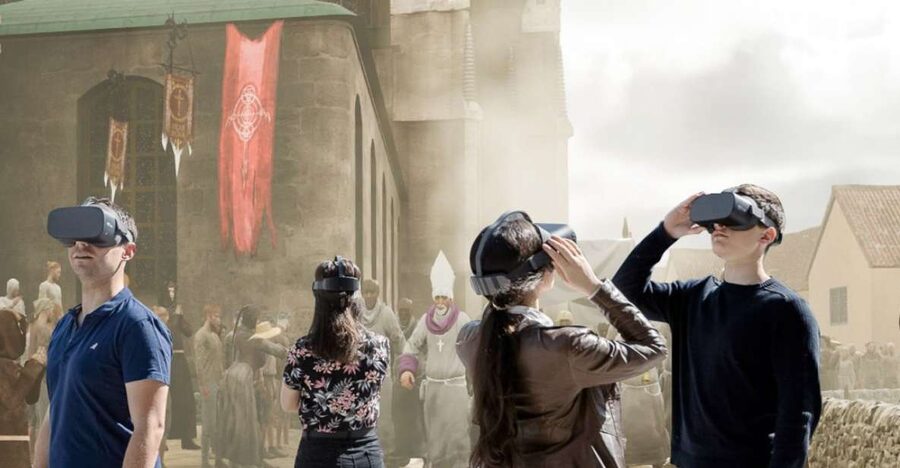
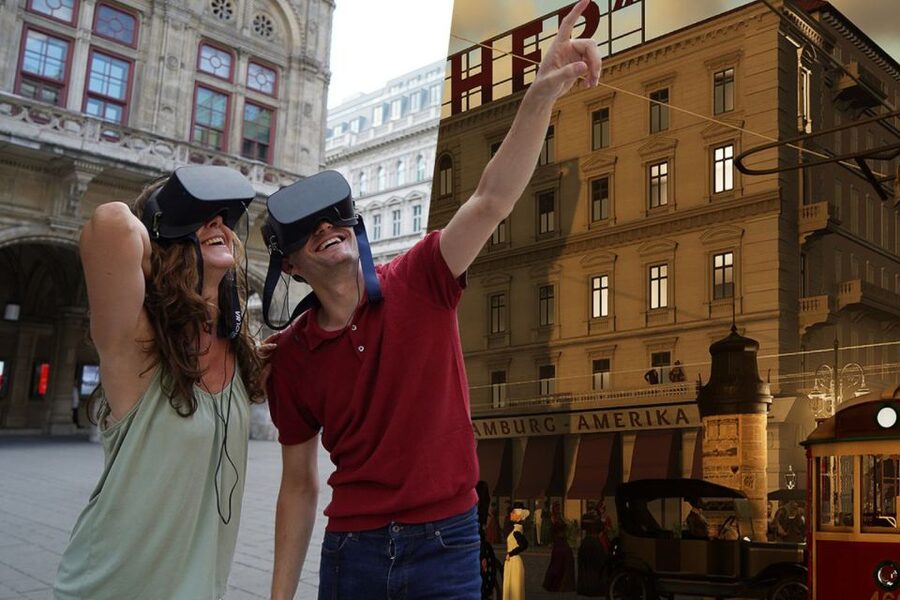
Vienna in VR feels like time travel with good shoes and a plan. You get 360-degree virtual reality tied to real city spots, and you follow along with a multilingual audioguide that keeps the stories clear.
That mix is the standout. If you want your first day in Vienna to start with context, this tour does a lot in a short time.
One thing to consider: the VR visuals vary in sharpness depending on the scene and setup. If you are sensitive to audio-language switching or want the VR to do all the work, you may wish for more show-and-tell inside the headset.
In This Review
- Key highlights you should care about
- Vienna’s past is built for 360-degree storytelling
- Meeting at Neuer Markt, then walking toward the Albertina
- The walking route: 3.2 kilometers of old-town sightseeing
- Six scenes of Vienna history, in the order your head will remember them
- 1483 White Sunday procession: ornaments out in public
- 1683 Ottoman siege: seeing danger approach
- Plague darkness and Augustin’s humor and music
- Hofburg area hunting: meet Empress Sisi and Franz Joseph II
- The Opera in the golden 20s: getting ready for performance
- St. Stephen’s Square in WWII: cathedral burning and Soviet entry
- What the guides do that the headset cannot
- Audioguide languages: a real advantage for mixed groups
- VR quality and comfort: plan for mixed results
- Price and value: what $45 buys in a short time
- Logistics that can make or break the day
- Who this tour is best for
- Should you book the Vienna time-traveling VR tour?
- FAQ
- Where does the tour start?
- Where does the tour finish?
- How long is the tour?
- How much does it cost?
- What’s included in the price?
- Is food included?
- What languages are available?
- Is the tour wheelchair accessible?
- Is the tour suitable for children?
- Is it safe for people with epilepsy?
- Can the tour be canceled due to weather?
Key highlights you should care about
- Neuer Markt start, Albertina finish, so the pacing feels like a real sightseeing walk.
- Six time periods in VR, each linked to a recognizable Vienna landmark area.
- Live guide in English and German, plus an audioguide with English, Spanish, Dutch, French, Italian, and Russian.
- Major turning points, from 1483 White Sunday to WWII’s final days at St. Stephen’s Square.
- Flat route, about 3.2 kilometers, making it easier to focus on the story instead of the terrain.
- Wheelchair accessible, with route and pace designed for sightseeing rather than steep climbing.
Other headset and projection rooms
- Vienna: Light of Creation Votive Church Immersive Light Show
★ 4.8 · 6,779 reviews - Vienna: Time Travel and Magic Vienna History Tour
★ 4.6 · 3,879 reviews - Time Travel-Magic Vienna History Tour Ticket
★ 4.5 · 1,099 reviews - Vienna: Madame Tussauds Admission Ticket
★ 4.6 · 1,077 reviews
Vienna’s past is built for 360-degree storytelling
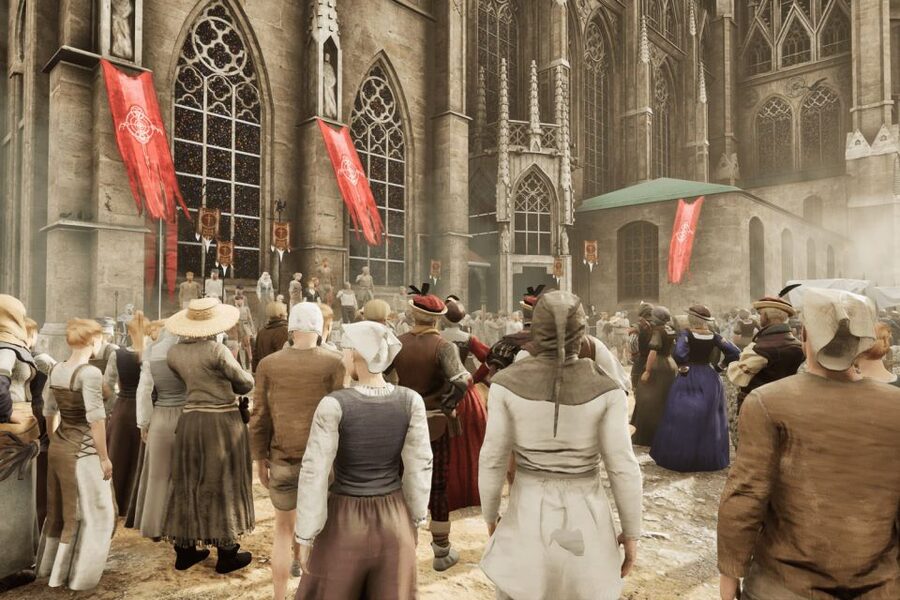
Vienna is the kind of city where the stones already feel like they remember things. This tour leans into that by pairing a guided city walk with VR scenes that give you a full all-round view, not just a small screen moment.
What I like is how the story moves in big jumps, but you still stay grounded in where you are. You will go from religious procession to siege, from plague gloom to opera-night anticipation, and then into WWII’s closing chapter, all while your feet keep you in the old town rhythm.
Meeting at Neuer Markt, then walking toward the Albertina
The tour starts at Neuer Markt 6. Get there about 15 minutes early and look for the turquoise-colored entrance, so you do not waste time hunting on a cold or wet street.
You will end at Albertina, which helps because you can keep exploring right after the tour without needing to backtrack. The duration is listed around 100 minutes, and the walking tour portion is described as about 105 minutes, so plan for roughly 1 hour and 40 minutes to 2 hours total, including headset moments.
If you hate standing around in weather, you will likely appreciate the setup. One guide-led group experience included being welcomed in an office, which means less waiting outside before you start moving.
The walking route: 3.2 kilometers of old-town sightseeing
This is a walking tour over flat terrain, around 3.2 kilometers total. That matters because the tour’s core strength is learning as you walk, not sprinting between far-flung sights.
You should also note the weather reality. The tour might be canceled due to heavy rain or storms, and the decision can happen at the last minute as conditions worsen. If you have other tight plans that day, keep some flexibility.
Six scenes of Vienna history, in the order your head will remember them
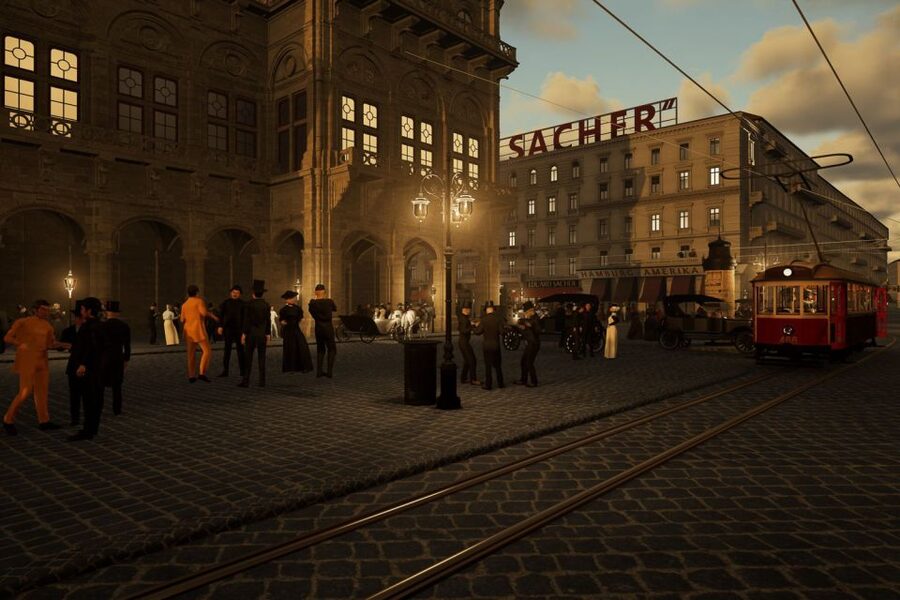
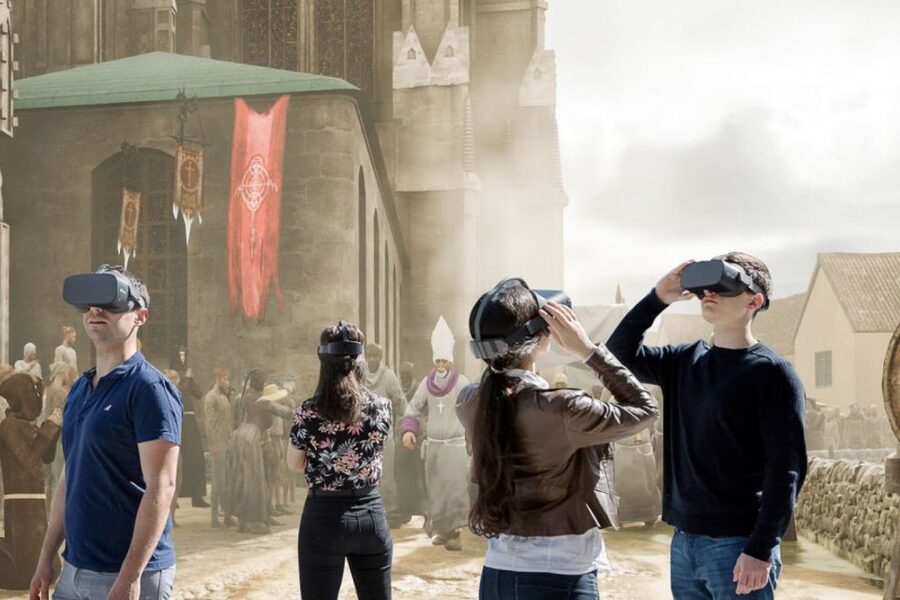
The tour runs with a guide on the ground while you switch to VR at key moments. The structure is simple: you listen, you walk, you put on the headset, and you watch history unfold around you in six scenes.
Here is how the time jumps work, and why each one is worth your attention.
1483 White Sunday procession: ornaments out in public
You kick things off with a procession on White Sunday in 1483. Even if you know little about Vienna’s medieval world, this scene is a good “anchor.” It shows how public ritual, religion, and civic life connected in a time when people barely separated daily routine from belief.
In the real city, you get that visual contrast fast. The old streets and church areas make it easier to imagine people gathering, moving, and turning ceremonies into shared memory. This is also the kind of scene that helps your brain accept the rest of the timeline without feeling like random dates.
1683 Ottoman siege: seeing danger approach
Next comes a darker chapter, when the Ottoman Empire carries out another siege during the second siege in 1683. VR helps here because you do not just hear about conflict, you experience the atmosphere of being there.
You also get to connect Vienna’s later identity to this kind of threat. This is not history as trivia. It is history as pressure, and pressure shapes politics, architecture, and even how a city tells its own story afterward.
Plague darkness and Augustin’s humor and music
Then you hit the plague period, where the tour focuses on the darkness of a time when illness emptied households and communities. The plague moment is paired with the story of Augustin, a singer who helped show Vienna could survive by using humor and music.
That pairing is smart because it avoids one-tone suffering. When you learn that culture and performance still mattered even in terror, the city feels more human. You are not only learning what went wrong, you are learning how people coped in real life.
Hofburg area hunting: meet Empress Sisi and Franz Joseph II
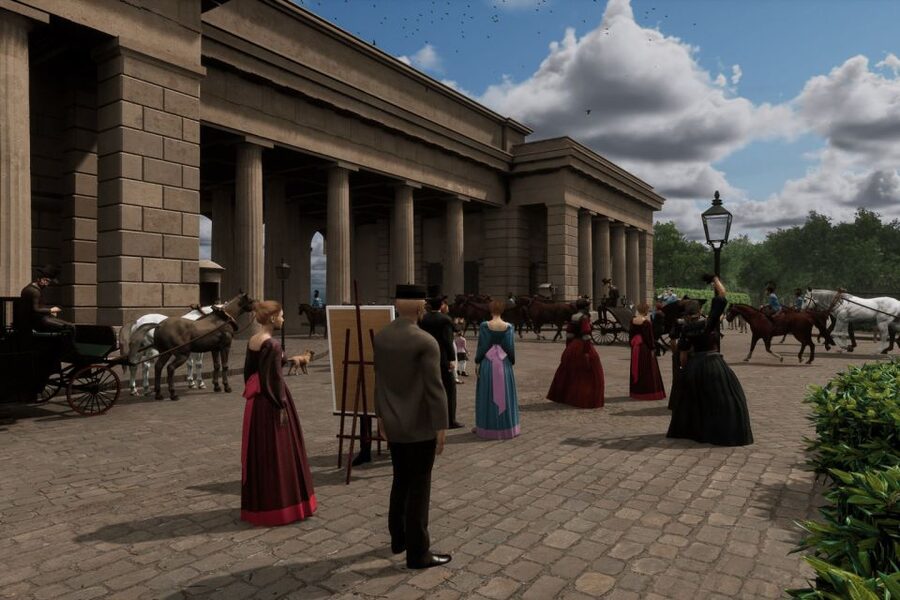
On a sunny day, you will walk around the Hofburg area and see Empress Sisi and Emperor Franz Joseph II during a hunting trip. This scene is lighter than the siege and plague, but it still gives you something useful.
The tour includes a playful local detail: you are standing close enough to the road to wink at the moment. That kind of small instruction might sound silly, but it is exactly what helps you remember a scene later. It turns the VR moment into a specific memory, not a blur of costumes.
The Opera in the golden 20s: getting ready for performance
Next is the Opera and the golden 20s. Instead of only showing the final spectacle, this scene looks at how people prepare for an opera performance.
That is a valuable choice. In Vienna, music is not a side hobby, it is part of the city’s self-image. Seeing the lead-up helps you understand why audiences took the rituals of performance so seriously. It is the difference between seeing the end of a story and learning how it is made.
St. Stephen’s Square in WWII: cathedral burning and Soviet entry
The last VR scene is at St. Stephen’s Square, and it brings you into the final month of the terrible Second World War. You witness the cathedral burning and then the Soviet army driving the last German soldiers out.
This is heavy material, and it is delivered in a way that aims to be visual and direct. If you want your Vienna history to cover the whole spectrum, this ending is the full stop. After this, you will likely look at the square with new eyes, even if you never learn a single fact from a textbook.
What the guides do that the headset cannot
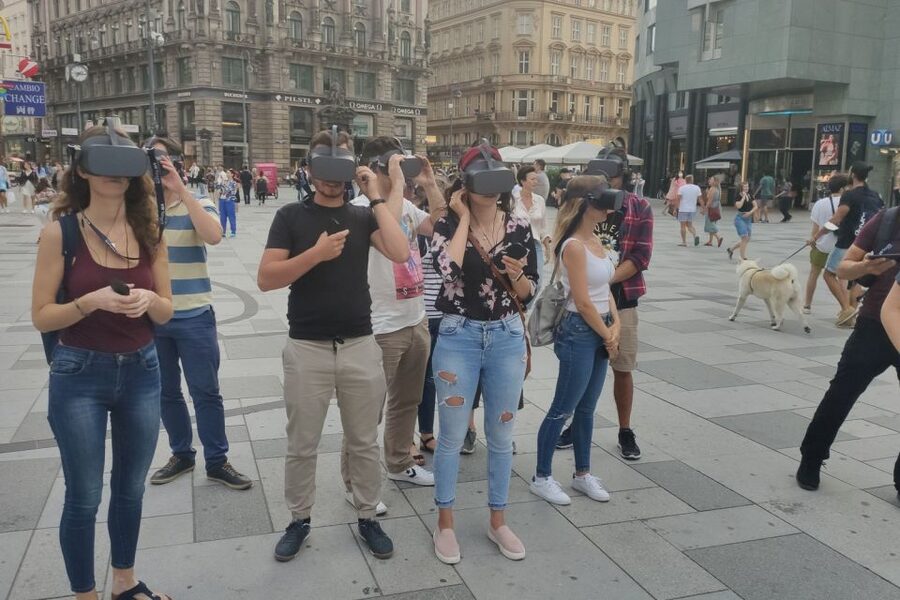
The VR is the headline, but the guide is the glue. Your live guide speaks English and German, and they help you use the VR glasses and earphones so you can actually follow what is happening.
Two guide names show up clearly in the experience feedback: Julian and Dr. Reiner. The big practical takeaway is simple. When the guide can smoothly bridge languages, everyone spends less time confused and more time connecting the walking parts with what the headset shows you.
You also get room for different learning styles. If you like audio narration, the audioguide covers you. If you prefer a human voice on the street, the live guide keeps the pacing and context straight.
Audioguide languages: a real advantage for mixed groups
The audioguide is included and offers English, Spanish, Dutch, French, Italian, and Russian. That matters a lot in a city where day-to-day tourism can turn into a language juggling act.
One consideration from real-world experience: if you are in a mixed-language group, translation can become tricky between English and German as the tour moves. If you want the smoothest experience, pick the audio or language setup that you can follow without constant switching.
VR quality and comfort: plan for mixed results
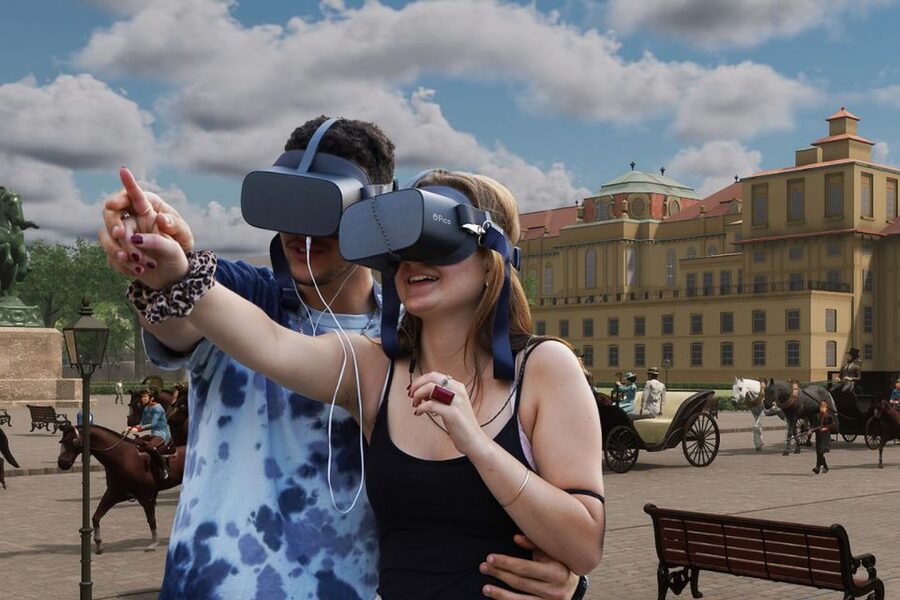
VR is the heart of the tour, but you should set expectations. In some scenes, the visuals are described as slightly rough and blurry, with faces that can look indistinct. That is not unusual for VR tech used in a live tour environment, where lighting, screen calibration, and device updates can vary.
Comfort is also part of the equation. If you wear glasses, expect to adjust the headset fit. If you feel anxious in intense visual scenes, know that the tour includes dark historical moments like plague and WWII.
Most importantly: this tour is not suitable for people with epilepsy, which is a key safety note you should respect.
Price and value: what $45 buys in a short time
At $45 per person, you are paying for two things: guided storytelling and VR hardware. For a 100-minute experience, it can be a good value if you are using your first days to get orientation and context.
This is especially true because you walk a compact loop and hit major historical beats, from medieval rituals to Ottoman pressure to 20th-century devastation. If you tried to cobble this together yourself with audio apps, you would spend more time clicking around and less time seeing why those moments matter to Vienna’s identity.
If you already feel confident about Vienna history and you only care about one era, you might not get maximum value. But if you want a fast, memorable overview that changes how you see the city, the price starts to make sense.
Logistics that can make or break the day
A few practical points help this run smoothly.
- Wear comfortable walking shoes. The terrain is flat, but it is still a real walk.
- Bring a light layer if the weather is changeable, because the tour can be canceled late if storms move in.
- If you are traveling with someone who needs a specific language, double-check your language setup early, since the tour includes a live guide plus an audioguide.
Also, note that food and drinks are not included. You can do this as a stand-alone history boost, then plan a meal after.
Who this tour is best for
This is a strong choice for:
- First-time visitors who want a structured orientation to Vienna’s old town.
- People who learn well through visual stories, not just facts on plaques.
- Travelers who like variety, since the timeline spans multiple centuries in one compact outing.
It may be less ideal for:
- Anyone who wants a deep, academic lecture. This is narrative and visuals, not a seminar.
- Families with young kids. The tour is not suitable for children under 8.
Should you book the Vienna time-traveling VR tour?
Book it if you want a short, focused way to see Vienna as a city shaped by major events, not just beautiful buildings. The combination of a live guide, six VR scenes, and a strong audioguide setup is built for getting you oriented fast, and the St. Stephen’s Square and WWII ending is the kind of moment that tends to stick.
Think twice if VR image sharpness is your top priority, or if you know you will not enjoy dark history scenes. And if you are planning around tight weather windows, keep in mind the tour can be canceled due to heavy rain or storms at short notice.
If you match those expectations, this is a clever way to spend your time in Vienna, and it can make your later walks feel like you are following a story rather than just passing landmarks.
FAQ
Where does the tour start?
The tour starts at Neuer Markt 6. Arrive about 15 minutes before the start time and look for the turquoise-colored entrance.
Where does the tour finish?
The tour finishes at the Albertina.
How long is the tour?
The tour duration is listed as 100 minutes. The guided walking portion is described as about 105 minutes, so expect roughly 1.5 to 2 hours total.
How much does it cost?
The price is $45 per person.
What’s included in the price?
You receive virtual reality glasses and earphones for the audio guide.
Is food included?
No. Food and drinks are not included.
What languages are available?
The live tour guide speaks English and German. The audio guide is available in English, Spanish, Dutch, French, Italian, and Russian.
Is the tour wheelchair accessible?
Yes. The tour is listed as wheelchair accessible.
Is the tour suitable for children?
No. It is not suitable for children under 8.
Is it safe for people with epilepsy?
No. The tour is not suitable for people with epilepsy.
Can the tour be canceled due to weather?
Yes. The tour might be canceled due to poor weather like heavy rain or a storm, and the decision may be made at the last minute.
Tours: Rest of the Austria File
- Vienna: Schönbrunn Palace & Gardens Skip-the-Line Tour
★ 4.7 · 7,739 reviews - Vienna Spanish Riding School Guided Tour
★ 4.7 · 6,765 reviews - Vienna: Skip-the-Line Sisi Museum, Hofburg and Gardens Tour
★ 4.8 · 5,918 reviews - Vienna: Skip-the-Line Schönbrunn Palace & Gardens Tour
★ 4.8 · 5,411 reviews
Tour Reviews: Rest of the Austria File
- Vienna: Vivaldi’s Four Seasons Concert in Karlskirche
★ 4.7 · 14,951 reviews - Vienna: Schönbrunn Palace & Gardens Skip-the-Line Tour
★ 4.7 · 7,739 reviews - Vienna: Light of Creation Votive Church Immersive Light Show
★ 4.8 · 6,779 reviews - Vienna Spanish Riding School Guided Tour
★ 4.7 · 6,765 reviews
Screens, Headsets and Light Rooms
- Vienna: Light of Creation Votive Church Immersive Light Show
★ 4.8 · 6,779 reviews - Vienna: Time Travel and Magic Vienna History Tour
★ 4.6 · 3,879 reviews - Time Travel-Magic Vienna History Tour Ticket
★ 4.5 · 1,099 reviews - Vienna: Madame Tussauds Admission Ticket
★ 4.6 · 1,077 reviews
Newest Vienna write-ups on file
- Vienna: Private Walking Tour to The Hofburg & Graben Street★ 5.0 · 3 reviews
- Vienna: Private tour Mauthausen and Linz★ 4.1 · 3 reviews
- Vienna Private Full Day Tour – Tickets to Schönbrunn & Lunch★ 5.0 · 3 reviews
- Vienna: Johann Strauss 200th birthday anniversary exhibition★ 4.7 · 3 reviews
- Vienna: Full-Day Vienna Woods Wine Tasting Tour★ 5.0 · 3 reviews
- Vienna: Festive Season and New Year’s Eve Waltz Workshop★ 5.0 · 3 reviews
Light Shows & VR Rooms, compared.
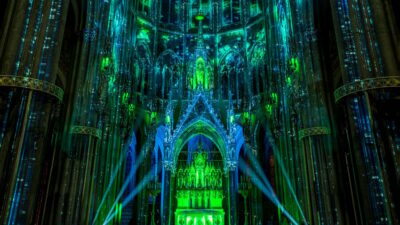 ★ 4.8Vienna: Light of Creation Votive Church Immersive Light ShowFrom $256,779 reviews
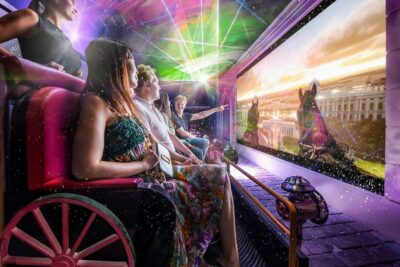 ★ 4.6Vienna: Time Travel and Magic Vienna History TourFrom $273,879 reviews
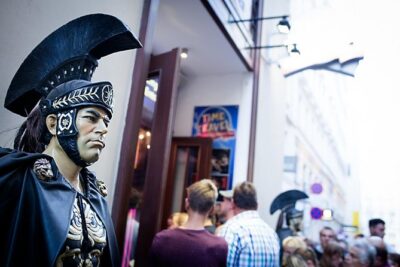 ★ 4.5Time Travel-Magic Vienna History Tour TicketFrom $271,099 reviews
 ★ 4.6Vienna: Madame Tussauds Admission TicketFrom $281,077 reviews
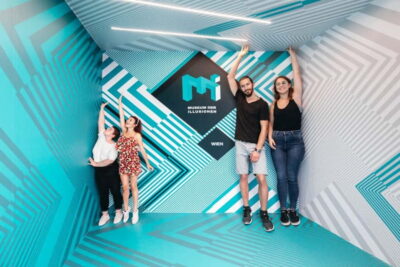 ★ 4.0Vienna: Museum of Illusions Vienna Admission TicketFrom $181,058 reviews
 ★ 4.5Vienna: Mythos Mozart ExperienceFrom $27895 reviews
 ★ 4.6Vienna: Tickets to Haus der MusikFrom $22704 reviews
 ★ 4.5Vienna: “Sisi’s Amazing Journey” Virtual Reality ExperienceFrom $14673 reviews
This tour also sits in