
REVIEW · LIGHT SHOWS & VR ROOMS
Vienna: Tickets to Haus der Musik
Vienna turns sound into a game. At Haus der Musik, the old music world meets interactive displays inside the former Palais of Archduke Charles, where Otto Nicolai lived when he founded the Vienna Philharmonic in 1842.
What I love most is how hands-on the experience feels, from trying interactive instruments to playing music-themed games with your own name and choices.
The second thing I really like is the way composer-and-orchestra history is treated like something you can study, using historic documents, models, costumes, and personal items alongside modern installations. You get the Vienna classics (Haydn, Mozart, Beethoven, Schubert, Strauss, Mahler, Schönberg) without turning it into a stuffy lecture.
One drawback to consider is that this museum is designed for action, so it can be busy and hands-on in a way that might not suit you if you’re craving quiet, sit-down listening.
In This Review
- Key things to know before you go
- Vienna palace to music lab: what Haus der Musik really feels like
- Your best game plan: how to tackle 4 floors without missing the good stuff
- The Vienna Philharmonic story starts in the Palais of Archduke Charles
- Composer stations: Haydn through Schönberg in a modern layout
- Conduct like you mean it: the virtual orchestra challenge
- The science of sound: instruments, interactive displays, and your ears learning fast
- Hear your name in Mozart form with Namadeus
- Compose a waltz with a throw of the dice
- New Year’s Concert in HD: a calm moment inside the action
- Price and value: is $22 per person a smart buy?
- What to bring (and what you should expect to pay extra for)
- Who should book Haus der Musik tickets?
- Should you book Haus der Musik tickets?
- FAQ
- Where is Haus der Musik located?
- How long is the experience valid?
- How much are tickets?
- What should I bring with me?
- Is there anything included with the ticket?
- Is food and drink included?
- Can I use the app guide in different languages?
- Is it wheelchair accessible?
Key things to know before you go
- Otto Nicolai and the Vienna Philharmonic connection: the museum sits in the Palais where Nicolai lived when he helped launch the orchestra.
- 4 floors of music and sound: each level shifts the focus, from composer stories to interactive sound science.
- Conducting challenge: test your timing as you face a virtual Vienna Philharmonic experience.
- Namadeus name game: you hear your name as an original Mozart composition (with a catch, see FAQ).
- Make-and-play waltz activity: compose your own waltz using a throw of the dice.
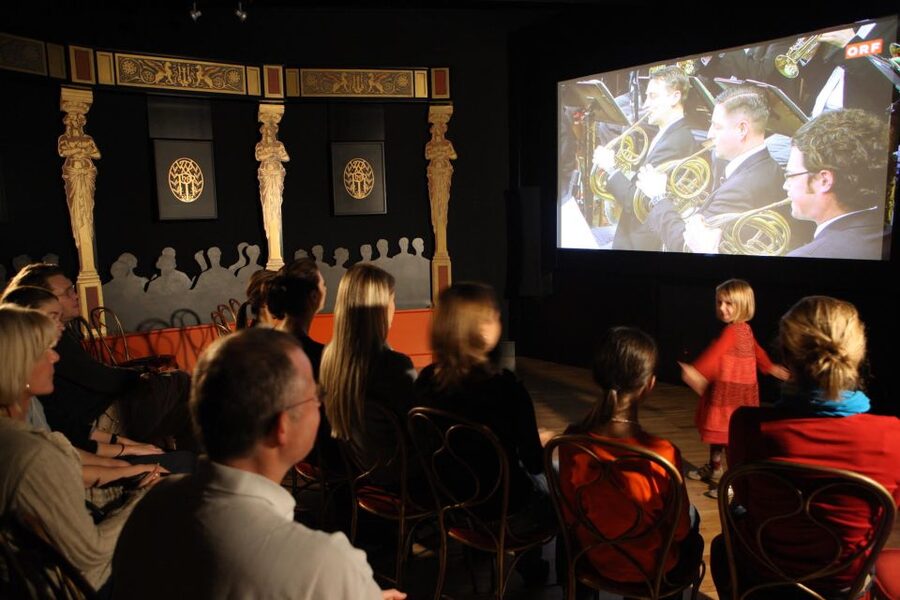
- HD New Year’s Concert playback: watch the Vienna Philharmonics New Year’s Concert in high-definition quality.
Other headset and projection rooms
- Vienna: Light of Creation Votive Church Immersive Light Show
★ 4.8 · 6,779 reviews - Vienna: Time Travel and Magic Vienna History Tour
★ 4.6 · 3,879 reviews - Time Travel-Magic Vienna History Tour Ticket
★ 4.5 · 1,099 reviews - Vienna: Madame Tussauds Admission Ticket
★ 4.6 · 1,077 reviews
Vienna palace to music lab: what Haus der Musik really feels like
Haus der Musik works because it refuses the usual museum rhythm. Instead of lots of glass cases and silence, you get stations where your hands, ears, and curiosity are part of the show. I like that the building itself carries weight, too, since it’s in a historic palace associated with the rise of the Vienna Philharmonic.
You’re also not stuck with a single “music angle.” One area is composer-focused, another leans into the science of sound, and the games tie it all together. The result is a museum visit that works even if not everyone in your group loves classical music equally.
Your best game plan: how to tackle 4 floors without missing the good stuff
You have one day, and you’ll feel the urge to “do everything.” That’s normal, but the smart approach is to pick your two or three must-dos, then let the rest unfold around them. The museum gives you an app guide (8 languages) plus a museum map, which helps you move fast and avoid backtracking.
Here’s a practical flow that usually makes the visit feel smooth:
First, start with the composer timeline areas so you understand who you’re looking at. Then switch to the hands-on sound spaces, where the ideas start to make sense in your body, not just your head. Finish with the interactive games like conducting, Namadeus, and the waltz activity, since those are the most “I want to try one more time” stops.
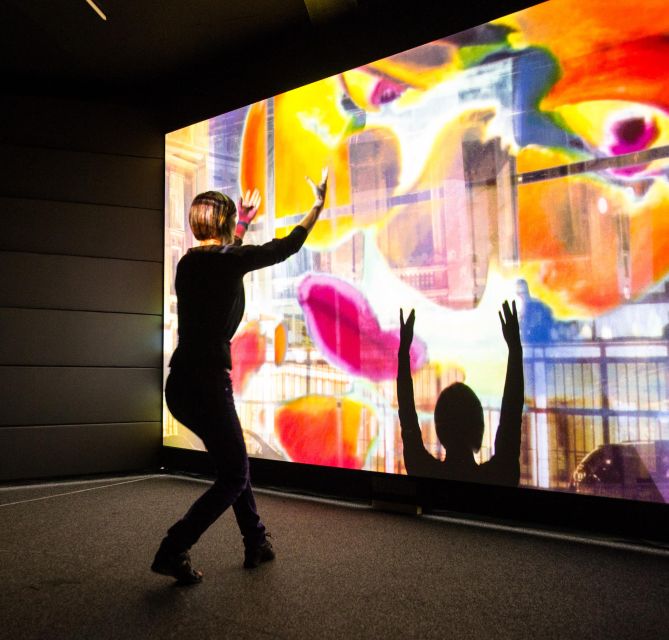
Expect more than a walk-through. The museum is built for participation, and many exhibits ask you to listen, press buttons, or experiment with instruments and sound triggers. If you bring patience and headphones (yes, you need them), you’ll get more out of every floor.
The Vienna Philharmonic story starts in the Palais of Archduke Charles
The museum’s setting matters. Haus der Musik is housed in the former Palais of Archduke Charles, and that’s not trivia. It’s part of the reason the place feels tied to Vienna’s music rise rather than floating in an abstract timeline.
A key thread is the museum’s connection to Otto Nicolai. The founder of the Vienna Philharmonic Orchestra lived in this palais area when he helped establish the orchestra in 1842. In the museum’s presentation of Philharmonic history, you can see precious documents and mementos from the orchestra’s past, which gives the story real texture.
If you love the Vienna Philharmonic as an institution, this is where you’ll feel the “why” behind the fame. If you’re more casual about orchestras, this is still useful, because it frames the rest of the museum. You’ll understand why the concerts, the composers, and the modern performances belong to a single cultural ecosystem.
Composer stations: Haydn through Schönberg in a modern layout
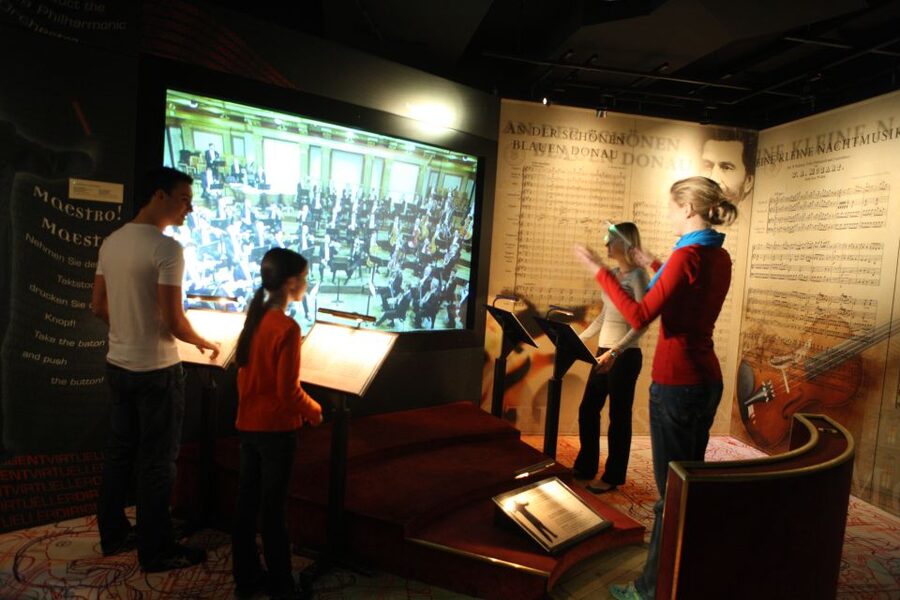
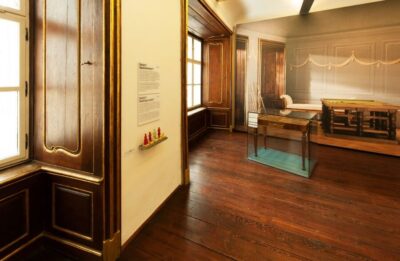
On the history levels, the museum introduces major names of the Wiener Klassik world and beyond: Haydn, Mozart, Beethoven, Schubert, Strauss, Mahler, and Schönberg. What helps here is the mix of formats. You’re not limited to labels. You encounter historic documents, models, costumes, and personal items, plus modern installations that connect the composer story to the space around you.
One clever advantage of this approach is pace. You can skim when you want, and you can slow down when something catches your ear. The museum presents composers in a contemporary environment, which means the “old material” is presented in ways that don’t require you to already know every musical term.
And because the museum also runs temporary exhibitions in the inner courtyard, you might see special music-historical themes tied to famous musicians or periods like Viennese Modernism. That keeps your visit from feeling like the same rerun every time, even if you’ve heard the names before.
Other Vienna write-ups filed under Austria

Conduct like you mean it: the virtual orchestra challenge
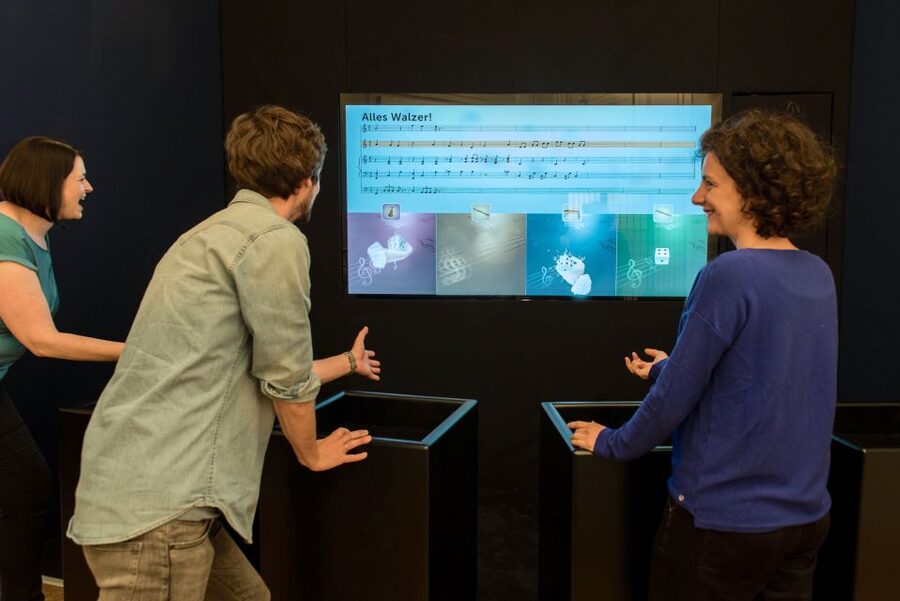
One of the most fun parts of Haus der Musik is the interactive conducting experience. You can test your talent as a conductor and face the world famous Vienna Philharmonic Orchestra through an interactive setup. It’s the kind of exhibit that makes even non-musicians grin, because the goal is not to be perfect. The goal is to interact with rhythm and musical response.
This stop is also valuable for a different reason. Conducting looks mystical until you translate it into cues: tempo, timing, cues for sections. Even if you don’t read music, you’ll start to recognize how orchestras coordinate and why “feel” matters.
If you’re going with kids, this is usually a top choice because it creates that instant feedback loop. If you’re going with a partner, it’s a great shared moment, because you can take turns, laugh at wrong attempts, and then focus harder on the next try.
The science of sound: instruments, interactive displays, and your ears learning fast
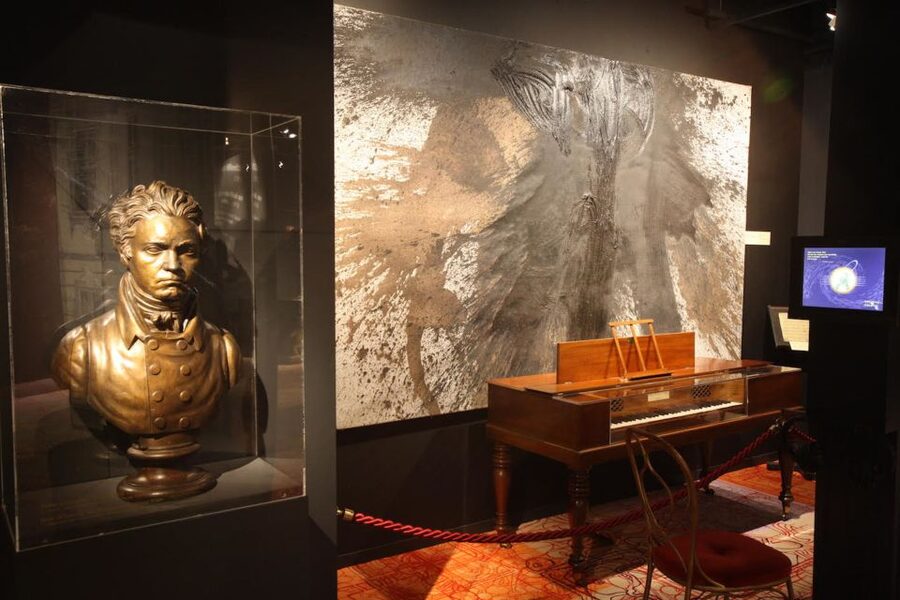
Haus der Musik’s reputation for hands-on fun makes sense, but the best part is that it explains sound in ways you can test. You’ll find interactive displays and instruments that turn sound into something physical and understandable. This is where the museum earns respect from people who normally skip “science sections.”
Why it matters: when you hear something in a concert hall, it’s easy to treat it as magic. Here, you get the tools to understand how sound behaves. You can experiment with noises and sound inputs, and that helps you connect what you hear to what’s happening.
One practical tip: when you see a sound experiment, don’t rush. Sit with it for a minute, then try adjusting whatever you’re meant to control. The museum is built so you learn by comparison, not by memorizing facts.
You’ll also notice that this science-and-sound area ties back to the composer story. Once you’ve experienced how sound changes, the historical ideas feel less like names on a wall and more like choices artists made.
Hear your name in Mozart form with Namadeus
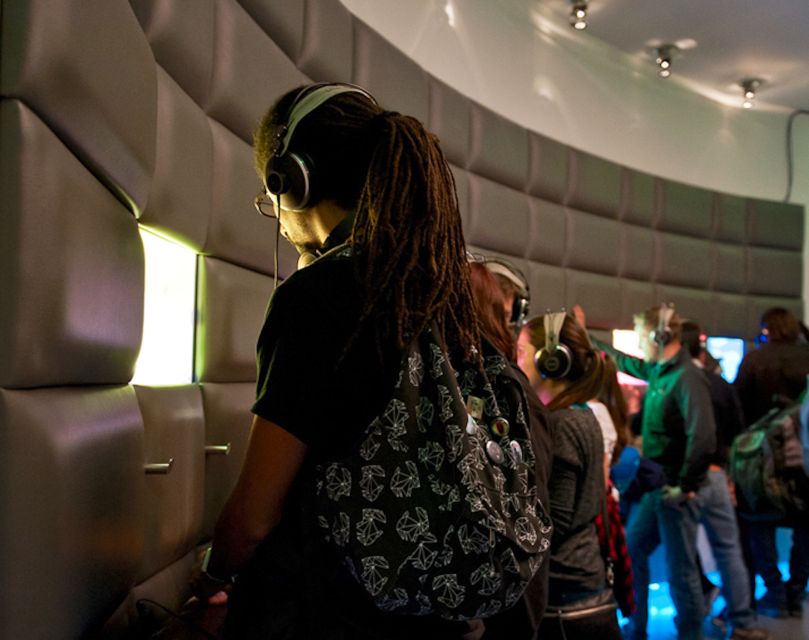
Namadeus is one of those ideas that sounds gimmicky until you experience how personal it feels. The museum offers an interactive game where you can hear your name as an original Mozart composition. It’s a fun way to connect identity with music, and it often becomes the “wait, try it again” moment.
There is one important detail: the Namadeus certificate is not included in your ticket. That doesn’t stop you from doing the name experience, but it matters if you’re hoping for a printed keepsake. If having a certificate is important to you, check what’s actually included at the time of your visit.
Also, bring your real expectations. This is not a concert recording of Mozart. It’s an interactive way to experience the concept of a composition built around your name. It’s playful, memorable, and a great activity when you want something that feels modern and personal.
Compose a waltz with a throw of the dice
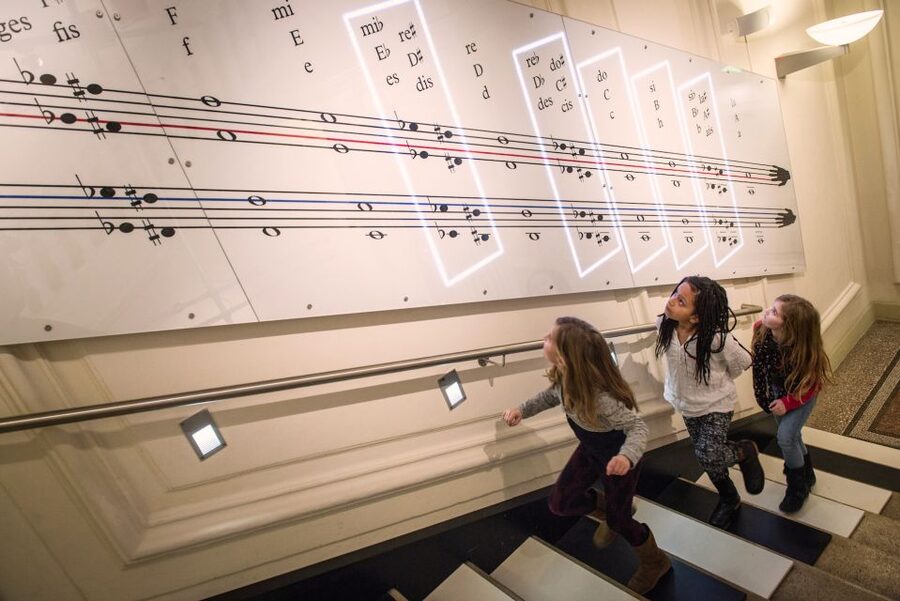
If you want to create something and not just listen, this is the stop. You can compose your own waltz using a throw of the dice. It’s a simple format, but it gets at a real musical truth: composition is partly structure, partly pattern, and partly chance decisions that produce a result.
Even if your waltz isn’t “perfect,” the value is in the learning. You’ll see how musical form works, and you’ll connect the word waltz with something practical. That turns the experience from observation to participation, which is what Haus der Musik does better than most museums.
If you’re traveling with kids, this one is especially good because it turns classical-style thinking into a game. If you’re traveling as adults, it’s still worth it because it makes the museum’s mission feel tangible.
New Year’s Concert in HD: a calm moment inside the action
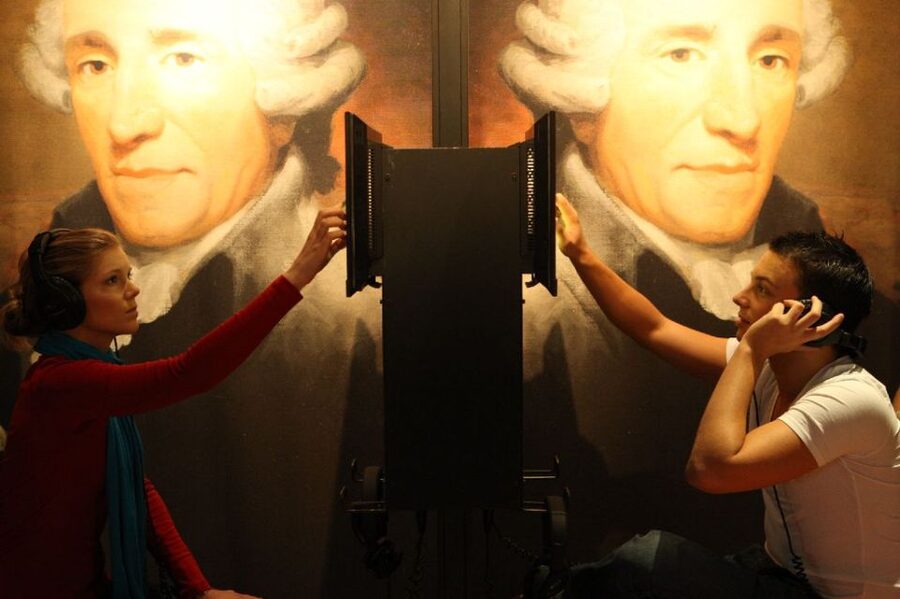
Not everything is interactive all the time. Haus der Musik includes a chance to listen to the Vienna Philharmonics New Year’s Concert in HD quality. It’s a nice shift after hands-on exhibits, especially if your ears need a breather.
This matters because sound experiences in a museum can be tiring. A high-definition concert playback gives you a “how it should sound” reference point. After you’ve played with sound and experimented with instruments, the concert makes the science feel useful, not academic.
Price and value: is $22 per person a smart buy?
At $22 per person for a 1-day ticket, Haus der Musik sits in the category of affordable cultural attractions with strong “time on site” potential. The value comes from three things you rarely get in one place:
You get historic music content tied to Vienna’s orchestra legacy.
You get interactive sound learning that’s not just visual.
You get multiple participation activities, like conducting, Namadeus, and composing a waltz.
Also, your ticket includes the app guide (8 languages), a map, and coat check. That reduces friction when you’re moving through a multi-floor museum. You’ll likely spend enough time here that the per-hour value stays reasonable, even if you linger at the interactive stations.
Where value can drop slightly: if you personally dislike interactive exhibits and prefer quiet museums with minimal participation, you might feel like you’re paying for activities you won’t use much. In that case, you’d want to make sure your “must-do” list includes at least one hands-on sound or game area.
What to bring (and what you should expect to pay extra for)
Bring headphones. The museum specifically notes that visitors need them, which is especially important because many sound-focused exhibits rely on audio you don’t want leaking everywhere.
Your ticket includes admission, an app guide in 8 languages (plus a children’s app in 2 languages), a museum map, and coat check. Food and drinks are not included, so plan on buying meals elsewhere nearby if you stay longer than a couple of hours.
One small practical note: if a certificate is part of your plan, remember the Namadeus certificate is not included. If you want a keepsake, you may need to confirm what’s available on site.
Who should book Haus der Musik tickets?
This ticket is a great fit if you fall into one or more of these groups:
You like classical music and want a playful, modern way to connect with the big names.
You’re curious about how sound works, and you want to experiment instead of just reading.
You’re traveling with kids and want a place where they actually have things to do.
You want a Vienna activity that feels cultural, but not overly formal.
It might be a weaker fit if you’re looking for a quiet museum visit where you can sit and listen to music without interaction. The museum is designed for movement and sound trials, so expect noise and activity in the popular interactive zones.
Should you book Haus der Musik tickets?
Yes, if your goal is a Vienna experience that combines composer history with hands-on sound learning. For the price, you’re getting multiple major activities in one building, plus the Vienna Philharmonic context that ties it together.
Before you buy, check that your group is comfortable with participatory museums. If you want one anchor activity, choose between conducting, Namadeus, or the waltz composer game, and then build your visit around it.
If that sounds like your kind of day, this is an easy booking to make in Vienna.
FAQ
Where is Haus der Musik located?
The meeting point is Haus der Musik, Seilerstätte 30, 1010 Vienna.
How long is the experience valid?
The ticket is valid for 1 day, starting from first activation.
How much are tickets?
The price is $22 per person.
What should I bring with me?
You should bring headphones.
Is there anything included with the ticket?
The ticket includes admission, an app guide you can download on your smartphone in 8 languages (and a children’s app in 2 languages), a map of the museum, and coat check.
Is food and drink included?
No. Food and drinks are not included.
Can I use the app guide in different languages?
Yes. The app guide is available in 8 languages, and there is also a children’s app in 2 languages.
Is it wheelchair accessible?
Yes. The museum is wheelchair accessible, with step-free access at the main and side entrances, automatic sliding doors, wheelchair-accessible elevators, and wheelchair-accessible toilet facilities in the inner courtyard and on the top floor.
Tickets: Rest of the Austria File
- Vienna: Classic Ensemble Vienna in St. Peter’s Church Ticket
★ 4.7 · 4,819 reviews - Vienna Kunsthistorisches Museum Day Admission Ticket
★ 4.6 · 3,690 reviews - Vienna: Tickets for Mozarthaus Vienna with Audio Guide
★ 4.2 · 2,344 reviews - Vienna: Skip-the-Line Entrance Ticket to the Danube Tower
★ 4.5 · 2,303 reviews
Tour Reviews: Rest of the Austria File
- Vienna: Vivaldi’s Four Seasons Concert in Karlskirche
★ 4.7 · 14,951 reviews - Vienna: Schönbrunn Palace & Gardens Skip-the-Line Tour
★ 4.7 · 7,739 reviews - Vienna: Light of Creation Votive Church Immersive Light Show
★ 4.8 · 6,779 reviews - Vienna Spanish Riding School Guided Tour
★ 4.7 · 6,765 reviews
Screens, Headsets and Light Rooms
- Vienna: Light of Creation Votive Church Immersive Light Show
★ 4.8 · 6,779 reviews - Vienna: Time Travel and Magic Vienna History Tour
★ 4.6 · 3,879 reviews - Time Travel-Magic Vienna History Tour Ticket
★ 4.5 · 1,099 reviews - Vienna: Madame Tussauds Admission Ticket
★ 4.6 · 1,077 reviews
Newest Vienna write-ups on file
- Vienna: Private Walking Tour to The Hofburg & Graben Street★ 5.0 · 3 reviews
- Vienna: Private tour Mauthausen and Linz★ 4.1 · 3 reviews
- Vienna Private Full Day Tour – Tickets to Schönbrunn & Lunch★ 5.0 · 3 reviews
- Vienna: Johann Strauss 200th birthday anniversary exhibition★ 4.7 · 3 reviews
- Vienna: Full-Day Vienna Woods Wine Tasting Tour★ 5.0 · 3 reviews
- Vienna: Festive Season and New Year’s Eve Waltz Workshop★ 5.0 · 3 reviews
Light Shows & VR Rooms, compared.
 ★ 4.8Vienna: Light of Creation Votive Church Immersive Light ShowFrom $256,779 reviews
 ★ 4.6Vienna: Time Travel and Magic Vienna History TourFrom $273,879 reviews
 ★ 4.5Time Travel-Magic Vienna History Tour TicketFrom $271,099 reviews
 ★ 4.6Vienna: Madame Tussauds Admission TicketFrom $281,077 reviews
 ★ 4.0Vienna: Museum of Illusions Vienna Admission TicketFrom $181,058 reviews
 ★ 4.5Vienna: Mythos Mozart ExperienceFrom $27895 reviews
 ★ 4.5Vienna: “Sisi’s Amazing Journey” Virtual Reality ExperienceFrom $14673 reviews
 ★ 4.6Vienna: Time Traveling Virtual Reality Sightseeing TourFrom $45672 reviews
This tour also sits in