
REVIEW · VIENNA CELLARS & GHOST WALKS
Vienna: Private Walking Tour of the Central Cemetery
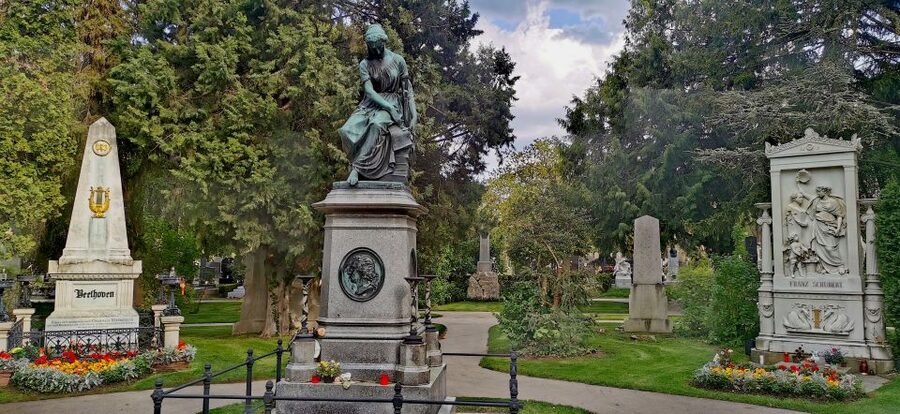
Vienna Central Cemetery hits you fast.
This private walking tour turns a graveyard into a guided story, with the Vienna Central Cemetery you can understand instead of just wander. You get a real sense of how the place grew from early criticism to one of the city’s most striking memorial landscapes, and you move at a human pace with an expert leading the way.
I especially like two things. First, you have a state-certified Austrian guide, and when headsets are needed for larger groups, you can still follow along clearly. Second, the route mixes famous monuments with specific chapters of Viennese and European history, from Ringtheater fire victims in 1881 to Soviet soldiers from the 1945 Battle of Vienna.
One consideration: the tour runs in German, and the subject matter stays intentionally somber, so it is not built for anyone wanting a light, funny stroll the whole time.
In This Review
- Key things to know before you go
- Vienna Central Cemetery: why a graveyard feels like a city tour
- Finding the 2nd Gate: the small details that save time
- How the private format changes what you get from a 2-hour walk
- Monumental tombs and the story of “equality” in death
- The Ringtheater fire graves: learning how tragedy shaped remembrance
- Soviet soldiers and the 1945 Battle of Vienna
- The cemetery church in Art Nouveau: the dominant structure you should not miss
- The forest cemetery ending: where modern burial fits in
- Price and value for a private group up to 10
- Logistics that matter: language, time, and what to wear
- Who this Vienna Central Cemetery tour suits best
- Should you book this private Central Cemetery tour?
Key things to know before you go
- Private group, not a cattle car, with time to ask questions as you walk the grounds
- State-certified Austrian guidance that keeps the stories clear and structured
- Memorial stops tied to real events, including the 1881 Ringtheater fire and 1945 Soviet casualties
- The Art Nouveau cemetery church, positioned as the dominant focal structure
- A finish at the forest cemetery, showing how modern burial looks in today’s society
- Easy-to-find meeting point, the 2nd gate, with your guide on the right at the water hydrant
Cellars, crypts and night routes
- Vienna: Vienna Central Cemetery Guided Walking Tour
★ 4.8 · 3,307 reviews - Vienna: Viennese Underworld Guided Walking Tour
★ 4.7 · 1,865 reviews - Vienna: Imperial Crypt Entrance Ticket
★ 4.6 · 1,507 reviews - Vienna: 1.5-Hour Underground Walking Tour
★ 4.9 · 1,146 reviews
Vienna Central Cemetery: why a graveyard feels like a city tour

Even if you usually skip cemeteries, Vienna Central Cemetery has a way of changing your mind quickly. It is huge, but the experience is not about aimless roaming. Your guide helps you see patterns, which graves matter for what reason, and how different eras used stone, symbolism, and architecture to speak to the living.
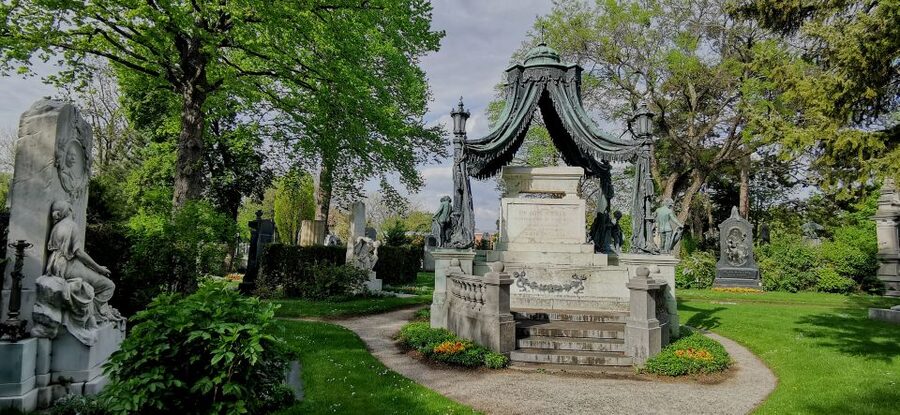
The cemetery also carries a strong idea under the surface. People may be equal in death, but the visible story above ground can be loud: reputation, status, prosperity, and fame show up in monumental tombs. That contrast makes the place feel more human, not less.
What you should expect is a mix of solemn and deeply historical. You will hear stories that connect past and present, and you will walk through memorials built both for remembrance and for a warning about senseless death.
Finding the 2nd Gate: the small details that save time
Meeting points matter in cemeteries, because there is a lot of space and not much patience. You will meet at the 2nd gate. Once you enter, the city guide stands on the right at the water hydrant.
That clarity is a big deal for a tour like this. It means you spend less time guessing and more time starting strong. If you are coming from central Vienna, do yourself a favor and plan a little extra buffer for getting there, so you are not rushing before the walk.
Also keep in mind you are outdoors. Bring layers, even if the weather looks good at first. A cemetery walk can feel cooler than you expect, especially during the winter months when the light changes quickly.
How the private format changes what you get from a 2-hour walk
Two hours is a nice window for a cemetery, long enough to see key areas and learn context, but not so long that you lose the thread. The private group setup matters because the guide can pace the walk around your questions and your comfort level.
If you are traveling with family, friends, or a small group of history lovers, this format is ideal. You can ask why a certain grave is designed the way it is, or what a particular memorial is referring to, and the guide can adjust on the spot.
Your guide is described as state-certified and Austrian. That usually means the information stays grounded, and the stories come with structure, not random facts dumped one after another. And when headsets are included for groups from 15, it is a sign they are thinking about the practical side of hearing clearly in an open outdoor space.
Monumental tombs and the story of “equality” in death
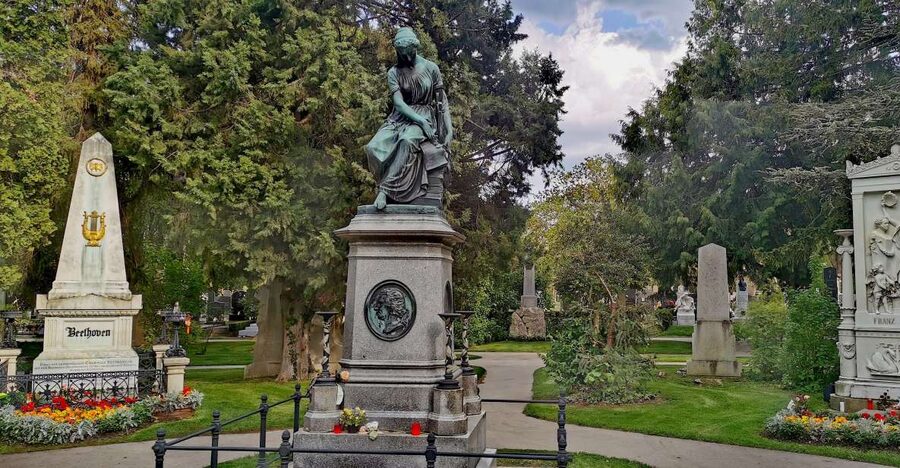
Central Cemetery is often talked about for its scale, but what makes it valuable on a guided walk is how it turns scale into meaning. You will see the “splendor and glory” side of remembrance, with impressive, monumental tombs of well-known people.
At the same time, you will get the emotional context behind the memorials. Many graves and memorials were erected not just to remember, but also to warn, reflecting how some deaths were seen as senseless. That angle changes how you read the cemetery. You are not just looking at stone, you are learning why the stone was placed.
One of the most effective ways to experience this is to let your guide frame what you are seeing. Instead of treating each tomb like a separate attraction, you start noticing the cemetery as a timeline and an argument about society, status, grief, and memory.
Other Vienna write-ups filed under Austria
The Ringtheater fire graves: learning how tragedy shaped remembrance
Some cemeteries feel like they were built only for the dead. Central Cemetery also feels like it was built for the living to understand a specific loss.
You will see graves for the victims of the Ringtheater fire in 1881. A stop like this is more than a history lesson. It shows how a single event can ripple through a city and end up carved into long-lasting memorial form.
What you gain from a guided moment here is connection. The guide helps you place the event into a broader Viennese story, so the names and dates do not feel abstract. You can also better understand the cemetery’s role as a space of public remembrance, not only a place of private mourning.
If you like history that has human weight, this is one of the stops that tends to hit hardest. It is also the kind of moment where a guide’s tone and pacing matter, because the subject can feel heavy quickly.
Soviet soldiers and the 1945 Battle of Vienna
Another powerful chapter comes with the graves for Soviet soldiers who died in the Battle of Vienna in 1945. This stop anchors the cemetery in the final stages of World War II, and it brings a different kind of memorial language into view.
Here is what is useful: you are not just learning that a battle happened. You are learning how that battle became part of Vienna’s physical memory through burials and remembrance. A guided route helps you see why this cemetery holds such a wide historical range, not just local figures.
When you come away from a stop like this, you often start noticing how different memorials handle meaning. Some focus on individuals and achievements. Others carry the tone of collective loss. Seeing both in a single walk gives you a more honest view of how societies cope after catastrophe.
The cemetery church in Art Nouveau: the dominant structure you should not miss
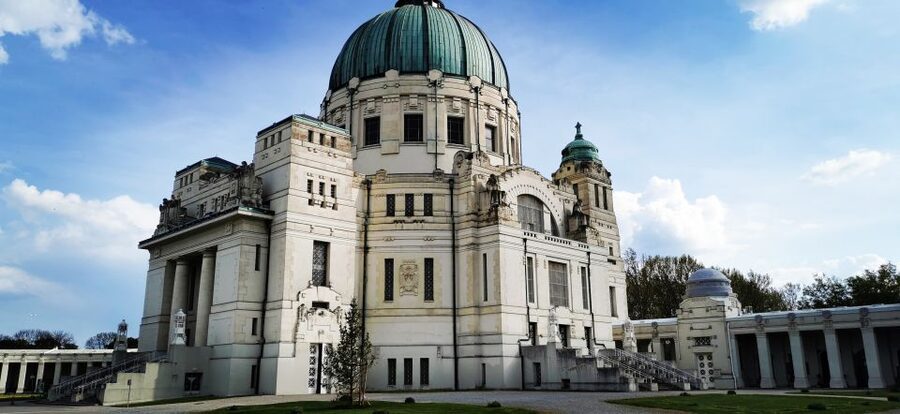
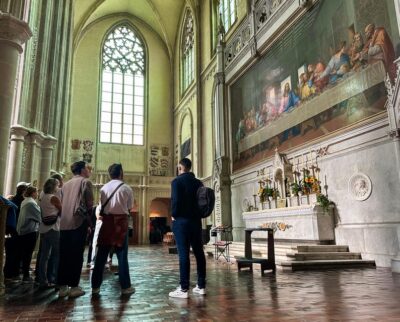
Central Cemetery has a clear “center of gravity,” and you will feel it as you approach the church. A magnificent cemetery church in Viennese Art Nouveau sits in a dominant position, almost at the center of the cemetery.
This is a key part of the value of the tour because the guide does more than point and say pretty. You get a guided visit inside the church, with explanation of architectural history. If you enjoy buildings, this can turn the tour from sad to genuinely fascinating.
Art Nouveau architecture in Vienna is a whole world on its own, and learning how the church fits into that style gives you a framework for noticing details. Even if you are not an architecture nerd, you will likely appreciate how the structure “rules” the space.
Free admission to the cemetery church is included, which makes this stop easier to justify. Instead of deciding later whether it is worth your time or ticket cost, you simply walk in as part of the guided flow.
The forest cemetery ending: where modern burial fits in
At the end of the tour, you reach the forest cemetery. This is where the tone shifts toward what modern burial looks like, and it connects the cemetery to today’s attitudes toward death and remembrance.
The name already tells you what to expect conceptually, but the guided context helps. You are not just seeing a different area. You are seeing how burial practices evolve, and how design can reflect changing values in society.
This final stop is a good way to end a somber tour. It gives you closure that is not only emotional, but also practical and forward-looking.
If you leave the cemetery feeling a little stunned, that is normal. Finishing with a view of how modern burials are handled can help you process the earlier memorials without your brain getting stuck in only one era.
Price and value for a private group up to 10
The price is $217 per group, up to 10 people, for a 2-hour private walking tour. On paper, it sounds high if you compare it to a general group bus tour. In real terms, private tours work differently, because you are paying for direct guidance and focused time.
To gauge value, think in per-person terms:
- If you fill a group of 10, you are looking at roughly $22 per person. That is often competitive for a guided experience with a specialized site.
- If you come with just 2 people, it becomes closer to $109 per person, which is a tougher sell unless you strongly prefer private pacing and targeted storytelling.
Also factor in what is included. You get a state-certified Austrian guide, and free admission to the cemetery church. There is also a required solidarity contribution of 3 euros per person charged on site and before the tour, starting January 1, 2024, plus the general requirement that commercial cemetery tours use accredited guides.
In short, it is best value when you can bring friends or family to spread the cost.
Logistics that matter: language, time, and what to wear
This is a German-language tour. If you are comfortable in German, great. If not, you may need to decide whether the experience is worth it based on how much you want to hear in real time versus reading afterward.
Your walking time is 2 hours. In a cemetery, you will want comfortable shoes and a plan for weather. Paths can be uneven in places, so avoid anything that makes you constantly watch your footing.
Wheelchair access is listed, so the experience is designed with mobility in mind. Still, since you are on foot across outdoor terrain, it is smart to consider how you personally manage walking distances.
Who this Vienna Central Cemetery tour suits best
This tour is a strong fit if you want:
- a private guided experience where you can slow down and ask questions
- history with real anchors, like the Ringtheater fire and the 1945 Battle of Vienna
- a mix of memorials and architecture, including the Art Nouveau cemetery church
- a story-led walk that covers both old and modern burial approaches
It is not the right match if you are looking for a casual, cheerful activity or if German-only narration will be a dealbreaker.
Guides in this style tend to land well when you want respectful humor, not just heavy lecturing. The guide associated with this experience is Christian Pacic, and the overall tone shared with many guests is that the storytelling can be entertaining while still informative. That matters in a place like this, because attention is harder to maintain when the setting is so solemn.
Should you book this private Central Cemetery tour?
Yes, if you want more than a photo stop. Booking makes sense when you care about context, architecture, and the exact meaning behind memorials tied to major events. The private pacing helps you keep the stories straight, and the cemetery church visit gives you a clear architectural payoff that fits inside the 2-hour window.
Skip it if you do not read or understand German well enough to follow a guided conversation. Also, if you want a light outing, this is built around remembrance and death, not distraction.
If you are traveling with a group that can reach the size cap, the value becomes much easier to justify. For solo travelers, it can still be worth it if private guidance and the cemetery church stop are your top priorities.
Tours: Rest of the Austria File
- Vienna: Schönbrunn Palace & Gardens Skip-the-Line Tour
★ 4.7 · 7,739 reviews - Vienna Spanish Riding School Guided Tour
★ 4.7 · 6,765 reviews - Vienna: Skip-the-Line Sisi Museum, Hofburg and Gardens Tour
★ 4.8 · 5,918 reviews - Vienna: Skip-the-Line Schönbrunn Palace & Gardens Tour
★ 4.8 · 5,411 reviews
Tour Reviews: Rest of the Austria File
- Vienna: Vivaldi’s Four Seasons Concert in Karlskirche
★ 4.7 · 14,951 reviews - Vienna: Schönbrunn Palace & Gardens Skip-the-Line Tour
★ 4.7 · 7,739 reviews - Vienna: Light of Creation Votive Church Immersive Light Show
★ 4.8 · 6,779 reviews - Vienna Spanish Riding School Guided Tour
★ 4.7 · 6,765 reviews
Cellars, Crypts and Night Routes
- Vienna: Vienna Central Cemetery Guided Walking Tour
★ 4.8 · 3,307 reviews - Vienna: Viennese Underworld Guided Walking Tour
★ 4.7 · 1,865 reviews - Vienna: Imperial Crypt Entrance Ticket
★ 4.6 · 1,507 reviews - Vienna: 1.5-Hour Underground Walking Tour
★ 4.9 · 1,146 reviews
Newest Vienna write-ups on file
- Vienna: Private Walking Tour to The Hofburg & Graben Street★ 5.0 · 3 reviews
- Vienna: Private tour Mauthausen and Linz★ 4.1 · 3 reviews
- Vienna Private Full Day Tour – Tickets to Schönbrunn & Lunch★ 5.0 · 3 reviews
- Vienna: Johann Strauss 200th birthday anniversary exhibition★ 4.7 · 3 reviews
- Vienna: Full-Day Vienna Woods Wine Tasting Tour★ 5.0 · 3 reviews
- Vienna: Festive Season and New Year’s Eve Waltz Workshop★ 5.0 · 3 reviews
Vienna Cellars & Ghost Walks, compared.
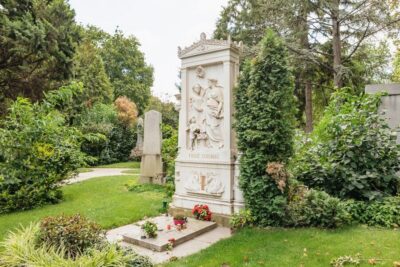 ★ 4.8Vienna: Vienna Central Cemetery Guided Walking TourFrom $3353,307 reviews
 ★ 4.7Vienna: Viennese Underworld Guided Walking TourFrom $371,865 reviews
 ★ 4.6Vienna: Imperial Crypt Entrance TicketFrom $171,507 reviews
 ★ 4.9Vienna: 1.5-Hour Underground Walking TourFrom $321,146 reviews
 ★ 4.4Vienna: Ghosts and Legends Guided Nighttime Walking TourFrom $201,088 reviews
 ★ 4.8Vienna: Guided Walking Tour of the Central CemeteryFrom $34392 reviews
 ★ 4.9“The Third Man” Film Location TourFrom $30315 reviews
 ★ 4.8Vienna: Spooky Ghost Tour in EnglishFrom $28209 reviews
This tour also sits in