
REVIEW · VIENNA CLASSICAL CONCERTS
Vienna Private Walking Tour including State Opera
Vienna sings, then you walk its empire. You will get a State Opera start plus a guided sweep through Vienna’s power stories, from Roman Vindobona to the Habsburgs, with live ties to the composers you keep seeing on museum placards. The other big win for me is how the route stitches together music, politics, and fine arts in one logical loop. One thing to consider: access inside the opera can be limited depending on what is happening on the day, so you should ask what is actually included beyond public areas.
This is a true private group experience, priced for up to 15 people, lasting about 3 hours, in English or German. You meet at Stephansplatz 8A, then your guide leads you through key squares, churches, and imperial buildings on foot, with time to look instead of just speed-walking. Wear comfortable shoes, because it is a lot of ground for a half-day stroll.
By the end, you should have a much better grip on Vienna’s geography: Mozart’s monument area, the Art History Museum and Hofburg complex facades, the Michaelerkirche, Roman ruins and medieval wall traces, the Graben shopping street, Peterskirche, and finally Stephansplatz with Stephansdom towering over it all.
In This Review
- Key things I would bank on before you go
- State Opera timing and what the visit really feels like
- Your private 3-hour route from Stephansplatz to the opera district
- Vienna from Roman Vindobona to the Habsburg machine
- Mozart Monument, the Art History Museum facades, and Hofburg power views
- Michaelerkirche, Roman remnants, and the Burg Theatre ghost
- Graben Street and the Richard Lionheart street story
- Peterskirche and the long view back to the 4th century
- Stephansplatz and Stephansdom, the final big visual anchor
- Price and value for a private group up to 15
- Who should book this, and who should be cautious
- Should you book this Vienna private walking tour?
- FAQ
- Where is the meeting point for this tour?
- How long is the Vienna Private Walking Tour including State Opera?
- What is the price and group size?
- What is included in the tour?
- Are entrance fees included?
- What languages are available for the live guide?
- Is the tour suitable for people with mobility impairments?
- What should I bring?
Key things I would bank on before you go
- State Opera House as your anchor stop: you start there, and your guide connects the building to the city’s musical life.
- Habsburg-to-modern Vienna storyline: you connect empires, world wars, and the Second Republic to specific places.
- Mozart Monument to Hofburg walk logic: major sights are placed so you understand how this district functions.
- Roman, medieval, and imperial layers close together: Roman Vindobona references show up in the square spaces, not just books.
- Church stops with purpose: Michaelerkirche and Peterskirche come with the why, not just the what.
- Stephansdom as your visual payoff: the tour ends at Stephansplatz where the city’s scale finally clicks.
Other Vienna concert halls on file
- Vienna: Vivaldi’s Four Seasons Concert in Karlskirche
★ 4.7 · 14,951 reviews - Vienna: Classical Concert in the World-Famous Musikverein
★ 4.6 · 6,673 reviews - Vienna: Classic Ensemble Vienna in St. Peter’s Church Ticket
★ 4.7 · 4,819 reviews - Vienna: Mozart Concert at the Golden Hall
★ 4.6 · 3,986 reviews
State Opera timing and what the visit really feels like
Most Vienna walking tours throw a quick photo stop at the big buildings. This one makes the Vienna State Opera the first major set piece, and that changes the tone fast. You arrive at a building whose identity has been shaped over time, first known as the Vienna Court Opera in the 1860s, and later renamed by the Habsburgs in 1920, right when the early Austrian Republic was taking shape.
Inside the opera experience depends on what the building allows on that day. The activity is described as including a visit to the State Opera, but in practice you should treat this as an access-dependent visit, not a guaranteed full performance-level or backstage-style tour. A good guide will still help you get something real out of it: the architecture, the history of directors like Gustav Mahler, Herbert von Karajan, and Claudio Abbado, and the sense of why this building became the public face of Vienna’s classical-music world.
I also like that the opera connection is not just name-dropping famous titles. You will hear about works associated with the house, including La Traviata, La Clemenza di Tito, and Verdi’s Don Carlo. For you, that matters because once the guide places those titles into the story of this specific building, the opera stops being abstract. It becomes a map in your mind, with a reason each era invested in this kind of cultural power.
If you are hoping for a very specific kind of access, I suggest you ask a simple question before you go: what areas are you actually entering? Public spaces, the lobby, or something beyond that. It is worth it, because the difference between a quick look and a meaningful interior visit is the difference between a good tour and a memorable one.
Your private 3-hour route from Stephansplatz to the opera district
The meeting point is Stephansplatz 8A (1010 Wien). From there, you head toward the State Opera House and then continue on a route that brings you through Vienna’s grand core back toward Stephansplatz again.
Why this matters: Stephansplatz is the easiest place to orient yourself in central Vienna, because Stephansdom is so dominant. Starting near it lets you understand the “shape” of the walk early. You learn where you are relative to the imperial zone, and then the tour uses that positioning to explain how Vienna’s institutions grew outward.
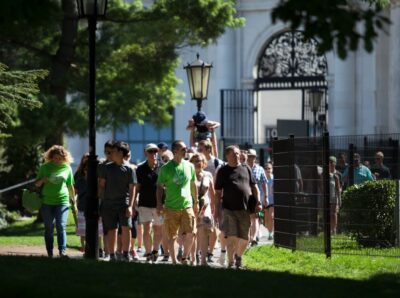
The walking pace is built for a guided explanation rather than a fast checklist. You are outdoors for chunks of time, and you should plan for uneven stone and lots of curb steps along the way. You will want comfortable shoes, because even when it feels like a short city core loop, your legs notice the difference between looking at Vienna and actually walking Vienna.
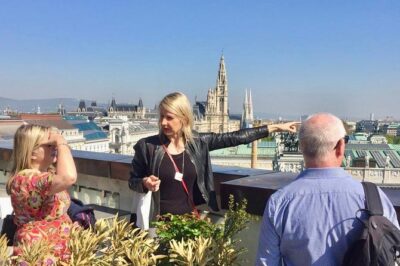
One more practical thing: this is a private group. That sounds fancy, but it is practical too. You can ask questions that would slow a larger group down. If you have a particular composer you love, or a specific dynasty angle you care about, you can usually steer the guide toward that interest.
Vienna from Roman Vindobona to the Habsburg machine
The tour’s story engine is the long arc from early city roots to the Habsburg period and beyond. You will hear references back to Roman Vindobona, Vienna’s ancient footprint, and you will watch the guide connect those early layers to later medieval and imperial development.
This is more than trivia. In Vienna, power keeps relocating, but it often reuses the same strategic geography. The guide uses key squares and street lines to show you how one era builds on another. That is how you learn the city rather than memorize it.
At one point you will be looking at Roman ruins in the center of a square, and also noticing older medieval wall traces. You will even hear about remnants of older structures linked to the former Burg Theatre. These details are valuable because Vienna can otherwise feel like a collection of pretty façades. When you understand the physical layering, the city starts to read like a timeline.
And yes, the tour also covers the big 20th-century shocks. You will get World War context and learn how the Second Republic was born. I like how this is integrated into the walk rather than treated as a lecture separate from the scenery. It keeps the sites meaningful. You do not just stand in front of a building and guess what happened around it.
For you, the takeaway is simple: you will leave with a stronger sense of cause and effect. You will see why the Habsburgs cared about cultural institutions, why classical music became part of political branding, and why modern Vienna still carries those architectural fingerprints.
Mozart Monument, the Art History Museum facades, and Hofburg power views
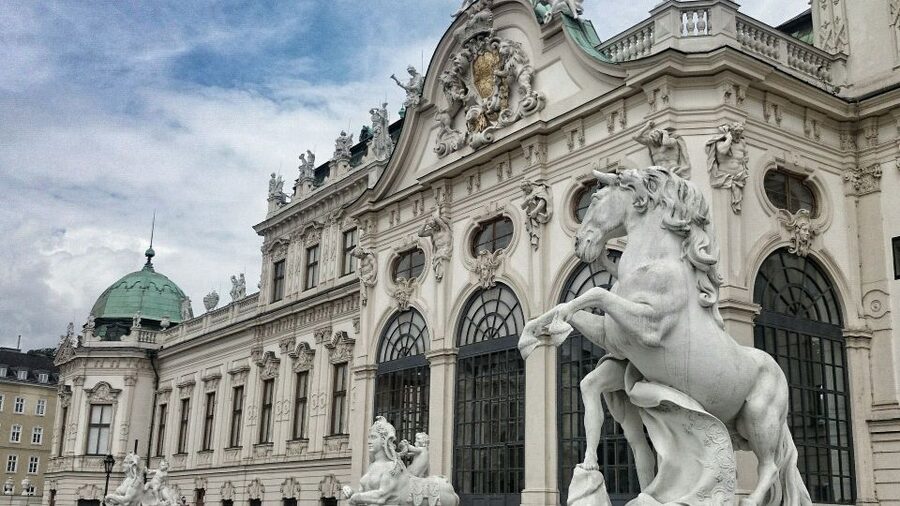
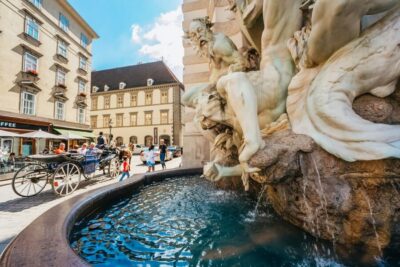
A highlight of the route is how it balances art and empire. You will see the Mozart Monument area, then move toward the Art History Museum and the Hofburg, mainly through their impressive facades and surrounding views.
If you are the type who likes to understand why a building looks the way it does, this segment can click. Vienna’s museum architecture is not just about collections. It is about prestige and public authority. The guide ties this directly into the Habsburg story: the monarchy did not only rule land, it staged cultural meaning.
Hofburg is especially important because it is the physical reminder that the empire was not a single palace idea. It was a complex of power centers, with ceremonies, administration, and everyday court life all blended into one district. Seeing the facades and standing near the right angles helps you recognize it as a system, not one dramatic backdrop.
You will also pass the Michaelertor gate, with a look toward the Church of St. Michael, the Michaelerkirche. This church is described as the emperors’ official church for years, and that detail changes how you read the stop. It is not just a landmark. It is a statement about who got to worship, how state identity showed up in sacred space, and how the monarchy used religious symbolism as part of public legitimacy.
Other Vienna write-ups filed under Austria
Michaelerkirche, Roman remnants, and the Burg Theatre ghost
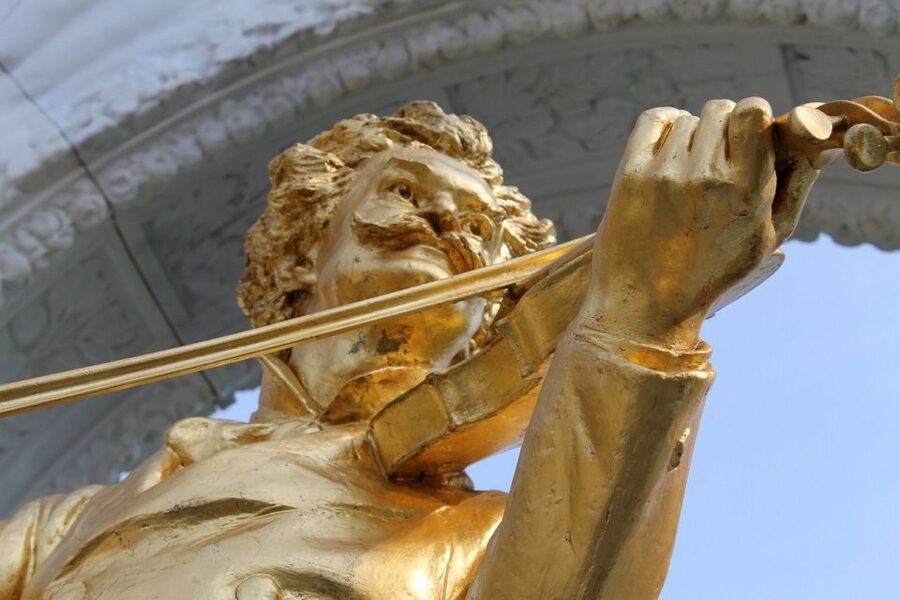
This is the kind of stop that many tours rush through, but here it helps to slow down. You are moving through the imperial core, and the guide uses this area to connect multiple time periods in tight proximity.
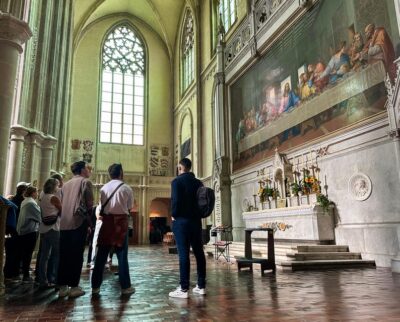
You will look at the Michaelerkirche area, then the surrounding square context where Roman ruins are visible. After that, you will hear about older medieval walls and the remnants of the old Burg Theatre. That Burg Theatre detail matters because Vienna’s entertainment culture was not born in the State Opera age alone. The city has always treated performance as part of public life, and the monarchy helped shape where and how it happened.
A practical note for your expectations: this is outdoors and site-based. You are not going to get everything by staring at stone for 30 seconds. You will get more from this stop if you treat it like a “place puzzle.” The guide is basically handing you the pieces, and your job is to notice where the modern street sits over older layouts.
Graben Street and the Richard Lionheart street story
One of the more fun, specific details on the route is the mention of Der Graben, the Graben shopping street. You will hear that it dates back to the Roman Empire and was used by Richard Lionheart to enter the city.
I like this kind of fact because it helps you imagine real movement. A street is not only a shopping strip. In old cities, streets are timelines where people walked for reasons tied to power, trade, and warfare. When the guide connects a medieval figure like Richard Lionheart to a Roman-era street line, the city stops feeling locked in one century.
If you enjoy strolling after the tour, this segment is also useful because Der Graben sits in a perfect location for an easy continuation. You can keep walking toward shops or cafés without needing to reorient again.
Peterskirche and the long view back to the 4th century
Peterskirche, St. Peter’s Church, is another key stop. The tour description includes that the church has been standing since the 4th century, and that is exactly the kind of timeframe that changes your mental model.
This is one of those Vienna moments where you feel the city’s patience. A lot of European capitals feel modern because the newest layers dominate the center. Vienna can feel different because so much happened on the same ground for such a long time. When you stand near a church tied to that early date, you understand why later empires acted like Vienna was worth investing in for generations.
The guide’s job here is to keep it from becoming a dry age statement. If the guide is strong, you will hear how religious sites, imperial needs, and street geography reinforced each other.
Stephansplatz and Stephansdom, the final big visual anchor
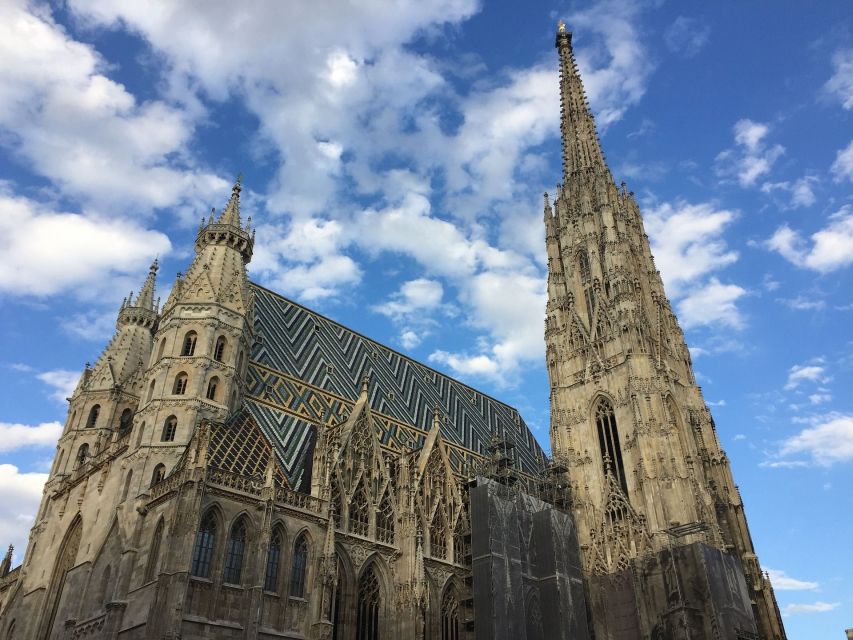
You reach Stephansplatz together with Stephansdom, Vienna’s cathedral and one of the tallest churches in the world. You will likely notice the Roman-Gothic feel right away, especially once you are standing close enough for scale to matter.
Ending here is smart. Even if you are not an architecture superfan, seeing the cathedral after walking through imperial power structures helps you reset the big picture. You start connecting the city’s religious symbolism, political authority, and artistic ambition.
Also, Stephansplatz is where your brain can finally file things. The walk ends where you began, so you can look back and see how the pieces link together. That is the difference between taking photos and actually learning a city.
Price and value for a private group up to 15
At $323 per group up to 15 people, this tour can be a good value if you are traveling with people who will actually use the guide time well. Private walking tours work best when you treat them like a shared learning session, not just a way to get to landmarks faster.
What is included is a local professional guide and a visit to the State Opera. Entrance fees are not included. So the value question becomes: what do you get for that opera visit access?
Here is my practical way to think about it. If your opera stop is genuinely more than a quick glance, you get two benefits at once: a guide-led architectural and music-history explanation, plus a memorable experience in one of the city’s most iconic buildings. If access ends up limited to public areas, you still may enjoy the tour, but the opera piece might feel shorter than you imagined.
You also need to factor in that timing can affect what you see inside any working performing arts venue. If you have tight plans later the same day, build in breathing room.
The tour length is about 3 hours. That is a sweet spot for Vienna central areas. You get enough time to feel the storyline, but it is not so long that everyone starts fading at the same time.
Who should book this, and who should be cautious
This tour fits well if you like guided interpretation, not just sightseeing. It is especially good for you if you care about how Vienna’s musical heritage grew alongside power, and you want a walk that connects the Habsburg dynasty to the places you will keep seeing.
You might also like it if you are traveling with a mixed group. The route includes Roman ruins, medieval wall remnants, major churches, museum façades, and the opera district. Different interests can each find something.
You should be cautious if you have limited mobility, because the tour is not suitable for people with mobility impairments. Also, if you are very sensitive about historical topics and how they are handled, keep in mind that the route includes World Wars and the birth of the Second Republic. A guide’s tone matters when discussions get heavy.
Finally, with an opera visit, you should set expectations. Confirm what is included for your specific day. If you are booking around an important event or you are counting on a deeper inside access, ask ahead, because opera house schedules can be unpredictable.
Should you book this Vienna private walking tour?
Book it if you want a guided, story-driven walk that connects Vienna’s music scene to the imperial places that made it possible. The best version of this tour is the one where the State Opera visit feels like more than a quick stop, and the guide helps you read the city in layers, Roman through Habsburg through modern Vienna.
Skip or reconsider if you need guaranteed full interior opera access beyond public areas, or if mobility constraints make walking difficult. Also, if you prefer very strictly neutral historical narration, message the operator in advance and ask about how the tour frames the World War and Second Republic material.
If you go in with clear expectations, comfortable shoes, and a willingness to let Vienna’s layers talk to each other, this is a solid way to get oriented and feel the city’s cultural engine in motion.
FAQ
Where is the meeting point for this tour?
The meeting point is Stephansplatz 8A, 1010 Wien, Austria.
How long is the Vienna Private Walking Tour including State Opera?
The tour duration is 3 hours.
What is the price and group size?
The price is $323 per group, up to 15 people.
What is included in the tour?
The tour includes a local professional guide and a visit to the State Opera.
Are entrance fees included?
No. Entrance fees are not included.
What languages are available for the live guide?
The live tour guide is available in English and German.
Is the tour suitable for people with mobility impairments?
No. It is not suitable for people with mobility impairments.
What should I bring?
You should bring comfortable shoes.
Tours: Rest of the Austria File
- Vienna: Schönbrunn Palace & Gardens Skip-the-Line Tour
★ 4.7 · 7,739 reviews - Vienna Spanish Riding School Guided Tour
★ 4.7 · 6,765 reviews - Vienna: Skip-the-Line Sisi Museum, Hofburg and Gardens Tour
★ 4.8 · 5,918 reviews - Vienna: Skip-the-Line Schönbrunn Palace & Gardens Tour
★ 4.8 · 5,411 reviews
Tour Reviews: Rest of the Austria File
- Vienna: Vivaldi’s Four Seasons Concert in Karlskirche
★ 4.7 · 14,951 reviews - Vienna: Schönbrunn Palace & Gardens Skip-the-Line Tour
★ 4.7 · 7,739 reviews - Vienna: Light of Creation Votive Church Immersive Light Show
★ 4.8 · 6,779 reviews - Vienna Spanish Riding School Guided Tour
★ 4.7 · 6,765 reviews
Concert Halls Around Vienna
- Vienna: Vivaldi’s Four Seasons Concert in Karlskirche
★ 4.7 · 14,951 reviews - Vienna: Classical Concert in the World-Famous Musikverein
★ 4.6 · 6,673 reviews - Vienna: Classic Ensemble Vienna in St. Peter’s Church Ticket
★ 4.7 · 4,819 reviews - Vienna: Mozart Concert at the Golden Hall
★ 4.6 · 3,986 reviews
Newest Vienna write-ups on file
- Vienna: Private Walking Tour to The Hofburg & Graben Street★ 5.0 · 3 reviews
- Vienna: Private tour Mauthausen and Linz★ 4.1 · 3 reviews
- Vienna Private Full Day Tour – Tickets to Schönbrunn & Lunch★ 5.0 · 3 reviews
- Vienna: Johann Strauss 200th birthday anniversary exhibition★ 4.7 · 3 reviews
- Vienna: Full-Day Vienna Woods Wine Tasting Tour★ 5.0 · 3 reviews
- Vienna: Festive Season and New Year’s Eve Waltz Workshop★ 5.0 · 3 reviews
Vienna Classical Concerts, compared.
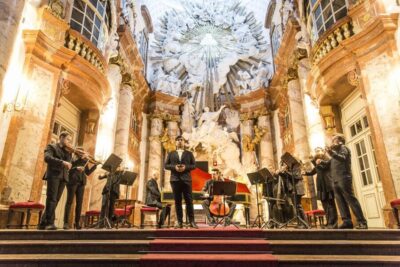 ★ 4.7Vienna: Vivaldi’s Four Seasons Concert in KarlskircheFrom $4014,951 reviews
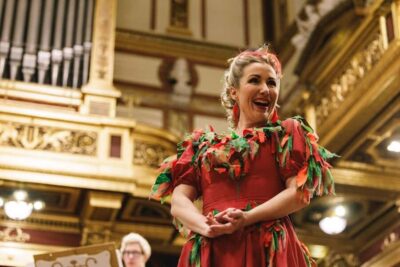 ★ 4.6Vienna: Classical Concert in the World-Famous MusikvereinFrom $176,673 reviews
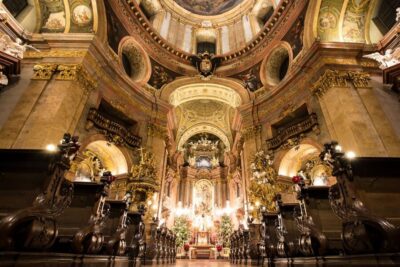 ★ 4.7Vienna: Classic Ensemble Vienna in St. Peter’s Church TicketFrom $454,819 reviews
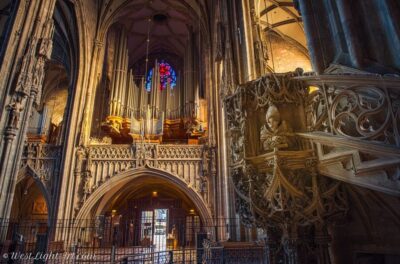 ★ 4.1Vienna: Classical Concert at St. Stephen’s CathedralFrom $114,177 reviews
★ 4.6Vienna: Mozart Concert at the Golden HallFrom $783,986 reviews
★ 4.1Vienna: Classical Concert at St. Stephen’s CathedralFrom $114,177 reviews
★ 4.6Vienna: Mozart Concert at the Golden HallFrom $783,986 reviews
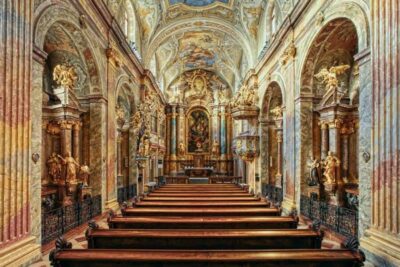 ★ 4.6Vienna: Classical Concert in St. Anne’s Church (Annakirche)From $383,414 reviews
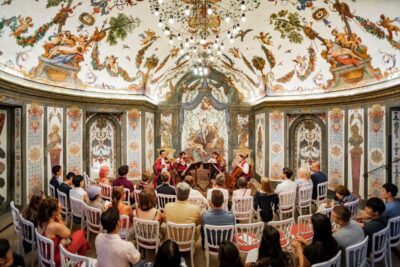 Vienna: Classical Concert at Mozart’s First House2,423 reviews
 ★ 4.5Vienna: Mozart and Strauss Concert at SchönbrunnFrom $632,364 reviews
This tour also sits in