
REVIEW · HOFBURG & THE SISI MUSEUM
Vienna: Imperial Treasury in the Hofburg Palace
A crown can stop you in your tracks. In the Imperial Treasury inside the Hofburg Palace, you get a concentrated hit of Habsburg power, plus church relics and myth-bent objects that make this stop feel way more fun than a typical museum shopping list. I love how the collections walk you through centuries of wealth in one tight route, and I love seeing the Austrian Imperial Crown up close, along with the regalia tied to the Holy Roman Empire. One thing to consider: it is not a long, slow wander, so if you want to read every label and take long breaks, you’ll need extra time.
You’ll start in the oldest part of the Hofburg complex, the Swiss Wing, where the display rooms are designed for viewing masterpieces behind glass. Expect crowd control by design, since this is a small group format limited to 10 participants. My only caution is practical, the entry works off a voucher that needs to be printed, so arrive with that ready to avoid wasted minutes at the ticket counter.
In This Review
- Key points to know before you go
- Swiss Wing, not Versailles-style, but still royal
- The main crown jewels: Austrian Imperial Crown plus Holy Roman regalia
- Empress Elisabeth’s jewels and the Habsburg power machine
- Legendary relics: Holy Lance, Holy Grail, and unicorn horn
- How long to plan for your Swiss Wing treasure route
- Audio guide, self-guided flow, and why pace matters
- Price and value: is $18 a good deal for the Hofburg?
- Who should book this Imperial Treasury visit
- Best time to visit and what to do first
- Should you book the Imperial Treasury in the Hofburg?
- FAQ
- Where is the meeting point for this visit?
- How long does this Imperial Treasury visit take?
- Is an audio guide included with the entrance ticket?
- Do I need a printed voucher to enter?
- Is the Imperial Treasury at the Hofburg Palace wheelchair accessible?
- Do children get free admission?
- How big is the group?
Key points to know before you go
- Swiss Wing meeting point puts you in the oldest Hofburg galleries, right where the real treasure rooms begin
- Austrian Imperial Crown and Holy Roman Empire regalia are the headline act for crown-jewel fans
- Habsburg gem highlights include major colored stones and heirloom jewelry tied to emperors and empresses
- Order of the Golden Fleece and collections linked to Burgundy add a “this is how power worked” angle
- Legendary relics like the Holy Lance, Holy Grail (agate bowl), and even the horn of a unicorn make the story playful
- Expect about 1 to 1.5 hours for a solid visit if you move at an easy pace
Hofburg and Sisi, further entries
- Vienna: Skip-the-Line Sisi Museum, Hofburg and Gardens Tour
★ 4.8 · 5,918 reviews - Vienna: Imperial Treasury in the Hofburg Palace
★ 4.4 · 1,791 reviews - Vienna: Imperial Crypt Entrance Ticket
★ 4.6 · 1,507 reviews - Vienna: Hofburg and Empress Sisi Museum Guided Tour
★ 4.7 · 1,460 reviews
Swiss Wing, not Versailles-style, but still royal
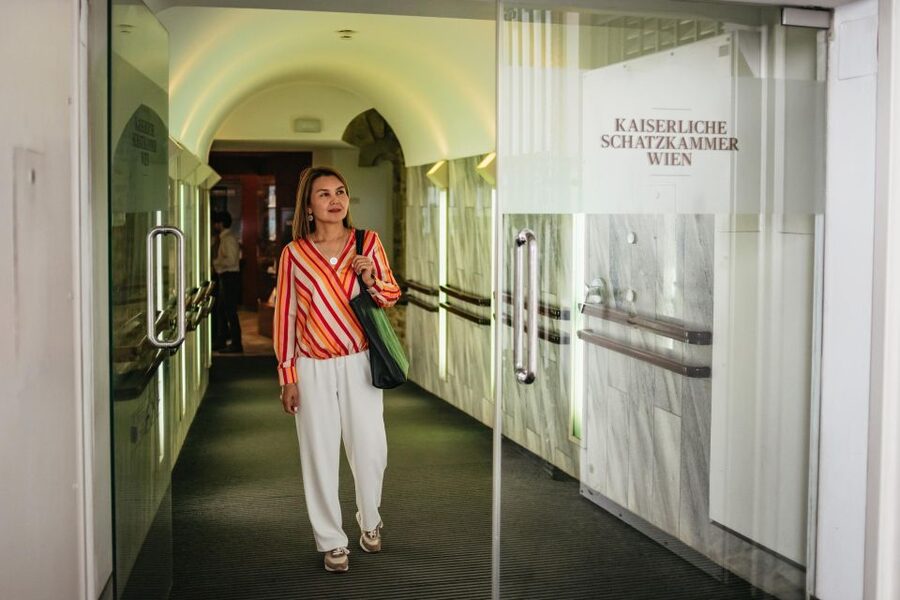
Start at the Hofburg’s Swiss Wing, your meeting point. This matters because you are walking into the oldest core of the palace, not the newer, flashier parts you might associate with grand parade rooms. The whole feel is compact and focused, like the museum designed this to be efficient: you come for the objects, not for a long intro film.
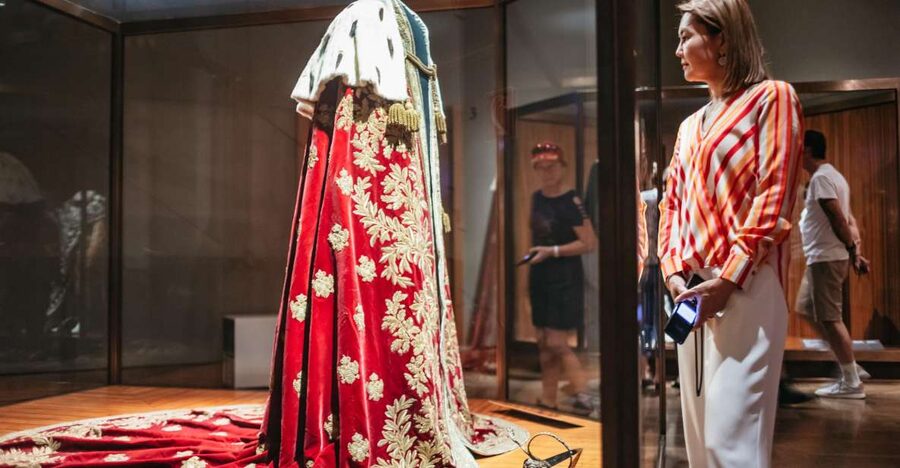
You’ll also feel the “treasury” mindset. Glass cases are positioned for steady viewing, and the rooms help you compare objects without getting lost in a maze of random rooms. The setup is ideal if you want to see a lot and still actually absorb what you’re looking at.
And yes, there are reasons people book this specific stop. The Imperial Treasury, also known by its German name Schatzkammer, is one of the big-name collections for royal and sacred objects in Europe. That means you get the center of the action in a single outing.
The main crown jewels: Austrian Imperial Crown plus Holy Roman regalia
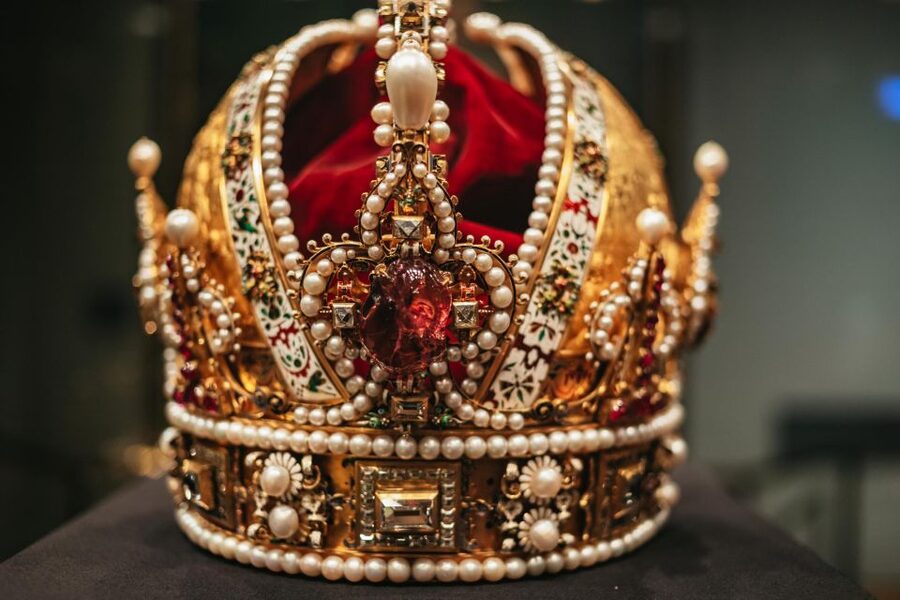
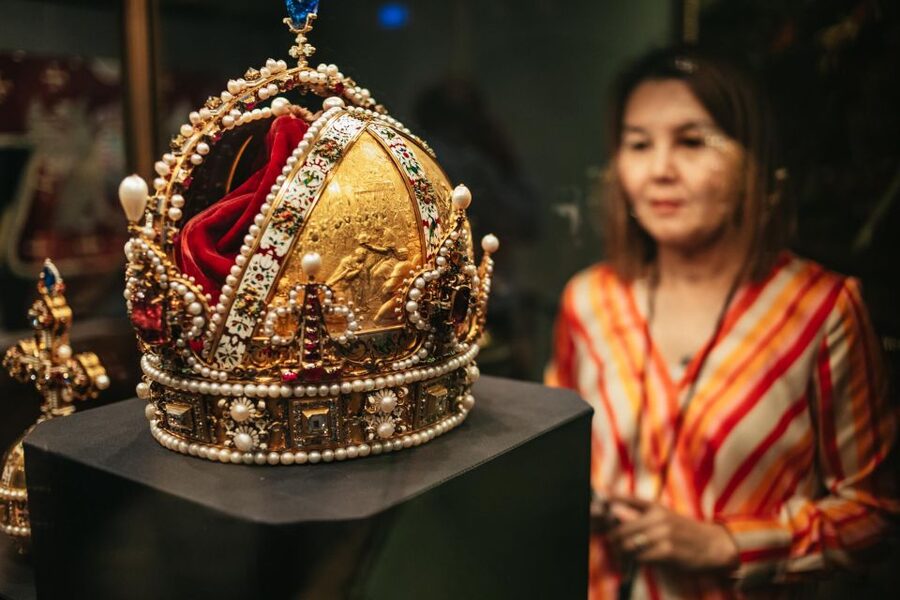
If crowns are your thing, you are in the right room. The Austrian Imperial Crown is one of the stars of the collection, repeatedly singled out for its beauty and its symbolic weight. Seeing it in person is different from seeing it in a textbook photo, because you notice materials and craftsmanship choices that do not show up well in pictures.
This is also where the story expands beyond Austria. You’ll see crown jewels connected to the Holy Roman Empire, including the Imperial Crown. It is one of those moments where the political reality hits: this was not just jewelry, it was state power you could hold in your mind and point to as proof.
What I like about this section is the way the display makes hierarchy visible. There’s a clear sense that certain objects were made to signal authority, inheritance, and legitimacy. If you have visited other European royal sites, you can compare the “language” of monarchy here, the way symbols are used to say, we rule because we are part of a bigger chain.
Practical tip: take a full minute at the crown and then circle back once you’ve seen a couple of other items. The first look is about impact; the second look is about details.
Empress Elisabeth’s jewels and the Habsburg power machine
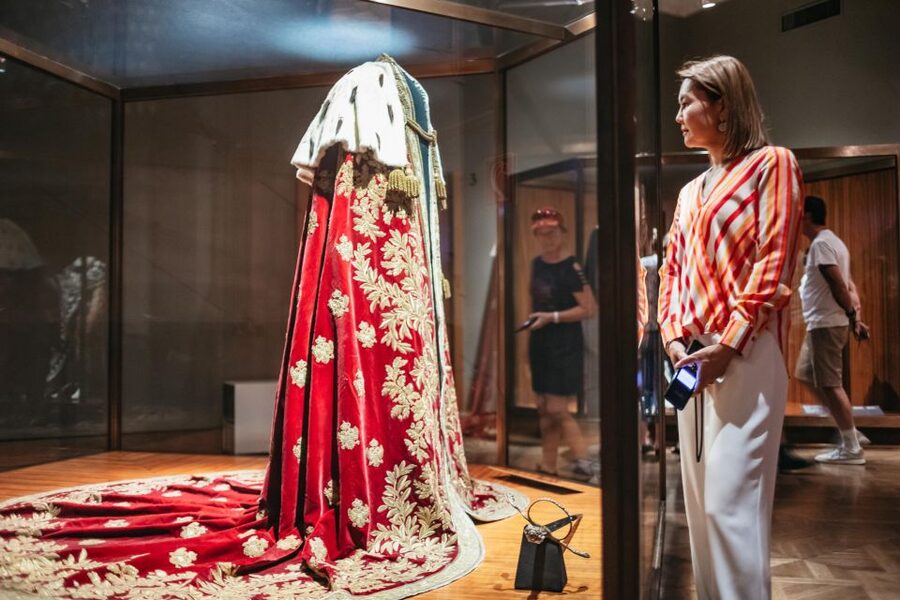
Next, you move into the heart of Habsburg jewelry. This is where you start spotting the emotional side of the collection, not just the cold language of thrones and titles. One standout is the mention of pieces from the original jewelry of Empress Elisabeth. That detail alone makes the display feel more human, because it ties objects to a specific person rather than treating everything as anonymous royal loot.
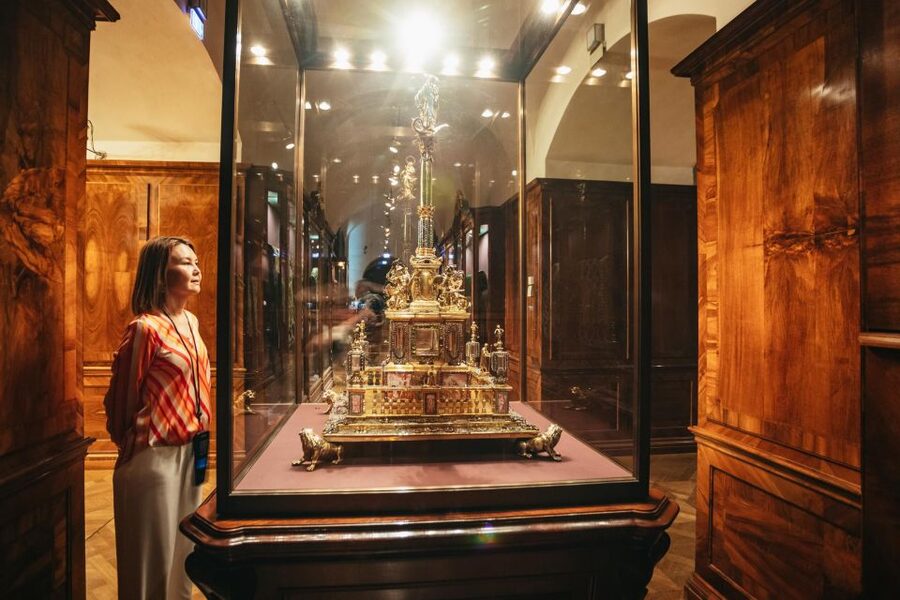
You can also expect major colored-stone highlights, including one of the largest emeralds in the world. The key word here is scale. Even if you have seen fine jewelry before, seeing a giant, expertly cut emerald in a royal context changes your sense of what “luxury” meant for the Habsburgs. It was not just fashion. It was currency, strategy, and propaganda.
This area also connects to how monarchy organized itself. You’ll encounter the treasure associated with the Order of the Golden Fleece, one of the most famous orders of chivalry. These displays help you understand that power was social as well as political. Membership, ritual, and visual symbols all reinforced who mattered.
And then there are the supporting cast items that make the treasury feel alive. The display includes collections tied to 15th-century Burgundy, which adds another layer: the Habsburg court didn’t exist in a vacuum. It borrowed prestige from neighbors and displayed that relationship in objects.
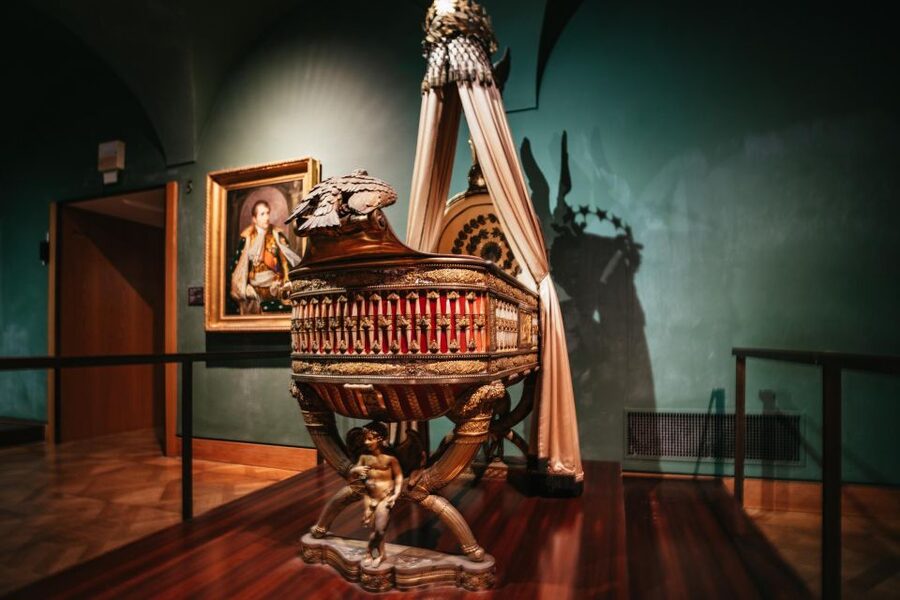
One more detail I appreciate: there’s also the cradle of the King of Rome, who is linked here to Napoleon II. That cradle shifts the mood slightly. Suddenly this is not only about crowns and ceremony, it is about lineage, the hope of heirs, and how dynasties tried to control their future through objects meant to last.
If you are the kind of visitor who likes the behind-the-scenes texture, you might also catch smaller, practical-looking items such as chamberlains’ keys and tabards mentioned as fascinating by visitors. Those objects remind you that courts ran on systems, attendants, and rituals, not only on emperors.
Legendary relics: Holy Lance, Holy Grail, and unicorn horn
Now for the rooms that turn the museum from solemn into storybook weird. This is where you’ll encounter legendary treasures such as the Holy Lance from the 8th century. Even if you come in skeptical about legends, the object itself matters because it represents how people in power treated faith as part of authority.
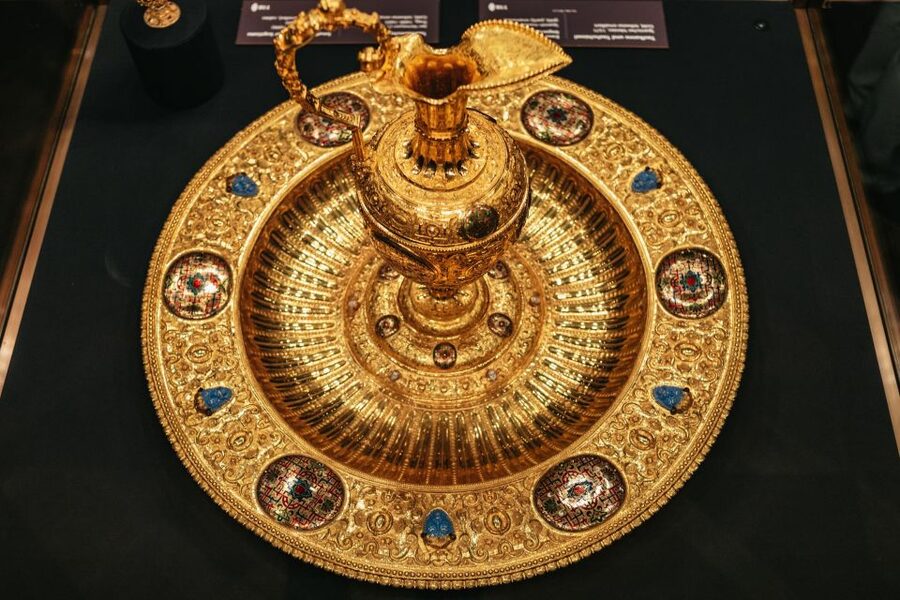
You’ll also see the Holy Grail in the form of the world’s largest agate bowl. Yes, the famous title shows up in the treasure story, but the real reason this hits is the physical presence. A massive, carefully crafted stone object framed as a sacred relic has an immediate visual effect. It reads as devotion, craft, and status all at once.
And then there’s the horn of a unicorn. This kind of display is a reminder that medieval and early modern collectors did not always separate myth from matter the way we do now. For them, belief mattered, and belief showed up in procurement and display. Seeing it in a curated royal treasury makes you think about how knowledge was constructed through objects.
This section also helps you understand why the Imperial Treasury is so popular. It is not just jewelry and crowns. It’s a controlled collection of the items people wanted to see, own, and trust. That includes relics, ceremonial objects, and yes, symbolic oddities that made a court feel magical and untouchable.
How long to plan for your Swiss Wing treasure route
This is a museum where time management makes the difference between wow and rushed.
The experience is sold as a 1-day visit, but for most people the focused treasury part is around an hour to an hour and a half depending on how much you stop. That matches what you want here, because the whole collection is presented in a way that you can complete without exhausting yourself.
I recommend you plan for about 90 minutes if you like to read. Plan for closer to 60 minutes if you primarily scan and then return for details on the pieces you care about most.
A practical note: the ticketing and entry flow can eat some time. Since a printed voucher is required, build in a buffer at the start. If you show up right before your time slot, you might feel rushed once you hit the ticket counter.
Inside, the rooms are set up for logical movement, but you can still lose your bearings if you skip looking at the signage. My advice is simple: before you start looking for gems, glance at the room layout so you know your direction. You want your best energy for the crown and the legendary relics, not for guesswork in front of a wall of glass.
Audio guide, self-guided flow, and why pace matters
An audio guide is not listed as included with the ticket, but it is an option worth thinking about if you enjoy context. Some visitors find it genuinely helpful because it adds layers of meaning to objects that can otherwise feel like a beautiful but confusing lineup of gold and stones.
In a treasury like this, labels help, but audio helps more when the object story is complex. You get the how and why, not only the what. That’s especially useful for the religious relics and for the crown regalia, where symbolism matters as much as craftsmanship.
If you are traveling with your own guide, the setup supports that. Guided tour is not included, but you can bring your own guide for commentary.
My best approach for you depends on your style:
- If you like to stop and read, go audio-free and use signage plus the included ticket viewing route.
- If you like quick navigation with deeper meaning, add the audio and let it guide your attention.
Also, don’t underestimate breaks. This is not an all-day museum. If you try to sprint through everything, you’ll miss the details that make the experience special. Take a moment to stand back from the glass, then lean in for the craftsmanship.
Price and value: is $18 a good deal for the Hofburg?
At $18 per person, this is priced like a ticketed “must-see highlight,” not like a slow, multi-building museum day. And that fits what you get. The Imperial Treasury is focused. You are paying for access to high-demand rooms where the objects themselves are the main event.
Value comes from three things:
- Concentration: you see crown jewels, sacred relics, and Habsburg jewelry in one route.
- Quality of objects: you are not looking at copies or decorative filler. This is real historical regalia and gemstones.
- Efficiency: most visits fit well into a single outing without stealing your whole day.
If you are trying to choose between several big Vienna sights and you want one that delivers a strong hit of visual and symbolic history fast, this is often a smart choice. It’s also a good pairing with other Hofburg stops, since you are already in the palace complex.
One caution on value: because the voucher requires printing, you might lose some time at entry if your plans are tight. But if you handle the voucher step early, the cost-to-experience ratio feels fair.
Who should book this Imperial Treasury visit
I think this one is especially suited for you if:
- You love crown jewels, court ceremony, and the visible language of monarchy
- You enjoy religious relics and the way belief shaped royal collecting
- You want a museum stop that is high-impact without being all-day
- You travel with older kids or teens who can handle reading and symbolism
It’s also a great option if your schedule is packed. Vienna is full of major sights, and this is a compact way to add one of the most famous treasury collections to your list.
If you hate crowds, you’ll likely appreciate the small-group limit to 10 participants. It tends to keep the rooms feeling manageable compared to bigger, open-entry galleries.
If you dislike glass cases or prefer a more interactive museum style, you might find it less engaging than hands-on attractions. But the objects here are the point.
Best time to visit and what to do first
The treasury experience works best when you start with the crown items. That sets your mental baseline for what you’re about to see, and it helps you understand why the other treasures are displayed alongside them.
If you can, arrive with enough time to handle ticketing calmly. Once you’re in, keep moving steadily to the crown rooms, then slow down around the gem and relic sections.
And if you are lucky enough to have a guide, names like Petee and Alex show up as examples of how some guides can add sharp, helpful context about figures like Franz Joseph and Sisi. Even without a guided tour included, you can still benefit from that kind of targeted storytelling by using audio or adding your own guide.
Should you book the Imperial Treasury in the Hofburg?
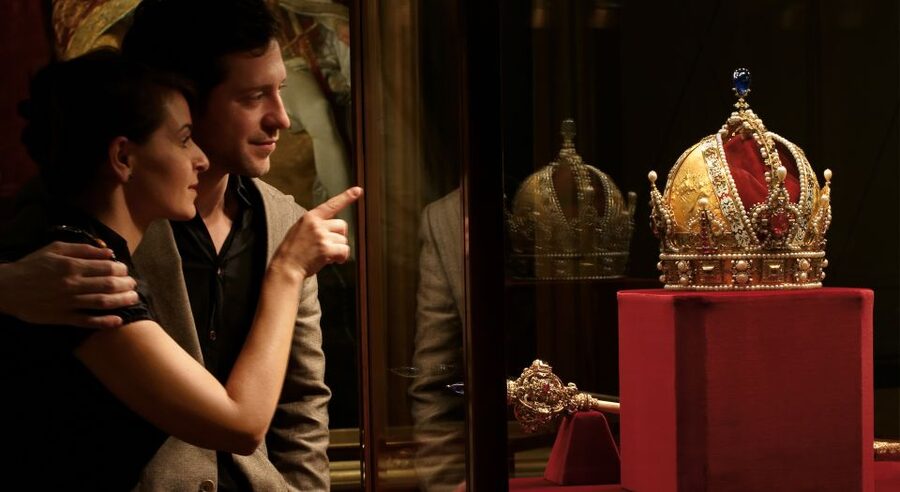
Yes, you should book it if you want a concentrated, high-impact Vienna experience focused on real imperial objects. The Austrian Imperial Crown, Holy Roman regalia, major gemstones, and legendary relics like the Holy Lance and Holy Grail bowl make it memorable fast. It’s also good value at $18 when you consider the prestige and rarity of the pieces you see.
Skip booking only if your style is “all-day museum wandering,” or if you strongly prefer museums with lots of hands-on interaction. This is a viewing experience, and your reward comes from paying attention.
FAQ
Where is the meeting point for this visit?
The meeting point is the Swiss Wing in the Vienna Hofburg Palace.
How long does this Imperial Treasury visit take?
The activity is valid for 1 day. In practice, you can often finish the treasury circuit in about 1 to 1.5 hours if you’re viewing at a comfortable pace.
Is an audio guide included with the entrance ticket?
No. The ticket includes entrance only. An audio guide is listed as not included.
Do I need a printed voucher to enter?
Yes. A printed voucher is required.
Is the Imperial Treasury at the Hofburg Palace wheelchair accessible?
Yes. The experience is wheelchair accessible.
Do children get free admission?
Children and young people under 19 generally enjoy free admission.
How big is the group?
This is a small group experience limited to 10 participants.
Tour Reviews: Rest of the Austria File
- Vienna: Vivaldi’s Four Seasons Concert in Karlskirche
★ 4.7 · 14,951 reviews - Vienna: Schönbrunn Palace & Gardens Skip-the-Line Tour
★ 4.7 · 7,739 reviews - Vienna: Light of Creation Votive Church Immersive Light Show
★ 4.8 · 6,779 reviews - Vienna Spanish Riding School Guided Tour
★ 4.7 · 6,765 reviews
The Hofburg File
- Vienna: Skip-the-Line Sisi Museum, Hofburg and Gardens Tour
★ 4.8 · 5,918 reviews - Vienna: Imperial Crypt Entrance Ticket
★ 4.6 · 1,507 reviews - Vienna: Hofburg and Empress Sisi Museum Guided Tour
★ 4.7 · 1,460 reviews - Vienna: Skip-the-Line Hofburg and Empress Sisi Museum Tour
★ 4.8 · 801 reviews
Newest Vienna write-ups on file
- Vienna: Private Walking Tour to The Hofburg & Graben Street★ 5.0 · 3 reviews
- Vienna: Private tour Mauthausen and Linz★ 4.1 · 3 reviews
- Vienna Private Full Day Tour – Tickets to Schönbrunn & Lunch★ 5.0 · 3 reviews
- Vienna: Johann Strauss 200th birthday anniversary exhibition★ 4.7 · 3 reviews
- Vienna: Full-Day Vienna Woods Wine Tasting Tour★ 5.0 · 3 reviews
- Vienna: Festive Season and New Year’s Eve Waltz Workshop★ 5.0 · 3 reviews
Hofburg & the Sisi Museum, compared.
 ★ 4.8Vienna: Skip-the-Line Sisi Museum, Hofburg and Gardens TourFrom $615,918 reviews
 ★ 4.6Vienna: Imperial Crypt Entrance TicketFrom $171,507 reviews
 ★ 4.7Vienna: Hofburg and Empress Sisi Museum Guided TourFrom $561,460 reviews
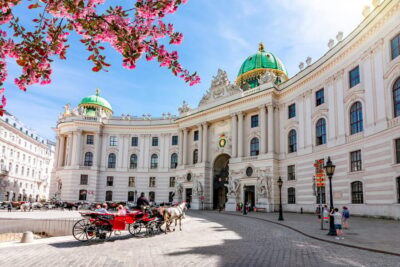 ★ 4.8Vienna: Skip-the-Line Hofburg and Empress Sisi Museum TourFrom $55801 reviews
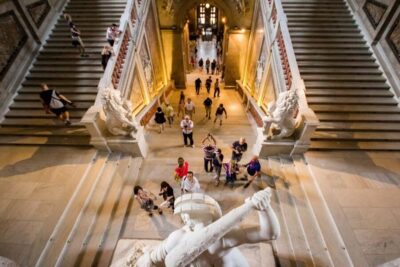 ★ 4.7Combo Ticket: Kunsthistorisches Museum & Imperial TreasuryFrom $37785 reviews
 ★ 4.5Vienna: “Sisi’s Amazing Journey” Virtual Reality ExperienceFrom $14673 reviews
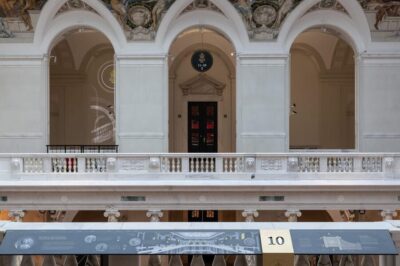 ★ 4.3Vienna: Imperial Treasury & New Hofburg Palace Combo TicketFrom $40614 reviews
 ★ 4.1Vienna: New Hofburg Palace Audio-Guided Tour & Entry TicketFrom $27566 reviews
This tour also sits in