
REVIEW · GRAZ & STYRIA
Graz Private Walking Tour
Graz packs centuries into ninety minutes. This private walking tour makes the city feel connected, not just seen, with stops tied to Habsburg court life and the Kunsthaus view of Graz’s modern side. I like how the guide threads together politics, religion, and everyday urban life so you understand why the architecture matters. I also like that the route mixes classic landmarks with 21st-century design. One possible drawback: it is still a walking tour, so if you hate on-your-feet time, plan for a slow pace and comfortable shoes.
You meet in the main square, then head uphill and back through the old town, with a local guide who stays with your group only. It is built for small groups, and you can lean into what you want to focus on since the guidance is flexible. If you want just a quick highlight reel, 90 minutes can feel short, but if you like story-driven sightseeing, it is a great length.
In This Review
- Key things I’d put on your Graz radar
- Graz’s best trick: turning landmarks into stories
- Price and value for a private group up to 15
- Meeting at Hauptpl: getting your bearings fast
- Schlossberg hill views and medieval trader stories
- The market square and Town Hall: power you can see
- Luegg House, the White House, and the Eagle Pharmacy
- Palais Sturgkh and Archduke Johann: later influence, not just medieval
- Landhaushof and the Renaissance courtyard of the Styrian Diet
- Kunsthaus Graz and the old town UNESCO frame
- The guide makes the difference, especially Leo
- What you should bring, and how to pace your 90 minutes
- Who this tour suits best
- Should you book this Graz Private Walking Tour?
- FAQ
- How long is the Graz Private Walking Tour?
- How much does the tour cost?
- Where do we meet?
- Is the tour private?
- What languages are offered?
- Are entrance fees included?
Key things I’d put on your Graz radar
- Habsburg residence context that explains why Graz feels different from other Austrian cities
- Styrian Diet influence connected to specific civic spaces, not vague history
- Architecture you can actually name including Luegg House and the White House relief
- Faith and politics in the same city blocks, so the mindset comes through
- Old town UNESCO status since 1999 paired with a modern art stop at Kunsthaus
Graz and Styria entries on file
- Kunsthaus Graz Museum Entrance Ticket
★ 3.5 · 19 reviews - Graz: Old Town Highlights Private Walking Tour
★ 4.6 · 16 reviews - Universalmuseum Joanneum Pass in Graz
★ 4.0 · 14 reviews - Fun & mobile scavenger hunt through Graz
★ 4.5 · 12 reviews
Graz’s best trick: turning landmarks into stories
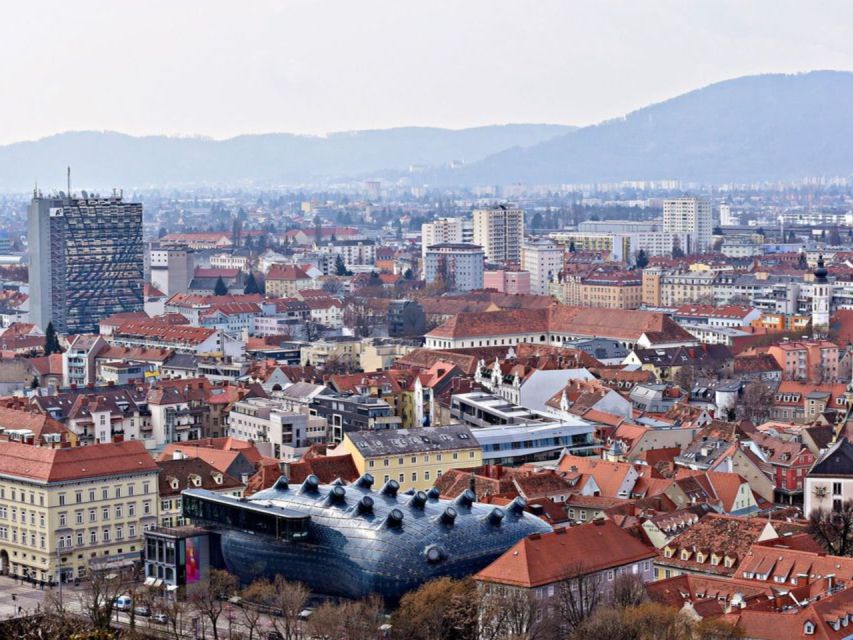
Graz is one of those cities where the past does not sit politely in a museum. It shows up in façades, courtyards, and street corners, and the tour is set up to help you read that built language. You also get the bonus of seeing why Graz collects nicknames like UNESCO City of Design, City of Human Rights, and Culinary Capital City of Austria, even though the center is unmistakably old.
The tour is 90 minutes, private, and guided by a local who stays with your group only. That matters because the guide is not bouncing between multiple groups, so you get time to ask questions and get straight answers. In the recent feedback I saw, people praised guides for adapting to what the group wanted, and for sharing insider leads for the rest of the day, which is exactly the kind of practical bonus that makes city walking tours feel worth it.
Price and value for a private group up to 15
At $289 per group (up to 15 people), the pricing is surprisingly sensible for anyone traveling with more than one person. If you split it across a family group or a few friends, it often lands closer to what you would pay for a ticketed attraction, but you get a guided walk that includes multiple major points of interest.
What is included is the local guide with your group only. Entrance fees are not included, so if you are hoping to go inside museums or special exhibitions during the 90 minutes, you should be ready for extra costs. Still, the core experience is built around seeing the city and understanding it, and that is where a private format shines.
Meeting at Hauptpl: getting your bearings fast
The meeting point is right in the heart of Graz, next to the fountain in the middle of the main square, Hauptpl. 1, 8010 Graz. Starting here is smart because you immediately get the city’s geometry. You can look around and understand where the uphill pieces connect to the pedestrian old town pieces.
From the first minutes, you are guided into the bigger theme of Graz as a Habsburg residence. That framing helps you stop treating individual buildings as separate postcards. Instead, you start seeing how power, culture, and public life shaped what got built, what got decorated, and what got preserved.
Schlossberg hill views and medieval trader stories
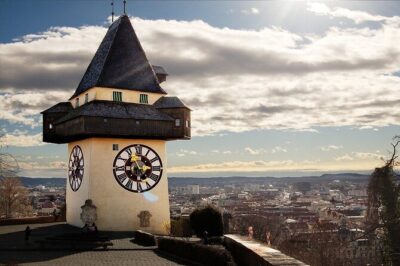
The tour begins with a view from Schlossberg hill above the city, and that first perspective does a lot of work for you. When you look down from higher ground, the old town’s structure makes more sense, and you can understand why certain areas became the stage for government, faith, and trade.
One highlight here is the story of Graz in the Middle Ages, when it was home to Slavic merchants and traders. Even if you never study medieval Central Europe in detail, this kind of context helps you understand that cities are always mixing cultures, not switching them off. It also sets up the later stops, because you start to recognize how trade routes and political power tend to travel together.
Other Graz write-ups filed under Austria
The market square and Town Hall: power you can see
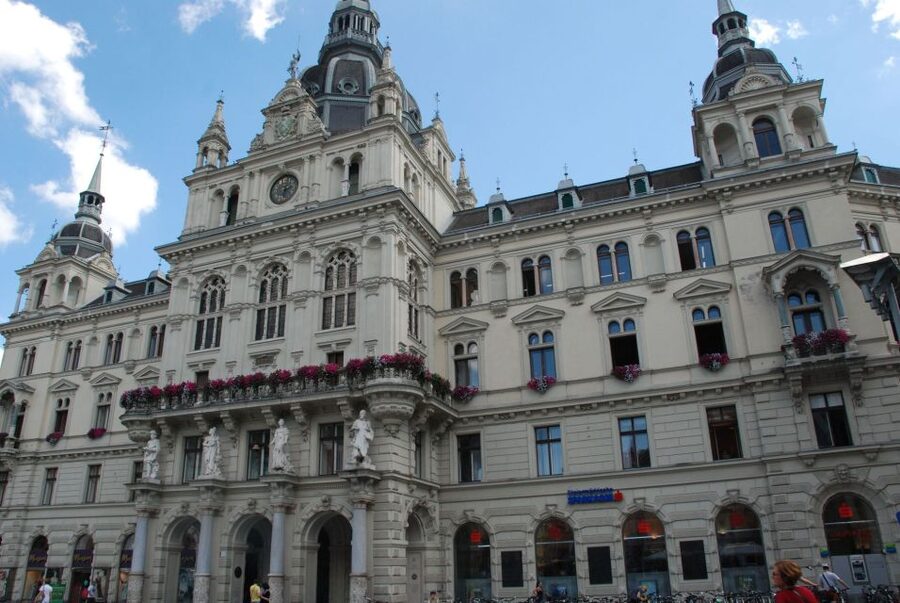
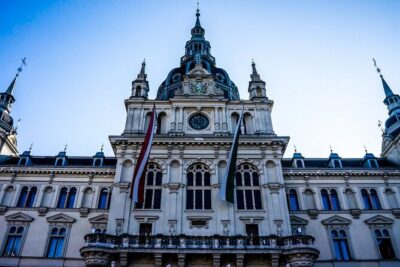
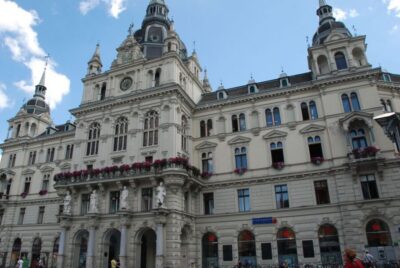
As the walk moves from the hill into the center, the Town Hall dominates the market square. It is the kind of building that instantly signals civic identity, and the tour uses it as a stepping stone into Graz’s political and religious background.
From here, the route becomes very nameable, meaning you can remember what you saw. That makes a difference later when you try to navigate on your own or when you want to explain the city to someone back home. You are not just told that something is important, you are pointed to why it matters.
Luegg House, the White House, and the Eagle Pharmacy
This is where Graz’s architecture starts to feel personal. You see details you might otherwise miss, and you learn how façade style can reflect the era and the city’s priorities.
You will admire:
- The Luegg House from the 17th century, known for its impressive stucco façade
- The White House, a five-story building with a sandstone relief of the Virgin Mary
- The Eagle Pharmacy from the 16th century
What I like about these stops is how quickly they give you range. You go from civic presentation to religious imagery to a more everyday kind of historical landmark, and the mix helps you understand that politics and faith were part of daily urban life. The guide also links the architectural heritage to Graz’s cultural habits, including the role of music and the way public spaces helped shape community life.
One practical consideration: stucco façades and relief work reward close looking. If you are traveling in a hurry, slow down for a few minutes at each stop so you actually catch the details the guide is pointing out.
Palais Sturgkh and Archduke Johann: later influence, not just medieval
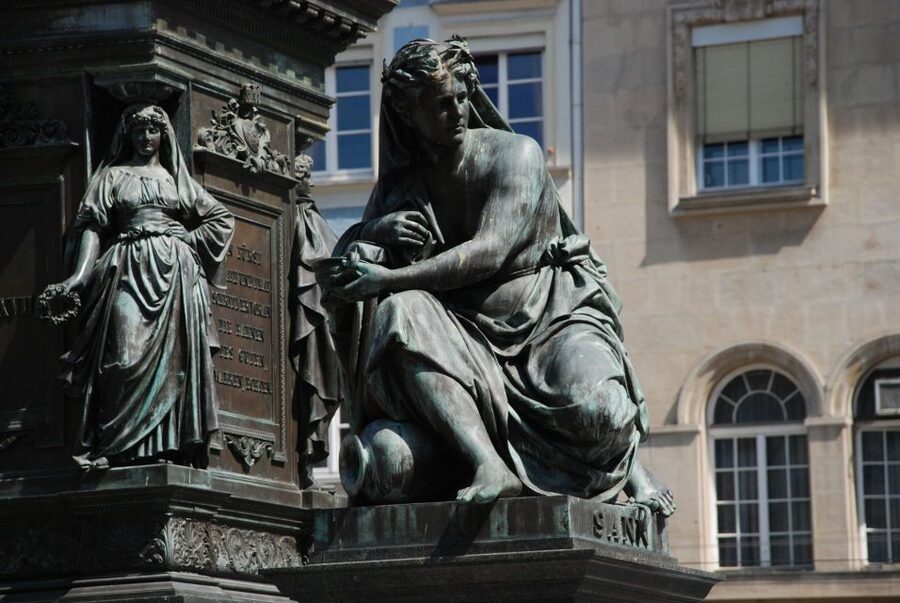
The walk also touches older and later layers. You will see the 14th-century Palais Sturgkh, which adds depth because it keeps you from getting stuck in one time period. Then you will find the fountain and statue of Archduke Johann, dating from 1878, which gives you a way to think about Graz beyond the Renaissance and the Habsburg peak centuries.
This part of the tour is useful if you want the city to feel whole. Many quick city walks skim over the middle periods and then jump straight to modern design. Here, the later civic memory reminds you that cities keep rewriting their identity long after the first golden age.
Landhaushof and the Renaissance courtyard of the Styrian Diet
One of the most valuable stops is Landhaushof, with its remarkable Renaissance courtyard, noted as the first one in the city. This is the kind of place where you can feel the seriousness of government without needing a lecture. Courtyards create a sense of enclosure, and they often concentrate the symbols of civic authority.
This is also where the tour connects you to the historic Styrian Diet and how it influenced Graz. Instead of treating the Diet as a name from a textbook, the guide shows you how civic institutions shaped the physical city. You start to understand how “who makes decisions” often leaves a footprint, sometimes in architecture, sometimes in layout, and sometimes in what gets preserved.
If you like political context, you will likely appreciate the way the tour balances the official side with the human side. Religious and political background are both part of the explanation, which helps you make sense of why certain buildings look the way they do and why certain streets gained importance.
Kunsthaus Graz and the old town UNESCO frame
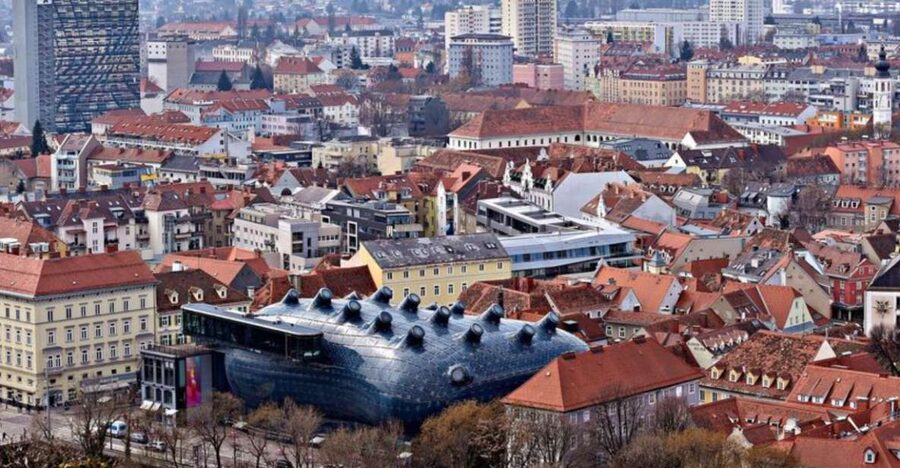
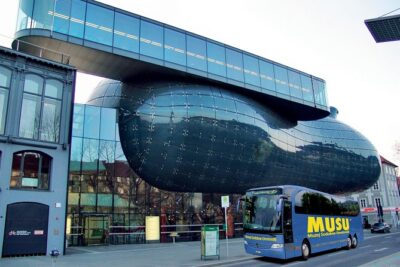
After the historic stops, you jump to the 21st century at Kunsthaus Graz, known for its blob-like ultramodern architecture. This is a smart pivot, because it prevents the walk from feeling like a one-note museum stroll. You see how Graz can honor the old while still building boldly for the present.
The tour also emphasizes that the old town is a UNESCO World Heritage site since 1999. That UNESCO framing is not just a badge. It is a way to understand why the historic district has held together as well as it has, and why the city’s “old and new” contrast feels intentional rather than accidental.
If you are a design-minded visitor, this pairing is especially satisfying: you see Renaissance civic space, then you see contemporary art space, and you start to connect the city’s identity to creativity and public culture. If you are more of a history-first visitor, the modern stop still helps, because it shows the living continuation of Graz’s cultural scene.
The guide makes the difference, especially Leo
The experience depends heavily on the guide, and the best feedback I saw singled out the guide’s storytelling and flexibility. In one account, the guide was named Leo, and the comments praised his interesting stories, fascinating points of interest, and follow-up suggestions for how to spend the rest of the day.
That type of guidance is what makes a private walking tour feel like a conversation, not a script. Another key point from the feedback: people described that their wishes were taken into account, and that the leadership came with insider knowledge. In practice, that means you can ask questions, shift your pace, and steer the focus toward what you care about most, whether that is architecture, political background, or the cultural scene.
What you should bring, and how to pace your 90 minutes
All you really need is comfortable shoes. Since the tour is 90 minutes and includes a hill viewpoint, plan for some steady walking. If you want photos, build in short pauses rather than trying to sprint between stops.
Also, come with at least one interest to guide your questions. If you care about Habsburg history, ask how the residence aspect connects to the landmarks. If you care about civic life, ask about the Styrian Diet angle. If you care about art and architecture, pay attention to the shift from old town UNESCO space to the Kunsthaus stop.
Who this tour suits best
This works especially well if you:
- Are visiting Graz for the first time and want a guided route that makes the city feel coherent
- Like architecture when it comes with context, not just dates
- Want a clear Habsburg and civic thread, including the Styrian Diet influence
- Prefer a private group format that lets you focus your questions
It may feel less ideal if you want a long, museum-style day or if you do not enjoy walking at all. But for a compact, story-forward introduction, the structure is well matched to a short stay.
Should you book this Graz Private Walking Tour?
I think it is a strong choice for most first-time visitors to Graz, especially those who care about what buildings mean. The combination of Habsburg residence stories, the Styrian Diet civic focus, and a modern art stop at Kunsthaus gives you a balanced picture in just 90 minutes. Plus, the private format and the guide attention are real value, particularly for groups up to 15.
One helpful decision tool: if you want a guided framework that you can use for the rest of your day, this tour format is built for that. And if your schedule is tight, the option to reserve now and pay later can reduce stress while you finalize plans.
FAQ
How long is the Graz Private Walking Tour?
The tour lasts 90 minutes.
How much does the tour cost?
It costs $289 per group, up to 15 people.
Where do we meet?
You meet next to the fountain in the middle of Hauptpl. 1, 8010 Graz, Austria.
Is the tour private?
Yes, it is a private group tour, with a local guide who stays with your group only.
What languages are offered?
The live guide is available in German and English.
Are entrance fees included?
No, entrance fees are not included.
Tours: Rest of the Austria File
- Graz: Old Town Highlights Private Walking Tour
★ 4.6 · 16 reviews - Graz Scavenger Hunt and Sights Self Guided Tour
★ 4.0 · 9 reviews - Graz city tours
★ 3.5 · 9 reviews - Graz Private Walking Tour With A Professional Guide
★ 5.0 · 5 reviews
Tour Reviews: Rest of the Austria File
- Kunsthaus Graz Museum Entrance Ticket
★ 3.5 · 19 reviews - Graz: Old Town Highlights Private Walking Tour
★ 4.6 · 16 reviews - Universalmuseum Joanneum Pass in Graz
★ 4.0 · 14 reviews - Fun & mobile scavenger hunt through Graz
★ 4.5 · 12 reviews
Graz and Styria Entries
- Kunsthaus Graz Museum Entrance Ticket
★ 3.5 · 19 reviews - Graz: Old Town Highlights Private Walking Tour
★ 4.6 · 16 reviews - Universalmuseum Joanneum Pass in Graz
★ 4.0 · 14 reviews - Fun & mobile scavenger hunt through Graz
★ 4.5 · 12 reviews
Newest Graz write-ups on file
- Private Photoshoot Walk Old Town of Graz★ 3.0 · 3 reviews
- Graz: Funicular Ride & Schlossberg Picnic Experience★ 4.8 · 4 reviews
- Graz Private Walking Tour★ 4.9 · 4 reviews
- Graz Private Walking Tour With A Professional Guide★ 5.0 · 5 reviews
- Graz Funicular Ride and Schlossberg Picnic Experience★ 5.0 · 5 reviews
- Explore Graz in 60 minutes with a Local★ 5.0 · 7 reviews
Graz & Styria, compared.
 ★ 3.5Kunsthaus Graz Museum Entrance TicketFrom $1519 reviews
 ★ 4.6Graz: Old Town Highlights Private Walking TourFrom $21016 reviews
 ★ 4.0Universalmuseum Joanneum Pass in GrazFrom $2414 reviews
 ★ 4.5Fun & mobile scavenger hunt through GrazFrom $2612 reviews
 ★ 3.5Graz city toursFrom $169 reviews
 ★ 4.0Graz Scavenger Hunt and Sights Self Guided TourFrom $139 reviews
 ★ 5.0Explore Graz in 60 minutes with a LocalFrom $1187 reviews
 ★ 5.0Graz Funicular Ride and Schlossberg Picnic ExperienceFrom $1475 reviews
This tour also sits in