
REVIEW · TICKETS
Forchtenstein Castle Admission Ticket & Optional Guided Tour
A castle that surprises at every turn. Forchtenstein Castle delivers the largest secco wall paintings north of the Alps and Europe’s silver furniture that tells you, fast, how powerful families liked to display their taste. This isn’t just a stop for pretty rooms. It is a smart, story-driven museum route packed into about an hour.
I also like how the collections feel intentionally arranged, from the first floor religious spaces to the weapon displays, then up to courtly objects with dates that make history tangible. One possible drawback: the visit is not suitable for people with mobility impairments, so you should expect stairs and a limited ability to reroute around them.
In This Review
- Key highlights you should care about
- Forchtenstein Castle: what makes this 1-hour ticket feel like good value
- Start in the inner courtyard, then let the secco murals set the tone
- First floor priorities: oratory, chapel, and the private armory of weapons
- Second floor collections: Ottoman tent artifacts and 17th-century coronation flags
- Gallery of Ancestors: the full-length Vlad portrait and fictional family myths
- Kunstkammer cabinets and the Prince Paul Esterházy collecting obsession
- What about the optional guided tour, and when it’s worth it
- Practical tips before you go: timing, language, and stairs
- Should you book Forchtenstein Castle?
- FAQ
- What is the duration of the Forchtenstein Castle admission ticket?
- How much does the ticket cost?
- What is included with the admission ticket?
- Is an audio guide available, and what language is it in?
- Is the optional guided tour included in the price?
- What time should I arrive?
- What languages are offered?
- Is the experience suitable for mobility-impaired visitors?
- What is the cancellation policy?
- Can I reserve without paying right away?
Key highlights you should care about
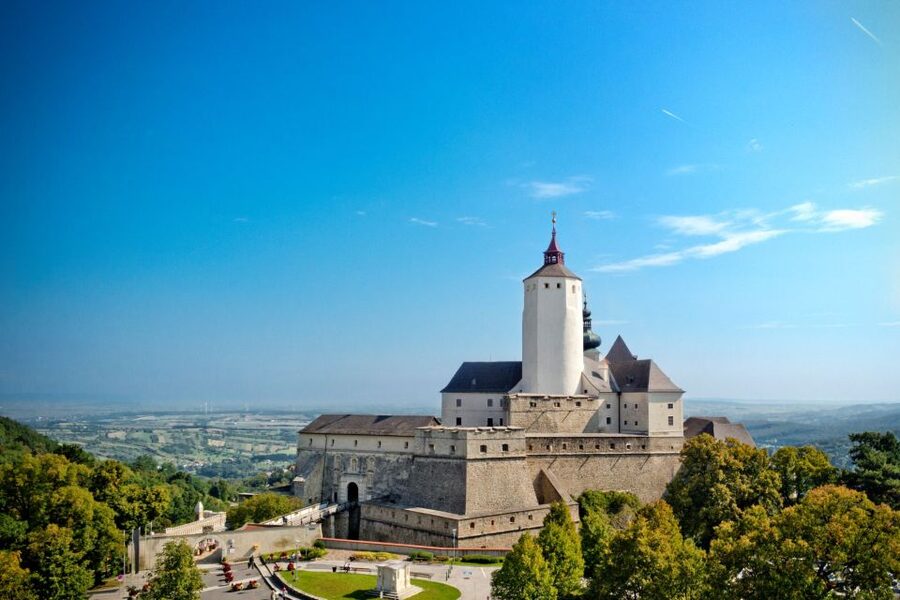
- Largest secco wall paintings north of the Alps in the inner courtyard
- Europe’s largest and earliest collection of silver furniture
- Oratory, chapel, and one of Europe’s largest private armories
- Oldest known coronation flags from Hungary, Croatia, and Serbia
- Gallery of Ancestors with the only known full-length portrait of Vlad the Impaler
- A 1-hour route that works well even on busy travel days
Forchtenstein Castle: what makes this 1-hour ticket feel like good value

At about $22 per person for roughly 1 hour, Forchtenstein Castle is the kind of cultural stop that does not waste your time. You are paying for access to a tightly organized set of rooms and collections, not a long wandering tour where you wait for the “main event” to show up.
The value comes from how much variety you get in a short window. One moment you are looking at large secco murals in the courtyard. Next, you are staring at silver furniture that is tied to the very early history of decorative collecting. Then you jump to weapons and ceremonial flags from the 17th century. That mix is the point. It shows you how the Esterházy family shaped their image through art, objects, and display.
If you like your museums with clear turning points, this works. You can also choose the optional guided tour, if you want the extra narration to connect the dots.
Start in the inner courtyard, then let the secco murals set the tone
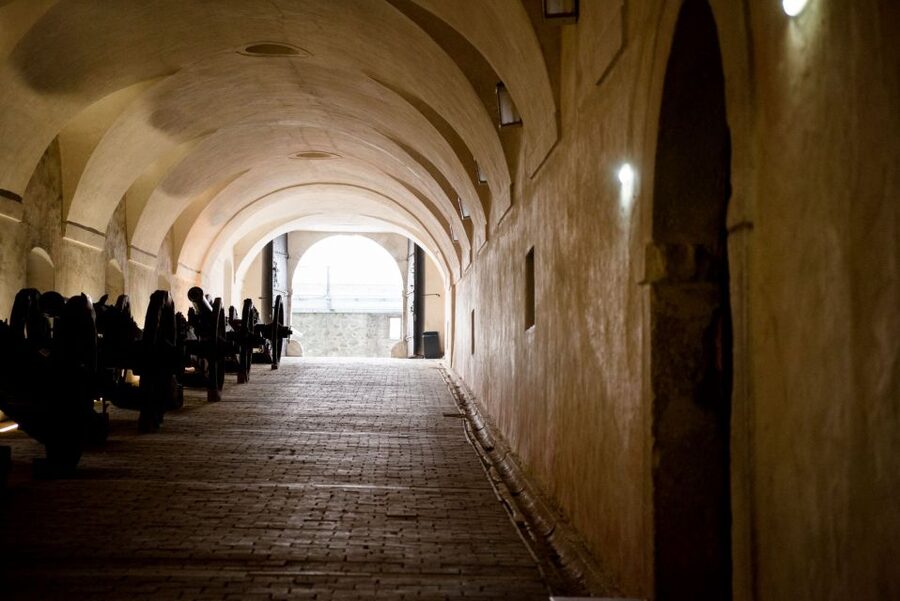
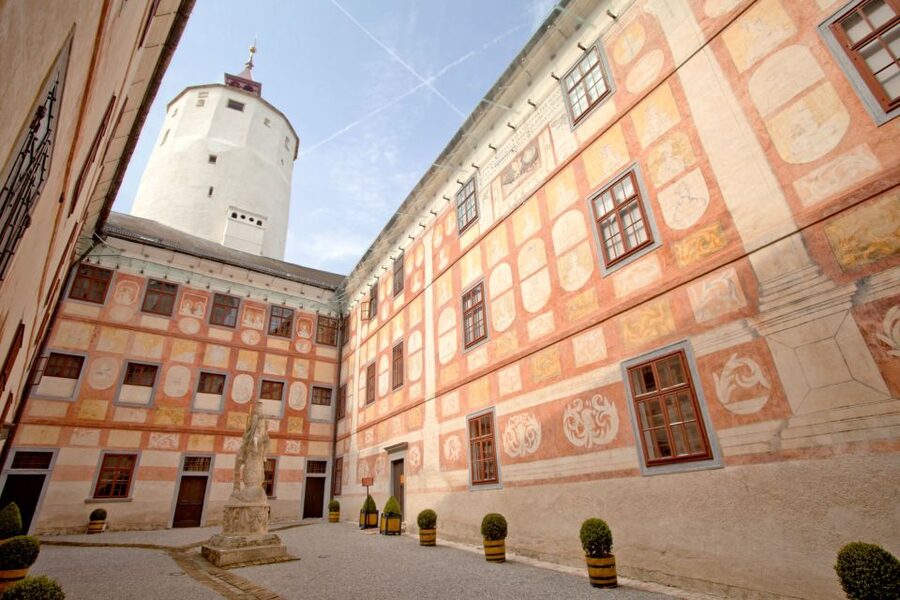
Your visit kicks off in the inner courtyard, where you can see the standout visual: the largest display of secco wall paintings north of the Alps. Even if you are not a specialist in mural art, this is the kind of setting that makes the rest of the castle make sense. The courtyard painting is bold, physical, and meant to be seen in person, not just in photos.
Secco wall paintings are all about timing and technique, but for you as a visitor, the real takeaway is scale and presence. Courtyards were social spaces. A big mural there was a way of announcing, we have taste, we have resources, we are connected to the wider European world.
Practical tip: spend a minute looking at the mural as a whole before you zoom in on details. The impact is designed for that first step back.
First floor priorities: oratory, chapel, and the private armory of weapons
From the courtyard, the route leads you into the oratory and chapel on the first floor. This part matters because it adds a different emotional register to the visit. After the outdoor spectacle, you get a more contained religious space, which helps explain how noble households treated faith, authority, and ceremony as part of daily life.
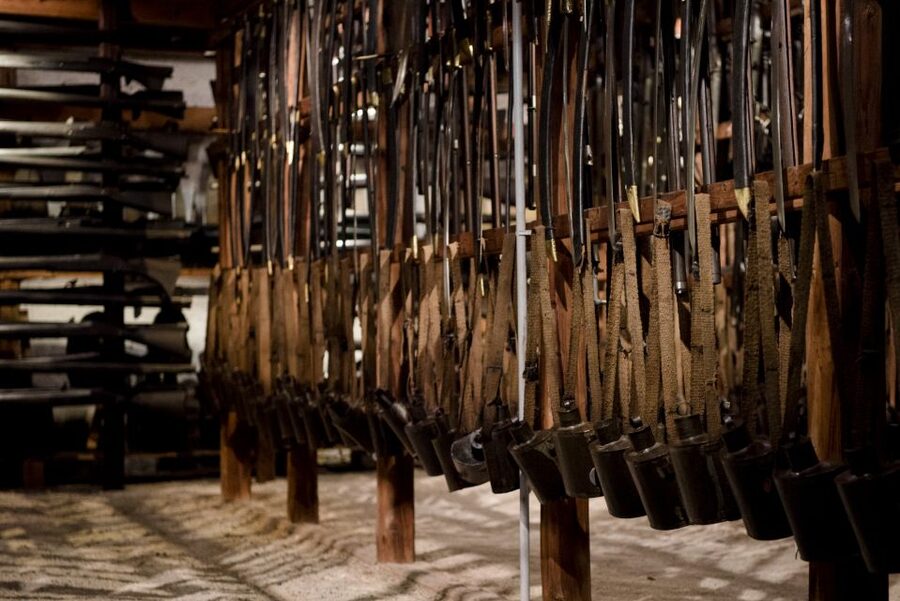
Then comes the big attention grabber for many people: the collection of weapons in one of Europe’s largest private armories. You are not just looking at a single display case. You are looking at a private collection, which changes how you interpret what you see. Weapons in a private armory are about more than combat. They are about power, prestige, craftsmanship, and lineage.
What to watch for:
- How weapons and armor are presented as artifacts, not props.
- The sense of curation, where the armory becomes a museum topic, not just storage.
Possible consideration: this part of the castle is likely to involve standing and moving between rooms. Wear shoes you trust. This is not the time for slick soles.
Second floor collections: Ottoman tent artifacts and 17th-century coronation flags
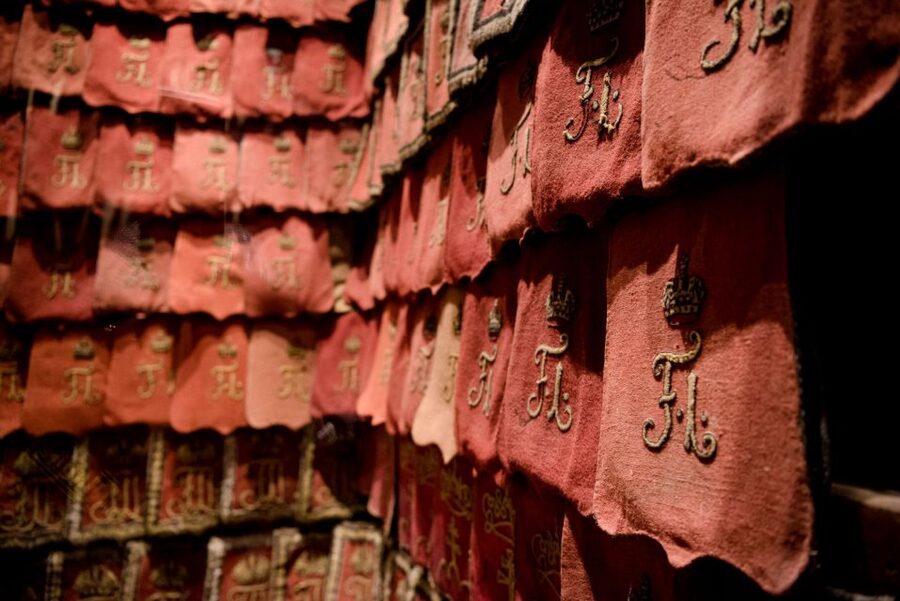
Up on the second floor, you shift from religious spaces and weaponry to a more ceremonial, courtly set of objects.
One item that helps anchor the scale is the 400-year-old Ottoman tent. It is the kind of object that can stop you mid-walk because it is both foreign and historically specific. That contrast is exactly why it belongs in a cabinet-style collection. It signals contact between worlds, not just imitation.
Then you hit another headline feature: the three coronation flags dating from the 17th century, described as the oldest known coronation flags from Hungary, Croatia, and Serbia. Even if flags are not your usual interest, these work because they connect objects to political identity. These are not decorative textiles. They are symbolic statements about authority and legitimacy.
I like this section because it forces you to see how status gets stitched into everyday display. Flags are meant to be seen from a distance, raised at moments that matter, and remembered afterward. In a museum room, they still carry that function.
Gallery of Ancestors: the full-length Vlad portrait and fictional family myths
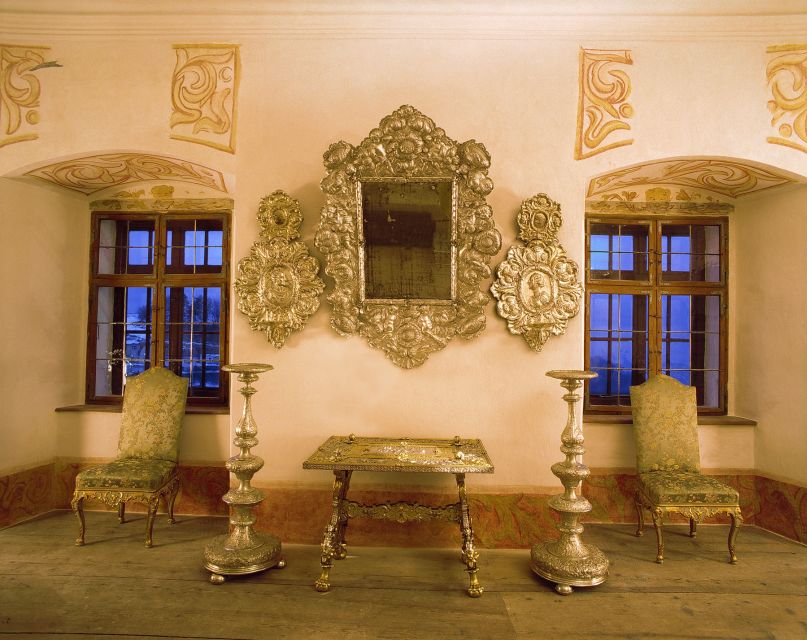
The Gallery of Ancestors is where the castle starts feeling theatrical in a good way. You get the only known full-length portrait of Vlad the Impaler, and that alone is enough to earn a long look.
But the broader point is how the Esterházy family used imagery to shape identity. Alongside Vlad, you will see portraits connected to both real and invented lines of ancestry, including figures like Attila the Hun and Vlad. Whether every connection is literal, the message is clear: ancestry was a branding tool.
This is where I think the visit becomes more than a list of objects. It becomes a window into a collecting mindset. The castle is not trying to be neutral. It is trying to show how one family understood its place in European power and legend.
Kunstkammer cabinets and the Prince Paul Esterházy collecting obsession
If you stay focused on the collecting angle, you will enjoy the Kunstkammer, a cabinet of curiosities dating from the late 16th to the early 18th century. This is the “collector’s logic” room.
A cabinet of curiosities can be random in some museums. Here, it helps that the story behind it is tied to the Esterházy collection culture. You can connect what you see to Prince Paul Esterházy and his passion for collecting, which makes the room feel less like clutter and more like intention.
What you get out of this section:
- A clearer sense of why a family would preserve unusual, high-craft objects.
- A better feeling for how early modern collectors mixed art, science, status, and spectacle.
If you only have time for one “deep look,” put it here. The Kunstkammer rewards a slower scan, but it also fits the overall 1-hour pace if you keep moving room to room.
What about the optional guided tour, and when it’s worth it
The ticket includes admission, and the guided part is optional. If you like your museums with stronger explanations, the guide is often where the connections appear. In a castle full of symbols, a short guided thread can help you understand why the secco murals, armory, and coronation flags live in the same story.
If you prefer to read at your own pace, you can still get plenty out of self-guided time. The key features are concrete and named: secco murals, silver furniture, the armory, the Ottoman tent, the coronation flags, and the ancestor gallery.
One practical note: the tour languages listed here are German, and the audio guide is German as well if you add it.
Practical tips before you go: timing, language, and stairs
Plan for a 1-hour visit and arrive about 15 minutes before your activity start time. That early arrival helps you get oriented and settled, especially in a castle where rooms connect in a way that feels natural once you’re inside.
Language: this experience is listed in German. If you do not speak German, you will still be able to enjoy the visuals, but you might need to rely on shorter, simpler interpretations on the spot. If there is an audio guide in German available for the listed add-on cost, it can help you get the key points without slowing your pace.
Mobility: the visit is not suitable for people with mobility impairments. So if you or someone in your group needs step-free routing, you should treat that as a hard constraint rather than a maybe.
How to pace it:
- Spend longer at the courtyard mural.
- Give the armory and the coronation flags a focused look.
- Then finish strong with the Gallery of Ancestors and the Kunstkammer room.
This route works best if you treat it like a guided walk even when you go self-paced: room to room, with quick stops for the big targets.
Should you book Forchtenstein Castle?
Book this ticket if you want a fast, high-impact castle visit in Burgenland that includes major eye-catching collections: secco murals, historic silver furniture, a large private armory, and ceremonial objects tied to 17th-century power. It is a good choice for couples, history-minded travelers, and anyone who likes the feeling of walking through a family collection rather than a generic museum.
Skip or rethink it if mobility is an issue. The visit is explicitly not suitable for people with mobility impairments, and the castle layout likely assumes stairs and movement between floors.
If you are deciding between self-guided and optional guidance, choose guided time if you want someone to connect the dots between the art, the armory, and the ancestor portraits. Choose self-guided if you are comfortable reading cues on your own and you simply want to see the objects and absorb the atmosphere at your own speed.
FAQ
What is the duration of the Forchtenstein Castle admission ticket?
The activity runs for 1 hour.
How much does the ticket cost?
The price is listed as $22 per person.
What is included with the admission ticket?
The admission ticket is included. An audio guide is not included in the ticket price.
Is an audio guide available, and what language is it in?
An audio guide is available in German, and it is listed as €2.
Is the optional guided tour included in the price?
The ticket includes admission. The guided tour is labeled as optional.
What time should I arrive?
Plan to arrive 15 minutes before the activity starts.
What languages are offered?
The experience is listed in German.
Is the experience suitable for mobility-impaired visitors?
No. It is listed as not suitable for people with mobility impairments.
What is the cancellation policy?
You can cancel up to 24 hours in advance for a full refund.
Can I reserve without paying right away?
Yes. There is a reserve and pay later option, so you can book your spot and pay nothing today.
Tickets, compared.
 ★ 4.7Vienna: Classic Ensemble Vienna in St. Peter’s Church TicketFrom $454,819 reviews
 ★ 4.6Vienna Kunsthistorisches Museum Day Admission TicketFrom $253,690 reviews
 ★ 4.2Vienna: Tickets for Mozarthaus Vienna with Audio GuideFrom $182,344 reviews
 ★ 4.5Vienna: Skip-the-Line Entrance Ticket to the Danube TowerFrom $212,303 reviews
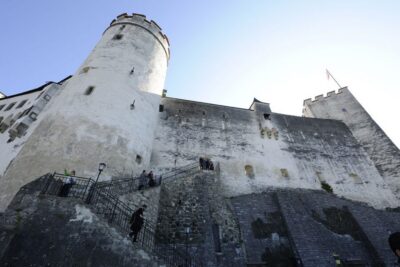 ★ 4.6Salzburg: Hohensalzburg Fortress Admission TicketFrom $172,236 reviews
 ★ 4.7Tickets for the Albertina ExhibitionsFrom $232,126 reviews
 ★ 4.6Sigmund Freud Museum TicketFrom $181,668 reviews
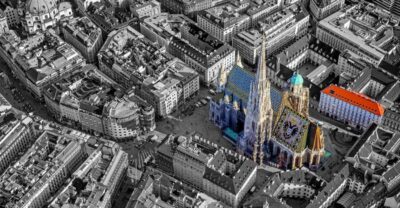 ★ 4.5Vienna: St. Stephen’s Cathedral & Dom Museum Wien TicketsFrom $341,652 reviews