
REVIEW · TICKETS
Entrance ticket Heidi Horten Collection Vienna
Vienna turns art into a living room. The Heidi Horten Collection pairs a striking, open-feeling building with a modern mix that includes Klimt ⇄ Warhol on the ground floor, plus a special show called The Line running from 19 September 2025 to 8 March 2026. I love how the museum’s layout makes you feel like you are moving through ideas, not just walking past frames, and I love the way the artwork stretches across eras and styles, from Vienna around 1900 to pop art and beyond. One possible drawback: if you want a quiet, traditional museum with strict gallery rules, the bold contemporary presentation and occasional sensory elements can feel a bit jarring.
This is a great-value stop, too, because your entrance ticket includes an audio guide (in English) and covers all fees and taxes. You can usually plan on 1 to 2 hours, and using the mobile ticket makes it easy to fit into a busy day near Vienna’s major sights.
In This Review
- Key highlights worth planning around
- First, what this ticket gets you in Vienna
- The building is not just a container, it shapes your visit
- Klimt ⇄ Warhol on the ground floor: what to look for
- The Line special exhibition: tracing one basic element across time
- How to plan your 1 to 2 hour route (without feeling rushed)
- The audio guide and SMARTIFY: how to get more from your visit
- Location advantage: fitting this into a Vienna museum day
- Price and value: what $14.38 buys you
- Who should book this, and who should think twice
- Should you book this Heidi Horten Collection ticket?
- FAQ
- How long should I plan for my visit?
- Is the experience available in English?
- What is included with the entrance ticket?
- Do I need a printed ticket?
- Where is the museum and is it easy to get to?
- Is free cancellation available?
Key highlights worth planning around
- Architecture with sightlines: you can keep your bearings and still feel connected to other rooms
- Klimt ⇄ Warhol permanent exhibition: a high-impact modern pairing with big-name artists
- The Line special exhibition (19 Sep 2025 to 8 Mar 2026): a theme-driven walk through how a single art element changes meaning
- Audio guide included: helps you read the art when you want context without a group tour
- Easy central location: close to major sights, so this fits well between other museums
- A museum that is willing to take risks: some rooms are playful, even a little theatrical
Other Vienna write-ups filed under Austria
- Vienna: Classic Ensemble Vienna in St. Peter’s Church Ticket
★ 4.7 · 4,819 reviews - Vienna Kunsthistorisches Museum Day Admission Ticket
★ 4.6 · 3,690 reviews - Vienna: Tickets for Mozarthaus Vienna with Audio Guide
★ 4.2 · 2,344 reviews - Vienna: Skip-the-Line Entrance Ticket to the Danube Tower
★ 4.5 · 2,303 reviews
First, what this ticket gets you in Vienna
The entrance ticket for the Heidi Horten Collection is priced at $14.38 per person and is valid for a visit lasting about 1 to 2 hours. You get an audio guide included, and it is offered in English, which is handy if you want control over your pace.
The experience is designed for self-guided wandering. That works well here, because the museum’s space is open and transparent, with sightlines between areas. In other words, you do not feel forced into a rigid route. You can start where your interest pulls you, and you can pause when a theme clicks.
The “value” part is not just the ticket price. It is the package deal: audio guide plus all fees and taxes already included. For a short museum visit in Vienna, that is the kind of all-in thinking that saves time and keeps your plans simple.
The building is not just a container, it shapes your visit
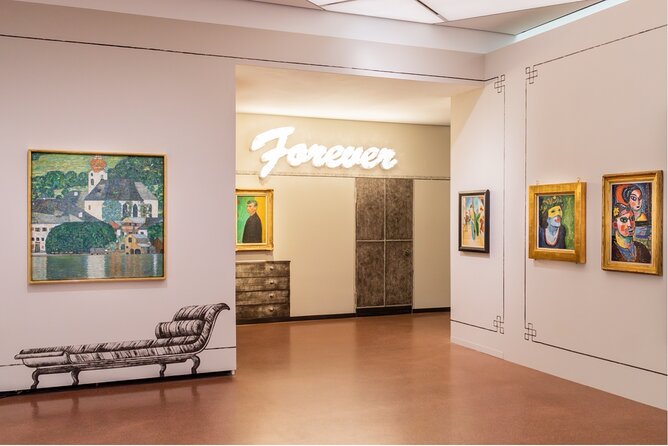
One of my favorite things about this museum is that the architecture is part of the art experience. The interior is designed to feel open and transparent, with sightlines between artworks. Practically, that means less time guessing where you are going. You can glance across rooms and understand how the museum is organized.
It also changes the vibe. Traditional museums often rely on a “white cube” style, where each room feels sealed off and quiet. Here, the openness creates a more connected flow. That can be great if you like modern art that benefits from comparison and pattern-spotting.
The trade-off is that open layouts can also amplify sound and atmosphere. Some installations in modern museums are meant to be immersive, and if you are sensitive to light, sound, or busier environments, you may find certain zones more distracting than you expected. If you like your art visits calm and minimal, it is worth mentally preparing for a museum that is not afraid to be interactive.
Klimt ⇄ Warhol on the ground floor: what to look for
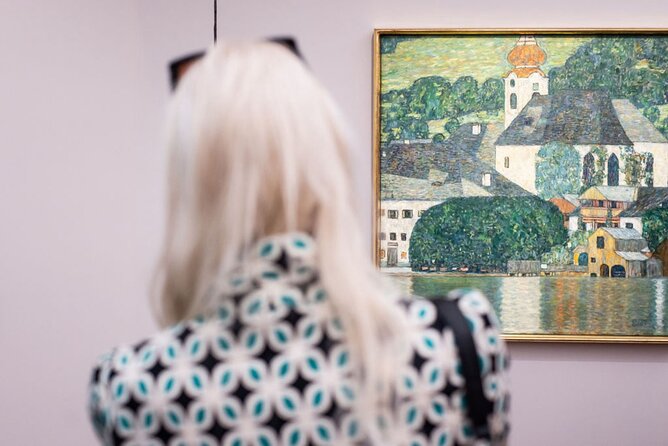
The permanent exhibition is built around Klimt ⇄ Warhol. That pairing is smart because it forces you to compare two ends of modern visual culture without pretending they belong to the same world.
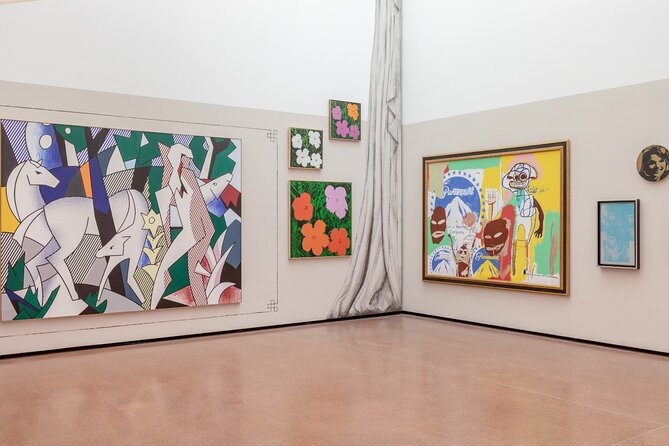
This area is described as a curated presentation of one of Europe’s top-class private collections, set in an architectural space that is meant to feel special and gallery-like. In plain terms, this is where you go for an art “hit,” with recognizable names and styles arranged in a way that encourages you to connect the dots.
You can expect international modern and contemporary art with artists that include Bacon, Baselitz, Basquiat, Chagall, Fontana, Haring, Klee, Klein, Klimt, Lichtenstein, Magritte, Nolde, Picasso, Rothko, Warhol, and many others. If that list makes you think pop art and modern art are your comfort zone, you will likely enjoy this floor most.
How I would approach it:
- Start by looking for the visual language that repeats across artists. It might be contrast, fragmentation, strong outlines, or bold color choices.
- Then switch your focus to technique. Even when the subject matter changes, the way each artist builds impact can feel surprisingly related.
- Finally, use the audio guide to slow down on artworks that feel like they are “saying a lot” at once.
If you love big-name modernists, you can spend a surprisingly satisfying hour here without feeling like you must see everything. The ground floor is designed as a doorway, encouraging you to keep moving and learning as you go.
The Line special exhibition: tracing one basic element across time
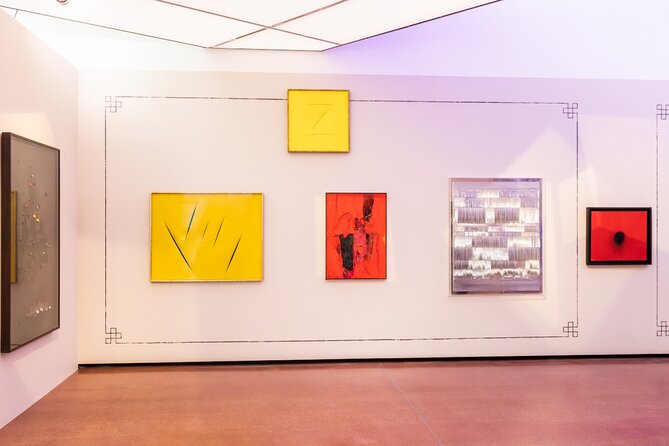
The special exhibition running from 19 September 2025 to 8 March 2026 is called The Line. The museum frames the line as a fundamental building block of art, and the theme follows its meaning across time and continents.
The show invites you on a journey that moves from Vienna around 1900, through the art world of the 1960s, and into art from today. You are basically asked to treat drawing and marks like a headline that can change meaning depending on context. A line can suggest movement, structure, emotion, control, or disruption. In this exhibition, you can see how that one “simple” element becomes a tool for many different messages.
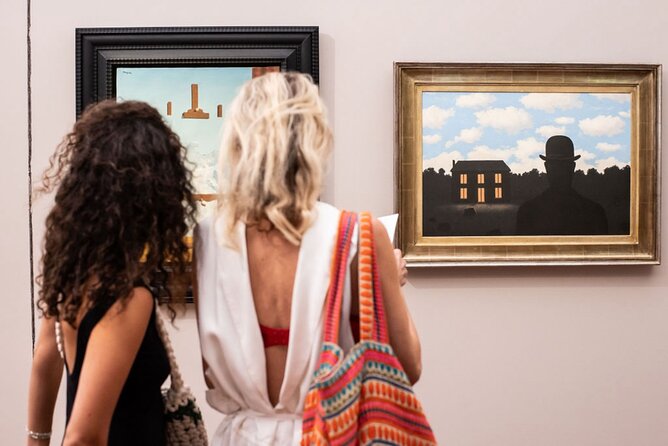
The exhibition also includes works by internationally known artists such as Paul Klee, Lucio Fontana, Roy Lichtenstein, Egon Schiele, Jackson Pollock, Agnes Martin, Andy Warhol, and Chiharu Shiota, among others. If you care about modern art but want more than a random walk, a theme like this gives you a reason to pay attention.
What makes this show especially worth planning for is the way it blends famous modern and contemporary names with the broader question of what lines do. In a typical museum day, you might get overwhelmed by the sheer variety. Here, the line theme acts like a filter. You walk in thinking you will see drawings or graphics. You walk out understanding that a line can be a gesture, a texture, a boundary, or even a philosophy.
Practical note for pacing: I suggest you spend more time than you think on the early sections. When you see how Vienna around 1900 connects to later movements, the “theme logic” starts to feel stronger. Then, the later galleries become easier to interpret.

How to plan your 1 to 2 hour route (without feeling rushed)
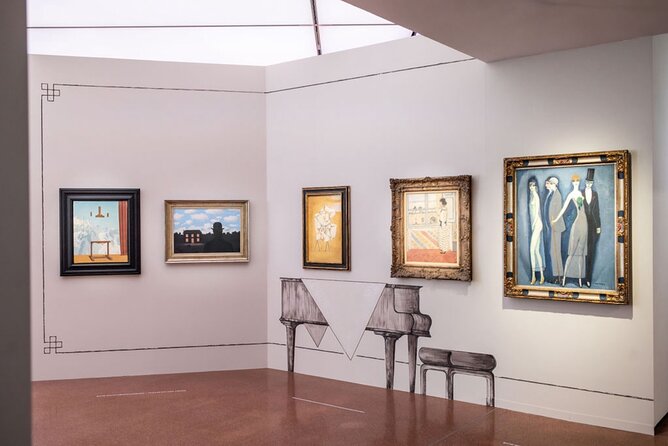
With a short visit window, your biggest risk is trying to see everything. The museum is designed so you can wander comfortably, so the better strategy is to pick an order that supports your interests.
Here is a simple plan that works well:
- Start with Klimt ⇄ Warhol if you want a high-impact introduction.
- If you want the deeper theme experience, spend your second block on The Line.
- Use the audio guide to target artworks that you can’t quickly “read” visually.
Because the interior is open and you can see between spaces, you can adjust your route on the fly. If you notice you are drawn into one area, you do not have to force yourself to leave right away. You just keep an eye on time.
A helpful habit: before you move rooms, take 15 to 30 seconds to locate the next theme goal. That keeps you from wandering for 30 minutes and realizing you forgot the point of your visit.
Also, be aware that modern museums sometimes have narrow passageways and clear space rules. The museum uses signage to manage traffic and keep you at a respectful distance from works. You will enjoy it more if you assume there will be moments where walking slows down a bit.
The audio guide and SMARTIFY: how to get more from your visit
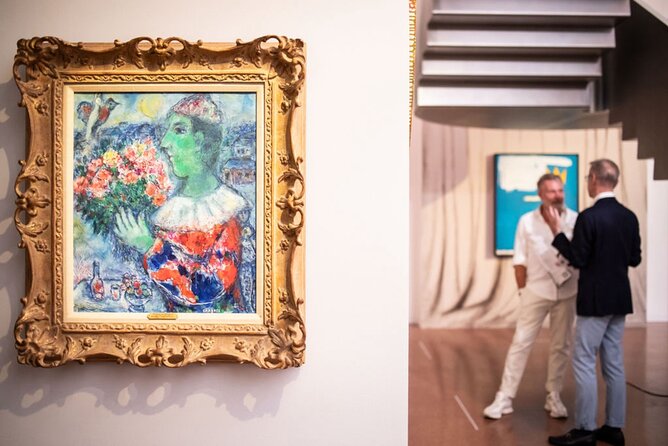
Your ticket includes an audio guide, and the museum notes that it is available via SMARTIFY, including from home. That is useful because you can read up on the museum style before you arrive, or you can download what you need beforehand so your phone is ready when you enter.
Since the audio guide is offered in English, it removes one of the most annoying parts of independent museum visits: figuring out what matters without relying only on labels.
How I use audio guides in museums like this:
- I do not try to listen to every track start to finish.
- I use it strategically, mainly for artworks that I find visually intense but conceptually hard to interpret.
- I pause when the audio gives a key idea, then go back and look again at what is in front of me.
This is especially helpful for a theme-driven show like The Line, where the meaning behind marks can shift based on technique and context. With audio, you spend less time guessing and more time noticing.
One more tip from the museum’s overall attitude: the experience is not only serious. The staff and art education approach can be playful and respectful, which helps if you feel intimidated by contemporary art. That tone makes it easier to stay curious.
Location advantage: fitting this into a Vienna museum day
You are in central Vienna, close to major landmarks. One big advantage is that this museum pairs easily with other classics like the Albertina, and it is close to the Vienna State Opera area. That means you can plan a museum day that does not require complicated transportation.
On a practical level, central location matters because it lets you keep momentum. You are not losing half a day on transfers. You can walk between stops if your schedule is tight, or use public transportation if the weather turns.
If you are building a route around the inner city, this is a strong candidate for a focused stop between longer museums. The 1 to 2 hour duration makes it fit into a day without turning your evening into a scramble.
Price and value: what $14.38 buys you
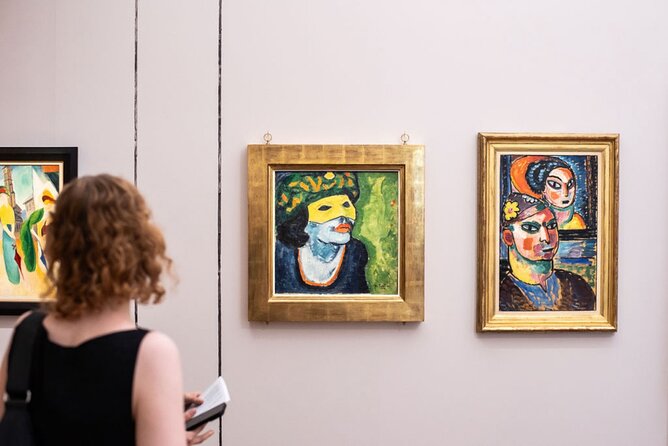
At $14.38 per person, this ticket feels like good value because it includes the essentials:
- Entrance to the museum
- Audio guide
- All fees and taxes
Many Vienna museums charge ticket prices plus separate costs for audio, and that adds up quickly if you are visiting as a couple or family. Here, the ticket is more “bundle-style,” which makes budgeting easier.
It also makes sense for the type of visit. You are not committing to a full-day cultural marathon. You are committing to a compact experience with two main art zones: the permanent Klimt ⇄ Warhol presentation and the special exhibition The Line. If you like modern and contemporary art, you can walk in and feel like you got your money’s worth in a short timeframe.
Would I call it a bargain? It is not “cheap,” but it is fair for what you receive. It is especially worth it if you plan to use the audio guide instead of treating the visit as a fast photo stop.
Who should book this, and who should think twice
This ticket is a great match if you:
- Like modern and contemporary art, especially pop art and 20th century names
- Enjoy art themes that give you a framework for looking
- Want a short, high-quality museum stop that fits between bigger attractions
- Appreciate bold museum design and don’t mind a more theatrical atmosphere
You might consider another option if you:
- Only want traditional, quiet galleries with minimal sensory effects
- Prefer a museum experience that feels more tightly controlled and less “designed”
- Want a strictly chronological, textbook approach with no interpretive leaps
The museum takes creative risks with how art is presented and how space works. That is also why it can be memorable.
Should you book this Heidi Horten Collection ticket?
If you are planning a Vienna trip and you want one modern art stop that feels both accessible and thought-provoking, I would book it. The combination of Klimt ⇄ Warhol on the ground floor and The Line as the special exhibition gives you two different ways to look at modern art, one through star names and one through a clear theme. The included audio guide is the kind of support that turns a quick visit into a better one.
If you are the type who likes quiet museums and you know contemporary art can distract you, you may feel less comfortable. But even then, the architecture and the central location make it an easy, low-commitment try.
FAQ
How long should I plan for my visit?
Plan for about 1 to 2 hours.
Is the experience available in English?
Yes. The entrance ticket notes the experience is offered in English.
What is included with the entrance ticket?
Your ticket includes the entrance to the Heidi Horten Collection, an audio guide, and all fees and taxes.
Do I need a printed ticket?
No. It is a mobile ticket.
Where is the museum and is it easy to get to?
It is near public transportation, and it is located in central Vienna near major landmarks like the Vienna State Opera area.
Is free cancellation available?
Yes, you can cancel for a full refund if you cancel up to 24 hours in advance of the experience start time.
Tickets: Rest of the Austria File
- Vienna: Classic Ensemble Vienna in St. Peter’s Church Ticket
★ 4.7 · 4,819 reviews - Vienna Kunsthistorisches Museum Day Admission Ticket
★ 4.6 · 3,690 reviews - Vienna: Tickets for Mozarthaus Vienna with Audio Guide
★ 4.2 · 2,344 reviews - Vienna: Skip-the-Line Entrance Ticket to the Danube Tower
★ 4.5 · 2,303 reviews
Tour Reviews: Rest of the Austria File
- Vienna: Vivaldi’s Four Seasons Concert in Karlskirche
★ 4.7 · 14,951 reviews - Vienna: Schönbrunn Palace & Gardens Skip-the-Line Tour
★ 4.7 · 7,739 reviews - Vienna: Light of Creation Votive Church Immersive Light Show
★ 4.8 · 6,779 reviews - Vienna Spanish Riding School Guided Tour
★ 4.7 · 6,765 reviews
Newest Vienna write-ups on file
- Vienna: Private Walking Tour to The Hofburg & Graben Street★ 5.0 · 3 reviews
- Vienna: Private tour Mauthausen and Linz★ 4.1 · 3 reviews
- Vienna Private Full Day Tour – Tickets to Schönbrunn & Lunch★ 5.0 · 3 reviews
- Vienna: Johann Strauss 200th birthday anniversary exhibition★ 4.7 · 3 reviews
- Vienna: Full-Day Vienna Woods Wine Tasting Tour★ 5.0 · 3 reviews
- Vienna: Festive Season and New Year’s Eve Waltz Workshop★ 5.0 · 3 reviews
Tickets, compared.
 ★ 4.7Vienna: Classic Ensemble Vienna in St. Peter’s Church TicketFrom $454,819 reviews
 ★ 4.6Vienna Kunsthistorisches Museum Day Admission TicketFrom $253,690 reviews
 ★ 4.2Vienna: Tickets for Mozarthaus Vienna with Audio GuideFrom $182,344 reviews
 ★ 4.5Vienna: Skip-the-Line Entrance Ticket to the Danube TowerFrom $212,303 reviews
 ★ 4.6Salzburg: Hohensalzburg Fortress Admission TicketFrom $172,236 reviews
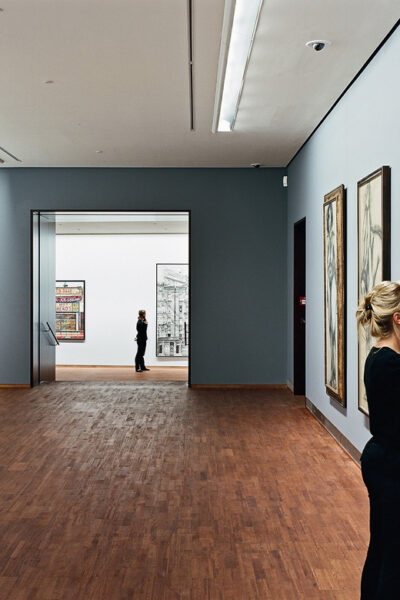 ★ 4.7Tickets for the Albertina ExhibitionsFrom $232,126 reviews
 ★ 4.6Sigmund Freud Museum TicketFrom $181,668 reviews
 ★ 4.5Vienna: St. Stephen’s Cathedral & Dom Museum Wien TicketsFrom $341,652 reviews