
REVIEW · TOURS
Vienna: Sightseeing Tour in a 1920s Classic Style Car
Vienna looks best when you do it in quick, smart bites. This 60-minute ride in a 1920s classic electric car lets you take in major sights without battling weather or traffic stress. I especially like the mix of comfortable window views plus real explanations from the driver, not just a rattled-off script.
Two details that really win me over: first, the whole route is designed for together time, since it’s a private group of up to 10. Second, the ride is fully emission-free, so you get around the center with a calm, no-fuss feel. Even if you are not a big museum person, the stories connect the places into one picture.
One possible drawback to consider: you are mainly viewing from the car, so if you want long stops inside churches, museums, or famous cafés, you’ll need separate time on your own. Think of this as orientation and highlights, not a deep replacement for walking tours.
In This Review
- Key points at a glance
- A 1920s Electric Old-Timer That Makes Vienna Feel Easy
- The 60-Minute Route, and What You Actually Get From It
- Albertina and the Old City Wall, Fast Orientation at the Start
- Ringstraße and Opera Power: From Historic Statues to Staatsoper Views
- Burggarten to the Hofburg: Palace Gardens and Imperial Center Views
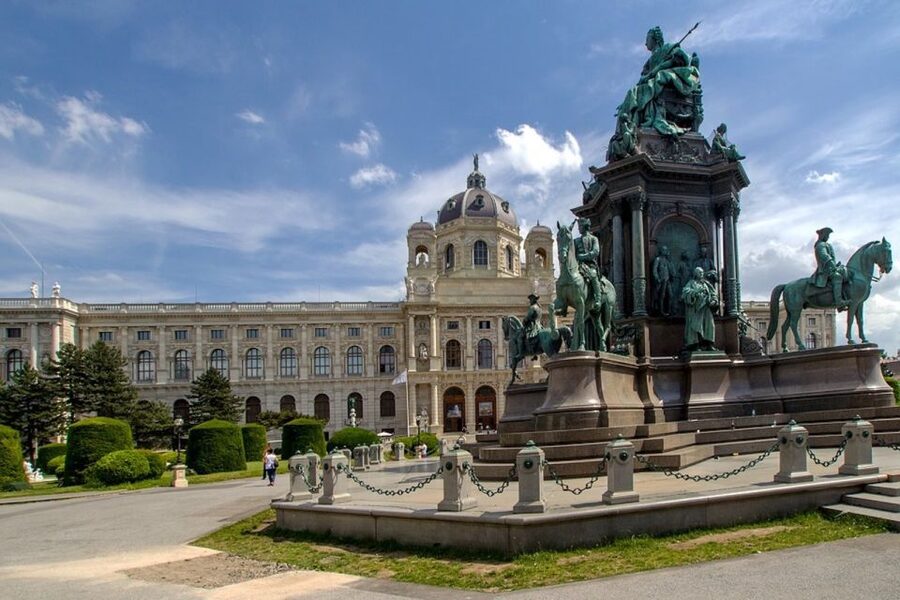
- Museums, Monuments, and the Maria Theresia Axis
- Parlament, Burgtheater, Rathaus, and Universität: Vienna’s Civic Face
- Café Central Area to St. Stephen’s: The Core You Can’t Miss
- Stadtpark, Strauss, and the Music Quarter to End: Music Vienna in Motion
- Price and Value: When $282 Per Group Actually Makes Sense
- Should You Book This Vienna Old-Timer Tour?
- FAQ
- How long is the tour?
- How many people are in a group?
- What kind of vehicle is used?
- Does the tour run in bad weather?
- What languages are available?
- Where does the tour start and end?
- Is admission to sights included?
- What is included in the tour price?
- Is free cancellation available?
- Can I reserve now and pay later?
Key points at a glance
- A 1920s-style electric old-timer gives you classic Vienna vibes with modern comfort
- Up to 10 people in a private group, so families can stay together and move at one pace
- Driver-led commentary in English or German, plus audio support during the drive
- Big-name stops from the Ringstraße to St. Stephen’s Cathedral, paced for a relaxed 1 hour
- Good for rainy or gray days, since you stay in the car and still see a lot
Still choosing? These Vienna entries sit alongside it in our Austria file.
- Vienna: Vivaldi’s Four Seasons Concert in Karlskirche
★ 4.7 · 14,951 reviews - Vienna: Schönbrunn Palace & Gardens Skip-the-Line Tour
★ 4.7 · 7,739 reviews - Vienna: Light of Creation Votive Church Immersive Light Show
★ 4.8 · 6,779 reviews - Vienna Spanish Riding School Guided Tour
★ 4.7 · 6,765 reviews
A 1920s Electric Old-Timer That Makes Vienna Feel Easy
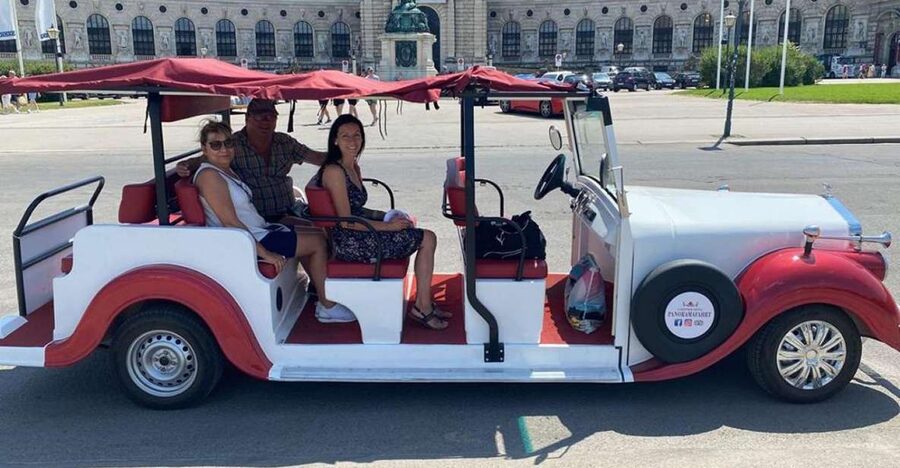
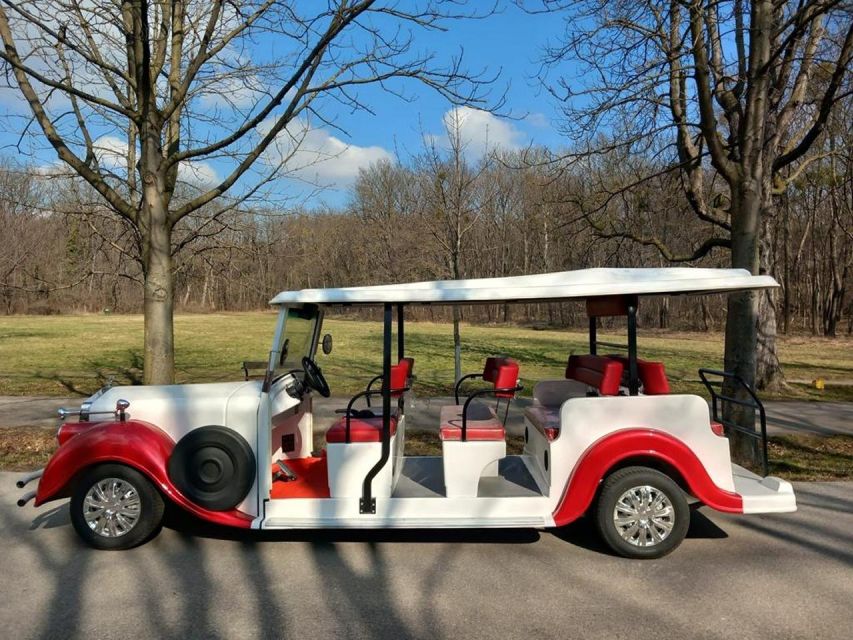
There is something about Vienna seen from a classic-style vehicle. You sit back, look out, and the city changes scenes like a movie reel. This tour uses an old-timer electric car, and that matters more than you might think. You get an emission-free ride, and the whole experience feels smoother and calmer than cramming sightseeing into a hectic walking circuit.
I also like that it is driver-led. You are not stuck staring at a screen, and you get human pacing. Your driver is the one sharing the context, and the audio commentary supports it while you roll past famous buildings. English and German are both offered, which is handy if you have a mixed-language group.
One small but real perk is the group size. Up to 10 people means you are not lost in a crowd. It tends to make the ride more conversational, and it helps if kids get restless, or if adults just want to ask quick questions.
The 60-Minute Route, and What You Actually Get From It
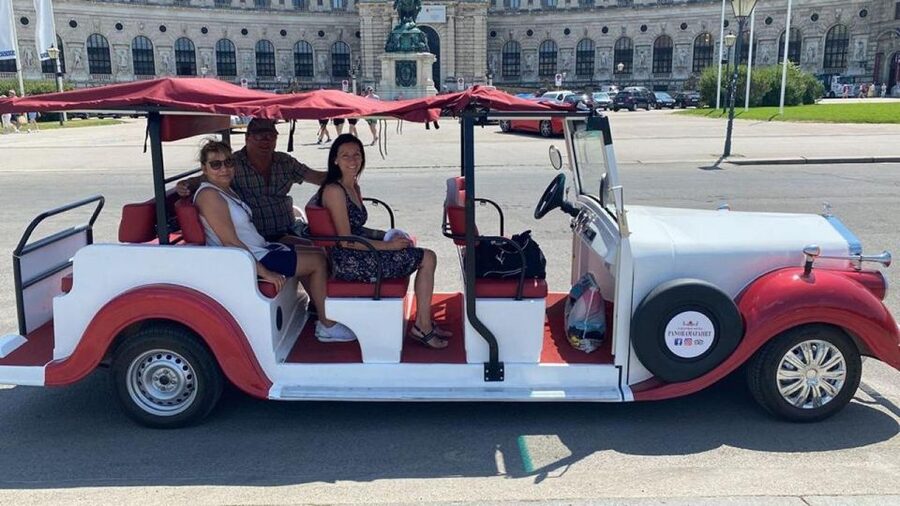
This is a 60-minute highlights loop. That sounds short, and it is, but that is also the point. The route is built to show you the major “Vienna icons” that most first-time visitors feel they should see: the imperial core, the Ringstraße grandeur, the cathedral area, and the music quarter.
The stop list is long, so let’s make it practical. You will see lots of landmarks, but the time at each one is limited by design. You are getting the big picture fast:
- You learn what you are looking at while it is still fresh.
- You get a mental map of where things are.
- You decide what you want to return to later on foot.
The best way to use this tour is as your first big city overview. If you start here, you can spend the rest of your time walking with purpose instead of guessing. If you start later, it still helps you connect dots you might have missed.
Albertina and the Old City Wall, Fast Orientation at the Start
The ride begins and ends in central Vienna, tied to the Café Mozart area near Albertinaplatz. The listed meeting point is also given as Herrengasse 12 at Hotel Radisson Blu, so I’d recommend you confirm where the car actually picks you up on the day. In practice, you want to be at the spot your driver is expecting, because this is a time-tight loop.
Your first views include the Albertina area and the sense of Vienna’s layered city core. You also pass the idea of the old city boundary, including the alte Stadtmauer. That’s a helpful early lesson: Vienna is not one era. Even when you’re seeing grand boulevards, you are standing on top of older outlines.
Then the route moves toward the Ringstraße world. If you are the type who gets overwhelmed by a long list of landmarks, this segment does a good job turning that list into a storyline: here is where the city’s power and culture show off.
Ringstraße and Opera Power: From Historic Statues to Staatsoper Views
As the car glides along the Ringstraße, the city starts to feel like a set of carefully staged scenes. The Ringstraße is Vienna’s grand boulevard, and you’ll catch iconic frontages and statues that explain why this stretch became the city’s public stage.
You’ll see major cultural markers along the way, including the Staatsoper area and the grand boulevard itself. You also pass sights tied to German-language literature and art, including the Goethe Denkmal and Schiller Denkmal. It’s a quick way to learn that Vienna’s identity is not only imperial. It is also poets, artists, and institutions.
A few more highlights roll past in this section:
- Akademie der bildenden Künste (a strong clue to Vienna’s art-school tradition)
- Palais Schy (palace architecture that hints at the city’s aristocratic past)
- Mozart Denkmal (because even the monuments here seem to hum with the same composer theme)
There is also the administrative and cultural rhythm of the Ringstraße, where grand buildings sit side by side like chapters in a book. The drawback is simple: from a moving car you cannot linger. But if you want “get your bearings fast,” this is exactly how to do it.
Burggarten to the Hofburg: Palace Gardens and Imperial Center Views
Next comes the heart of the imperial story. You’ll get views that connect Burggarten and the bigger imperial complex around the Hofburg. This part of the city is where Vienna’s power image becomes architecture.
You pass through the Burggarten area and its garden structures, including the Palmenhaus and Schmetterlingshaus. These are the kinds of spots you might not notice from the street alone, and the car gives you a clear look at how the gardens sit inside the palace zone.
Then the route swings through the symbolic gateways and squares. You’ll pass the neues Burgtor, and then you are in Heldenplatz territory. Heldenplatz is one of those places where Vienna’s scale becomes obvious in a hurry. The photos from the car will be good, but it is the sense of space that matters.
From here, you see the Hofburg complex and nearby landmarks like the Nationalbibliothek, plus the Welt Museum and the Präsidentenpalast views. It’s an imperial area with multiple purposes: residence, culture, knowledge, and government all share this neighborhood.
Museums, Monuments, and the Maria Theresia Axis
Vienna loves a good statue, and this route makes sure you see the main cast. As you move through the museum and monument areas, you’ll get clear views of figures and institutions that shape the city’s visual language.
You’ll see the Natur und kunsthistorisches Museum area, which is one of the most important cultural groupings in the center. Nearby, you pass statuary including Maria Theresia and other major historical figures such as Prinz Eugen and Erzherzog Karl. Even if you do not know the details, you’ll understand the intent: Vienna uses monuments to keep major stories in public view.
Other prominent roll-by stops in this zone include Palais Epostein and then onward toward the civic center. The advantage of seeing it from the car is that it saves your energy. If you tried to walk this exact sequence, you’d spend a lot of time crossing streets and waiting. From the electric old-timer, you keep momentum and let your driver do the explaining.
Parlament, Burgtheater, Rathaus, and Universität: Vienna’s Civic Face
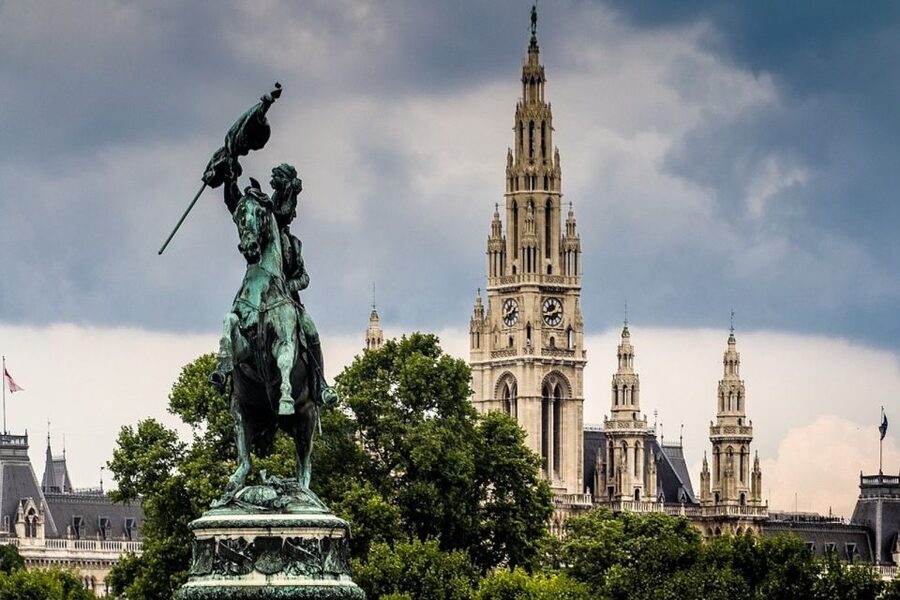
After the imperial zone, you shift into the civic and cultural backbone of Vienna. This is where the city starts to look less like a royal stage and more like a working capital.
You’ll pass the Parlament and then the Burgtheater area, and you’ll also catch views of the Rathaus (Vienna’s city hall). The Universität comes into view as well, which helps you understand that education and culture are treated as public identity, not private sidelines.
You also see Liebenberg Denkmal, and you may notice how the city’s sculpture and public design show up right alongside civic buildings. This matters for two reasons. First, it’s easier to read Vienna when you see the same “design logic” repeated. Second, it helps you plan a walking return if you enjoy architecture and city planning.
One practical reality: from the car you do not get the street-level detail, like smaller inscriptions and street art. So treat this as the big framing. Then if one building really grabs you, you can zoom in later on foot.
Café Central Area to St. Stephen’s: The Core You Can’t Miss
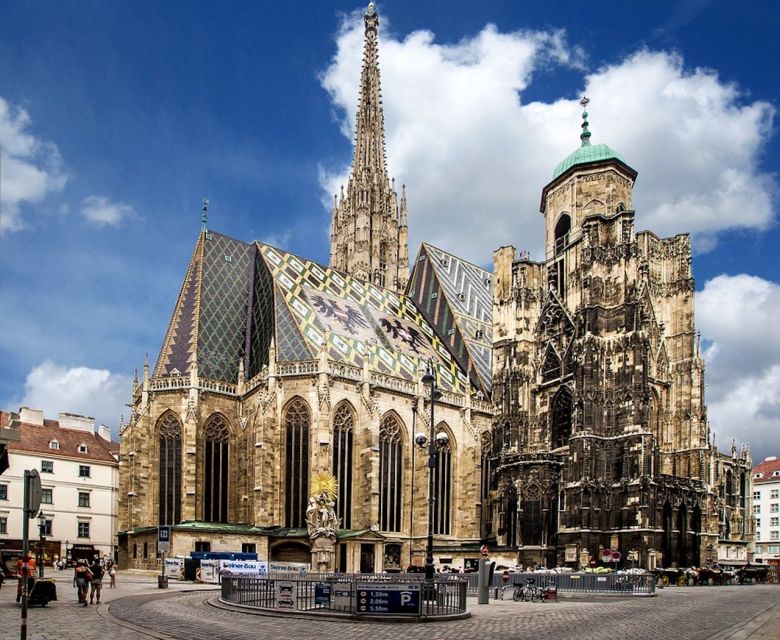
Now we move into the older, busier-feeling parts of the center. This section is where the route becomes personal, because St. Stephen’s Cathedral and the surrounding lanes are the kind of places you’ll want to revisit.
You’ll pass the Palais Ferstl with Café Zentral, plus areas near Am Hof. It’s a good combo, because it shows Vienna’s café culture and the nearby historic atmosphere without forcing you to choose one thing right now.
Then the route continues past Hohe Brücke and toward Salz Gries and Marc Aurel Straße. You also see hoher Markt and Hochzeitsbrunnen, plus Ankeruhr near the central core. Ankeruhr is a very recognizable clock landmark, and even from the car it’s easy to spot what makes it special.
And then, the star of the show, Stephansdom. The cathedral area is one of those places where Vienna’s scale and detail hit you at once. From the car you get a strong view, but you also get a clear signal: this is a stop that deserves your own time after the ride. If you only do one cathedral photo that day, do it here. If you have more time, come back and walk the immediate area so you can see the details up close.
Finally you pass Wollzeile and the broader inner-center streetscape, which helps you understand how Vienna’s shopping and pedestrian lanes weave into the landmark zone.
Stadtpark, Strauss, and the Music Quarter to End: Music Vienna in Motion
Toward the end, the tour turns toward the city’s famous leisure and music identity. You’ll see Stadtpark and then monuments tied to Johann Strauss and the music culture around him. The city treats music as part of everyday identity, not a niche interest.
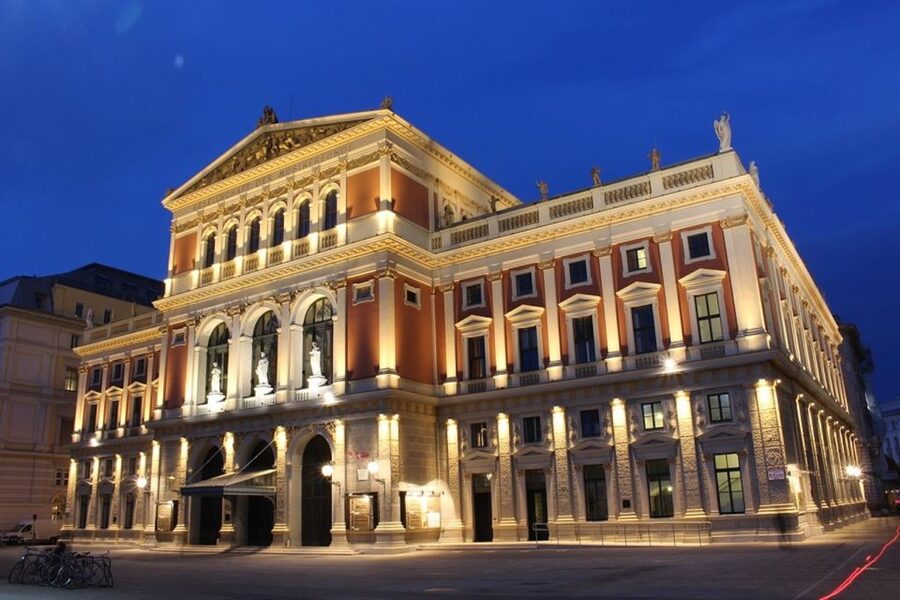
You’ll pass the Kursalon Hübner area and Café Schwarzenberg, and you’ll also get views toward the Musikverein. This is the classic Vienna soundscape in visual form. Even if you do not attend a concert, seeing the venues and the surrounding culture gives you context for why the city is so obsessed with music in the first place.
This section also includes the Hotel Imperial area and then famous grand hotels like the Grand Hotel and Hotel Bristol. You’ll see the Hotel Sacher as well. These are landmarks, but they are also useful reference points. When you know where the hotels are, your mental map of the center gets a lot clearer.
The ride then loops back through the Staatsoper zone again and returns toward Albertina to finish. It feels like the route is closing a circle, and that makes the last ten minutes feel surprisingly satisfying.
Price and Value: When $282 Per Group Actually Makes Sense
The price is $282 per group up to 10 people, for a 60-minute ride. That is not the cheapest option if you are traveling solo. But it can be a strong value if you’re splitting between family members or a small group who wants one vehicle, one shared overview, and one guide voice.
Here is how I’d think about it for your budget:
- If you have 2 to 5 people, you’re often paying for convenience, time saved, and guided context.
- If you have closer to 10 people, the cost per person becomes much easier to swallow, and the private-car comfort becomes the main win.
- Admission fees are not included, so you are not paying to go inside big-ticket venues during the ride. You are paying for the orientation and the guided storytelling while you see key exteriors.
The car quality score is high too, with 88% of reviewers giving it a perfect score. That matters because Vienna sightseeing can be tiring, especially with lots of stairs and waiting. This option removes a chunk of that friction.
Should You Book This Vienna Old-Timer Tour?
I’d book this if you want a quick, friendly way to see Vienna’s major sights in one go, especially if weather is a question mark. It’s also a great fit when you’re traveling with kids or anyone who gets tired walking. The driver’s commentary, the private group size, and the classic-electric comfort work together.
I would skip it if your plan is mostly about deep museum time or long photo stops at specific monuments. This tour is the big-picture set-up. You’ll still want to add walking time for the places that call to you most.
If you are trying to decide between two styles of sightseeing, pick this for day one or day two. Then plan a follow-up on foot around the places that grabbed you from the car windows, especially Stephansdom and the Ringstraße icons.
FAQ
How long is the tour?
It lasts 1 hour.
How many people are in a group?
It is a private group for up to 10 persons.
What kind of vehicle is used?
You ride in an electric old-timer car with a 1920s classic style.
Does the tour run in bad weather?
Yes, the tour is designed for sightseeing no matter the weather.
What languages are available?
The live tour guide and commentary are available in English and German.
Where does the tour start and end?
It starts and ends in 1010 Vienna. The tour starts and ends at Café Mozart, Albertinaplatz 2, 1010 Vienna, and the listed meeting point is 1010 Vienna Herrengasse 12 (Hotel Radisson Blu).
Is admission to sights included?
No, admission fees are not included.
What is included in the tour price?
The price includes the tour and audio commentary by the driver.
Is free cancellation available?
Yes, you can cancel up to 24 hours in advance for a full refund.
Can I reserve now and pay later?
Yes, you can reserve now and pay later.
Tours: Rest of the Austria File
- Vienna: Schönbrunn Palace & Gardens Skip-the-Line Tour
★ 4.7 · 7,739 reviews - Vienna Spanish Riding School Guided Tour
★ 4.7 · 6,765 reviews - Vienna: Skip-the-Line Sisi Museum, Hofburg and Gardens Tour
★ 4.8 · 5,918 reviews - Vienna: Skip-the-Line Schönbrunn Palace & Gardens Tour
★ 4.8 · 5,411 reviews
Tour Reviews: Rest of the Austria File
- Vienna: Vivaldi’s Four Seasons Concert in Karlskirche
★ 4.7 · 14,951 reviews - Vienna: Schönbrunn Palace & Gardens Skip-the-Line Tour
★ 4.7 · 7,739 reviews - Vienna: Light of Creation Votive Church Immersive Light Show
★ 4.8 · 6,779 reviews - Vienna Spanish Riding School Guided Tour
★ 4.7 · 6,765 reviews
Newest Vienna write-ups on file
- Vienna: Private Walking Tour to The Hofburg & Graben Street★ 5.0 · 3 reviews
- Vienna: Private tour Mauthausen and Linz★ 4.1 · 3 reviews
- Vienna Private Full Day Tour – Tickets to Schönbrunn & Lunch★ 5.0 · 3 reviews
- Vienna: Johann Strauss 200th birthday anniversary exhibition★ 4.7 · 3 reviews
- Vienna: Full-Day Vienna Woods Wine Tasting Tour★ 5.0 · 3 reviews
- Vienna: Festive Season and New Year’s Eve Waltz Workshop★ 5.0 · 3 reviews
Tours, compared.
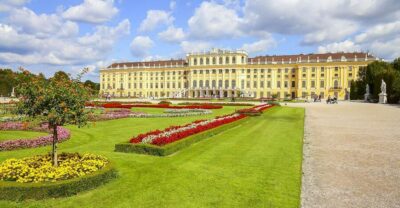 ★ 4.7Vienna: Schönbrunn Palace & Gardens Skip-the-Line TourFrom $637,739 reviews
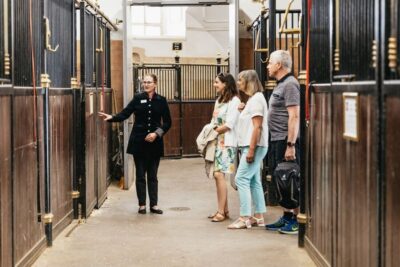 ★ 4.7Vienna Spanish Riding School Guided TourFrom $286,765 reviews
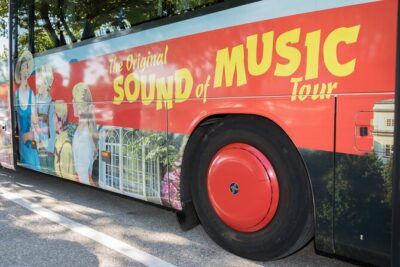 ★ 4.5The Original Sound of Music Tour in SalzburgFrom $906,129 reviews
 ★ 4.8Vienna: Skip-the-Line Sisi Museum, Hofburg and Gardens TourFrom $615,918 reviews
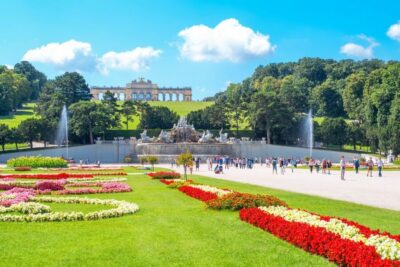 ★ 4.8Vienna: Skip-the-Line Schönbrunn Palace & Gardens TourFrom $765,411 reviews
 ★ 4.8Salzburg: Original Sound of Music TourFrom $885,059 reviews
 ★ 4.7Vienna: Guided Walking Tour of City Center HighlightsFrom $254,989 reviews
 ★ 4.2Vienna: Hop-On Hop-Off Sightseeing Bus Tour in 19 LanguagesFrom $414,518 reviews