
REVIEW · TOURS
Vienna: ‘Armenia In The Heart Of Austria’ Tour
Vienna hides an Armenian world inside a monastery. What I love is the Maria Schutz Church interior, where the artwork is tied to Armenian identity, and the way the tour then turns to the Mekhitharis Library, with manuscripts and rare printed works that you just do not see in mainstream Vienna. One possible drawback: it is a tightly focused 2-hour, indoor-heavy visit, so if you came only for classic palace-and-cafe sightseeing, this may feel niche (in the best way).
The pace works because your guide keeps the story moving, from the Mekhitarist Congregation to specific objects you can actually look at. In my experience, the small group limit to 10 people makes it feel personal, and the tour ends with a Mekhitharine liqueur tasting that turns the final page of the story into something you can taste, not just read.
In This Review
- Key Highlights You Should Know Before You Go
- A 2-Hour Monastery Visit That Feels Personal (and Actually Useful)
- Entering Maria Schutz Church, Where Armenian Protection Meets Vienna Art
- Loretto Chapel and Mary with the Rose After the 1683 Siege
- The Refectory Stop You Shouldn’t Skip: Schnorr von Carolsfeld
- Mekhitharis Museum and Library: Armenian Manuscripts in the Heart of Vienna
- Beyond Books: Coins, Ceramics, Carpets, and Aivazovsky
- Mekhitharine Liqueur Tasting to Close the Tour
- Price and Value: What $84 Buys You in Real Access
- Who This Tour Fits Best (and When It Might Not)
- Should You Book Armenia in the Heart of Austria?
- FAQ
- How long is the Armenia in the Heart of Austria tour?
- Where do we meet for the tour?
- How much does the tour cost?
- What is included in the tour price?
- How big is the group?
- What languages are available for the live guide?
- What will I see during the visit?
- Can I cancel if my plans change?
Key Highlights You Should Know Before You Go
- Maria Schutz Church (built 1874), replacing an earlier Cappuccine church, with Armenian-focused altar art
- The Mekhitharis Library’s scale, including 2,800 Armenian manuscripts and 170,000 Armenian publications
- Loretto Chapel and the Baroque Mary with the Rose, linked to the 1683 siege of Vienna
- The refectory painting The Feeding of the Five Thousand, a monumental work in the monastery setting
- Collections beyond books, including numismatics, ceramics, carpets, and art by Armenian painters like Aivazovsky
- Mekhitharine liqueur tasting, plus the background on families and the business behind it
Still choosing? These Vienna entries sit alongside it in our Austria file.
- Vienna: Vivaldi’s Four Seasons Concert in Karlskirche
★ 4.7 · 14,951 reviews - Vienna: Schönbrunn Palace & Gardens Skip-the-Line Tour
★ 4.7 · 7,739 reviews - Vienna: Light of Creation Votive Church Immersive Light Show
★ 4.8 · 6,779 reviews - Vienna Spanish Riding School Guided Tour
★ 4.7 · 6,765 reviews
A 2-Hour Monastery Visit That Feels Personal (and Actually Useful)

You meet in front of the main entrance of the Mekhitarist Monastery in Vienna. From there, you are not just “touring a church.” You are stepping into a living institution that preserved Armenian culture in Austria, while still functioning as a monastery today. The tour runs for about 2 hours and keeps the group small, capped at 10 participants, which matters because you get time to ask questions and hear the reasoning behind what you are seeing.
This also means the visit is efficient. You will move through the church, chapel, refectory, and then the museum and library galleries, in a logical sequence. It is perfect for a short Vienna stay, or when you want a cultural detour that still feels grounded in real objects, not vague history lectures.
Entering Maria Schutz Church, Where Armenian Protection Meets Vienna Art
The tour starts with context: the history of the Mekhitarist Congregation in Vienna. This is not background fluff. It sets up why the monastery’s art and collections matter, especially the way religious devotion and Armenian identity are woven together in physical form.
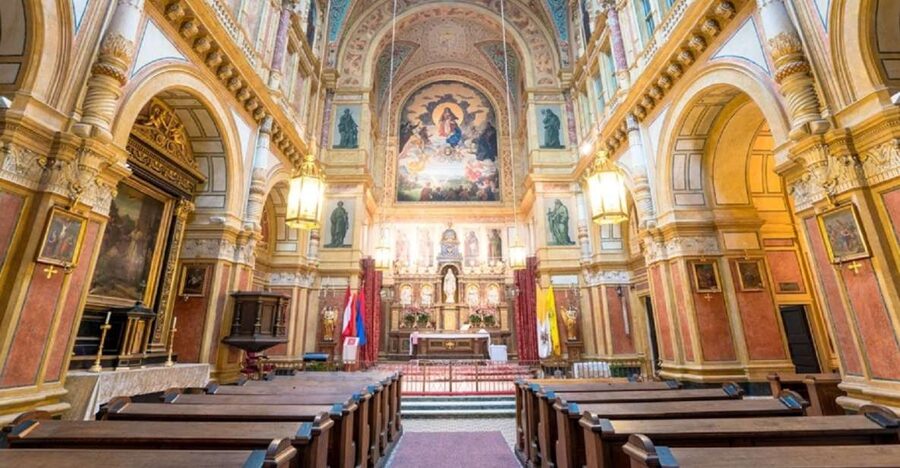
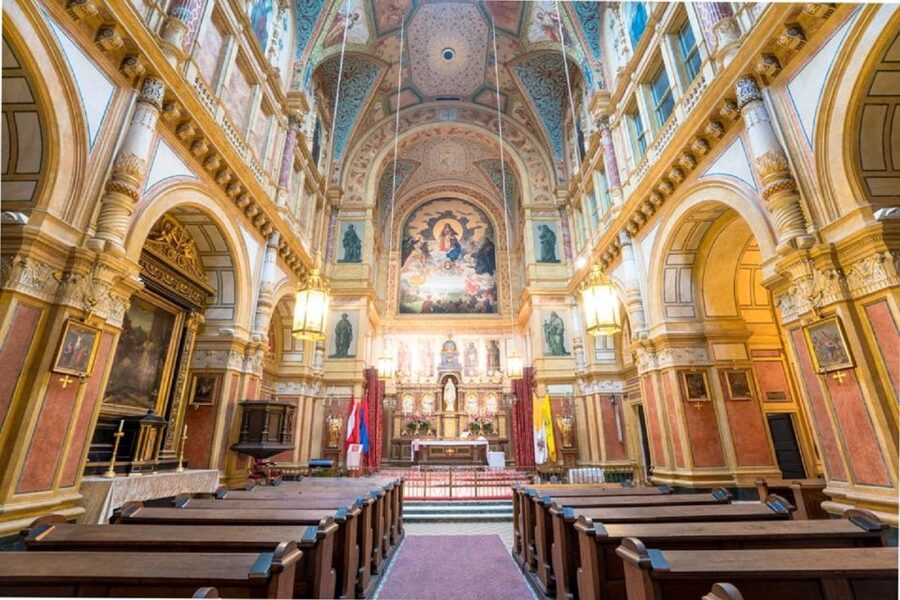
Then you get to Maria Schutz Church, built in 1874. Your guide explains that it replaced the older Cappuccine church, which gives you a sense of continuity in the site while also showing how the Armenian community shaped its own sacred space in Vienna. Once inside, you will focus on specific altar pieces, because that is where the messages become clear.
Two works are especially worth paying attention to. The altar painting devoted to St Mary’s protection of Armenia was painted by Camillo Sitte. You will also see the altar dedicated to St Gregory the Illuminator, designed by Theophil von Hansen, the architect connected to major civic architecture in Vienna, including the Austrian Houses of Parliament.
What I like about this church section is that it gives you a way to look. Instead of staring at decorations and hoping something “clicks,” the guide points you toward the themes: protection, identity, and religious authority. Even if you are not Armenian and do not know the names, you leave with clear anchors for what you saw.
Loretto Chapel and Mary with the Rose After the 1683 Siege
From Maria Schutz, you move into the Loretto-Chapel. This is one of those spaces where baroque details can feel dramatic on their own, but here the story gives it extra weight.
The chapel holds a baroque miraculous picture called Mary with the Rose. The key historical moment your guide connects to the painting is the siege of Vienna in 1683, when the picture was rescued intact from the perils of the Turkish siege. That rescue detail makes the artwork feel less like an aesthetic object and more like a carrier of survival and continuity.
This stop is also a good reminder that monasteries are often political as well as religious. Vienna was a crossroads, and stories like this show how faith objects could become symbols of resilience in the middle of real conflict.
The Refectory Stop You Shouldn’t Skip: Schnorr von Carolsfeld
Next comes the monastery refectory. You pass through it as part of the flow, but it is worth lingering mentally, because the most impressive element is a monumental painting by Ludwig Ferdinand Schnorr von Carolsfeld: The Feeding of the Five Thousand.
In a monastery setting, the image does not feel random. It ties to the daily rhythm of communal life, and it echoes themes of care, provision, and service that fit the congregation’s mission. Even if religious art is not usually your thing, this is the kind of work that rewards a few minutes of attention.
One practical consideration: because the tour is only 2 hours total, you will not have unlimited time at every stop. This painting is one of the places where you get a big payoff from the short time you spend there.
Mekhitharis Museum and Library: Armenian Manuscripts in the Heart of Vienna
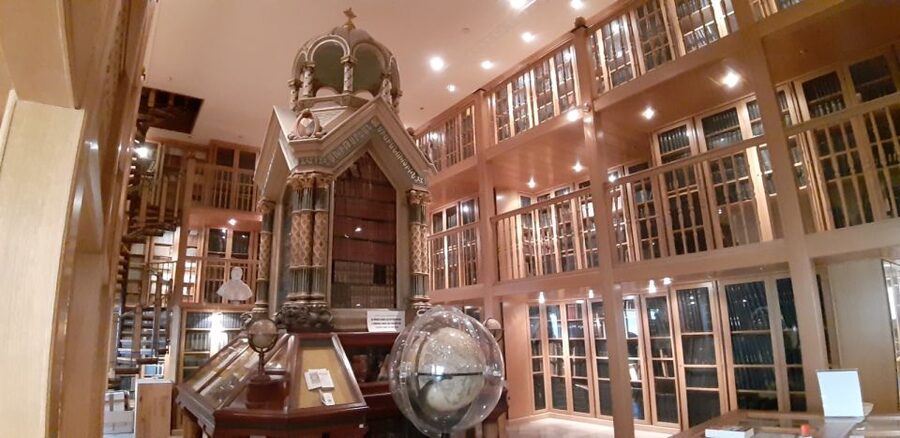
Then you shift from “church art” to “cultural memory.” The tour moves into the Mekhitarist museum and the library area, where the focus is on the Mekhitharis Library. If you care about writing, printing, and how culture gets preserved, this is the highlight section of the entire experience.
Here are the numbers your guide will connect to what you see: the library holds more than 2,800 Armenian manuscripts, plus more than 170,000 volumes of ancient and modern Armenian publications. It also has the largest collection of Armenian newspapers and magazines found in the Western world. That last detail is particularly meaningful because newspapers and periodicals are not just history. They are the voices of daily life, debates, and changing politics.
If you have ever wondered how a language survives when communities scatter, this is the answer you can point to. This library is proof of the work required to keep books, records, and printed culture alive across generations.
In the museum galleries, you will also see exhibitions of special collections. The guide highlights the parts that are easiest to miss if you are just walking in on your own, like the way specific object categories were collected and preserved together.
Beyond Books: Coins, Ceramics, Carpets, and Aivazovsky
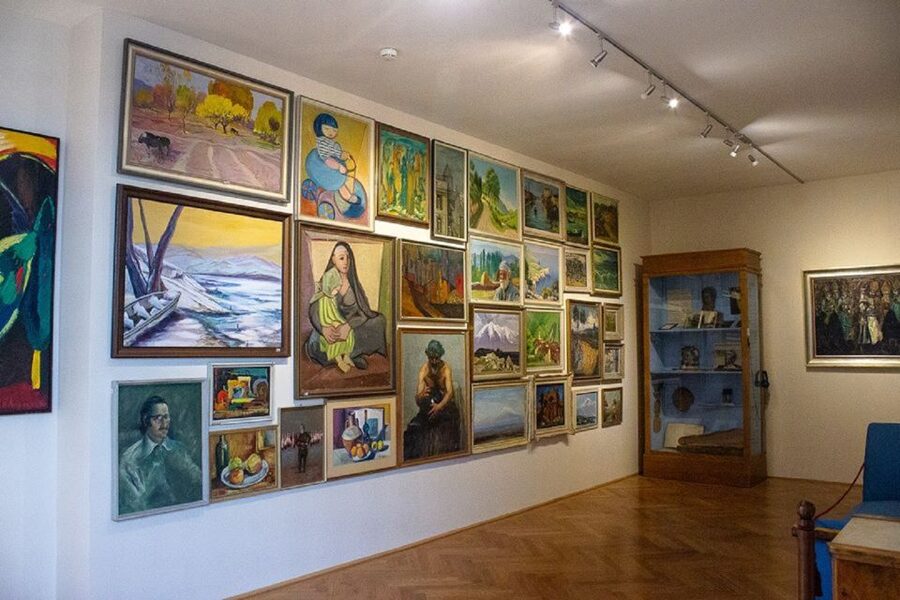
The museum does not stop at manuscripts and old documents. You will learn about the Mekhitharis collections in multiple categories, including numismatics, ceramics, carpets, and other items mainly produced by Armenians.
One standout category is the numismatic collection of coins: about 10,000 Armenian coins, plus around 20,000 coins from other countries. That mix matters because it helps you understand trade, influence, and the wider world touching Armenian communities over time.
You will also encounter ceramics and carpets, and you will get the context for how these objects reflect Armenian production and craftsmanship. Then there is the art component. The gallery contains valuable paintings by Armenian artists, including three paintings by Aivazovsky.
If you are an art lover, this is a satisfying moment because it lets you connect literature and manuscripts to visual culture. If you are more of a history person, it becomes a way to see how everyday objects and collecting habits can carry historical meaning.
Mekhitharine Liqueur Tasting to Close the Tour
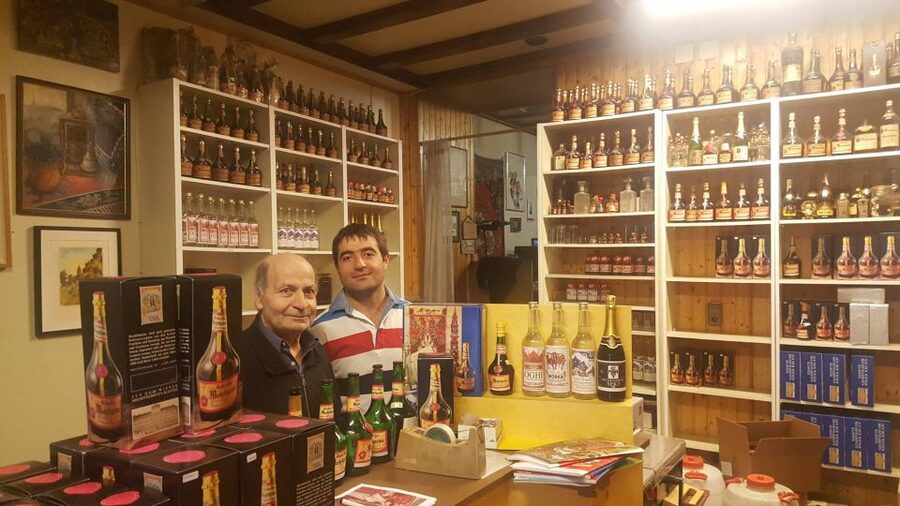
At the end, you taste Mekhitharine liqueur. For me, the tasting is not a random add-on. It is a practical way to cap the experience, because the tour has already been about preservation and identity, and then you finish with something produced and shared.
You will learn about secrets behind the liqueur’s unique taste, its history, its families, and the business side of how it is made and sustained. It is a small ritual, but it gives you a final, memorable touch that helps the monastery story stay with you after you leave.
Price and Value: What $84 Buys You in Real Access
The tour costs $84 per person and lasts about 2 hours. In practical terms, that is roughly $42 per hour, and you are paying for more than basic entry.
You get entrance fees handled, a live guide service, and the liqueur tasting included in the price. But the bigger value is access and interpretation: a guide points you to the altar paintings, chapel artwork, specific collections, and the meaning behind what you see. If you tried to do this alone, you might notice the buildings, but you would likely miss the “why these objects” layer that makes the whole visit click.
This is also a good value pick if you are traveling solo or with a small group, because the experience is designed around small numbers, and your guide can respond to questions in English, German, or Armenian.
Who This Tour Fits Best (and When It Might Not)
I think this tour is best for you if:
- you want a serious cultural experience in Vienna that is not the standard route
- you like churches, art, and symbolic objects tied to real history
- you enjoy libraries and collections, especially rare manuscripts and newspapers
- you want a short, high-impact tour that still feels personal
It may not be ideal if:
- you are hoping for lots of outdoor walking or typical “Vienna views”
- you want a broad sampler of Austrian landmarks rather than a deep focus on Armenian heritage in Vienna
- you are not interested in religious art or cultural history, even when it is presented clearly
Should You Book Armenia in the Heart of Austria?
If you want a Vienna experience that feels different but still grounded and well explained, I would book it. The combination is hard to beat for a 2-hour tour: Maria Schutz Church, the chapel story of Mary with the Rose, the monastery refectory painting, and then the Mekhitharis Library and museum collections with their remarkable scale. And finishing with a Mekhitharine liqueur tasting is a smart way to carry the experience home.
If you are the type who likes to connect places to specific objects and stories, this tour delivers. If you prefer only mainstream sights, you might treat it as a one-time detour. For most curious travelers, it is exactly the kind of stop that turns a city visit into something you remember.
FAQ
How long is the Armenia in the Heart of Austria tour?
The tour lasts 2 hours.
Where do we meet for the tour?
Meet in front of the main entrance of the Mekhitarist Monastery.
How much does the tour cost?
The price is $84 per person.
What is included in the tour price?
Entrance fees, guide service, and a liqueur tasting are included.
How big is the group?
The group is limited to 10 participants.
What languages are available for the live guide?
The live tour guide is available in Armenian, English, and German.
What will I see during the visit?
You will see Maria Schutz Church, the Loretto-Chapel with the Mary with the Rose painting, the refectory area with The Feeding of the Five Thousand, and the Mekhitarists Museum and Library.
Can I cancel if my plans change?
You can cancel up to 24 hours in advance for a full refund.
Tours: Rest of the Austria File
- Vienna: Schönbrunn Palace & Gardens Skip-the-Line Tour
★ 4.7 · 7,739 reviews - Vienna Spanish Riding School Guided Tour
★ 4.7 · 6,765 reviews - Vienna: Skip-the-Line Sisi Museum, Hofburg and Gardens Tour
★ 4.8 · 5,918 reviews - Vienna: Skip-the-Line Schönbrunn Palace & Gardens Tour
★ 4.8 · 5,411 reviews
Tour Reviews: Rest of the Austria File
- Vienna: Vivaldi’s Four Seasons Concert in Karlskirche
★ 4.7 · 14,951 reviews - Vienna: Schönbrunn Palace & Gardens Skip-the-Line Tour
★ 4.7 · 7,739 reviews - Vienna: Light of Creation Votive Church Immersive Light Show
★ 4.8 · 6,779 reviews - Vienna Spanish Riding School Guided Tour
★ 4.7 · 6,765 reviews
Newest Vienna write-ups on file
- Vienna: Private Walking Tour to The Hofburg & Graben Street★ 5.0 · 3 reviews
- Vienna: Private tour Mauthausen and Linz★ 4.1 · 3 reviews
- Vienna Private Full Day Tour – Tickets to Schönbrunn & Lunch★ 5.0 · 3 reviews
- Vienna: Johann Strauss 200th birthday anniversary exhibition★ 4.7 · 3 reviews
- Vienna: Full-Day Vienna Woods Wine Tasting Tour★ 5.0 · 3 reviews
- Vienna: Festive Season and New Year’s Eve Waltz Workshop★ 5.0 · 3 reviews
Tours, compared.
 ★ 4.7Vienna: Schönbrunn Palace & Gardens Skip-the-Line TourFrom $637,739 reviews
 ★ 4.7Vienna Spanish Riding School Guided TourFrom $286,765 reviews
 ★ 4.5The Original Sound of Music Tour in SalzburgFrom $906,129 reviews
 ★ 4.8Vienna: Skip-the-Line Sisi Museum, Hofburg and Gardens TourFrom $615,918 reviews
 ★ 4.8Vienna: Skip-the-Line Schönbrunn Palace & Gardens TourFrom $765,411 reviews
 ★ 4.8Salzburg: Original Sound of Music TourFrom $885,059 reviews
 ★ 4.7Vienna: Guided Walking Tour of City Center HighlightsFrom $254,989 reviews
 ★ 4.2Vienna: Hop-On Hop-Off Sightseeing Bus Tour in 19 LanguagesFrom $414,518 reviews