
REVIEW · LINZ & UPPER AUSTRIA
Linz Private Walking Tour
Music and cathedrals in two hours. That mix is why this Linz Private Walking Tour feels so satisfying, you get the city’s big cultural stories without wasting time on guesswork. I love how the route weaves Mozart connections into the same walk as major religious landmarks, and I also like the practical pace that makes it easy to keep up. One thing to keep in mind: entrance fees are not included, so if you want to go inside beyond the exterior viewing, budget a bit extra.
This tour is built for a small, private group, which means your guide can steer toward what you care about most, music, architecture, or the way Linz used to work. A guide named Sandra, for example, is noted for being friendly and adaptable, and that kind of attention can make the history feel personal instead of like a list. If you are traveling with kids or you just want a super relaxed stroll with lots of free time, the packed two hours might feel a little tight.
In This Review
- Key highlights worth your attention
- Enter Linz’s Old Town at Hauptplatz, in the right mood
- Trinity Column first, so the rest of the tour has meaning
- City Hall, main square details, and how to read baroque-era settings
- Following the Danube River thread through Linz’s story
- Old Cathedral and New Cathedral: seeing faith scale up close
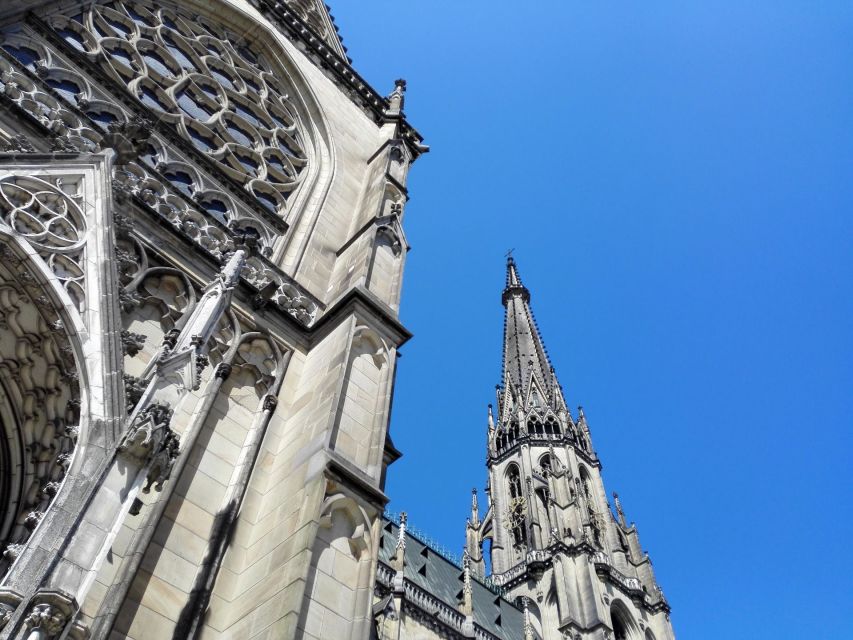
- Mariendom (New Cathedral): Austria’s largest church in neo-Gothic scale
- Mozart Residence and the three-day writing sprint that links Linz to music
- Linzer Torte time: the world’s oldest cake recipe story
- Price and value for a private group up to 15
- Should you book the Linz Private Walking Tour?
- FAQ
- How long is the Linz Private Walking Tour?
- Where does the tour start?
- Is this tour private?
- What is included, and are entrance fees covered?
- What languages are available for the guide?
- What is the cancellation policy?
Key highlights worth your attention
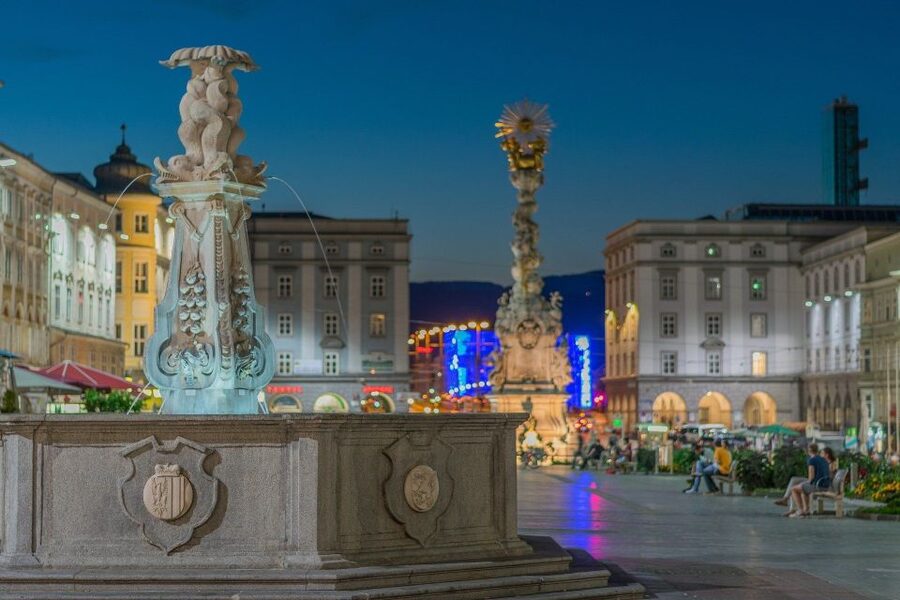
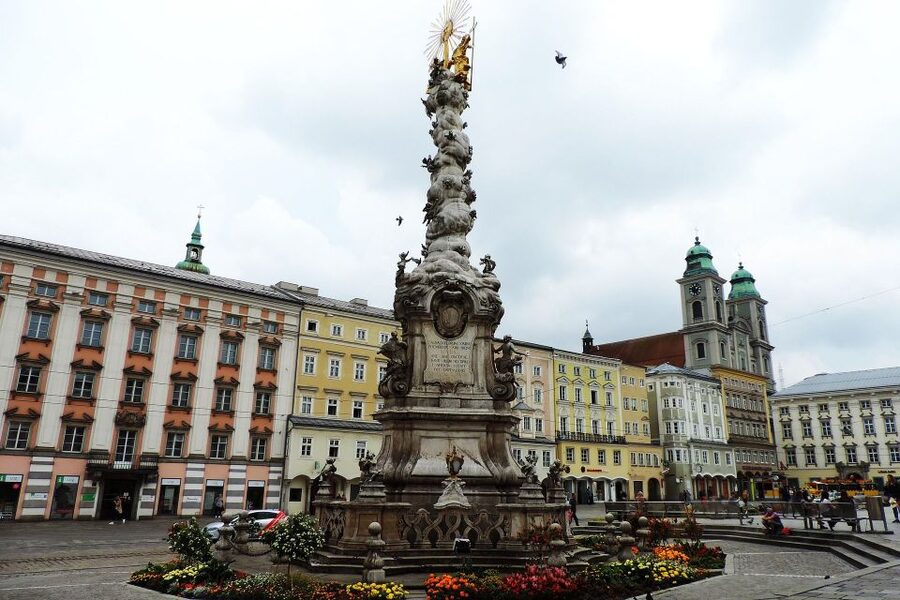
- Hauptplatz start at the Trinity Column, a 20-metre white marble marker of gratitude after disasters
- Mariendom New Cathedral in neo-Gothic style, Austria’s largest church with a 134 m tower and space for 20,000
- Mozart Residence, where the composer wrote the Linz Symphony and Linz Sonata in only three days
- Danube River moments, tying Linz’s story to trade, water, and the city’s rhythm
- Linzer Torte, linked to the world’s oldest cake recipe dating from 1653
- Private guiding in English or German, so you get real answers instead of one-size-fits-all facts
Upper Austria entries near Linz
- Linz: Harbor Cruise
★ 4.3 · 204 reviews - KZ Mauthausen Private Trip from Linz
★ 4.5 · 15 reviews - CITY QUEST LINZ: uncover the secrets of this city!
★ 4.5 · 6 reviews
Enter Linz’s Old Town at Hauptplatz, in the right mood
Linz works well for a walking tour because the center is compact, and the city seems to enjoy mixing eras. You start in the middle of it all, so you can quickly understand where landmarks sit in relation to each other. The big win is that you do not need to spend your first day getting oriented, the guide gives you the map in human form.
A strong part of the experience is the way the walking route helps you connect themes. You are not only seeing buildings, you are learning why those buildings mattered to everyday life, faith, and civic pride. You also get context for how Linz became known as a city of music, then you immediately see that idea show up in the streets around Hauptplatz.
One practical point: the tour is only two hours, so dress for walking and wear shoes you trust. If the weather turns, you will still cover the main sights, but you may not want to linger in every side street.
Trinity Column first, so the rest of the tour has meaning
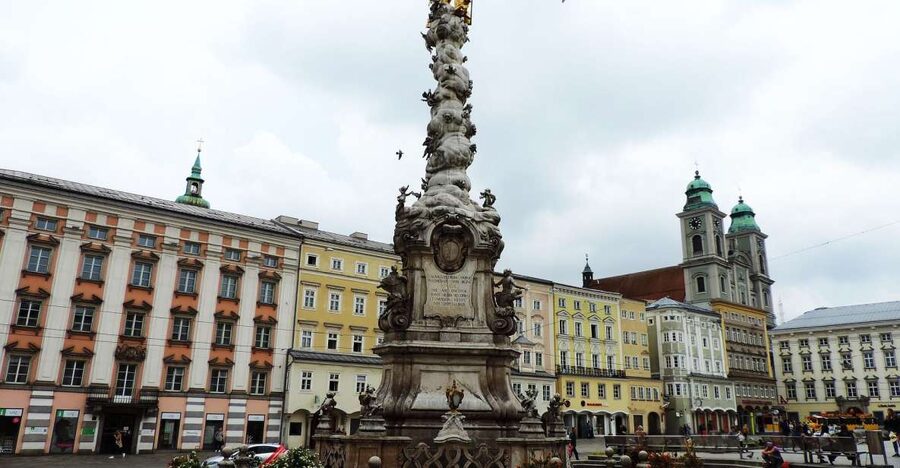
The meeting point is in front of the Trinity Column on Hauptplatz, 4020 Linz. That is a smart start because it anchors your understanding of the city fast. The column is about 20 metres tall, made of white marble, and built in gratitude to the Holy Trinity for protection against fire, war, and plague.
As you stand there, the story is not abstract. It explains why religion and public monuments are so visible in the Old Town, and why you will keep noticing faith-related symbolism as the walk continues. It also gives you a lens for the churches you will see next, including what the city chose to build and show off.
This is also where I think a private guide pays off. Even if you have seen famous columns in other cities, the guide can point out the specific Linz angle and keep the details tied to what you are looking at right now, instead of shifting into a lecture mode.
City Hall, main square details, and how to read baroque-era settings
After Hauptplatz, the walk naturally leads you toward the civic heart of Linz. You will look at the main square and the City Hall, and your guide connects those landmarks to how the city governed itself and projected stability.
What I like here is the way “architecture talk” stays connected to real life. City buildings were not just pretty, they were statements about order, work, and community. When you see the Old Town baroque architecture up close, you start noticing how styles were used to communicate confidence.
Then the guide shifts your attention toward how history sits beside the present. Linz is known as a mix of old and new, and you feel that here. You can look at a serious monument and then glance at what is happening nearby in modern life, and it clicks that Linz has been changing for a long time.
If you are the type who likes to take photos, this part is great. You have open square space for wider shots, and you also get chances for details once the guide points them out.
Following the Danube River thread through Linz’s story
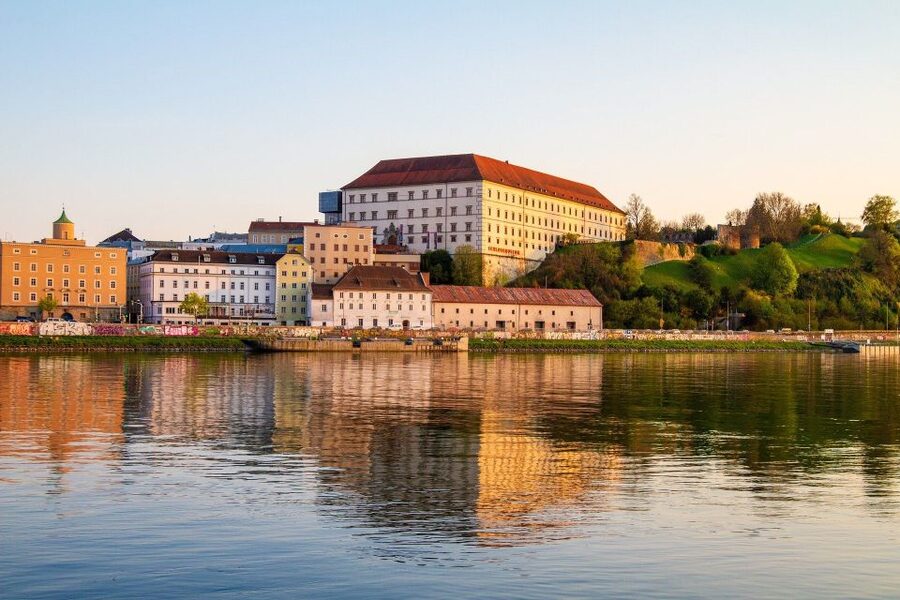
The tour includes time near the Danube River. This matters because Linz is not only a cathedral-and-music city, it is also a water-and-transport city. The river helped shape how people moved goods, how communities formed, and how the city developed links beyond its own streets.
When a guide ties a landmark to the river, you stop treating the Danube as just a scenic backdrop. You start seeing it as part of the city’s practical engine. That makes everything else on the walk land better, because you know why certain neighborhoods and buildings gained importance.
Another reason I appreciate this stop is pacing. A river moment breaks up the intensity of the most monumental sights, and it gives you an easy chance to reset, look around, and catch your breath. You get “big picture” understanding without losing the walking flow.
Old Cathedral and New Cathedral: seeing faith scale up close
You will pass both the Old Cathedral and the New Cathedral area. The point is not just to say the names, it is to show you how Linz’s religious identity is layered. One building reflects older styles and earlier eras of the city’s priorities, while the New Cathedral signals a later wave of ambition.
Your guide helps you see those differences quickly. Even if you only remember a few key points after the tour, you will likely remember the feeling of progression, how Linz built upward, outward, and into new architectural language.
The exterior focus here is also practical. If you are short on time, exterior viewing still gives you a lot. It lets you grasp the structure and setting without getting stuck in long lines or spending extra money right away.
Mariendom (New Cathedral): Austria’s largest church in neo-Gothic scale
The star of the walk is the neo-Gothic New Cathedral, also called the Mariendom. This church is Austria’s largest, with a 134 m tower and seating for about 20,000 people. Even before you get too deep into details, the sheer size changes how you perceive the surrounding streets.
This is one of those sights where scale is the message. A building like this is not just a place for worship, it is a visible marker of collective identity, resources, and confidence. When your guide explains that the church holds around 20,000, you can picture it as a major gathering space, not a quiet back-alley church.
You may not notice every architectural feature from ground level alone, but the guide can direct your attention to what matters. And since the tour is timed to two hours, you get a focused look rather than hours of standing around.
If you are curious about religious architecture, this stop is a highlight you will feel immediately. If you are less into church design, the Mariendom is still worth it because the tower and massing are simply hard to ignore.
Mozart Residence and the three-day writing sprint that links Linz to music
Then the tour shifts into music territory, which is where Linz earns its reputation. You will visit the Mozart Residence, a Renaissance building where Mozart wrote the Linz Symphony and the Linz Sonata in just three days. That is the kind of detail that sticks because it turns a famous composer into a real working person with a deadline.
Your guide also connects this to the city’s broader musical legacy, including Beethoven. You get the sense that Linz was not an accident on a music route, it was a place where major compositions could take shape. Standing near the building, you can almost feel the difference between touring a monument and learning how something was created.
This part of the experience is especially good if you have limited time. You are getting a strong story arc, from Hauptplatz and public history, to the religious center, to the creative center. And because the guide explains what the music meant and why Linz mattered, the stops feel connected instead of like separate photo opportunities.
A small practical thought: if you are a musician or a music fan, bring even a basic curiosity about symphonies and sonatas. You will pick up more from the explanations than if you treat it as only a composer name on a sign.
Linzer Torte time: the world’s oldest cake recipe story
Linz is also a food city, and the Linzer Torte is front and center. The tour highlights it as the oldest cake recipe in the world, dating to 1653. Even if you do not remember every historical detail, the point is clear: this is a long-lived local tradition you can taste and take with you.
Food stops are where good guides shine because they translate history into something you can enjoy. Rather than treating dessert as a random extra, your guide frames Linzer Torte as part of Linz’s identity, not just a snack. You also get a way to understand why locals still care about it today.
If you have dietary needs, you might want to ask your guide how the tasting works and what options are possible. The tour data here focuses on the experience highlights, so asking upfront is the best move.
And if you are already hungry by the time you reach this point, do not feel bad. The walk is designed to build toward the culinary payoff, so you are not eating immediately after your first stop.
Price and value for a private group up to 15
The price is $289 per group, up to 15 people, for a duration of two hours. That is not cheap in absolute terms, but the value comes from two things: a local guide who stays with your group only, and the tight, curated route that hits Linz’s biggest talking points without you doing research for hours.
For small groups, the per-person cost can be quite reasonable if you split it. For larger groups up to the cap, you may find this is a smart way to keep everyone together and reduce decision fatigue. The guide also helps you spend time on the right parts of the city instead of wandering and hoping you stumble onto the best bits.
Also, you are not paying for entrance fees. If you plan to go inside churches or other sites during the walk, keep that in mind. Your money mostly goes to the guide time and the structure, which is why you get so much narrative value out of a short two hours.
Who should consider this tour? It fits best if you want a serious overview of Linz with a focus on music, landmarks, and architecture, not just a casual stroll. If you are the type who loves Mozart facts, can appreciate big church scale, and wants a clean plan for seeing the essentials, this is a strong match.
Should you book the Linz Private Walking Tour?
I would book it if you want a two-hour, guided hit of the key Linz storylines: Hauptplatz, Trinity Column, Danube connections, Old and New Cathedral, the Mozart Residence, and the Linzer Torte tradition. The private format matters here because it keeps the information tailored and the pace workable, and that is exactly what makes a short tour feel worth it.
I would hesitate only if you prefer unguided wandering, or if you want lots of time inside buildings rather than outside-and-explained viewing. Since entrance fees are not included, you may also want to plan ahead if you expect to pay for extra access during the route.
If you show up ready to walk, bring curiosity about music and architecture, and lean into your guide’s direction, this tour is an efficient way to understand Linz in a way that feels personal, not rushed.
FAQ
How long is the Linz Private Walking Tour?
The tour lasts 2 hours.
Where does the tour start?
You meet in front of the Trinity Column on Hauptplatz, 4020 Linz, Austria.
Is this tour private?
Yes. It is a private group with your guide staying with your group only.
What is included, and are entrance fees covered?
A local guide is included. Entrance fees are not included.
What languages are available for the guide?
The tour is available in English and German.
What is the cancellation policy?
You can cancel up to 24 hours in advance for a full refund.
Tour Reviews: Rest of the Austria File
- Linz: Harbor Cruise
★ 4.3 · 204 reviews - KZ Mauthausen Private Trip from Linz
★ 4.5 · 15 reviews - CITY QUEST LINZ: uncover the secrets of this city!
★ 4.5 · 6 reviews
Upper Austria Entries
- Linz: Harbor Cruise
★ 4.3 · 204 reviews - KZ Mauthausen Private Trip from Linz
★ 4.5 · 15 reviews - CITY QUEST LINZ: uncover the secrets of this city!
★ 4.5 · 6 reviews
Newest Linz write-ups on file
- CITY QUEST LINZ: uncover the secrets of this city!★ 4.5 · 6 reviews
- KZ Mauthausen Private Trip from Linz★ 4.5 · 15 reviews
- Linz: Harbor Cruise★ 4.3 · 204 reviews
Linz & Upper Austria, compared.
 ★ 4.6Vienna: Day Trip to Mauthausen Concentration Camp MemorialFrom $174303 reviews
 ★ 5.0Mauthausen Concentration Camp Day Trip from ViennaFrom $143271 reviews
 ★ 4.3Linz: Harbor CruiseFrom $17204 reviews
 ★ 5.0Customized Private Tour to Salzburg for Cruise Guests from Linz or PassauFrom $1,54819 reviews
 ★ 4.5KZ Mauthausen Private Trip from LinzFrom $42015 reviews
 ★ 4.8Full-Day Private Trip from Vienna to Mauthausen MemorialFrom $81210 reviews
 ★ 5.0From Vienna: Gmunden, Hallstatt, Salzkammergut Day TourFrom $3539 reviews
 ★ 5.0Private Day Trip From Vienna To Mauthausen and MelkFrom $3619 reviews
This tour also sits in