
REVIEW · TOURS
Digital puzzle tour with Marcus Aurelius’ order
Roman mysteries in Vienna, solved at your own pace. This digital puzzle tour sends you through Roman Vienna in the area of Vindobona’s former legionary camp, following a mission tied to Marcus Aurelius. With only a smartphone and the mobile ticket password, you work your way from spot to spot, cracking codes and chasing the next clue.
I especially like the puzzle design and the way it stays historically grounded. The game keeps the difficulty in a smart middle zone, and the historical facts are woven into what you see as you solve each step. One consideration: it is fully outdoors with no seating options, so you will feel the weather and the walking.
In This Review
- Key points before you go
- Starting at Herrengasse 16, then firing up the Marcus Aurelius mission
- Why Vindobona puzzles feel more historical than typical scavenger hunts
- How the outdoor game works, from location hunts to Latin password clues
- Timing and pacing: plan on about two hours, then stretch it your way
- Team size and group value: $52.04 per group up to 15 people
- What you’ll learn about Roman Vienna while solving, not just reading
- Navigating Vienna’s squares and alleys with a phone as your co-pilot
- Comfort, weather, and the reality of no seating
- A quick reality check on who this tour suits best
- Should you book On behalf of Her Majesty, the Marcus Aurelius order?
- FAQ
- Where does the tour start and end?
- How long is the digital puzzle tour?
- How much does it cost and how many people are included?
- What do I need to play the tour?
- Is there a guide who leads you during the tour?
- Does the activity run outdoors?
- Is the tour only for adults?
- Is the tour accessible for people with mobility needs?
- What happens if I cancel?
Key points before you go
- Roman Vindobona theme: you are walking the streets where a Roman legionary camp once stood.
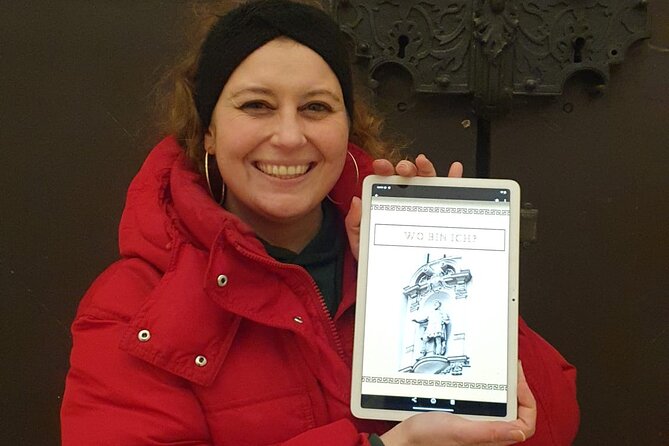
- Smartphone-led clues: you solve, then you find the next location, with guidance on your phone.
- Code and language puzzles: expect Roman numeric codes and Latin password-style challenges.
- Good value per group: one group ticket covers up to 15 people.
- Built for self pacing: no rush from a schedule, you control how long you linger.
- Outdoors the whole time: public sidewalks only help a bit, stairs are part of the deal.
Still choosing? These Vienna entries sit alongside it in our Austria file.
- Vienna: Vivaldi’s Four Seasons Concert in Karlskirche
★ 4.7 · 14,951 reviews - Vienna: Schönbrunn Palace & Gardens Skip-the-Line Tour
★ 4.7 · 7,739 reviews - Vienna: Light of Creation Votive Church Immersive Light Show
★ 4.8 · 6,779 reviews - Vienna Spanish Riding School Guided Tour
★ 4.7 · 6,765 reviews
Starting at Herrengasse 16, then firing up the Marcus Aurelius mission
Your adventure begins at Herrengasse 16, 1010 Wien. That location matters because the tour is simple in logistics: you start there and you finish back there, so you can treat it like a focused pocket of Vienna time rather than a complicated hop across neighborhoods.
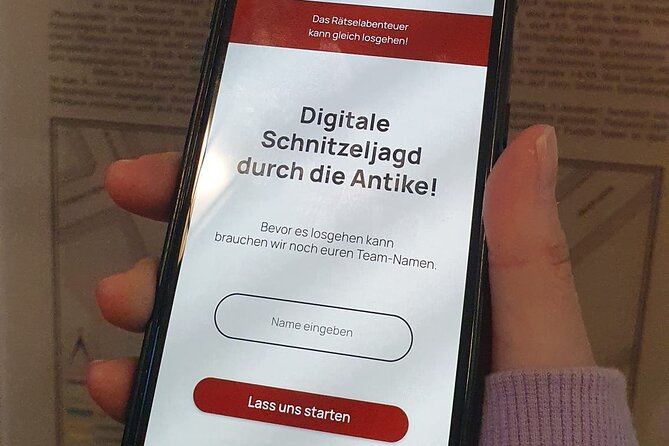
Once you book, you get a mobile ticket. At the starting point, you use the link and the password shown on your ticket to start the game on your phone, in your browser. There is no need to wait around for a guide to arrive. You are basically your own team coordinator, just with a virtual “hand” on the screen.
If you like puzzles, the setup feels friendly. The tour is designed for adults, and it also works with mixed groups that include kids, but the focus is on team problem-solving rather than sightseeing with a microphone. Make sure your phone is charged before you begin. This kind of scavenger hunt lives or dies on battery life.
Why Vindobona puzzles feel more historical than typical scavenger hunts
A lot of “puzzle tours” are just a hunt with a theme. This one leans hard into history, specifically the Roman camp of Vindobona, which is the Roman footprint beneath modern Vienna.
You do not just read plaques. You solve tasks that connect to the places you walk by. The mission is framed as fulfilling Marcus Aurelius’s order, and as you move through squares and alleys, the clues point you toward details that you would likely skip on a normal stroll. That is the big value here: your feet and your brain work together, so the city becomes a puzzle board.
It is also worth noting that you are not expected to bring prior knowledge. The game language assumes you can learn as you go, from the information embedded in the experience and from what you notice at each location. The best part is that the historical anecdotes are tied to what you are doing, not tacked on afterward.
From the praise this tour has earned, people consistently flag that the historical info is not basic. Even if you know Vienna’s broad story, you still end up looking at overlooked corners with new eyes. That is the kind of “learning by doing” that sticks.
How the outdoor game works, from location hunts to Latin password clues
The tour is designed as a sequence. You solve a puzzle, then you find the next location that pushes you further in the mission. Your smartphone acts like the control panel. It tells you what to do next once you complete the current step.
Expect a mix of puzzle types:
- Roman numeric codes that you have to crack as you interpret clues.
- Clues on buildings that you read like a detective, not like a tourist.
- Latin passwords where language becomes part of the challenge.
After that, you keep moving. The route stays outdoors the whole time, so you are constantly transitioning between steps. This format is great if you like momentum. It also means you need to be comfortable doing a “walk and think” rhythm for a couple of hours.
What I think makes this version different is how the puzzles are tied to the Roman camp idea. You are not just solving random riddles in an abstract sense. The story of the former legionary camp is the thread connecting where you go and what you solve.
If you get stuck, you can still keep the team moving. That is one advantage of being self-guided. You are not waiting for a guide to give you a hint at the next junction. Your phone is your hint station.
Timing and pacing: plan on about two hours, then stretch it your way
The tour takes about 2 hours, approximately. In practice, that range usually comes from two factors: how quickly your group solves puzzles and how much you pause to read or re-check clue text.
Because it is self-guided, you are not locked into a tight schedule with a fixed end time you must race toward. That is a big deal in Vienna, where weather and crowding can shift your plans fast. If your group likes solving together, you can move steadily. If you prefer to linger and absorb, you can slow down without derailing a group dynamic.
The flip side is that you cannot count on breaks. The tour includes no seating options. So if you build a plan around “quick puzzle stops,” you might still end up standing and walking for the full block of time.
My practical advice: treat it like a walking activity, not a museum visit. Wear weatherproof clothing if the forecast looks sketchy. And plan to bring a little water for the stroll, even though the experience is puzzle-centered.
Team size and group value: $52.04 per group up to 15 people
The price is $52.04 per group, up to 15 people. That is where the math gets interesting.
For families or friends, group pricing is usually the difference between “fun” and “worth it.” With this format, one ticket can cover a small team with multiple brains on the same clues. More people can mean you solve faster, argue less, and enjoy it more. It also makes it easier for mixed-age groups, because not everyone needs to be the “code person.”
If you are traveling as a solo person or a couple, you might feel like you are paying for a group game. Still, it can be great value because the tour is your time, your pace, and your content. You are not paying for someone else to lead you. You are paying for the puzzle experience and the structured path.
Best-fit groups:
- Friends who like puzzles and history.
- Couples who want an activity that does not require a pre-dinner reservation.
- Small groups who want to explore without a strict guide schedule.
- Anyone who likes walking the city in short, meaningful chunks.
What you’ll learn about Roman Vienna while solving, not just reading
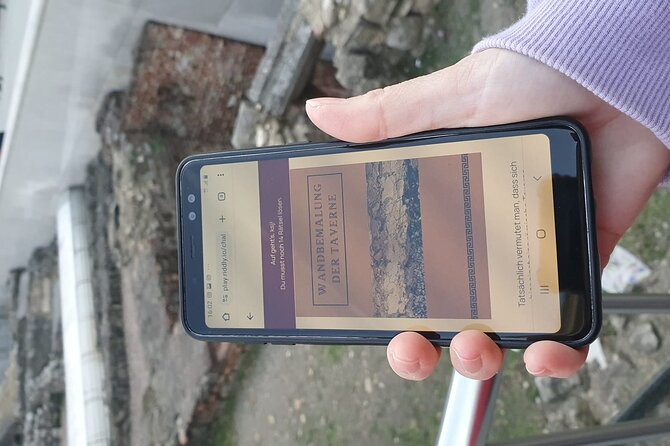
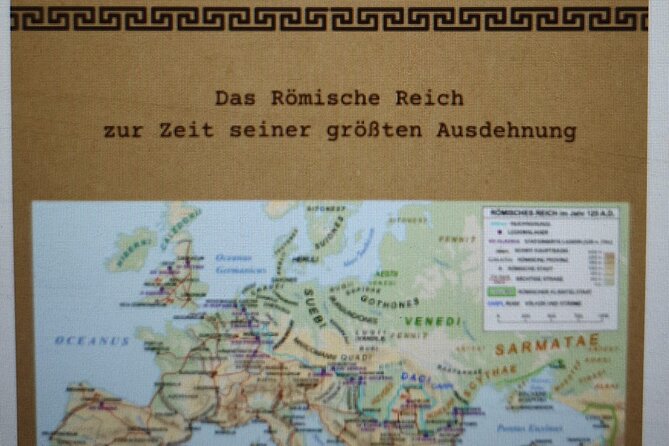
You are walking in the shadow of Vindobona, the Roman legionary camp area. The tour is built around the idea that Vienna’s modern streets have traces of that older settlement period, even if most of it is not obvious at first glance.
You learn through observation plus problem-solving. After you solve a code or decipher a clue, the experience usually connects it to the physical setting you are standing in. That makes the historical details feel earned. You are not just memorizing. You are noticing, then confirming.
This is also where the tour earns repeat praise: the added information can be genuinely new even if you know a little about Vienna. That points to a smart balance. The clues guide you to specifics, and the narrative explains what you might otherwise miss.
You also get a sense of how Roman life can be reconstructed from small things. Look closely at building clues and you start to think like a historian. You ask what was here, what might still be hinted at, and why the Romans laid out camps the way they did. The tour turns that thinking into a game.
If you enjoy antiquity, you get extra fuel. If you are brand new to Roman history, you still get a clear entry point, because the experience does not assume you already know the story.
Navigating Vienna’s squares and alleys with a phone as your co-pilot
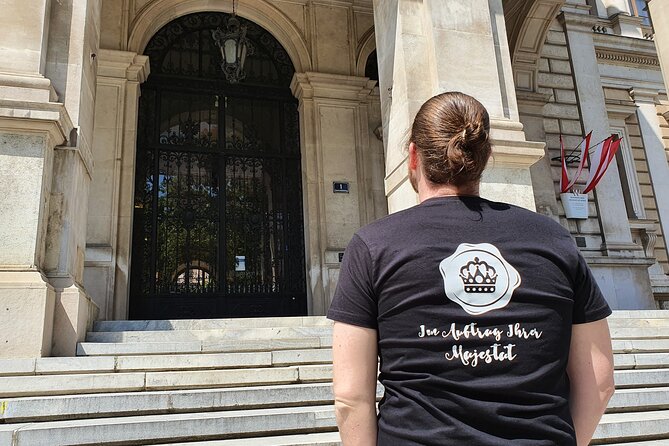
This is an outdoors-only walk, which means navigation becomes part of the challenge. The good news is that the tour is designed for this city style of movement. Vienna is a place of streets, squares, and side passages, and the puzzle format uses that reality.
You should go into it with a simple mindset: follow the clue, solve the step, then move with purpose. The next location is part of the game, so getting slightly off route can slow you down. Still, the experience is not about sprinting. You can move at an adult pace.
I also recommend you keep an eye on your surroundings as you walk. The puzzles reference what you see. If you are watching where you step but ignoring the buildings, you will feel stuck more often than you need to be.
One more practical tip: check your phone settings before you start. If you rely on mobile data, make sure you have internet access. If you plan to use Wi-Fi, confirm you can connect reliably at the start and along the route.
Comfort, weather, and the reality of no seating
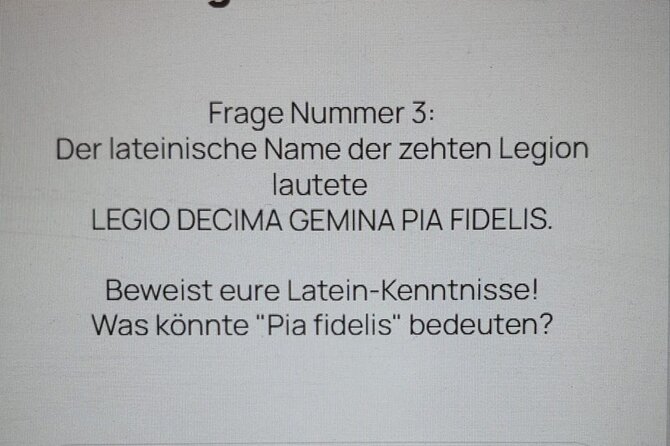
Let’s be honest. This tour is outdoors the whole time. There are no seating options. So even if the puzzles are engaging, your body still needs to tolerate two hours of walking and standing.
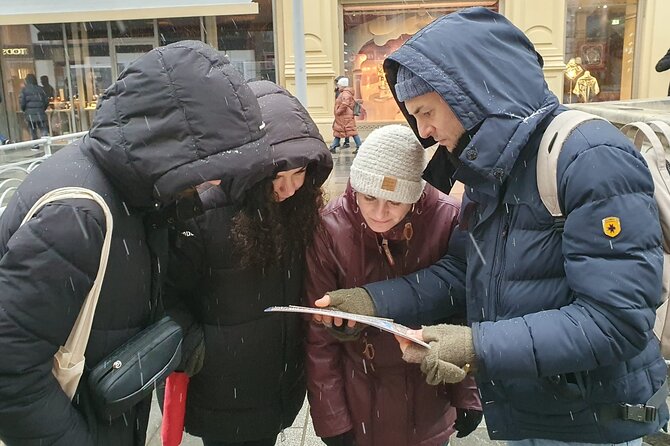
Vienna weather can flip quickly, and because the experience asks you to be out on sidewalks and to climb stairs, dress for the conditions. Weatherproof clothing is specifically suggested, which usually means bring a light layer that handles drizzle and wind.
The good part: the tour is designed for public sidewalks, and it is described as in principle barrier-free. But there are stairs to climb. If you have mobility concerns, this is not the type of experience to assume fully flat access.
Service animals are allowed, and it is near public transportation. That helps with getting to the start point without making the whole day complicated.
A quick reality check on who this tour suits best
This is an adult-designed puzzle tour. That does not mean kids cannot join, but it does mean the challenge style is aimed at adults who are happy to solve logic and code-style tasks.
You will probably love it if:
- You like history that you actively “decode.”
- You enjoy puzzles with a fair level of difficulty.
- You want to explore Roman Vienna without committing to a guided tour schedule.
- You like the idea of starting instantly once you are at the meeting point.
You might want to skip it if:
- You hate standing and walking without breaks.
- Your group wants a traditional guided narration with lots of speaking.
- You prefer museums where you can sit down between stops.
Should you book On behalf of Her Majesty, the Marcus Aurelius order?
I think this is a strong buy for the right traveler. The big win is the combination of balanced puzzles and historically grounded story. The format also gives you control, which is useful in Vienna when your day might shift around weather or dinner plans.
If you are the kind of person who enjoys solving Roman numeric codes and translating clues into a next location, book it. The game mechanics make you look at the city in a more attentive way than a normal walk.
If you are unsure, consider your group. A group of friends or a couple with shared puzzle energy will likely get the most out of it. Solo players can still enjoy it, but bring patience, since you will be doing all the thinking yourself.
Bottom line: if you want an activity that feels like detective work in Roman Vienna, this digital puzzle tour is a smart way to spend two hours, starting right at Herrengasse 16.
FAQ
Where does the tour start and end?
The tour starts at Herrengasse 16, 1010 Wien, Austria. It ends back at the same meeting point.
How long is the digital puzzle tour?
The duration is about 2 hours.
How much does it cost and how many people are included?
The price is $52.04 per group, with a group size of up to 15 people.
What do I need to play the tour?
You need a smartphone with internet access. You also use the link and password shown on your mobile ticket.
Is there a guide who leads you during the tour?
No. It is a self-guided experience. A virtual scavenger hunt guides you through the steps on your phone.
Does the activity run outdoors?
Yes. The entire tour takes place outdoors, and it moves from place to place on public sidewalks.
Is the tour only for adults?
The tour is designed for adults, but children can also join.
Is the tour accessible for people with mobility needs?
In principle it is barrier-free because you walk on public sidewalks, but there are stairs to climb.
What happens if I cancel?
You can cancel for free. If you cancel at least 24 hours before the experience start time, you get a full refund. If you cancel less than 24 hours before, there is no refund.
Tours: Rest of the Austria File
- Vienna: Schönbrunn Palace & Gardens Skip-the-Line Tour
★ 4.7 · 7,739 reviews - Vienna Spanish Riding School Guided Tour
★ 4.7 · 6,765 reviews - Vienna: Skip-the-Line Sisi Museum, Hofburg and Gardens Tour
★ 4.8 · 5,918 reviews - Vienna: Skip-the-Line Schönbrunn Palace & Gardens Tour
★ 4.8 · 5,411 reviews
Tour Reviews: Rest of the Austria File
- Vienna: Vivaldi’s Four Seasons Concert in Karlskirche
★ 4.7 · 14,951 reviews - Vienna: Schönbrunn Palace & Gardens Skip-the-Line Tour
★ 4.7 · 7,739 reviews - Vienna: Light of Creation Votive Church Immersive Light Show
★ 4.8 · 6,779 reviews - Vienna Spanish Riding School Guided Tour
★ 4.7 · 6,765 reviews
Newest Vienna write-ups on file
- Vienna: Private Walking Tour to The Hofburg & Graben Street★ 5.0 · 3 reviews
- Vienna: Private tour Mauthausen and Linz★ 4.1 · 3 reviews
- Vienna Private Full Day Tour – Tickets to Schönbrunn & Lunch★ 5.0 · 3 reviews
- Vienna: Johann Strauss 200th birthday anniversary exhibition★ 4.7 · 3 reviews
- Vienna: Full-Day Vienna Woods Wine Tasting Tour★ 5.0 · 3 reviews
- Vienna: Festive Season and New Year’s Eve Waltz Workshop★ 5.0 · 3 reviews
Tours, compared.
 ★ 4.7Vienna: Schönbrunn Palace & Gardens Skip-the-Line TourFrom $637,739 reviews
 ★ 4.7Vienna Spanish Riding School Guided TourFrom $286,765 reviews
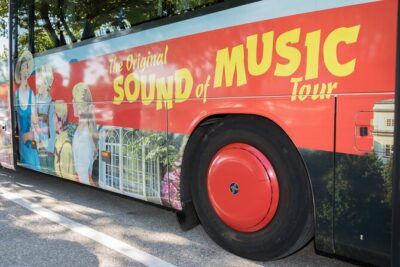 ★ 4.5The Original Sound of Music Tour in SalzburgFrom $906,129 reviews
 ★ 4.8Vienna: Skip-the-Line Sisi Museum, Hofburg and Gardens TourFrom $615,918 reviews
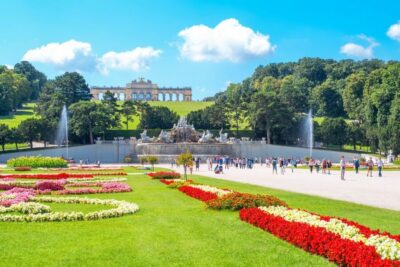 ★ 4.8Vienna: Skip-the-Line Schönbrunn Palace & Gardens TourFrom $765,411 reviews
 ★ 4.8Salzburg: Original Sound of Music TourFrom $885,059 reviews
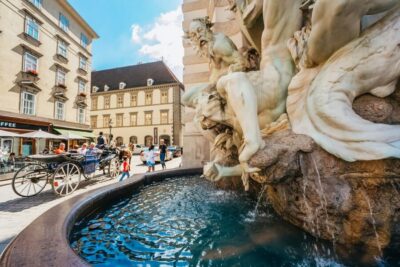 ★ 4.7Vienna: Guided Walking Tour of City Center HighlightsFrom $254,989 reviews
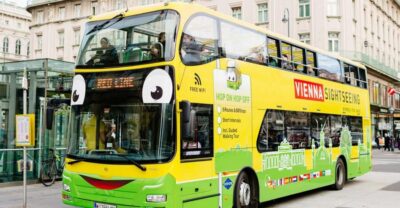 ★ 4.2Vienna: Hop-On Hop-Off Sightseeing Bus Tour in 19 LanguagesFrom $414,518 reviews