

REVIEW · TOURS
3D Salzburg: Unique VR-Tour
Salzburg rewound in 3D, and your phone matters. This is a 3D Salzburg VR tour that mixes a live guided walk with VR glasses and a smartphone app, taking you through different time periods in the city.
I love the way the experience links big landmarks like Mirabell Palace and Square with specific historical moments. I also like the focus on World War II in Salzburg, not just postcard old town vibes. The possible drawback is that the VR component can feel like a small number of key picture moments, so if you expect a long, walking-heavy history tour, you may find the time and structure limiting for the price.
In This Review
- Key things to know before your VR trip
- Where the 3D Salzburg VR experience starts, and how it works
- Mirabell Palace and Square: a fast route into a former Salzburg
- Markart Square’s old wood market, about 120 years ago
- Pfeifergasse during World War II: the emotional center of the tour
- The live guide in German, and what you gain from having a person
- Price and value: is 32 dollars worth 90 minutes of 3D history?
- Timing, logistics, and your smartphone checklist
- Who should book this 3D Salzburg VR tour, and who might not love it
- Should you book 3D Salzburg? My decision guide
- FAQ
- Where is the meeting point for the 3D Salzburg tour?
- How long is the tour?
- How much does the tour cost?
- What language is the live guide?
- What do I need to bring?
- Are VR glasses provided?
- Is food or drink included?
- Is the tour wheelchair accessible?
- Is the tour suitable for children?
- Can I get a full refund if I cancel?
Key things to know before your VR trip

- TimeTour app required on your smartphone, plus a charged phone so the scenes play smoothly
- VR glasses are provided, but you still control the experience through your phone
- Mirabellplatz is your anchor point, meeting in front of St. Andrä Church
- You get multiple eras, including what Salzburg looked like around World War II
- A live German guide, Sabine Rath, ties the visuals to stories and background
Still choosing? These Salzburg entries sit alongside it in our Austria file.
- The Original Sound of Music Tour in Salzburg
★ 4.5 · 6,129 reviews - Salzburg: Original Sound of Music Tour
★ 4.8 · 5,059 reviews - From Salzburg: Half-Day Tour to Hallstatt
★ 4.6 · 3,596 reviews - Salzburg: Mozart Concert at Mirabell Palace
★ 4.8 · 3,498 reviews
Where the 3D Salzburg VR experience starts, and how it works
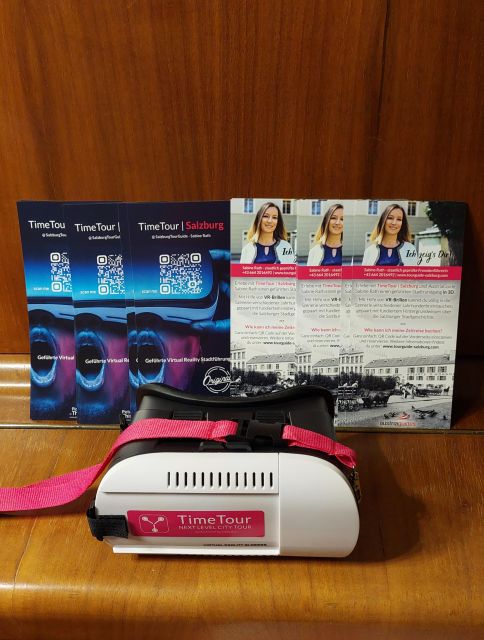
You meet at Mirabellplatz 5 (in front of St. Andrä Church). Arrive at least 5 minutes early so you can get settled before the tour starts, and so you are not scrambling with a phone that is at 2 percent battery.
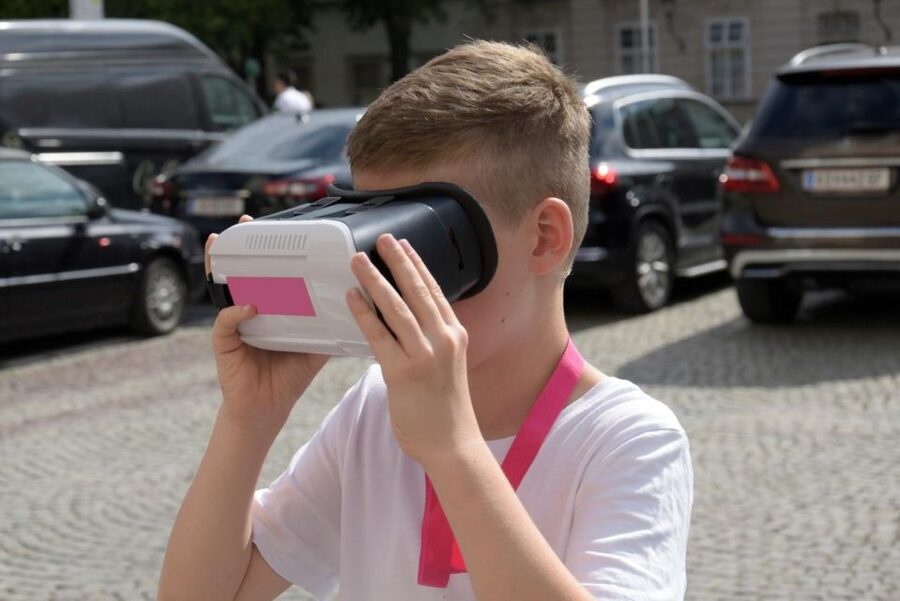
The key practical detail is this: your smartphone is required. You’ll want to download the free TimeTour app before you go. When you arrive, the tour provides the VR glasses and a password that lets the app unlock the tour content. That setup is part of the experience, so plan to show up with your phone ready, charged, and already updated enough to run the app properly.
Once you’re set, the flow is simple. You follow a live guide speaking German, then the VR glasses shift you into different epochs of Salzburg. Think of it as a guided “then and now” lesson, where the guide provides the context while your eyes get the visual time-travel.
Mirabell Palace and Square: a fast route into a former Salzburg
The first major target is Mirabell Palace and Square. Even if you’ve strolled around Mirabellplatz before, the VR experience changes how you see it by adding a historical layer you can’t easily get from the current-day streets alone.
What you can expect here is a staged look at an earlier Salzburg world, paired with stories that connect the palace area to the city’s past. This part works especially well if you enjoy short, high-impact scenes. You’re not waiting for a lecture hall moment. You’re seeing a visual cue first, then having the guide put meaning on top.
A practical tip: keep your eyes up when you’re not in the VR. The tour is designed so you can recognize the real space around you, then compare it to what the glasses show. That rhythm helps you orient fast and makes the history feel tied to place instead of floating in your screen.
Markart Square’s old wood market, about 120 years ago
Next up is a trip to Markart Square, focused on an old city wood market about 120 years ago. This is the kind of scene that can be more than just scenery, because markets are where everyday life shows itself quickly: the rhythm of work, the kind of trade happening, and the built environment that supported it.
In VR, this kind of setting can be more memorable than a name on a plaque. You get the benefit of seeing the square as a functional space, not just a backdrop for photos. And with the guide in the room, you have a human voice connecting the visuals to background information, which is where the tour becomes more than a tech demo.
One consideration: you’ll likely get scenes that are more “specific moments” than “full walking tours.” If your dream history experience is lots of time for building-by-building detail on foot, you may feel the Markart Square segment is brief. But if you’re happy with sharp time windows and guided interpretation, this stop can hit the sweet spot.
Pfeifergasse during World War II: the emotional center of the tour
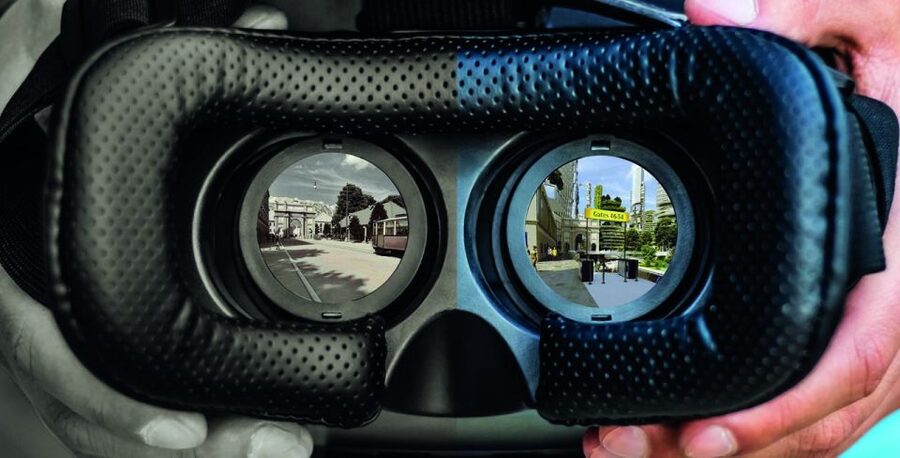
The tour’s big historical promise is what Salzburg looked like around World War II, including a scene in Pfeifergasse. This is the part most people care about, because it shifts the tone from charming old town to something weightier.
With VR glasses on, you’re seeing a reconstructed wartime city atmosphere, guided by background stories. Even when the visuals are not movie-quality, the structure matters. The guide’s narration gives you the why behind what you’re seeing, which helps you avoid the common problem with VR history experiences: staring at images without context.
If you want to get the most out of this segment, listen closely to the guide’s framing. World War II history can turn abstract fast if you only focus on what looks different. When the guide connects the scene to how the city lived, you’ll feel the story land in a more personal way.
The live guide in German, and what you gain from having a person

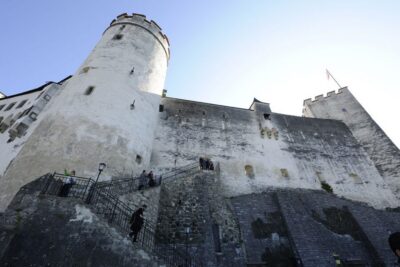
This tour includes a live guide, Sabine Rath, and the tour language is German. That matters. In a VR-only experience, the content can feel fixed. With a real guide, you get explanation, pacing, and the chance for the narration to steer your attention.
One of the best elements here is the guide style. You’re not just getting information dumped at you. You get the feeling of a friendly local guide sharing special stories about Salzburg, while the VR scenes do the job of showing what those stories refer to.
Still, there is a tradeoff. Because the tour is structured around VR picture moments and a fixed set of time periods, you might wish for more city-wide context, especially about everyday life and the old buildings themselves. If you’re the type who loves deep, long-form history lectures, this format may feel short. If you like guided storytelling with visuals as anchors, it should feel fun and engaging.
Price and value: is 32 dollars worth 90 minutes of 3D history?

The price is $32 per person for about 90 minutes. On paper, that can sound either reasonable or steep, depending on what you want.
Here’s how I’d judge value for you:
- If you’re curious about how Salzburg looked in World War II and you want the experience packaged into a short guided session, this price can feel fair. You’re paying for VR glasses, the app experience, and a live guide tying scenes to background.
- If you mainly want a traditional walking tour with lots of stop time, this may feel expensive. The format is not designed as a long route. It’s more like guided “episodes” that happen at set points.
Also remember what’s included and what is not. There are no entrance fees, and you get the VR glasses. But food and drink are not included, and your smartphone is not provided. So, if you already planned to snack nearby anyway, that’s fine. If you need meals built into your plan, you’ll want to eat before or after.
The best way to decide is to match your expectations to the format: it’s a tech-assisted storytelling experience, not a full day of historical immersion.
Timing, logistics, and your smartphone checklist

This tour asks you to be ready to work with your phone. That’s normal for a TimeTour-based experience, but it’s worth planning to avoid friction.
Before you arrive:
- Download the TimeTour app ahead of time
- Bring a charged smartphone
- Keep it in your control for the tour, because it’s required
At the start:
- You’ll get the password and the VR glasses once the tour begins
During the experience:
- Expect a mix of guided narration and VR picture moments
- Plan to stand and listen when you’re not inside a scene
One more practical note: the guide is German. If your German is basic, you’ll still catch a lot through the visuals, but you might miss some finer details. If German is not your strength at all, you may find the experience less satisfying than you hoped.
Who should book this 3D Salzburg VR tour, and who might not love it

I think 3D Salzburg: Unique VR-Tour is best for three types of people.
First, book it if you want a time-efficient way to see Salzburg’s history through multiple eras. You’re not committing to a half-day lecture. You get a guided session that changes the atmosphere quickly.
Second, book it if you’re genuinely interested in Salzburg during World War II. The tour is specifically built around that question, and it gives you a visual way to understand the city’s appearance in that period.
Third, book it if you enjoy guided storytelling more than long walking routes. A friendly, present guide can make or break a short experience, and this one is designed around live narration plus visuals.
I’d skip it, or at least lower expectations, if:
- You want a long, deeply detailed walking tour of buildings and districts
- You are expecting lots of different VR scenes and lots of exploration time
- You do not have a smartphone available, or you forget to charge it
It is also not suitable for children under 6 years. And it is wheelchair accessible, which is a real plus if you need mobility-friendly sightseeing.
Should you book 3D Salzburg? My decision guide

Book this tour if you want a compact, guided 3D history experience with a live German guide and a smartphone-based VR setup. It’s a nice fit when you want Salzburg’s past to show up quickly, especially the WWII-era focus and the landmark connections like Mirabell and Markart Square.
Think twice if you’re a “more hours equals better history” person. The structure is built around VR picture moments plus narration, so if you need lots of time on foot for detailed explanations, you might feel shortchanged.
If your goal is to understand Salzburg through a few powerful historical snapshots with a human guide, this is a fun, practical option. If your goal is exhaustive history, you’ll probably want something more walking-heavy.
FAQ
Where is the meeting point for the 3D Salzburg tour?
You meet at Mirabellplatz 5, 5020 Salzburg, in front of St. Andrä Church.
How long is the tour?
The tour lasts about 90 minutes, roughly 1.5 hours.
How much does the tour cost?
The price is listed as $32 per person.
What language is the live guide?
The live guided tour is in German.
What do I need to bring?
You need your own smartphone, and it should be charged. You also need to download the free TimeTour app before the tour.
Are VR glasses provided?
Yes. VR glasses are provided during the tour.
Is food or drink included?
No. Food and drinks are not included.
Is the tour wheelchair accessible?
Yes, the tour is wheelchair accessible.
Is the tour suitable for children?
It is not suitable for children under 6 years.
Can I get a full refund if I cancel?
You can cancel up to 24 hours in advance for a full refund.
Tours: Rest of the Austria File
- The Original Sound of Music Tour in Salzburg
★ 4.5 · 6,129 reviews - Salzburg: Original Sound of Music Tour
★ 4.8 · 5,059 reviews - From Salzburg: Half-Day Tour to Hallstatt
★ 4.6 · 3,596 reviews - Salzburg: Amphibious Splash Tour on Land & on Water
★ 4.7 · 1,097 reviews
Tour Reviews: Rest of the Austria File
- The Original Sound of Music Tour in Salzburg
★ 4.5 · 6,129 reviews - Salzburg: Original Sound of Music Tour
★ 4.8 · 5,059 reviews - From Salzburg: Half-Day Tour to Hallstatt
★ 4.6 · 3,596 reviews - Salzburg: Mozart Concert at Mirabell Palace
★ 4.8 · 3,498 reviews
Newest Salzburg write-ups on file
- Zell am See Alpine Village Private Day Trip from Salzburg★ 5.0 · 3 reviews
- Private Austrian Food Tasting Tour in Salzburg’s Old Town★ 4.5 · 3 reviews
- Salzburg to Vienna, Private Transfer, 2h of Sightseeing, Local Driver, English★ 5.0 · 3 reviews
- Private Customized Salzburg City and Country Tour★ 5.0 · 3 reviews
- Private Transfer from Salzburg to Vienna: Door-to-door, English-speaking driver★ 4.5 · 3 reviews
- Private Tour: Discover Salzburg and the Stunning Lake District★ 5.0 · 3 reviews
Tours, compared.
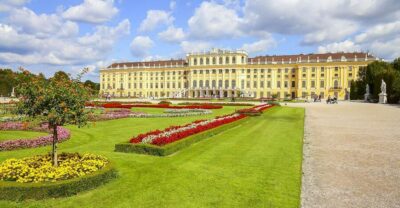 ★ 4.7Vienna: Schönbrunn Palace & Gardens Skip-the-Line TourFrom $637,739 reviews
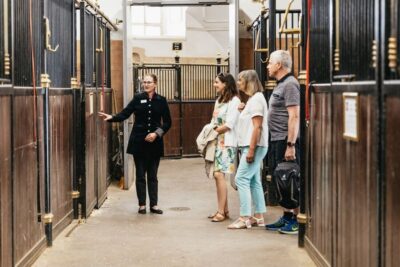 ★ 4.7Vienna Spanish Riding School Guided TourFrom $286,765 reviews
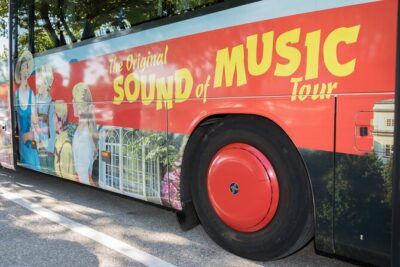 ★ 4.5The Original Sound of Music Tour in SalzburgFrom $906,129 reviews
 ★ 4.8Vienna: Skip-the-Line Sisi Museum, Hofburg and Gardens TourFrom $615,918 reviews
 ★ 4.8Vienna: Skip-the-Line Schönbrunn Palace & Gardens TourFrom $765,411 reviews
 ★ 4.8Salzburg: Original Sound of Music TourFrom $885,059 reviews
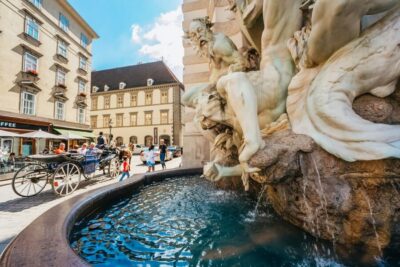 ★ 4.7Vienna: Guided Walking Tour of City Center HighlightsFrom $254,989 reviews
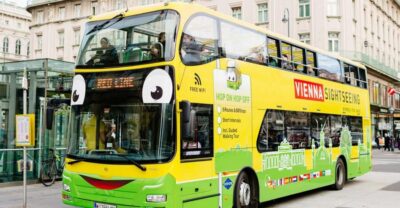 ★ 4.2Vienna: Hop-On Hop-Off Sightseeing Bus Tour in 19 LanguagesFrom $414,518 reviews